
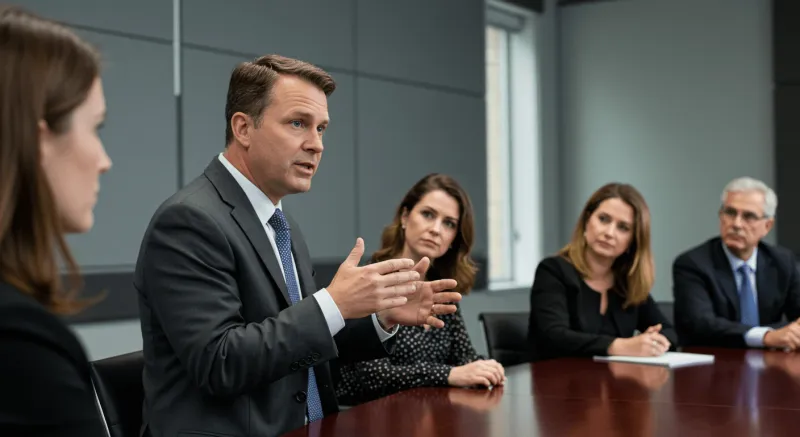
Facing a business dispute in Santa Clara?
30-90 days to resolution. No lawyer needed.





Resolve Business Disputes in Santa Clara Quickly and Effectively Through Arbitration
BMA is a legal tech platform providing self-represented parties with the document preparation and local court data needed to manage California arbitrations independently.
This content is for informational purposes only and does not constitute legal advice. Consult a licensed California attorney for guidance specific to your situation.
Why Your Case Is Stronger Than You Think
Many small-business owners and claimants in Santa Clara underestimate the power of their contractual provisions and documentation when facing disputes. California law, notably the California Arbitration Act (CAA), emphasizes that arbitration agreements are enforceable if properly drafted and executed, making their invocation a potent tool for resolution. When you have a signed arbitration clause—often included in service agreements, purchase contracts, or employment documents—you have a clear legal foundation that compels the other party to resolve conflicts through arbitration rather than court litigation. Proper documentation, such as emails, transaction logs, and contract revisions, can substantially strengthen your position by demonstrating compliance with procedural requirements and establishing clear contractual obligations. For example, detailed evidence of breach or damages, supported by timely records, can lead arbitrators to favor claims that are supported by concrete proof, reducing the risk of dismissal. By thoroughly understanding and organizing your evidence according to California Evidence Code standards, you enhance your capacity to convince an impartial arbitrator of your merits, thereby shifting the balance of procedural advantage in your favor.
$14,000–$65,000
Avg. full representation
$399
Self-help doc prep
What Santa Clara Residents Are Up Against
Santa Clara County, part of Silicon Valley’s economic engine, has a dense concentration of small and medium-sized businesses confronting common contractual and operational disputes. Data indicate that local courts and arbitration panels handle dozens of business disputes annually, often involving claims related to breach of contract, unpaid invoices, or misrepresentation. Enforcement challenges are frequent, with many parties unaware that arbitration clauses—even if enforceable—must be invoked early, otherwise procedural defaults can lead to dismissal or delays. Additionally, the local arbitration services such as AAA or JAMS see a steady increase in filings from Santa Clara businesses, with over 1,000 cases reported annually in recent years. Industry-specific behaviors—such as the reluctance to document communications or delays in formalizing claims—compound the difficulties. This environment underscores the importance of proactive dispute management and reliable documentation to avoid getting caught in protracted, expensive local litigation or arbitration processes.
The Santa Clara Arbitration Process: What Actually Happens
1. **Initiation of Arbitration:** The process begins with filing a demand for arbitration, usually within 30 days of dispute emergence, if outlined in your contract. Under the California Arbitration Act (California Code of Civil Procedure § 1280 et seq.), arbitration agreements are enforceable, and the arbitrator(s) are selected in accordance with AAA or JAMS rules, depending on what your contract specifies. Santa Clara’s local arbitration practices typically follow these national standards, modified by any specific procedural rules.
2. **Pre-Hearing Preparations:** Over the next 30-60 days, parties exchange pleadings, evidence, and witness lists. California law and local arbitration rules emphasize strict adherence to deadlines (see AAA Rules, Rule R-23). This phase often involves motions to clarify jurisdiction, scope, or evidentiary issues, which can result in preliminary hearings.
3. **Hearing and Evidence Presentation:** The hearing itself generally occurs within 60-90 days after the statement exchange, subject to scheduling and complexity. In Santa Clara, arbitrators typically conduct face-to-face hearings at neutral venues or via virtual hearings, in accordance with AAA and JAMS policies. Evidence must comply with California Evidence Code requirements; witnesses are sworn, and documentary proof must be submitted prior to or during the hearing. Under California law (Cal. Evidence Code § 350), admissible evidence is critical, and failure to produce relevant documents—such as signed contracts, email correspondence, or transaction logs—can weaken your case.
4. **Award and Enforcement:** The arbitrator’s decision, binding and enforceable in Santa Clara courts (California Code of Civil Procedure § 1285), is typically issued within 30 days of the hearing. Enforcement actions in Santa Clara align with state statutes, with the Federal Arbitration Act also applicable for interstate or federal-related disputes. Should enforcement become necessary, filing a petition for judgment confirms the award, which courts in Santa Clara readily uphold if procedural rules were followed.
Your Evidence Checklist

- Contractual Documents: Signed agreements, amendments, policy manuals, or service terms. Deadline: At the outset, verify signatures and scope.
- Correspondence: Emails, letters, and messages that establish communication, obligations, or breaches. Deadline: Gather all related communication during the dispute window.
- Transaction Records: Invoices, receipts, bank statements, or logs of payments or deliveries. Deadline: Collect these promptly, ideally before filing your demand.
- Witness Statements: Written or recorded testimony from employees, partners, or third parties confirming operational or contractual facts. Deadline: Prepare early, before arbitration begins.
- Documentation of Damages: Evidence of financial loss, lost profits, or harm caused by breach. Deadline: Assemble immediately to support damages claims.
Most claimants overlook the importance of authenticating digital records or fail to preserve the chain of custody for evidence, which can be decisive in arbitration. Properly labeled, indexed, and date-stamped files, submitted in compliance with arbitration rules (e.g., AAA Supplementary Rules), improve your chances for a favorable determination.
Ready to File Your Dispute?
BMA prepares your arbitration case in 30-90 days. No lawyer needed.
Start Your Case — $399People Also Ask

Is arbitration binding in California?
Yes. Under the California Arbitration Act (Cal. Civ. Proc. § 1280 et seq.), arbitration agreements that are valid and enforceable bind the parties to resolve disputes through arbitration. Courts uphold arbitration awards unless there is evidence of fraud or procedural misconduct, making arbitration a reliable, binding process.
How long does arbitration take in Santa Clara?
The timeline varies based on dispute complexity and procedural compliance but typically ranges from three to six months from filing to award. California law encourages prompt resolution, with many cases concluding in under 180 days if deadlines are strictly followed.
Can I appeal an arbitration decision in California?
Generally, arbitration awards are final and not subject to appeal. However, they can be challenged or set aside if procedural issues such as fraud, corruption, or arbitrator bias are proven, conforming to California Civil Procedure § 1286.6.
What happens if the other party refuses arbitration?
If a party refuses to participate after a valid arbitration agreement, the consenting party can seek court intervention to compel arbitration. Courts in Santa Clara uphold these motions, emphasizing the enforceability of arbitration clauses under California law.
Don't Leave Money on the Table
Full legal representation typically costs $14,000–$65,000 on average. Self-help document prep: $399.
Start Your Case — $399Why Insurance Disputes Hit Santa Clara Residents Hard
When an insurance company denies a claim in Santa Clara County, where 4.4% unemployment already strains families earning a median of $153,792, the last thing anyone needs is a $14K+ legal bill. Arbitration puts policyholders on equal footing with insurance adjusters.
In Santa Clara County, where 1,916,831 residents earn a median household income of $153,792, the cost of traditional litigation ($14,000–$65,000) represents 9% of a household's annual income. Federal records show 556 Department of Labor wage enforcement cases in this area, with $9,077,607 in back wages recovered for 3,244 affected workers — evidence that businesses here have a pattern of cutting corners on obligations.
$153,792
Median Income
556
DOL Wage Cases
$9,077,607
Back Wages Owed
4.44%
Unemployment
Source: U.S. Census Bureau ACS, Department of Labor WHD. IRS income data not available for ZIP 95056.
Federal Enforcement Data — ZIP 95056
Source: OSHA, DOL, CFPB, EPA via ModernIndexPRODUCT SPECIALIST
Content reviewed for procedural accuracy by California-licensed arbitration professionals.
About Jason Anderson

View author profile on BMA Law | LinkedIn | Federal Court Records
Arbitration Help Near Santa Clara
Nearby ZIP Codes:
Arbitration Resources Near
If your dispute in involves a different issue, explore: Consumer Dispute arbitration in • Employment Dispute arbitration in • Contract Dispute arbitration in • Business Dispute arbitration in
Nearby arbitration cases: Wasco insurance dispute arbitration • Brandeis insurance dispute arbitration • Glencoe insurance dispute arbitration • Montgomery Creek insurance dispute arbitration • Hornbrook insurance dispute arbitration
Other ZIP codes in :
References
California Arbitration Act:
https://leginfo.legislature.ca.gov/faces/codes_displayText.xhtml?lawCode=Code+of+Civil+Procedure&division=&title=3&part=3&chapter=2
California Civil Procedure:
https://govt.westlaw.com/calregs/
AAA Commercial Arbitration Rules:
https://www.adr.org/Arbitration
California Evidence Code:
https://leginfo.legislature.ca.gov/faces/codes_displayText.xhtml?lawCode=EVID&division=&title=1&chapter=1
California Business and Professions Code:
https://leginfo.legislature.ca.gov/faces/codes_displayText.xhtml?lawCode=BPC&division=&title=&part=
The moment the arbitration packet readiness controls failed was subtle but absolute—our team had ticked every procedural box in anticipation of the Santa Clara business dispute arbitration, yet the chain-of-custody discipline silently fractured during evidence collation. The initial breakdown wasn’t in documentation volume or availability but in timestamps that never synchronized, undermining chronology integrity controls before anyone realized the depth of the problem. By the time we detected conflicting versions of key correspondence, it was too late for reversal: crucial e-discovery submissions had already passed the window for supplementing or amending. Operationally, our trade-off between speed and thorough cross-verification backfired under jurisdictional pressure; the checklist’s apparent completeness masked a fatal lapse in document intake governance, eroding confidence and inflating risk without visible symptoms until final review. This failure reinforced the non-negotiable cost of airtight evidentiary workflows despite overlapping local arbitration practices in Santa Clara, California 95056 bearing unique procedural constraints.
This is a hypothetical example; we do not name companies, claimants, respondents, or institutions as examples.
- False documentation assumption: assuming checklist completion equates to intact evidentiary integrity.
- What broke first: unsynchronized timestamps causing hidden chronology faults deep in chain-of-custody workflows.
- Generalized documentation lesson tied back to "business dispute arbitration in Santa Clara, California 95056": rigorous, iterative cross-validation within arbitration packet readiness controls is critical to overcoming local evidentiary workflow trade-offs.
⚠ HYPOTHETICAL CASE STUDY — FOR ILLUSTRATIVE PURPOSES ONLY
Unique Insight Derived From the "business dispute arbitration in Santa Clara, California 95056" Constraints
Business dispute arbitration in Santa Clara operates under specific time-sensitive mandates that impose tight boundaries on evidence submission. These constraints greatly amplify the cost of even minor documentation errors, forcing arbitration teams to prioritize early and exhaustive verification—a trade-off that can strain resources but is indispensable to maintaining procedural integrity.
Most public guidance tends to omit the compounded operational risks introduced by simultaneous local and state procedural rules that affect evidentiary timelines in Santa Clara. Teams unfamiliar with these overlapping frameworks routinely underestimate the importance of integrated workflow controls that reinforce document intake governance early in the process.
The seemingly minor variations in regional procedural expectations—such as allowances for supplementary evidence or local vernacular interpretations of contract terms—require arbitration specialists to embed multilayered fact-checking routines. These routines offset the otherwise prohibitive costs of missed deadlines but demand adaptable scheduling and resource flexibility under tight arbitration packet readiness controls.
| EEAT Test | What most teams do | What an expert does differently (under evidentiary pressure) |
|---|---|---|
| So What Factor | Confirm evidence presence but rely on automated checklist completion. | Correlate timeline implications of evidence gaps with jurisdiction-specific arbitration deadlines before sign-off. |
| Evidence of Origin | Accept digital dates and metadata at face value without manual corroboration. | Perform cross-platform timestamp validation and leverage regional process knowledge to detect subtle chronology discrepancies. |
| Unique Delta / Information Gain | Focus on producing full document sets, overlooking incremental confirmation signals embedded in chain-of-custody annotations. | Extract and integrate ancillary metadata within arbitration packet readiness controls to preempt evidentiary disputes. |
Local Economic Profile: Santa Clara, California
N/A
Avg Income (IRS)
556
DOL Wage Cases
$9,077,607
Back Wages Owed
In Santa Clara County, the median household income is $153,792 with an unemployment rate of 4.4%. Federal records show 556 Department of Labor wage enforcement cases in this area, with $9,077,607 in back wages recovered for 4,975 affected workers.

