

Facing a insurance dispute in San Diego?
30-90 days to resolution. No lawyer needed.





Denied Insurance Claim in San Diego? Prepare for Arbitration in 30-90 Days
BMA is a legal tech platform providing self-represented parties with the document preparation and local court data needed to manage California arbitrations independently.
This content is for informational purposes only and does not constitute legal advice. Consult a licensed California attorney for guidance specific to your situation.
Why Your Case Is Stronger Than You Think
In San Diego, your position in an insurance dispute can be significantly reinforced by understanding the legal structure surrounding arbitration agreements. California law, particularly Civil Code sections 45 and 1280-1284, favors the enforceability of arbitration clauses if they are clearly written and voluntarily accepted within the policy. When properly documented, these clauses shift the decision-making process away from traditional courts to specialized arbitration forums, which often offer faster, more predictable resolutions and less costly procedures. By meticulously organizing your evidence—such as denial letters, policy provisions, and detailed loss documentation—you leverage the fact that arbitrators value well-structured, supported claims. Proper evidence management and a clear narrative can prevent the common pitfall of procedural default, which often tilts the outcome against claimants who overlook the importance of timely and authenticated documentation. In essence, a strategic approach to evidence can effectively balance the procedural asymmetry, giving you a real advantage over insurers who might attempt to dismiss or minimize your claim.
$14,000–$65,000
Avg. full representation
$399
Self-help doc prep
What San Diego Residents Are Up Against
San Diego County's insurance market, like many others in California, exhibits patterns of claim denials and delays, with recent enforcement data indicating thousands of violations related to unfair claim handling across multiple insurance sectors. State regulators have documented persistent issues such as unreasonable delays (per Insurance Code Sections 790.03 and 791), inadequate claim investigations, and improper denials, especially in sectors dealing with medical, property, and auto insurance. Local courts have seen a high volume of disputes, many of which default to arbitration due to clause enforceability issues or strategic insurer practices. Data from the California Department of Insurance highlights that a significant percentage of claims are resolved through informal or formal ADR processes, with San Diego being a hub for arbitration activity under AAA and JAMS. Claimants often face a landscape where insurers are aware of and leverage procedural complexities, making it critical for consumers and small businesses to come prepared with thoroughly documented evidence and clear procedural understanding. This collective data shows that claim disputes are prevalent; knowing this, claimants can better anticipate the challenges and prepare accordingly.
The San Diego Arbitration Process: What Actually Happens
1. Filing and Forum Selection: In California, the arbitration process often originates with the insurance company's arbitration clause, requiring you to select an approved forum such as the American Arbitration Association (AAA) or JAMS under the rules outlined in the policy. Filing must comply with California Civil Procedure Code (CCP) Section 1280.01, establishing a 30-day window post-dispute identification. Expect acknowledgment within 7-10 days.
2. Preparation and Scheduling: Once filed, both parties submit evidence and set a hearing date, typically scheduled within 30-60 days. Local arbitrator selection mechanisms follow the rules of the chosen forum, with CCP Section 1284.2 guiding arbitrator impartiality and disclosure requirements. The parties should prepare by organizing relevant evidence per local rules and anticipate procedural filings over the following weeks.
3. Hearing and Decision: The arbitration hearing in San Diego generally lasts 1-2 days, with the arbitrator hearing testimony, reviewing evidence, and applying applicable statutes like California Insurance Code Sections 790.03 and 790.08. The arbitrator issues a decision within a few weeks, often based on the evidence presented and the contractual language governing the dispute.
4. Enforcement and Possible Appeal: The arbitration award can be enforced via court under CCP Section 1285. If a party believes the arbitration was flawed due to arbitrator bias or procedural violations, remedies are limited but may include vacatur under CCP Section 1286.2. Understanding these stages helps claimants manage expectations and procedural compliance effectively.
Your Evidence Checklist
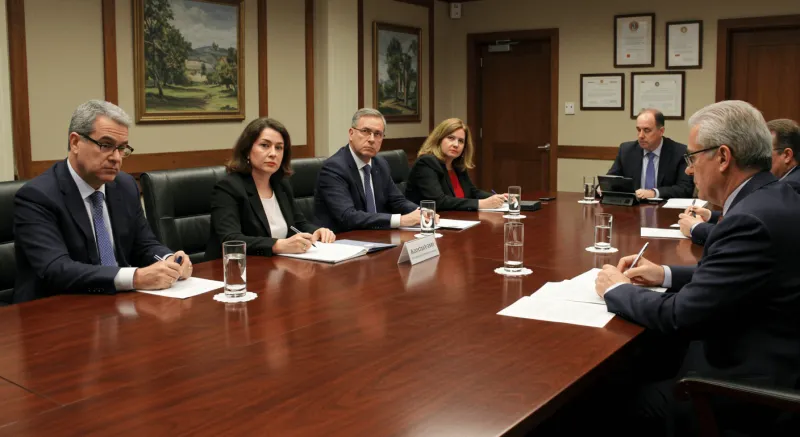
- Claim Denial Notices: Original denial letters, including timestamps and author signatures, to establish the timeline and grounds for denial. Deadline: Immediately upon receipt.
- Insurance Policy and Endorsements: Fully executed policy documents, including clauses relevant to arbitration (e.g., arbitration clause, coverage limits). Deadline: Before arbitration submission.
- Correspondence Records: All emails, letters, and communication logs with the insurer, demonstrating attempts to resolve or clarify issues. Deadline: Maintain ongoing.
- Estimate and Damages Documentation: Medical reports, repair estimates, invoices, and proof of incurred damages, with supporting photographs or videos. Deadline: As damages occur.
- Witness Statements: Affidavits or written statements from witnesses or experts supporting your claim. Deadline: Prior to hearing, but can be gathered last minute.
- Documentation Authentication: Ensure all evidence is properly verified, with clear provenance, and copies are stored securely in multiple locations, including digital backups. Done continuously.
The initial break happened when the chain-of-custody discipline faltered during document collection in an otherwise procedural-compliant arbitration packet readiness controls workflow, critical for insurance claim arbitration in San Diego, California 92110. At first glance, the file ticked all checklist boxes—documents logged, timelines attached, signatures verified—but a silent failure phase hid beneath that veneer: key evidence’s metadata was altered unknowingly in a batch export, undermining chronology integrity controls. Operational pressures to expedite the packet release had enforced a trade-off, sacrificing exhaustive forensic validation. Revealing this was irreversible; by the time the discrepancy surfaced during a follow-up review, the opposing party had already received and acted on these compromised records. Attempts to isolate and replace the corrupted elements only deepened temporal conflicts in the timeline, intensifying negotiation stalemates and inflating costs beyond projections. Had the evidence preservation workflow adhered strictly to continuous validation, the latent fault could have been interjected before dissemination, potentially averting the downstream cascade of trust erosion and procedural delays.
Ready to File Your Dispute?
BMA prepares your arbitration case in 30-90 days. No lawyer needed.
Start Your Case — $399This is a hypothetical example; we do not name companies, claimants, respondents, or institutions as examples.
- False documentation assumption: Believing checklist completion guarantees airtight evidence integrity creates vulnerability when metadata tampering goes unnoticed.
- What broke first: The invisible corruption of digital timestamps during batch export compromised core chronology integrity controls.
- Generalized documentation lesson tied back to "insurance claim arbitration in San Diego, California 92110": Embedding multi-layered validation checkpoints within the evidence preservation workflow is essential to sustain arbitration packet readiness controls and uphold trust.
⚠ HYPOTHETICAL CASE STUDY — FOR ILLUSTRATIVE PURPOSES ONLY
Unique Insight Derived From the "insurance claim arbitration in San Diego, California 92110" Constraints
Operating within San Diego’s 92110 insurance claim arbitration environment brings nuanced evidentiary pressure due to regional documentation standards and fast-paced procedural mandates. Each arbitration packet must balance completeness with timeliness, creating inherent trade-offs between exhaustive validation and operational efficiency. This dynamic elevates the cost of any overlooked metadata discrepancies exponentially.
Most public guidance tends to omit the criticality of continuous chain-of-custody discipline during batch operations, focusing instead on initial document collection or final submission reviews. This gap leaves teams vulnerable to latent failures that only manifest post-submission, complicating remedial pathways and increasing arbitration friction.
Teams must also navigate constrained resources, leading to workflow boundaries where certain validations become deprioritized. Without embedding automated and layered chronology integrity controls, key evidence risks silent corruption, eroding the foundation of arbitration packet readiness controls that underlie fair dispute resolutions.
| EEAT Test | What most teams do | What an expert does differently (under evidentiary pressure) |
|---|---|---|
| So What Factor | Rely on checklist completion as a proxy for evidence integrity | Continuously validate metadata and timestamps during every workflow stage |
| Evidence of Origin | Log initial collection source without repeated verification | Implement iterative chain-of-custody audits layered within export and transfer processes |
| Unique Delta / Information Gain | Focus on final packet completeness ignoring silent silent failure risks | Embed automated alerts triggered by deviations in chronology integrity controls to catch anomalies early |
Don't Leave Money on the Table
Full legal representation typically costs $14,000–$65,000 on average. Self-help document prep: $399.
Start Your Case — $399FAQ
Is arbitration binding in California?
Generally, yes. California courts uphold arbitration agreements that are clear, voluntary, and conform to statutory requirements under CCP Sections 1280-1284. Unless unconscionable or procedurally defective, arbitration decisions are typically binding and enforceable.
How long does arbitration take in San Diego?
The process usually spans 30 to 90 days from filing to decision, depending on case complexity, forum scheduling, and arbitrator availability. Local procedural rules aim to expedite resolution, but delays can occur if evidence or procedural issues arise.
What documents should I collect for my insurance dispute?
Key documents include claim denial notices, policy language, correspondence logs, damage estimates, witness statements, and any supporting photographic or video evidence. Authenticating and timely collection of these materials strengthens your case.
Can I settle my insurance dispute before arbitration?
Yes, settlement discussions are common and often encouraged by arbitration clauses and local rules. Mediation might be attempted before or during arbitration, which can save time and costs, but if unsuccessful, you proceed to arbitration as scheduled.
Why Insurance Disputes Hit San Diego Residents Hard
When an insurance company denies a claim in San Diego County, where 6.0% unemployment already strains families earning a median of $96,974, the last thing anyone needs is a $14K+ legal bill. Arbitration puts policyholders on equal footing with insurance adjusters.
In San Diego County, where 3,289,701 residents earn a median household income of $96,974, the cost of traditional litigation ($14,000–$65,000) represents 14% of a household's annual income. Federal records show 861 Department of Labor wage enforcement cases in this area, with $15,489,727 in back wages recovered for 11,396 affected workers — evidence that businesses here have a pattern of cutting corners on obligations.
$96,974
Median Income
861
DOL Wage Cases
$15,489,727
Back Wages Owed
6.03%
Unemployment
Source: U.S. Census Bureau ACS, IRS SOI, Department of Labor WHD. 13,350 tax filers in ZIP 92110 report an average AGI of $104,160.
PRODUCT SPECIALIST
Content reviewed for procedural accuracy by California-licensed arbitration professionals.
About Brandon Johnson

View author profile on BMA Law | LinkedIn | Federal Court Records
Arbitration Help Near San Diego
Nearby ZIP Codes:
Arbitration Resources Near
If your dispute in involves a different issue, explore: Consumer Dispute arbitration in • Employment Dispute arbitration in • Contract Dispute arbitration in • Business Dispute arbitration in
Nearby arbitration cases: Patton insurance dispute arbitration • Newark insurance dispute arbitration • Glennville insurance dispute arbitration • San Bruno insurance dispute arbitration • Carmel insurance dispute arbitration
Other ZIP codes in :
References
- California Civil Procedure Code, https://leginfo.legislature.ca.gov/faces/codes_displayText.xhtml?lawCode=CCP
- California Insurance Code, https://leginfo.legislature.ca.gov/faces/codes_displayText.xhtml?lawCode=INS
- American Arbitration Association (AAA), https://www.adr.org
- California Department of Insurance, https://www.insurance.ca.gov
- California Department of Consumer Affairs, https://www.dca.ca.gov
- AAI/R Moodle notes on California arbitration statutes
Local Economic Profile: San Diego, California
$104,160
Avg Income (IRS)
861
DOL Wage Cases
$15,489,727
Back Wages Owed
In San Diego County, the median household income is $96,974 with an unemployment rate of 6.0%. Federal records show 861 Department of Labor wage enforcement cases in this area, with $15,489,727 in back wages recovered for 12,813 affected workers. 13,350 tax filers in ZIP 92110 report an average adjusted gross income of $104,160.

