
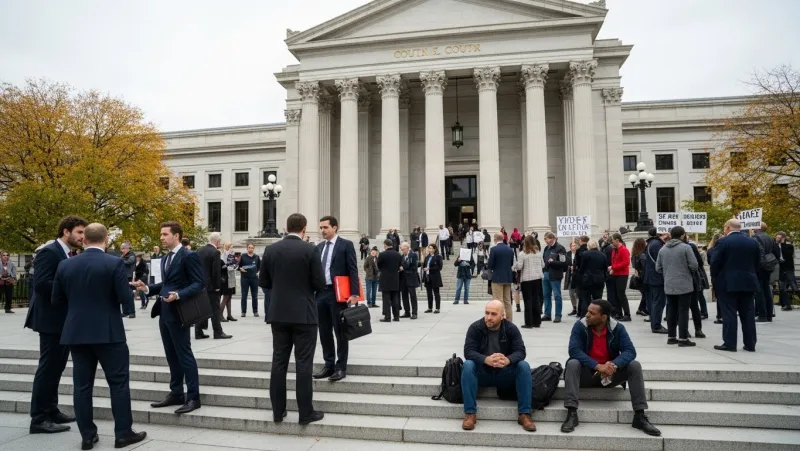
Facing a real estate dispute in Glendale?
30-90 days to resolution. No lawyer needed.





Facing a Real Estate Dispute in Glendale? Prepare Your Arbitration Case Effectively in 30-90 Days
BMA is a legal tech platform providing self-represented parties with the document preparation and local court data needed to manage California arbitrations independently.
This content is for informational purposes only and does not constitute legal advice. Consult a licensed California attorney for guidance specific to your situation.
Why Your Case Is Stronger Than You Think
In Glendale, California, claimants involved in real estate disputes often underestimate the advantages presented by well-prepared arbitration strategies within the constraints of the legal and administrative framework. When you have a clear understanding of California law—specifically the enforceability of arbitration clauses under the California Arbitration Act (Cal. Civ. Proc. § 1281.4)—and rigorous documentation practices, your position gains considerable leverage. Properly executed contract clauses that explicitly incorporate arbitration provisions are generally upheld if signed and drafted in compliance with contract law standards in California (Cal. Civ. Code § 1624). Additionally, arbitration mandates outlined in standard real estate agreements often provide binding resolutions, barring procedural irregularities.
$14,000–$65,000
Avg. full representation
$399
Self-help doc prep
By proactively reviewing agreement language, ensuring evidence collection aligns with California Evidence Code standards, and engaging at early stages with arbitral institutions such as AAA or JAMS, claimants can influence procedural outcomes favorably. Concrete examples include compiling comprehensive property transaction records, communication logs, and witness statements that can significantly sway arbitrator confidence. These actions shift procedural neutrality—normally skewed by the other party’s strategic delays or incomplete documentation—toward a position where your case meets the procedural and evidentiary standards expected within California arbitration forums.
What Glendale Residents Are Up Against
Glendale’s local environment reflects a high density of property transactions, lease negotiations, and development projects. According to recent Glendale enforcement data, the city has identified over 1,200 violations related to property issues annually, including disputes that escalate to legal or arbitration proceedings. Many of these cases involve small to mid-sized property owners, tenants, and local developers navigating complex contractual relationships with limited awareness of procedural constraints.
California state statutes, such as the California Civil Code and the Civil Procedure Code, establish the legal foundation for arbitration, but enforcement hinges on compliance with specific procedural requirements. Glendale arbitration cases often reveal common patterns—parties delay documentation, neglect jurisdictional limits, or overlook specific procedural timelines dictated by arbitration rules (e.g., AAA Commercial Rules). Data indicates that a significant portion of disputes are settled or dismissed due to procedural default or inadmissible evidence, highlighting the importance of meticulous preparation. Claimants are not alone in facing these challenges; they are part of a broader pattern where understanding local enforcement data underscores the need for strategic documentation and procedural discipline.
The Glendale Arbitration Process: What Actually Happens
Arbitration in Glendale, California, generally follows a four-stage process governed by the California Arbitration Act and specific rules of the designated arbitral forum, such as AAA or JAMS. The typical timeline unfolds as follows:
- Step 1: Initiation and Filing—Within 10-15 days of dispute escalation, the claimant files a demand for arbitration, referencing the contractual arbitration clause. This step must align with rules stipulated by the chosen arbitral institution and California civil procedure (Cal. CCP § 1280). The respondent receives notice and has 10 days to reply, setting the schedule for proceedings.
- Step 2: Case Management Conference—Typically held within 30 days post-appointment, this phase establishes procedural deadlines, evidentiary exchange, and arbitration hearing dates. Glendale-specific local rules or institutional guidelines (AAA or JAMS) govern specific timelines.
- Step 3: Evidence Exchange and Hearing—Over the next 30-60 days, parties exchange documents, prepare witness testimonies, and conduct depositions if applicable. The arbitral forum stipulates standards for evidence submission, including digital evidence compliance, with the hearing itself usually scheduled within 60-90 days after case management.
- Step 4: Award and Enforcement—The arbitrator delivers a written decision within 30 days of the hearing. In Glendale, enforcement of the arbitration award occurs via judgment registration under Cal. Civ. Proc. § 1285, which is generally straightforward unless procedural or jurisdictional issues arise.
Throughout this process, California statutes and arbitral rules govern each step, emphasizing procedural compliance, timely communication, and thorough documentation. Being aware of local procedural nuances enhances case efficiency and reduces the risk of delays or dismissals.
Your Evidence Checklist

- Property Transaction Documents: Signed purchase agreements, disclosures, and amendments. Deadline: before arbitration initiation. Format: PDF or original signed copies.
- Correspondence Records: Emails, letters, texts with property owners, tenants, or agents. Deadline: throughout dispute. Format: digital with preserved metadata.
- Financial and Payment Records: Receipts, escrow statements, bank statements showing payments or charges. Deadline: prior to hearing. Format: certified copies or digital backups.
- Photographic and Video Evidence: Conditions of property, damages, or incidents. Deadline: before hearing. Format: high-resolution digital files.
- Witness Statements: Affidavits or declarations from relevant witnesses, including neighbors or inspectors. Deadline: 20 days before hearing. Format: signed, notarized if possible.
- Legal Notices and Authority Documents: Notices of breach, eviction, or compliance. Deadline: immediately upon receipt or issuance. Format: original or certified copies.
Most claimants forget to establish a clear chain of custody and to document all communications promptly. Ensuring digital backups, timestamped records, and organized filing significantly bolsters your evidentiary position, especially when contested.
Ready to File Your Dispute?
BMA prepares your arbitration case in 30-90 days. No lawyer needed.
Start Your Case — $399People Also Ask

Is arbitration binding in California real estate disputes?
Yes. Provided the arbitration clause is enforceable, California law typically binds the parties to arbitral decisions, which courts generally uphold unless procedural or jurisdictional issues are proven.
How long does arbitration take in Glendale?
Most arbitration cases in Glendale resolve within 30 to 90 days after initial filing, depending on case complexity, evidence readiness, and the arbitral forum’s scheduling capacity.
Can I challenge an arbitration award in California?
Yes. Under California Civil Procedure § 1285, parties may seek to vacate or modify an arbitration award based on procedural misconduct, arbitrator bias, or lack of jurisdiction—though such challenges require strict compliance with statutory grounds.
What if the other party refuses arbitration?
If the arbitration clause is valid, courts can compel arbitration under California law (Cal. Civ. Proc. § 1281.2). Refusal to arbitrate may result in adverse court judgments or sanctions for contempt in some cases.
Don't Leave Money on the Table
Full legal representation typically costs $14,000–$65,000 on average. Self-help document prep: $399.
Start Your Case — $399Why Insurance Disputes Hit Glendale Residents Hard
When an insurance company denies a claim in Los Angeles County, where 7.0% unemployment already strains families earning a median of $83,411, the last thing anyone needs is a $14K+ legal bill. Arbitration puts policyholders on equal footing with insurance adjusters.
In Los Angeles County, where 9,936,690 residents earn a median household income of $83,411, the cost of traditional litigation ($14,000–$65,000) represents 17% of a household's annual income. Federal records show 137 Department of Labor wage enforcement cases in this area, with $4,780,425 in back wages recovered for 7,233 affected workers — evidence that businesses here have a pattern of cutting corners on obligations.
$83,411
Median Income
137
DOL Wage Cases
$4,780,425
Back Wages Owed
6.97%
Unemployment
Source: U.S. Census Bureau ACS, Department of Labor WHD. IRS income data not available for ZIP 91222.
PRODUCT SPECIALIST
Content reviewed for procedural accuracy by California-licensed arbitration professionals.
About Andrew Smith

View author profile on BMA Law | LinkedIn | Federal Court Records
Arbitration Help Near Glendale
Nearby ZIP Codes:
Arbitration Resources Near
If your dispute in involves a different issue, explore: Consumer Dispute arbitration in • Employment Dispute arbitration in • Contract Dispute arbitration in • Business Dispute arbitration in
Nearby arbitration cases: Lucerne insurance dispute arbitration • Bard insurance dispute arbitration • Elk Creek insurance dispute arbitration • Diablo insurance dispute arbitration • Downey insurance dispute arbitration
Other ZIP codes in :
References
- California Arbitration Act: https://leginfo.legislature.ca.gov/faces/codes_displayText.xhtml?section=1281.4&lawCode=CC
- California Code of Civil Procedure: https://leginfo.legislature.ca.gov/faces/codes_displayText.xhtml?lawCode=CCP&division=&title=5.&part=2.&chapter=
- California Civil Code - Contracts: https://leginfo.legislature.ca.gov/faces/codes_displayText.xhtml?lawCode=CIV&division=3.&title=&part=&chapter=
- AAA Commercial Arbitration Rules: https://www.adr.org/sites/default/files/Commercial%20Rules.pdf
- California Evidence Code: https://leginfo.legislature.ca.gov/faces/codes_displayText.xhtml?lawCode=EVID&division=&title=&chapter=
- California Department of Real Estate: https://dre.ca.gov
At the outset, the arbitration packet readiness controls failed silently during a real estate dispute arbitration in Glendale, California 91222, where a critical document chain-of-custody discipline breach occurred unnoticed. The checklist met every box, but the moment evidentiary integrity started degrading was embedded in embedded metadata mismatches—there was no flag to halt progress. By the time we noticed discrepancies, the documentation trail had fractures that rendered any retrospective repair impossible within the escalating arbitration timeline. Further compounding matters was the geographic specificity of Glendale’s local regulatory nuances, which were inadequately captured during document intake governance, causing key contractual amendments to be overlooked. This failure highlighted how even minor trade-offs in archival rigor, when combined with procedural boundaries set by local jurisdictional peculiarities, produce irreversible consequences. Our missteps underscore why adherence to a precise arbitration packet readiness controls regime is not optional but critical in such high-stakes cases.
This is a hypothetical example; we do not name companies, claimants, respondents, or institutions as examples.
- False documentation assumption: Relying solely on checklist completion masked underlying metadata inconsistencies that corrupted evidentiary trust.
- What broke first: Silent degradation of chain-of-custody discipline through unnoticed document version mismatches.
- Generalized documentation lesson tied back to "real estate dispute arbitration in Glendale, California 91222": In regional arbitration contexts, impeccable evidence preservation workflow anchored in local procedural rigor is indispensable.
⚠ HYPOTHETICAL CASE STUDY — FOR ILLUSTRATIVE PURPOSES ONLY
Unique Insight Derived From the "real estate dispute arbitration in Glendale, California 91222" Constraints
Real estate dispute arbitration in Glendale, California 91222 presents unique constraints including jurisdiction-specific documentation standards that challenge typical arbitration workflows. The regional regulatory framework imposes strict evidentiary submission timelines that increase pressure on document intake governance processes. This compresses window periods where even minor oversights escalate into impactful failures.
Most public guidance tends to omit the contextualized cost implications of jurisdictional nuances, which in Glendale necessitate tighter chain-of-custody discipline and localized metadata verification protocols. This creates a fundamental trade-off: balancing speed of arbitration packet readiness controls with thoroughness in evidence verification, often under-resourced in smaller firms.
The operational constraints of this locality demand that teams adapt documentation strategies to local requirements rather than relying on generic best practices. It underlines that expertise in arbitration packet readiness workflows must incorporate regional specificity as a core principle, not an afterthought, to maintain evidentiary integrity.
| EEAT Test | What most teams do | What an expert does differently (under evidentiary pressure) |
|---|---|---|
| So What Factor | Focus on checklist completion as proof of preparedness | Continuously validate metadata consistency and resolvability to detect silent failures |
| Evidence of Origin | Accept provided documents without detailed provenance verification | Employ localized chain-of-custody discipline tailored to jurisdictional nuances |
| Unique Delta / Information Gain | Generic archival standards applied across all arbitrations | Adapt archival rigor and intake governance to reflect Glendale’s regulatory nuances explicitly |
Local Economic Profile: Glendale, California
N/A
Avg Income (IRS)
137
DOL Wage Cases
$4,780,425
Back Wages Owed
Federal records show 137 Department of Labor wage enforcement cases in this area, with $4,780,425 in back wages recovered for 7,426 affected workers.

