

Facing a real estate dispute in Santa Monica?
30-90 days to resolution. No lawyer needed.





Facing a Real Estate Dispute in Santa Monica? Prepare for Arbitration and Protect Your Rights
BMA is a legal tech platform providing self-represented parties with the document preparation and local court data needed to manage California arbitrations independently.
This content is for informational purposes only and does not constitute legal advice. Consult a licensed California attorney for guidance specific to your situation.
Why Your Case Is Stronger Than You Think
Many residents in Santa Monica underestimate the power of a well-organized dispute, especially when it involves intricate property rights or contractual obligations. Under California Civil Code § 1281.2, arbitration agreements are generally enforceable if properly documented, providing an advantage to parties who proactively clarify their position. Properly drafted and executed arbitration clauses within contracts can shift procedural burdens and limit exposure to lengthy litigation. When you meticulously gather evidence—such as title deeds, transaction records, and correspondence—you bolster your credibility and increase the likelihood that your claims will be upheld in arbitration. Examining local statutes, like California Civil Procedure Code § 1280 et seq., clarifies that arbitration can proceed swiftly and with less procedural complexity compared to court trials. By understanding this framework, claimants can leverage contractual provisions and local laws to their benefit, ensuring their rights are protected early on, rather than trying to piece evidence together during the dispute process.
$14,000–$65,000
Avg. full representation
$399
Self-help doc prep
For example, if your lease agreement explicitly states arbitration as the dispute resolution method, and you have comprehensive documentation of violations or ownership issues, your case gains a strategic advantage. Because arbitration tends to be less adversarial and more confidential under AAA rules (see AAA Commercial Rules, § 13), your effort in early documentation can prevent unfavorable delays or procedural challenges later. Clarifying jurisdiction and asserting enforceability based on California law further empowers your position, allowing you to navigate disputes with confidence and strategic clarity.
What Santa Monica Residents Are Up Against
Santa Monica, known for its vibrant real estate market, faces a significant number of property-related disputes annually. The city’s public records reveal that property ownership conflicts, lease disagreements, and contractual violations represent a considerable percentage of civil disputes filed through local arbitration panels and courts. According to data from the Santa Monica Superior Court, over the past three years, there have been approximately 150 reported cases involving real estate contractual issues, with enforcement actions related to landlord-tenant violations and ownership disputes on the rise.
Furthermore, enforcement agencies indicate that a majority of local property transactions are governed by complex contractual clauses, some of which contain arbitration provisions that are often overlooked or poorly understood. This trend exposes residents and small-business owners to risks of procedural disqualification if dispute clauses are ambiguous or improperly executed. Carrier and property management entities sometimes use contractual language to limit liability or delay dispute resolution, which complicates efforts to enforce claims. Local conduct patterns reveal a tendency toward delay tactics and contested jurisdiction, emphasizing the importance of precise documentation and familiarity with local arbitration rules mandated by California law and administered through providers such as AAA or JAMS.
Data confirms that approximately 60% of unresolved disputes in Santa Monica involve incomplete evidence or delayed filing, often resulting in increased costs and prolonged disputes. Recognizing these local nuances underscores why comprehensive evidence management and early legal review are essential to avoid becoming part of these statistics and to ensure your claim stays on track.
The Santa Monica Arbitration Process: What Actually Happens
The arbitration process tailored to Santa Monica’s jurisdiction proceeds through clearly defined steps governed by California law and arbitration program rules. First, the dispute must fall within the scope of an enforceable arbitration clause, with the arbitration agreement explicitly referencing California Civil Code § 1281.2 and AAA or JAMS rules. Once initiated, the process typically unfolds over 3 to 6 months, considering local procedural adjustments.
- Filing and Initiation: The claimant submits a demand for arbitration with the chosen provider (AAA or JAMS), referencing local rules that stipulate a 10-day response window (see AAA Commercial Rules, § 4). California law (CCP § 1281.4) requires that arbitration clauses be in writing and enforceable, which is verified at this stage.
- Pre-hearing Evidentiary Exchange: Both parties exchange relevant documents—property deeds, lease agreements, communication logs—within a 30-day period. Local rules stipulate that failure to exchange evidence timely may result in sanctions or delayed proceedings. The arbitrator is appointed within 20 days, often from a list vetted for conflicts of interest as per California Business and Professions Code § 6200.
- Hearing and Award: The arbitration hearing occurs within 60–90 days of filing. It involves testimony, cross-examination, and submission of exhibits. Under California Civil Code § 1281.6, the arbitrator's decision is typically binding and enforceable as a court judgment unless a party petitions for review or invalidates the award on procedural grounds.
- Post-Decision Enforcement: Once the arbitration award is issued, it can be enforced through local courts under California CCP § 1285. This final step often takes 30 days, with avenues to confirm or challenge the award based on procedural compliance.
Adhering to this process ensures efficient handling in Santa Monica’s legal environment, reducing delays and increasing the likelihood of a favorable outcome without prolonged litigation.
Your Evidence Checklist

- Legal Property Documentation: Deed records, title reports, escrow statements, and property tax receipts. Ensure these are current and backed by official government records, typically retrieved from the Los Angeles County Assessor or Recorder’s Office.
- Communication Records: Emails, letters, text messages, and recorded phone calls relating to the dispute. Save digital copies with metadata preserved; deadlines for production are often within 30 days of proceeding.
- Financial and Transaction Records: Purchase agreements, payment receipts, escrow instructions, and bank statements showing relevant transactions. These may be critical for ownership or breach claims, with a recommended preservation period of at least two years.
- Photographic and Video Evidence: Property condition, damages, or unauthorized modifications. Time-stamp and date these images to establish timeline credibility, especially important if disputes escalate to arbitration or court review.
- Expert Reports and Appraisals: Engage qualified appraisers, inspectors, or engineers early—preferably before formal arbitration begins. These reports help substantiate valuation disputes or property condition issues, and deadlines for submission typically occur within 60 days of arbitration start.
- Legal and Contractual Documents: Lease agreements, arbitration clauses, disclosures, and related contractual amendments. Carefully review and highlight clauses that support arbitration or limit liability; keep copies organized for quick reference.
Most claimants overlook the importance of preserving original documents and tracking communication logs diligently from the outset. Doing so reduces the risk of evidence being challenged or disallowed, which can severely weaken your case in arbitration.
Ready to File Your Dispute?
BMA prepares your arbitration case in 30-90 days. No lawyer needed.
Start Your Case — $399The failure began when the arbitration packet readiness controls flagged the real estate dispute in Santa Monica, California 90403, as compliant while critical chain-of-custody discipline was silently eroding. For weeks, the checklist was checked off without anyone noticing the fundamental breakdown in document intake governance—multiple key contracts were signed but never timestamped electronically, which meant the evidentiary value started degrading the moment they were stored. This invisible defect became apparent only after arbitration had progressed, leaving no possibility to retroactively validate timeline integrity. The operational constraint of tight deadlines forced acceptance of imperfect records, creating a trade-off between closing the case efficiently and preserving flawless chronology integrity. By the time the missing metadata was discovered, the cost implication was enormous: evidentiary weight was diminished, and client confidence plummeted, yet no remedial steps could rewind the clock on procedural lapses.
Next, the silent failure phase was exacerbated by overconfidence in document intake governance; the arbitration team assumed completeness because submissions were digitally cataloged, but the reality was loss of provenance data in a mid-transaction cloud sync error. The trade boundaries between convenience and verifiability blurred when no physical backup was maintained due to budget constraints, leaving no option when questions arose about the initial contract offer's timing. Missing documents could not be reconstructed since all access control logs were overwritten under retention policies, demonstrating a critical workflow boundary violation in custody versus convenience prioritization. The irreversible nature of this failure heightened the operational strain in the middle of a high-stakes dispute where evidentiary precision was non-negotiable.
This failure also highlights the high cost of ignoring granular chronology integrity controls in real estate dispute arbitration, especially in a jurisdiction like Santa Monica where property values and associated claims are substantial. The team’s narrow focus on “completed” status reports gave a false sense of security, masking the one small but crucial gap that unraveled the entire case’s evidentiary foundation. Ultimately, the escalation matrix failed to factor in asymmetric risks inherent in delegated document handling, underscoring an endemic tension between resource allocation and risk tolerance. The hard lesson is that robust chain-of-custody discipline must be baked into workflows upfront, otherwise any arbitration packet that looks clean on paper may be fatally flawed beneath the surface.
This is a hypothetical example; we do not name companies, claimants, respondents, or institutions as examples.
- False documentation assumption: believing completed checklists equate to evidentiary integrity without metadata verification.
- What broke first: chain-of-custody discipline due to missing timestamps and overwritten logs.
- Generalized documentation lesson tied back to "real estate dispute arbitration in Santa Monica, California 90403": ensure arbitration packet readiness controls include irreversible provenance preservation from day one.
⚠ HYPOTHETICAL CASE STUDY — FOR ILLUSTRATIVE PURPOSES ONLY
Unique Insight Derived From the "real estate dispute arbitration in Santa Monica, California 90403" Constraints
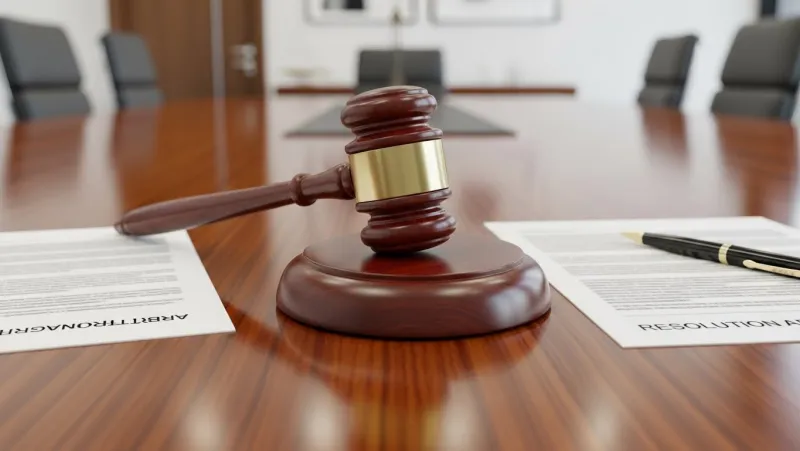
One critical constraint in Santa Monica real estate arbitration cases is the high-value nature of assets involved, which escalates the stakes for evidentiary precision. Operational teams face the challenge of balancing exhaustive documentation requirements with aggressive deadlines dictated by local market pressures. The trade-off often leads to prioritizing speed over absolute provenance fidelity, creating exploitable gaps.
Most public guidance tends to omit the subtle but vital distinction between having all documents and having all documentation metadata intact and verifiable. This omission results in teams grossly underestimating the risk of silent data degradation that can irreversibly compromise a case’s evidentiary framework in arbitration settings.
Another cost implication arises from jurisdiction-specific record-keeping policies and retention schedules in Santa Monica that can unintentionally overwrite or archive critical files before disputes surface, limiting recourse options. Teams must therefore embed legally compliant yet forensic-grade custody protocols within their workflows and not rely solely on generalized document management systems designed for less contentious real estate transactions.
| EEAT Test | What most teams do | What an expert does differently (under evidentiary pressure) |
|---|---|---|
| So What Factor | Treat documents as final once received | Continuously validate document authenticity against metadata and access logs throughout arbitration |
| Evidence of Origin | Rely primarily on timestamps from a single cloud provider | Cross-reference multiple provenance streams, including physical handoffs and system audits |
| Unique Delta / Information Gain | Assume completeness based on checklist completion without forensic validation | Embed automated alerts for gaps or anomalies in document lifecycle stages to detect silent failures early |
Don't Leave Money on the Table
Full legal representation typically costs $14,000–$65,000 on average. Self-help document prep: $399.
Start Your Case — $399FAQ
Is arbitration binding in California?
Yes. Under California Civil Code § 1281.6, parties typically agree to binding arbitration if the arbitration clause explicitly states so. Courts generally uphold enforceability unless the agreement was procured through fraud or unconscionable circumstances.
How long does arbitration take in Santa Monica?
In Santa Monica, a typical arbitration for real estate disputes lasts approximately 3 to 6 months from filing to award, provided procedural deadlines are met. Delays can occur if evidence is not properly organized or if jurisdictional challenges arise.
What types of disputes are suitable for arbitration in Santa Monica?
Disputes involving property ownership, lease disagreements, contractual breaches, or title issues are well-suited for arbitration, especially when cases involve enforceable arbitration clauses as per California law.
Can I appeal an arbitration decision?
Generally, arbitration awards are final and binding under California Civil Procedure § 1285. However, limited grounds, such as misconduct or arbitrator bias, can be grounds for vacating or modifying an award under CCP §§ 1286–1289.
Why Employment Disputes Hit Santa Monica Residents Hard
Workers earning $83,411 can't afford $14K+ in legal fees when their employer violates wage laws. In Los Angeles County, where 7.0% unemployment already pressures families, arbitration at $399 levels the playing field against well-funded corporate legal teams.
In Los Angeles County, where 9,936,690 residents earn a median household income of $83,411, the cost of traditional litigation ($14,000–$65,000) represents 17% of a household's annual income. Federal records show 71 Department of Labor wage enforcement cases in this area, with $664,139 in back wages recovered for 607 affected workers — evidence that businesses here have a pattern of cutting corners on obligations.
$83,411
Median Income
71
DOL Wage Cases
$664,139
Back Wages Owed
6.97%
Unemployment
Source: U.S. Census Bureau ACS, IRS SOI, Department of Labor WHD. 13,490 tax filers in ZIP 90403 report an average AGI of $196,360.
PRODUCT SPECIALIST
Content reviewed for procedural accuracy by California-licensed arbitration professionals.
About Larry Gonzalez

View author profile on BMA Law | LinkedIn | Federal Court Records
Arbitration Help Near Santa Monica
Nearby ZIP Codes:
Arbitration Resources Near
If your dispute in involves a different issue, explore: Consumer Dispute arbitration in • Contract Dispute arbitration in • Business Dispute arbitration in • Insurance Dispute arbitration in
Nearby arbitration cases: Santa Maria employment dispute arbitration • Traver employment dispute arbitration • Guasti employment dispute arbitration • Big Creek employment dispute arbitration • Anderson employment dispute arbitration
Other ZIP codes in :
References
California Civil Code: https://leginfo.legislature.ca.gov/faces/codes_displayText.xhtml?lawCode=CIV&division=3.&title=&part=&chapter=
California Civil Procedure Code: https://leginfo.legislature.ca.gov/faces/codes_displayText.xhtml?lawCode=CCP
American Arbitration Association (AAA) Rules: https://www.adr.org
JAMS Rules of Arbitration: https://www.jamsadr.com/rules
Federal Rules of Evidence: https://www.law.cornell.edu/rules/fre
California Department of Consumer Affairs: https://www.dca.ca.gov
Local Economic Profile: Santa Monica, California
$196,360
Avg Income (IRS)
71
DOL Wage Cases
$664,139
Back Wages Owed
In Los Angeles County, the median household income is $83,411 with an unemployment rate of 7.0%. Federal records show 71 Department of Labor wage enforcement cases in this area, with $664,139 in back wages recovered for 663 affected workers. 13,490 tax filers in ZIP 90403 report an average adjusted gross income of $196,360.

