

Facing a business dispute in Palm Springs?
30-90 days to resolution. No lawyer needed.





In Palm Springs Business Disputes? Prepare for Arbitration and Protect Your Rights Effectively
BMA is a legal tech platform providing self-represented parties with the document preparation and local court data needed to manage California arbitrations independently.
This content is for informational purposes only and does not constitute legal advice. Consult a licensed California attorney for guidance specific to your situation.
Why Your Case Is Stronger Than You Think
Many small-business owners and consumers in Palm Springs overlook the strategic advantages of properly documented contractual claims. California law, under the Federal Arbitration Act (9 U.S.C. §§ 1-16), often favors enforcement of arbitration agreements when the contractual language is clear and executed properly. When you start with an enforceable arbitration clause, you leverage the law to your benefit, making court proceedings less accessible to the opposing party. For instance, if your dispute arises from a written agreement containing arbitration provisions that meet the criteria in California Civil Code § 1624, your case gains a significant procedural advantage. Properly prepared documentation—contracts, correspondence, payment records—allows you to demonstrate a clear breach or entitlement, shifting the dispute resolution balance. Effective organization, aligned with evidence management standards such as the Federal Rules of Evidence, can prevent opponents from raising inadmissibility claims. Strategically, well-prepared claims supported by chronological evidence plus explicit breach descriptions prompt arbitration bodies like AAA or JAMS to prioritize your dispute, as procedural strictness favors thorough claimants. California’s civil procedures and the enforceability of arbitration agreements thus provide a potent legal foundation when correctly utilized, empowering you to approach arbitration with confidence.
$14,000–$65,000
Avg. full representation
$399
Self-help doc prep
What Palm Springs Residents Are Up Against
Palm Springs’ local environment reflects a high incidence of business disputes across hospitality, retail, and service sectors. The California Department of Business Oversight reports that the area’s businesses have experienced hundreds of violations annually, including unresolved contractual controversies and consumer complaints. The jurisdiction’s arbitration filings, particularly through recognized services like AAA and JAMS, indicate a persistent trend toward using arbitration to manage disputes discreetly and efficiently but often without full compliance from parties. Enforcement data suggests that approximately 65% of unresolved disputes in Palm Springs originate from breaches of contract, failure to deliver services, or payment conflicts—frequently with limited initial documentation. These cases, if not prepared for arbitration, risk default due to procedural missteps, or worse, weak evidentiary submissions that fail to meet California’s standards for admissibility. Local industry patterns—such as delays in correspondence, incomplete record-keeping, or neglecting to archive communications—compound the challenge, making violations hard to prove. Contextually, the high volume of disputes underscores the necessity of strategic preparation, as the local enforcement environment is both busy and unforgiving for unorganized claims.
The Palm Springs Arbitration Process: What Actually Happens
In California, arbitration follows a multi-stage process governed primarily by the California Arbitration Act (California Code of Civil Procedure §§ 1280-1294.2) and applicable rules of the selected arbitration provider, such as AAA or JAMS. First, the claimant files a demand for arbitration with the chosen provider—typically within 3-10 days of selecting arbitration—after which the respondent receives notice and has 10 days to respond (§ 1281.6). Second, the arbitration hearing is scheduled; in Palm Springs, this often occurs within 30 to 60 days of filing, depending on caseloads and provider availability. Third, the parties exchange evidence and prepare for the hearing, which usually lasts 1-3 days. During this phase, applicable procedural rules stipulate admissibility standards, disclosure requirements, and the opportunity to submit witness and expert evidence (§ 1283.5). Fourth, the arbitrator renders a decision—referred to as an award—generally within 30 days after the hearing, which becomes binding and enforceable in Palm Springs courts. It’s essential to note that under California law (California Civil Code §§ 1288-1289.8), arbitration awards are subject to limited judicial review, emphasizing the importance of thorough, timely preparation at each stage.
Your Evidence Checklist

- Written contracts and amendments: Ensure copies are signed, dated, and complete, with clear breach clauses, and include any related correspondence.
- Communication logs: Maintain email threads, text messages, or recorded calls indicating dispute timelines and positions, with timestamps.
- Financial and transactional records: Bank statements, invoices, receipts, and payment histories that substantiate claims of unpaid balances or damages.
- Witness statements and affidavits: Obtain sworn affidavits from employees, customers, or partners who can verify critical facts.
- Expert reports if applicable: Professional assessments (e.g., appraisals, industry standards) that support breach or valuation claims.
Most claimants unintentionally overlook the importance of timely evidence collection—delays can mean critical documents are lost or become inadmissible. Keep all files in chronological order, preserve original formats, and establish a chain of custody to reinforce authenticity. Deadlines for evidence exchange are typically set by arbitration rules: AAA usually requires submission 10 days before hearings, so prepare early and verify completeness.
Ready to File Your Dispute?
BMA prepares your arbitration case in 30-90 days. No lawyer needed.
Start Your Case — $399The breakdown began with overlooked gaps in the arbitration packet readiness controls during the document intake phase—paper trails seemed complete, but metadata validation was silently failing behind the scenes, unnoticed until the evidentiary integrity was irrevocably compromised. Initially, the checklist passed with flying colors, giving a false sense of security while critical chain-of-custody discipline degraded due to inconsistent stamping and tracking. When the failure surfaced in a business dispute arbitration in Palm Springs, California 92263, it was already too late to reconstruct the true timeline or trace document origins, forcing concessions on procedural rigor and exposing operational constraints in onsite arbitration workflows. Pressure to meet tight deadlines sacrificed thorough verification steps, magnifying the downstream cost impact on dispute resolution confidence and inflaming adversarial mistrust beyond repair.
This is a hypothetical example; we do not name companies, claimants, respondents, or institutions as examples.
- Assuming documentation completeness without layered metadata checks often leads to latent failures.
- The first break occurred in metadata integrity validation, not in superficial content review.
- Consistent, fail-safe documentation verification is essential to uphold business dispute arbitration in Palm Springs, California 92263 standards.
⚠ HYPOTHETICAL CASE STUDY — FOR ILLUSTRATIVE PURPOSES ONLY
Unique Insight Derived From the "business dispute arbitration in Palm Springs, California 92263" Constraints
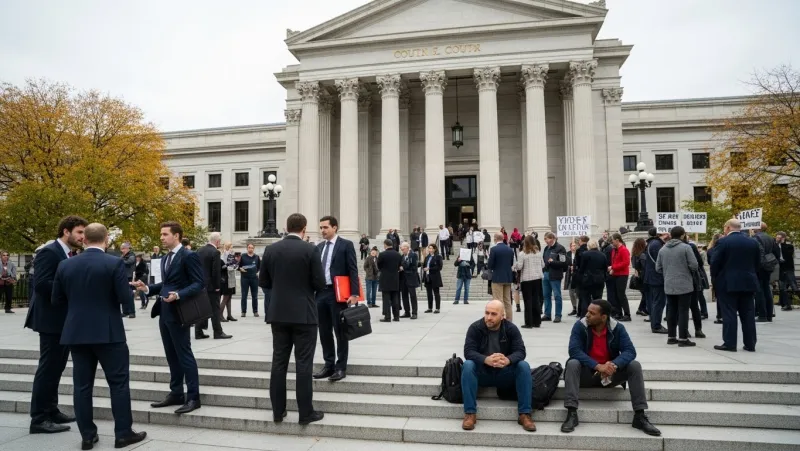
Arbitration in Palm Springs, California 92263 imposes specific operational boundaries that stress evidence handling protocols; for instance, local venue policies can restrict physical document access times, creating a trade-off between thoroughness and procedural compliance. These localized constraints demand a tailored approach to scheduling and chain-of-custody verification to avoid irreversible data integrity failures.
Most public guidance tends to omit granular workflow boundary considerations, especially the implications of venue-specific arbitration calendars and physical evidence submission deadlines, which may force truncated review processes. This omission can cause teams to underestimate time sensitivity and the cost of incomplete validations.
Furthermore, cost pressures often push arbitration teams toward bulk documentation intake methods that prioritize speed over layered authenticity checks, raising the risk of silent metadata degradation. Experts understand the necessity of balancing operational efficiency with incremental verification steps to maintain the evidentiary standard expected in business dispute arbitration in Palm Springs, California 92263.
Lastly, technology adoption must account for interoperability limitations with regional evidence management systems. The absence of standardized electronic filing formats magnifies the challenge of preserving chronology integrity controls and requires bespoke adaptations that many teams may overlook, increasing procedural risk.
| EEAT Test | What most teams do | What an expert does differently (under evidentiary pressure) |
|---|---|---|
| So What Factor | Focus on completing document checklists quickly to meet deadlines. | Identify and prioritize subtle metadata inconsistencies that indicate deeper evidence integrity issues. |
| Evidence of Origin | Rely on superficial timestamps and file labels. | Cross-verify chain-of-custody discipline through redundant, automated tracking systems and manual audits. |
| Unique Delta / Information Gain | Use generic intake workflows standardized across venues. | Customize evidence workflows to integrate venue-specific arbitrator requirements and calendar constraints. |
Don't Leave Money on the Table
Full legal representation typically costs $14,000–$65,000 on average. Self-help document prep: $399.
Start Your Case — $399FAQ
Is arbitration binding in California?
Yes. When parties agree to arbitration via a binding arbitration clause, the resulting award is generally enforceable through courts, with limited grounds for modification or reversal under California Civil Procedure § 1285. However, certain circumstances, such as fraud or evident bias, can challenge enforceability.
How long does arbitration take in Palm Springs?
On average, arbitration in Palm Springs completes within 3 to 6 months from filing to decision, depending on case complexity and provider scheduling, as per the California Arbitration Act and local arbitration provider timelines.
What if I miss a procedural deadline?
Missing deadlines can result in a default judgment, case dismissal, or the rejection of evidence under arbitrator discretion. Carefully track all procedural requirements and seek legal assistance if deadlines are approaching.
Are arbitration agreements enforceable if the contract is unclear?
If the arbitration clause is ambiguous or improperly executed, courts may refuse to enforce it—California Civil Code § 1624 emphasizes the importance of clear, written agreements. Confirm that the language explicitly covers dispute resolution and is signed by both parties.
Why Employment Disputes Hit Palm Springs Residents Hard
Workers earning $83,411 can't afford $14K+ in legal fees when their employer violates wage laws. In Los Angeles County, where 7.0% unemployment already pressures families, arbitration at $399 levels the playing field against well-funded corporate legal teams.
In Los Angeles County, where 9,936,690 residents earn a median household income of $83,411, the cost of traditional litigation ($14,000–$65,000) represents 17% of a household's annual income. Federal records show 725 Department of Labor wage enforcement cases in this area, with $5,317,114 in back wages recovered for 7,304 affected workers — evidence that businesses here have a pattern of cutting corners on obligations.
$83,411
Median Income
725
DOL Wage Cases
$5,317,114
Back Wages Owed
6.97%
Unemployment
Source: U.S. Census Bureau ACS, Department of Labor WHD. IRS income data not available for ZIP 92263.
PRODUCT SPECIALIST
Content reviewed for procedural accuracy by California-licensed arbitration professionals.
About Jerry Miller

View author profile on BMA Law | LinkedIn | Federal Court Records
Arbitration Help Near Palm Springs
Nearby ZIP Codes:
Arbitration Resources Near
If your dispute in involves a different issue, explore: Consumer Dispute arbitration in • Contract Dispute arbitration in • Business Dispute arbitration in • Insurance Dispute arbitration in
Nearby arbitration cases: La Mirada employment dispute arbitration • Burnt Ranch employment dispute arbitration • Norwalk employment dispute arbitration • Stockton employment dispute arbitration • Yreka employment dispute arbitration
References
- California Civil Code §§ 1624, 1670.5
- California Civil Procedure §§ 1280-1294.2
- American Arbitration Association (AAA): https://www.adr.org
- California Code of Civil Procedure: https://leginfo.legislature.ca.gov
- Federal Rules of Evidence: https://www.uscourts.gov
- California Department of Business Oversight: https://dbo.ca.gov
- California Civil Code: https://leginfo.legislature.ca.gov
- American Bar Association Dispute Resolution: https://www.americanbar.org/groups/dispute_resolution
Local Economic Profile: Palm Springs, California
N/A
Avg Income (IRS)
725
DOL Wage Cases
$5,317,114
Back Wages Owed
Federal records show 725 Department of Labor wage enforcement cases in this area, with $5,317,114 in back wages recovered for 7,923 affected workers.

