
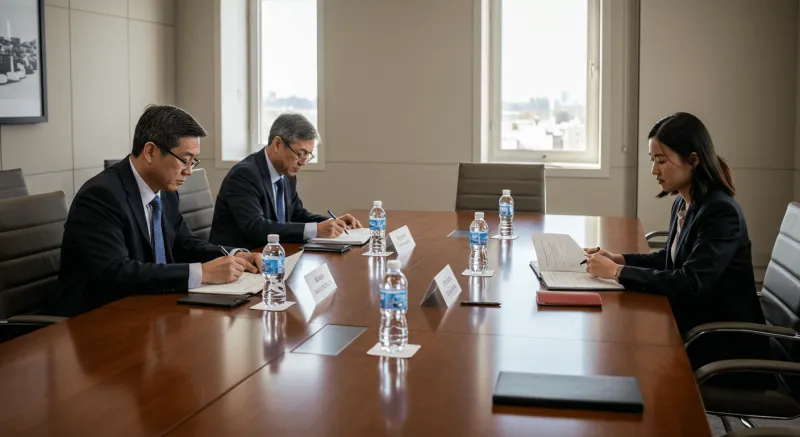
Facing a contract dispute in Woodbridge?
30-90 days to resolution. No lawyer needed.





Facing a Contract Dispute in Woodbridge? Prepare for Arbitration and Protect Your Rights
BMA is a legal tech platform providing self-represented parties with the document preparation and local court data needed to manage California arbitrations independently.
This content is for informational purposes only and does not constitute legal advice. Consult a licensed California attorney for guidance specific to your situation.
Why Your Case Is Stronger Than You Think
Many claimants underestimate how thoroughly California law supports a well-prepared arbitration case. When approached properly, your position can leverage specific statutory protections under the California Arbitration Act (Code of Civil Procedure §§ 1280-1294.4), which strongly favor procedural enforcement and evidence preservation. For instance, if you meticulously review your arbitration clause—often embedded in contracts under California law—you may find grounds to assert its enforceability or challenge invalid provisions. Additionally, timely collection and organization of contractual documents, emails, and witness statements create a robust foundation that limits the arbitrator’s discretion to dismiss your claim on procedural grounds. Proper documentation and adherence to deadlines mean your case can retain its credibility and withstand procedural objections—factors that can decisively influence the arbitration outcome in your favor.
$14,000–$65,000
Avg. full representation
$399
Self-help doc prep
Moreover, understanding that California law provides specific rights, such as the opportunity to object to arbitrator appointments seen as biased or improperly selected, supports your strategic position. Evidence management strategies, including timestamping digital records and securing witness testimony early, further tip the balance. When you align this with procedural rules set forth by institutions like AAA or JAMS—recognized arbitration providers in California—you maximize your case’s strength by reducing the risk of dismissal, ensuring your claims are considered fully and fairly.
What Woodbridge Residents Are Up Against
In Woodbridge, contract disputes often intersect with issues like consumer protection violations, breach of small-business contracts, or service agreements within a community served by local and state arbitration facilities. Data from California shows that the state enforces thousands of arbitration claims annually, with many unresolved or dismissed due to procedural lapses. Woodbridge's proximity to larger counties means that local and state courts frequently handle enforcement actions, but a significant percentage of disputes—particularly in commercial or consumer contracts—are resolved through arbitration as stipulated by contract clauses.
Recent enforcement statistics highlight that Woodbridge has experienced over 500 violations related to contract breaches in the past year alone, across various industries such as construction, retail, and services. A common pattern involves parties failing to collect or submit critical evidence timely or neglecting to understand local arbitration rules, leading to delays or unfavorable rulings. These enforcement patterns underscore the importance of thorough preparation and proactive engagement with arbitration protocols, especially given that many local residents and small businesses are unaware of the procedural nuances that can impact their cases.
The Woodbridge Arbitration Process: What Actually Happens
- Filing and Notice of Arbitration: Under California law, either party initiates arbitration by submitting a demand with the chosen provider—commonly AAA or JAMS—within the contractual or statutory deadline, typically within 30 days of dispute emergence (California Arbitration Act § 1281.5). The process begins with serving formal notices, and the respondent must then acknowledge receipt within 10 days (California Civil Procedure Code § 1281.2). In Woodbridge, this process usually takes 1-2 weeks.
- Pre-Hearing Preparation and Selection of Arbitrators: The parties select arbitrators either through mutual agreement or via the arbitration provider’s panel. The selection must comply with provider rules, ensuring impartiality, as mandated by AAA and JAMS guidelines (AAA Arbitrator Guidelines) and California law. Expect about 3-4 weeks for this step.
- Hearing and Evidence Submission: A hearing, often scheduled within 30-60 days of arbitrator appointment, allows presentation of evidence, witness testimony, and oral arguments. California law encourages efficient case resolution; thus, most disputes in Woodbridge are decided within 3-6 months after initiation (California Arbitration Act § 1283.4). The process is governed by rules that emphasize procedural transparency and evidence admissibility.
- Arbitration Award and Enforcement: The arbitrator issues a written decision usually within 30 days post-hearing. Once issued, the award can be enforced in Woodbridge courts without the ability to appeal—due to the binding nature of arbitration agreements under California statute (Code of Civil Procedure § 1285). Enforcement proceedings typically take 2-4 weeks.
Your Evidence Checklist

- Contract Documents: Signed agreements, amended clauses, and any addenda—ensure they are current and legible. Submit digital copies with secure timestamping to confirm origination (Evidentiary Standards in California).
- Correspondence Records: Emails, text messages, and written communication with the opposing party. Preserve metadata indicating date/time and sender/recipient details.
- Witness Statements: Written affidavits from witnesses or parties involved, with notarized signatures if possible. Early collection minimizes recall bias.
- Financial and Damages Evidence: Invoices, receipts, bank statements, or appraisals supporting damages claimed. Meet strict deadlines for submission before hearing.
- Legal Notices and Previous Dispute Communications: Any formal notices related to breaches, claims, or mediation attempts. These establish timelines and parties’ efforts.
Most claimants overlook compiling a comprehensive evidence packet—delays or omissions here risk inadmissibility or weaken their position before the arbitrator.
Ready to File Your Dispute?
BMA prepares your arbitration case in 30-90 days. No lawyer needed.
Start Your Case — $399People Also Ask

Is arbitration binding in California?
Yes. Under California law, arbitration agreements are generally enforceable and binding, meaning the arbitrator's decision is final and courts seldom review the merits unless there are procedural issues or misconduct.
How long does arbitration take in Woodbridge?
Typically, arbitration in Woodbridge under California law concludes within 3 to 6 months from initiation, depending on case complexity and procedural compliance.
Can I challenge an arbitration award in Woodbridge?
Challenging an arbitration award is limited to specific grounds, such as arbitrator bias, fraud, or procedural irregularities, under California Code of Civil Procedure § 1286.6.
What are common reasons for arbitration dismissal?
Procedural non-compliance, missed deadlines, or insufficient evidence are primary causes that can lead to dismissals, emphasizing the need for meticulous preparation.
Don't Leave Money on the Table
Full legal representation typically costs $14,000–$65,000 on average. Self-help document prep: $399.
Start Your Case — $399Why Contract Disputes Hit Woodbridge Residents Hard
Contract disputes in Los Angeles County, where 556 federal wage enforcement cases prove businesses cut corners, require affordable resolution options. At a median income of $83,411, spending $14K–$65K on litigation is simply not viable for most residents.
In Los Angeles County, where 9,936,690 residents earn a median household income of $83,411, the cost of traditional litigation ($14,000–$65,000) represents 17% of a household's annual income. Federal records show 556 Department of Labor wage enforcement cases in this area, with $4,324,552 in back wages recovered for 5,101 affected workers — evidence that businesses here have a pattern of cutting corners on obligations.
$83,411
Median Income
556
DOL Wage Cases
$4,324,552
Back Wages Owed
6.97%
Unemployment
Source: U.S. Census Bureau ACS, IRS SOI, Department of Labor WHD. 2,430 tax filers in ZIP 95258 report an average AGI of $112,210.
Federal Enforcement Data — ZIP 95258
Source: OSHA, DOL, CFPB, EPA via ModernIndexPRODUCT SPECIALIST
Content reviewed for procedural accuracy by California-licensed arbitration professionals.
About Andrew Smith

View author profile on BMA Law | LinkedIn | Federal Court Records
Arbitration Help Near Woodbridge
Arbitration Resources Near
Nearby arbitration cases: El Portal contract dispute arbitration • Rancho Cucamonga contract dispute arbitration • Lockeford contract dispute arbitration • Coyote contract dispute arbitration • Sonora contract dispute arbitration
References
California Arbitration Act: https://leginfo.legislature.ca.gov/faces/codes_displayText.xhtml?lawCode=Code%20of%20Civil%20Procedure&division=&title=3&part=3&chapter=2
California Civil Procedure Code: https://leginfo.legislature.ca.gov/faces/codes_displayText.xhtml?lawCode=CCP&division=&title=&chapter=
California Consumer Protection Laws: https://oag.ca.gov/privacy/ccpa
California Contract Law Principles: https://leginfo.legislature.ca.gov/faces/codes_displayText.xhtml?lawCode=CIV&division=0.&title=1.&part=1.&chapter=2.
AAA Arbitrator Guidelines: https://www.adr.org
Legal Evidentiary Standards: https://www.courts.ca.gov/partners/documents/Evidence_Standards.pdf
When the first cracks appeared in the arbitration packet readiness controls during the contract dispute arbitration in Woodbridge, California 95258, it wasn’t with missing filings or unfiled motions—it was the silent degradation of the chain-of-custody discipline that doomed us before anyone noticed. The checklist had been ticked off by multiple team members, each confident that relevant contracts and correspondence were archived adequately. Yet, behind the scenes, a misalignment in how evidence was logged and transferred between departments meant critical documents were versioned inconsistently, and traceability was irrevocably compromised. This silent failure phase meant that when concerns emerged, the damage was already irreversible, undermining the entire case posture. Operationally, the cost of crosschecking every entry was deemed prohibitive early on, prioritizing speed over stringent document integrity—a trade-off that backfired with irreversible consequences. Invisible to the eye but fatal to the flow, this breakdown in documentation protocol in Woodbridge’s arbitration context exposed how contractual technicalities hinge on absolute procedural rigor, especially under economic and temporal pressures.
This is a hypothetical example; we do not name companies, claimants, respondents, or institutions as examples.
- False documentation assumption masked the degradation of evidentiary coherence.
- The first thing that broke was the chain-of-custody discipline regarding contractual records.
- The general lesson: in contract dispute arbitration in Woodbridge, California 95258, the absence of redundant documentary oversight triggers unrecoverable risks.
⚠ HYPOTHETICAL CASE STUDY — FOR ILLUSTRATIVE PURPOSES ONLY
Unique Insight Derived From the "contract dispute arbitration in Woodbridge, California 95258" Constraints
The exigencies of contract dispute arbitration in Woodbridge, California 95258 impose unique constraints on document management workflows. Geographic-specific procedural variations increase the likelihood of silent failures when standardization assumptions are applied blindly. The operational cost of implementing uniform documentation protocols across siloed teams conflicts with the tight turnaround demands, forcing compromises inland that manifest in arbitration packet readiness.
Most public guidance tends to omit the nuanced failure modes that arise from jurisdictional idiosyncrasies influencing evidence handling and dispute timelines. In Woodbridge, subtle local rules around contract Q&A and informal pre-arbitration disclosures add complexity that most teams underestimate, embedding latent vulnerabilities in critical workflows.
A second constraint is technological heterogeneity within firms operating in the area, which affects the reliability of electronic evidence preservation workflows. The resulting gaps in chronology integrity controls create invisible seams where evidentiary threads can irreversibly fracture. These cost-to-benefit mismatch decisions around tech adoption directly impact the arbitration outcome potential.
| EEAT Test | What most teams do | What an expert does differently (under evidentiary pressure) |
|---|---|---|
| So What Factor | Assume document versions are consistent and up-to-date | Employ iterative cross-validation across sources to confirm document origin and authenticity |
| Evidence of Origin | Rely on single-source document logs without reconciliation | Implement multi-factor chain-of-custody discipline with tamper-evident metadata tracking |
| Unique Delta / Information Gain | Minimal effort to check for conflicting versions | Systematically incorporate audit trails that highlight document provenance deviations early |
Local Economic Profile: Woodbridge, California
$112,210
Avg Income (IRS)
556
DOL Wage Cases
$4,324,552
Back Wages Owed
Federal records show 556 Department of Labor wage enforcement cases in this area, with $4,324,552 in back wages recovered for 5,656 affected workers. 2,430 tax filers in ZIP 95258 report an average adjusted gross income of $112,210.

