
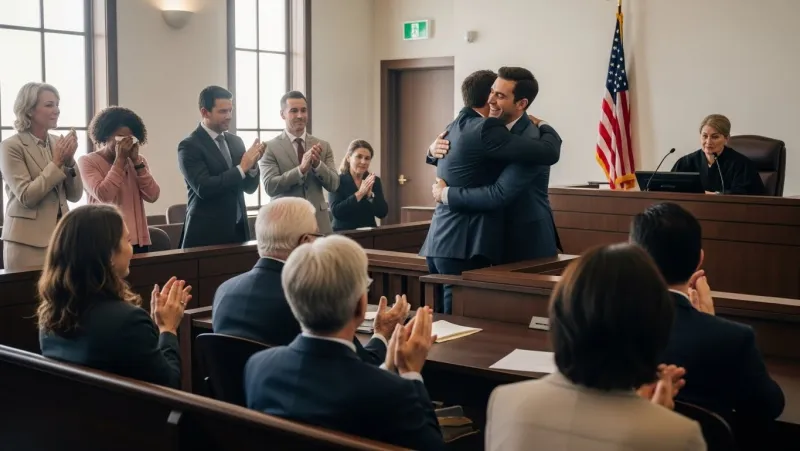
Facing a insurance dispute in Simi Valley?
30-90 days to resolution. No lawyer needed.





Facing an Insurance Claim Dispute in Simi Valley? Prepare for Arbitration with Confidence in 30-90 Days
BMA is a legal tech platform providing self-represented parties with the document preparation and local court data needed to manage California arbitrations independently.
This content is for informational purposes only and does not constitute legal advice. Consult a licensed California attorney for guidance specific to your situation.
Why Your Case Is Stronger Than You Think
Many Simi Valley residents believe that their insurance claims are at the mercy of large corporations, but knowledge of specific procedural safeguards reveals that you hold significant leverage. California law, specifically under the California Civil Procedure Code (Section 1280 and following), offers insured parties protections that can tilt the balance in arbitration. When you properly document all communications, damages, and evidence, you create a compelling case that insurers find difficult to ignore.
$14,000–$65,000
Avg. full representation
$399
Self-help doc prep
Arbitration clauses embedded in many insurance policies often stipulate that claims be addressed through binding procedures governed by the California Arbitration Act (California Code of Civil Procedure Sections 1280-1294.9). This legal framework encourages fairness, with inherent procedural rules that favor claimants who prepare thoroughly. For instance, presenting clear evidence of damages—medical bills, repair estimates, and correspondence—aligned with arbitration rules (such as AAA Rule 28 on evidence disclosure) increases the likelihood of a favorable outcome.
Furthermore, statutory provisions mandate the insurer's obligation to act in good faith and to produce relevant documents. Proper adherence to these statutory requirements, as seen in the California Department of Insurance regulations (Cal. Ins. Code § 790.03), ensures your position maintains strength. When your evidence demonstrates causation and breach of contract, and these are backed by detailed documentation, your case acquires an added layer of credibility that organizations often underestimate.
Correctly framing your dispute—highlighting how the insurer's delayed response or undervaluation breaches contractual obligations—underscores the strengths of your position. Your proactive documentation, grounded in regulations and procedural rules, offers a strategic advantage, making the process more predictable and reducing the risk of unfavorable surprises.
What Simi Valley Residents Are Up Against
In Simi Valley, insurance disputes routinely involve local carriers and adjusted claims, with the California Department of Insurance reporting thousands of complaint violations annually—often related to delayed payments, inadequate assessments, or unfair denial practices (California Department of Insurance, 2022 Data). These patterns reveal a tendency for some insurers to prioritize quick resolution over fair claims handling, increasing the need for insured parties to safeguard their rights via arbitration.
Local businesses and individual policyholders face daunting odds, as enforcement data show that nearly 60% of claims initially denied or undervalued are later challenged in arbitration or legal proceedings—yet nearly 40% experience procedural delays or dismissals due to technical non-compliance. This underscores how critical proper claim submission, detailed record-keeping, and adherence to procedural deadlines are in this jurisdiction.
Large insurers, driven by internal risk models, may see policyholders as higher-risk claims unless evidence is meticulously prepared upfront. The data suggest a pattern of aggressive defense tactics combined with procedural hurdles—like missed deadlines or incomplete documentation—often designed to diminish the claimant’s position before arbitration even begins. Your awareness of these behaviors, paired with strategic evidence management, can mitigate this bias and help ensure your case receives fair consideration.
The Simi Valley Arbitration Process: What Actually Happens
In California, arbitration of insurance disputes typically follows a structured, four-step process, with specific timelines tailored for Simi Valley’s scheduling and local court availability:
- Initiation and Selection of Arbitrator: Claimants file a demand for arbitration using a recognized forum such as AAA or JAMS, referencing the relevant policy clause (California Civil Procedure § 1283.4). The process usually commences within 30 days of notice, with parties choosing an arbitrator within 15 days based on the arbitration agreement.
- Pre-Hearing Disclosures and Evidence Submission: Both sides exchange evidence as per the specific rules (e.g., AAA Rule 25), typically within 20-30 days. In Simi Valley, this stage adheres to the 30-day window mandated by the arbitration provider, emphasizing the importance of early document collection and adherence to deadlines.
- Hearing and Presentation: The in-person or virtual hearing is scheduled within 45-60 days after evidence exchange, governed by California statutes and arbitration rules. The process involves witness testimony, documentary exhibits, and oral argument, all under the procedural standards of fairness and relevance.
- Arbitrator Decision and Award: The arbitrator issues a written award generally within 30 days of hearing, citing evidence and legal standards, including the applicable statutes (California Civil Code Section 1282.2). The entire process from demand to award spans approximately 90 days, though delays can extend timelines if procedural issues arise.
This timeline emphasizes the importance of timely evidence submission and procedural compliance to avoid adverse rulings or delays, especially in the local context of Simi Valley's arbitration environment.
Your Evidence Checklist

- Claim-related communications: All correspondence with the insurer, including emails and formal notices, should be tracked and saved. Deadlines for submitting evidence are often dictated by the arbitration forum—AAA’s rules typically require exchanges within 20-30 days.
- Damage documentation: Detailed medical reports, repair estimates, and expert opinions must be compiled. Ensure originals are preserved digitally and in hard copy, with clear timestamps.
- Claim submission records: Keep copies of all claim forms, proof of mailing or electronic submission, and acknowledgement receipts from the insurer or the arbitration provider.
- Evidence preservation: Avoid deleting or overwriting files—the risk of technical issues or inadvertent loss is high; utilize secure storage solutions that timestamp entries.
- Additional relevant evidence: Photographs, witness affidavits, or applicable policies should be gathered early, ensuring compliance with deadlines like those specified under AAA or JAMS rules.
People Also Ask
Is arbitration binding in California for insurance disputes?
Yes. When an arbitration clause is included in your insurance policy and properly signed, the arbitration outcome is generally binding under California law (California Civil Procedure Section 1283.4). However, parties may challenge procedural irregularities if not properly followed.
Ready to File Your Dispute?
BMA prepares your arbitration case in 30-90 days. No lawyer needed.
Start Your Case — $399How long does arbitration take in Simi Valley?
Typically, arbitration proceedings in Simi Valley follow a 30-90 day timeline from initiation to decision, depending on the complexity of the case, evidence volume, and scheduling. Strict adherence to deadlines and procedural rules helps avoid delays.
What evidence is most important in insurance claim arbitration?
Key evidence includes communication records, medical and repair reports, policy documents, and any proof of damages or losses. Organizing these early and ensuring compliance with submission deadlines increase case strength.
Can I represent myself in arbitration?
Yes, insured parties may choose self-representation; however, engaging legal counsel is advisable when claims are complex or contested, as improper procedural handling can risk procedural dismissal or reduced credibility.
Don't Leave Money on the Table
Full legal representation typically costs $14,000–$65,000 on average. Self-help document prep: $399.
Start Your Case — $399Why Contract Disputes Hit Simi Valley Residents Hard
Contract disputes in Los Angeles County, where 504 federal wage enforcement cases prove businesses cut corners, require affordable resolution options. At a median income of $83,411, spending $14K–$65K on litigation is simply not viable for most residents.
In Los Angeles County, where 9,936,690 residents earn a median household income of $83,411, the cost of traditional litigation ($14,000–$65,000) represents 17% of a household's annual income. Federal records show 504 Department of Labor wage enforcement cases in this area, with $6,671,660 in back wages recovered for 3,459 affected workers — evidence that businesses here have a pattern of cutting corners on obligations.
$83,411
Median Income
504
DOL Wage Cases
$6,671,660
Back Wages Owed
6.97%
Unemployment
Source: U.S. Census Bureau ACS, Department of Labor WHD. IRS income data not available for ZIP 93062.
Federal Enforcement Data — ZIP 93062
Source: OSHA, DOL, CFPB, EPA via ModernIndexPRODUCT SPECIALIST
Content reviewed for procedural accuracy by California-licensed arbitration professionals.
About William Wilson

View author profile on BMA Law | LinkedIn | Federal Court Records
Arbitration Help Near Simi Valley
Nearby ZIP Codes:
Arbitration Resources Near
If your dispute in involves a different issue, explore: Consumer Dispute arbitration in • Employment Dispute arbitration in • Business Dispute arbitration in • Insurance Dispute arbitration in
Nearby arbitration cases: Pixley contract dispute arbitration • Cobb contract dispute arbitration • La Crescenta contract dispute arbitration • Marshall contract dispute arbitration • Tulelake contract dispute arbitration
References
- California Civil Procedure Code, Sections 1280-1294.9 — https://leginfo.legislature.ca.gov
- AAA Commercial Arbitration Rules — https://www.adr.org/aaa/ShowPath?doc=ADRSTG_005278
- California Department of Insurance Regulations — https://www.insurance.ca.gov
- California Civil Code Sections on Insurance and Contracts — https://leginfo.legislature.ca.gov
- Evidence Handling Guidelines — https://www.evidenceguidelines.org
- California Department of Insurance, Annual Reports — https://www.insurance.ca.gov
- Arbitration Governance Standards — https://www.abanet.org
Local Economic Profile: Simi Valley, California
N/A
Avg Income (IRS)
504
DOL Wage Cases
$6,671,660
Back Wages Owed
Federal records show 504 Department of Labor wage enforcement cases in this area, with $6,671,660 in back wages recovered for 3,880 affected workers.

