
Get Your Contract Dispute Case Packet — Force Payment Without Court
A company broke a deal and owes you money? Companies in Santa Clara with federal violations cut corners everywhere — contracts, payments, obligations. Use their record against them.
5 min
to start
$399
full case prep
30-90 days
to resolution
Your BMA Pro membership includes:
Professionally drafted demand letter + evidence brief for your dispute
Complete case packet — demand letter, evidence brief, filing documents
Enforcement alerts when companies in your area get new violations
Step-by-step filing instructions for AAA, JAMS, or local court
Priority support — dedicated case manager on every filing
| Lawyer | Do Nothing | BMA | |
|---|---|---|---|
| Cost | $14,000–$65,000 | $0 | $399 |
| Timeline | 12-24 months | Claim expires | 30-90 days |
| You need | $5,000 retainer + $350/hr | — | 5 minutes |
Or Starter — $199 | Compare plans
30-day money-back guarantee • Limited to 12 new members/month





Contract Dispute Arbitration in Santa Clara, California 95055
BMA is a legal tech platform providing self-represented parties with the document preparation and local court data needed to manage California arbitrations independently.
This content is for informational purposes only and does not constitute legal advice. Consult a licensed California attorney for guidance specific to your situation.
Introduction to Contract Dispute Arbitration
Contract disputes are a common challenge faced by businesses and individuals in Santa Clara, California, 95055. These conflicts often arise from disagreements over contractual obligations, performance, or interpretation. Traditional litigation in courts can be time-consuming and costly, which underscores the importance of alternative dispute resolution methods such as arbitration. Arbitration provides a streamlined, confidential, and legally binding process wherein parties agree to submit their disputes to a neutral arbitrator or panel of arbitrators for a final resolution.
The primary goal of arbitration is to resolve disputes efficiently while respecting the rights of all parties involved. It is especially relevant in Santa Clara's dynamic economy, fueled by technology firms, manufacturing, and diverse service industries, where swift dispute resolution supports ongoing business operations.
Legal Framework Governing Arbitration in California
In California, arbitration is governed by the California Arbitration Act (CAA), which aligns closely with the Federal Arbitration Act (FAA). These statutes affirm that arbitration agreements are enforceable and that arbitration awards carry the same weight as court judgments.
California law emphasizes the importance of respecting the parties’ autonomy to choose arbitration and enforces arbitration clauses in commercial contracts. Additionally, courts in Santa Clara and across the state uphold the principle that arbitration should serve as a means to achieve fast and fair resolution, minimizing judicial intervention unless specific exceptions apply.
Legal theories such as Statist Justice Theory highlight that justice is best facilitated within bounded communities—like Santa Clara—by providing mechanisms that reduce court congestion and foster economic stability through efficient dispute resolution methods like arbitration.
Benefits of Arbitration Over Litigation
- Faster Resolution: Arbitration can resolve disputes significantly more quickly than traditional court proceedings, which may take months or years.
- Cost-Effective: Generally, arbitration reduces legal expenses by limiting procedural steps and court fees.
- Confidentiality: Unlike public court trials, arbitration proceedings are private, preserving the reputation of involved parties.
- Flexibility: Parties have greater control over scheduling and procedural rules.
- Enforceability: Arbitration awards are binding and enforceable in California courts, ensuring parties’ compliance.
According to Law & Economics Strategic Theory, legal rules like arbitration are often shaped by interests—such as business groups—that seek efficient and predictable dispute resolution systems rather than those emerging solely from public interest considerations.
Arbitration Process Specifics in Santa Clara
The arbitration process in Santa Clara generally follows several stages:
1. Agreement to Arbitrate
Parties agree via a contract clause or an independent agreement to resolve disputes through arbitration. This agreement specifies whether arbitration occurs before filing a lawsuit or as a mandatory step.
2. Selection of Arbitrator(s)
Parties select a neutral arbitrator or a panel. Arbitrators are often legal professionals or specific industry experts familiar with Santa Clara’s economic landscape.
3. Hearing and Evidence Presentation
The arbitration hearing involves presenting evidence, cross-examinations, and legal arguments, with proceedings tailored to the parties’ preferences and the arbitration provider’s rules.
4. Award Issuance
After reviewing the case, the arbitrator issues a binding agreement, known as an award, which can be confirmed and enforced by courts.
In Santa Clara, the process benefits from local legal familiarity and institutional support, making disputes more manageable and resolutions more aligned with local legal nuances.
Role of Local Arbitration Providers and Institutions
Santa Clara boasts several reputable arbitration providers and institutions that facilitate dispute resolution tailored to its diverse economy. These include private arbitration firms and industry-specific panels specializing in technology, manufacturing, and services.
Some local providers offer turnkey arbitration services, including case management, mediator and arbitrator selection, and adherence to California-specific legal standards. They also provide resources to ensure parties understand their rights and obligations, promoting fairness and efficiency.
Partnering with established institutions ensures that disputes are handled under rules compliant with California law and that awards are recognized and enforceable both locally and statewide.
Common Types of Contract Disputes in Santa Clara
The economic landscape of Santa Clara leads to specific types of contract disputes, including:
- Technology licensing disagreements
- Vendor and supply chain conflicts
- Employment and independent contractor disputes
- Business partnership disagreements
- Real estate and commercial leasing conflicts
- Intellectual property rights disputes
Addressing these disputes efficiently through arbitration helps preserve business relationships and ensures continuity in Santa Clara’s competitive environment.
Choosing the Right Arbitrator in Santa Clara
Selection of an arbitrator is a critical step that can significantly influence the outcome of a dispute. It is essential to choose someone who:
- Has expertise in the relevant industry or legal area
- Understands California and Santa Clara-specific laws
- Demonstrates impartiality and fairness
- Possesses experience in arbitration procedures
Many local arbitration providers maintain panels of qualified arbitrators who meet these criteria. Parties should consider mutual agreement or, if needed, rely on the provider’s expertise to select an arbitrator aligned with their case specifics.
Costs and Timeframe of Arbitration
Arbitration in Santa Clara typically costs less and takes less time than traditional litigation. Most disputes are resolved within six months to a year, depending on complexity.
Cost considerations include arbitrator fees, administrative expenses, and legal representation costs. Well-structured arbitration clauses combined with local resources can further optimize both expenses and duration.
Advances in arbitration logistics and procedures continue to improve efficiency, making arbitration an attractive option for Santa Clara’s busy commercial community.
Enforcing Arbitration Awards in California
Once an arbitration award is issued, it can be enforced through California courts with a straightforward process. Courts generally uphold arbitration awards unless there are valid grounds for set-aside, such as misconduct or procedural irregularities.
This legal enforceability provides assurance to parties that arbitration outcomes are binding, reinforcing arbitration’s role as a reliable dispute resolution mechanism in Santa Clara's legal landscape.
Conclusion: Why Arbitration Matters for Santa Clara Residents
In a city with a population of 128,165 and a thriving, diverse economy, effective dispute resolution mechanisms are vital to maintaining economic stability and encouraging investment. Arbitration offers Santa Clara residents and businesses a practical, efficient means to resolve contractual disagreements, respecting the city’s legal and economic environment.
Supported by California's legal framework and local arbitration providers, arbitration ensures that disputes are resolved fairly, confidentially, and swiftly. As legal theories such as the Justice applies primarily within bounded political communities perspective suggest, robust local dispute resolution strengthens community cohesion and economic resilience.
For those seeking experienced arbitration services, exploring options with reputable providers can facilitate seamless dispute resolution. Learn more about arbitration options at BMA Law.
Local Economic Profile: Santa Clara, California
N/A
Avg Income (IRS)
556
DOL Wage Cases
$9,077,607
Back Wages Owed
Federal records show 556 Department of Labor wage enforcement cases in this area, with $9,077,607 in back wages recovered for 4,975 affected workers.
Arbitration Resources Near Santa Clara
If your dispute in Santa Clara involves a different issue, explore: Consumer Dispute arbitration in Santa Clara • Employment Dispute arbitration in Santa Clara • Business Dispute arbitration in Santa Clara • Insurance Dispute arbitration in Santa Clara
Nearby arbitration cases: Brooks contract dispute arbitration • Sunland contract dispute arbitration • Posey contract dispute arbitration • Colton contract dispute arbitration • Pleasant Hill contract dispute arbitration
Other ZIP codes in Santa Clara:
Frequently Asked Questions
1. Is arbitration legally binding in California?
Yes. Arbitration awards in California are legally binding and enforceable in court, provided they are made in accordance with legal procedures and the arbitration agreement.
2. How does arbitration differ from mediation?
While both are alternative dispute resolution methods, arbitration leads to a binding decision issued by an arbitrator, whereas mediation involves facilitated negotiation without a compulsory resolution.
3. Can arbitration awards be appealed?
Generally, arbitration awards are final and only subject to limited grounds for modification or vacation in court, such as fraud or arbitrator misconduct.
4. How long does arbitration typically take in Santa Clara?
Most arbitration proceedings resolve within six months to a year, depending on case complexity and procedural factors.
5. What costs are involved in arbitration?
Costs include arbitrator fees, administrative expenses, and legal counsel. However, arbitration is often more cost-effective than traditional court proceedings.
Key Data Points
| Data Point | Details |
|---|---|
| City Population | 128,165 residents |
| ZIP Code | 95055 |
| Major Industries | Technology, manufacturing, services |
| Average Time for Arbitration | 6 months to 1 year |
| Legal Framework | California Arbitration Act, Federal Arbitration Act |
Why Contract Disputes Hit Santa Clara Residents Hard
Contract disputes in Los Angeles County, where 556 federal wage enforcement cases prove businesses cut corners, require affordable resolution options. At a median income of $83,411, spending $14K–$65K on litigation is simply not viable for most residents.
In Los Angeles County, where 9,936,690 residents earn a median household income of $83,411, the cost of traditional litigation ($14,000–$65,000) represents 17% of a household's annual income. Federal records show 556 Department of Labor wage enforcement cases in this area, with $9,077,607 in back wages recovered for 3,244 affected workers — evidence that businesses here have a pattern of cutting corners on obligations.
$83,411
Median Income
556
DOL Wage Cases
$9,077,607
Back Wages Owed
6.97%
Unemployment
Source: U.S. Census Bureau ACS, Department of Labor WHD. IRS income data not available for ZIP 95055.
Federal Enforcement Data — ZIP 95055
Source: OSHA, DOL, CFPB, EPA via ModernIndex
Arbitration War: The Silicon Valley Contract Clash
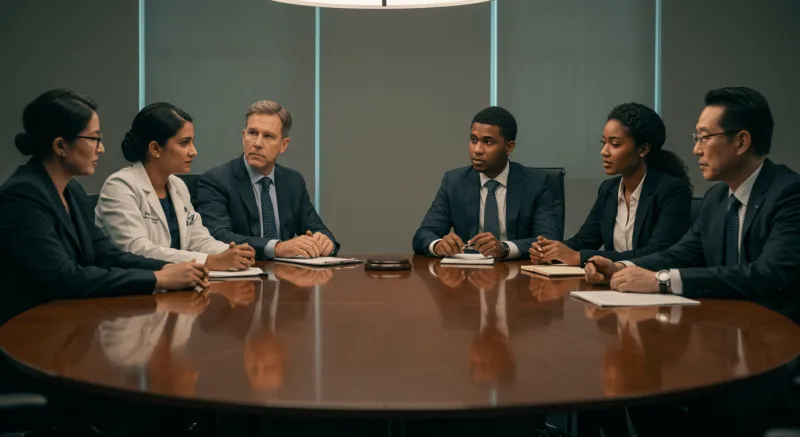
In early 2023, two Silicon Valley companies found themselves embroiled in a fierce arbitration battle over a $2.3 million software development contract. The dispute, heard in Santa Clara, California 95055, pitted NeuraTech Solutions, a cutting-edge AI startup, against Orion Data Systems, a well-established cloud infrastructure firm.
The saga began in June 2022, when Orion Data Systems contracted NeuraTech to develop a proprietary machine learning module designed to optimize cloud resource allocation. The contract stipulated a $2.3 million total payment with specific deliverables and stringent deadlines, including a final delivery by December 15, 2022.
However, tensions escalated quickly. NeuraTech delivered an initial beta version on December 20, citing unforeseen technical challenges and shifting requirements from Orion's product team. Orion contended the delay and alleged that the module did not meet agreed performance benchmarks. By January 2023, negotiations broke down as both parties claimed breach of contract.
Rather than pursuing lengthy court litigation, they agreed to arbitration to maintain some discretion amid the highly competitive tech landscape. The arbitration was held in April 2023 at a Santa Clara office complex known for hosting dispute resolutions for tech enterprises.
The arbitrator, retired Judge Marissa Chen, had a reputation for cutting through technical jargon and focusing on contractual obligations and industry standards. Over three intensive days, both sides presented exhaustive evidence: NeuraTech’s detailed development logs, Orion’s expert witness on software performance, emails evidencing shifting requirements, and multiple depositions.
NeuraTech argued that Orion's internal changes amounted to a “moving target,” unfairly impacting their ability to meet the final delivery date and performance criteria. Contrarily, Orion maintained that NeuraTech failed to allocate sufficient resources and that delays caused significant financial harm, including lost clients and delayed product launches.
Judge Chen ultimately ruled partially in favor of both parties. She acknowledged that Orion did request changes that complicated NeuraTech’s process but found that NeuraTech failed to notify Orion promptly about the full extent of delays and performance issues as required by the contract’s notice provisions.
The decision awarded Orion Data Systems $900,000 in damages for the delay and underperformance but ordered Orion to pay NeuraTech $450,000 for extra work incurred due to shifting specifications. With arbitration fees and costs split evenly, the net payment NeuraTech owed was $450,000.
The outcome underscored the importance of clear communication and documentation in fast-moving tech contracts. Both companies returned to business wiser and more cautious, reinforcing their internal project management protocols to avoid another "arbitration war" in the heart of Silicon Valley.

