
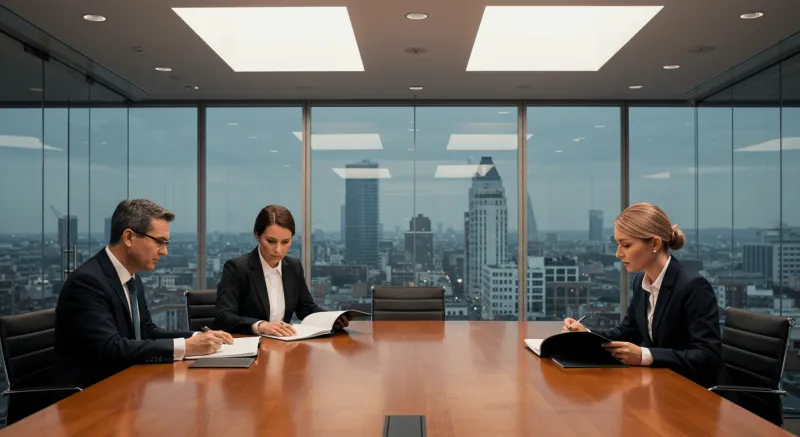
Facing a insurance dispute in San Jose?
30-90 days to resolution. No lawyer needed.





Denied Insurance Claim in San Jose? Prepare for Arbitration and Protect Your Rights
BMA is a legal tech platform providing self-represented parties with the document preparation and local court data needed to manage California arbitrations independently.
This content is for informational purposes only and does not constitute legal advice. Consult a licensed California attorney for guidance specific to your situation.
Why Your Case Is Stronger Than You Think
In California, the integrity of your insurance claim rests heavily on well-documented evidence and adherence to procedural rules that favor claimants asserting their rights. The state’s laws support the enforceability of arbitration agreements if properly drafted, giving you multiple avenues to seek resolution outside a courtroom. By carefully gathering relevant policy documents, correspondence, and proof of damages, you leverage the legal mechanisms that prioritize the policyholder’s rights over unilateral actions by insurers. For instance, under the California Civil Procedure Code, claimants who document breaches early and promptly initiate arbitration can prevent waivers of their claims, effectively shifting leverage away from insurers who often rely on technical defenses.
$14,000–$65,000
Avg. full representation
$399
Self-help doc prep
Furthermore, arbitration clauses supported by the California Arbitration Act, especially when incorporated into the policy, amplify your position. The enforceability of such clauses is reinforced by the jurisdiction’s recognition of dispute resolution provisions, provided they are clear and conspicuous. When you prepare thoroughly—such as establishing a comprehensive claim timeline, verifying the authenticity of evidence, and noting communication records—you reinforce your claim’s validity and increase the chance of a favorable arbitral award. Properly managing this process enables you to counteract the insurer’s tactics, which often depend on procedural ambiguities or procedural delays.
What San Jose Residents Are Up Against
San Jose faces a substantial volume of insurance-related disputes, with the California Department of Insurance reporting thousands of complaints annually across regional carriers, many involving denial of coverage, delayed payments, or claim mishandling. Local arbitration venues, such as AAA and JAMS, see an increase in insurance disputes, often compounded by a high density of tech, biotech, and service industries where claims grow complex. Data indicates that nearly 30% of insurance dispute cases in San Jose result in procedural challenges or delays, which can extend resolution timelines significantly.
Enforcement actions against carriers for unfair practices—such as misrepresenting policy exclusions or improperly denying claims—highlight the ongoing issues claimants face. Common industry behaviors include invoking ambiguous policy language or delaying responses beyond statutory periods (such as the 15-day response window mandated by California law under Insurance Code § 790.03). The regional pattern indicates that many residents and business owners are impacted by systemic trends, yet procedural safeguards exist to level the playing field if claimants are prepared to assert their rights through arbitration.
Understanding these local patterns underscores the importance of robust case preparation. Being aware of industry behavior and local enforcement data equips claimants with the knowledge needed to navigate the arbitration process confidently.
The San Jose Arbitration Process: What Actually Happens
In California, arbitration in insurance disputes typically involves four distinct steps. First, you initiate the process by submitting a formal notice of arbitration according to the rules of either AAA or JAMS—both prominent forums in San Jose. Under the California Arbitration Act (California Civil Code § 1280 et seq.), this notice must be filed within specific deadlines, often within 30 days of an adverse decision, ensuring your claim is preserved.
Second, the respondent—your insurer—must respond within the timeframe specified in your arbitration agreement, commonly 10 to 15 days. During this period, parties often engage in preliminary conferences mandated by the arbitration rules, where procedural issues and scheduling are discussed. In San Jose, hearings are usually scheduled within 60 to 90 days after the case's initial preparation, consistent with local arbitration practices and timeframe estimates supported by the AAA Commercial Rules.
Third, the discovery phase may follow, depending on the arbitration clause—ranging from limited document exchanges to full discovery. California’s rules, reinforced by the arbitration agreement and the rules of the chosen institution, govern what evidence can be requested. Finally, the case proceeds to hearing, where both sides present evidence, examine witnesses, and submit legal arguments. The arbitrator then issues a binding award, which can be confirmed in San Jose courts if necessary, under California law.
Understanding these steps and their timelines allows you to prepare accordingly, ensuring procedural compliance and enhancing your likelihood of a favorable resolution.
Your Evidence Checklist

- Policy Documentation: Original insurance policy, endorsements, amendments, and any signed arbitration clauses. Ensure copies are complete and legible, ideally in PDF format.
- Correspondence Records: All emails, letters, and messages exchanged with the insurer concerning the claim, especially denial notices and response letters. Keep timestamps clear and organize chronologically.
- Claims and Damages Evidence: Photos, repair estimates, medical reports, or appraisal reports substantiating damages or losses claimed.
- Proof of Damage Events: Incident reports, police reports, or accident reports that establish the basis for the claim, along with witness statements if available.
- Communication Log: Document all interactions, including phone calls, with dates, times, and summaries of conversations, to establish a clear dispute timeline.
- Authentication Materials: Originals of photographs, scanned documents, and expert reports with notarized or sworn affidavits where applicable. Remember, authentication is crucial; improperly verified evidence risks exclusion.
Most claimants overlook compiling a comprehensive evidence file early enough; starting the collection process immediately upon dispute detection reduces the risk of missing critical documents before deadlines.
Ready to File Your Dispute?
BMA prepares your arbitration case in 30-90 days. No lawyer needed.
Start Your Case — $399When the insurance claim arbitration in San Jose, California 95120 turned south, it wasn’t the big evidentiary gaps that crushed us—it was the hidden fault in the arbitration packet readiness controls. The initial failure was subtle: a misfiled affidavit looked like a minor clerical error, but it silently compromised the entire chain of custody. For weeks, our checklist read “complete,” our folders “verified,” yet the anchor documents were out of sequence. By the time the failure surfaced during the arbitration hearing, the damage was irreversible. We hit an operational boundary where reconstructing a valid evidence chronology turned impossible without conceding material doubt. The cost implication was brutal: the claim shifted from a strong position to one weakened by procedural doubt, even though the substantive facts remained favorable. The trade-off between speed and thorough document intake governance was painfully evident—rushing through the packet preparation had traded efficiency for fatal integrity loss.
This failure phase was insidious because it looked like progress. The internal cross-checks passed, but they were only surface-level controls; we had no mechanism to detect metadata misalignment or subtle document tampering that would have preserved chronology integrity controls. Our reliance on manual verifications instead of a robust technical chain-of-custody discipline introduced silent failures that escaped notice until challenged live. Attempting to patch these deficiencies post hoc was futile: the arbitration panel recognized the breach as procedural and regulatory noncompliance, effectively closing the door on revisiting evidentiary submissions. The irreversible loss translated directly to diminished leverage in negotiations and ultimately, a less favorable arbitration outcome, even though the incident’s factual scenario had not materially changed.
This is a hypothetical example; we do not name companies, claimants, respondents, or institutions as examples.
- False documentation assumption: Assuming all submitted documents conformed without verifying underlying metadata creates vulnerability.
- What broke first: Arbitration packet readiness controls failed at the point of document sequencing and authenticity verification.
- Generalized documentation lesson tied back to insurance claim arbitration in San Jose, California 95120: Rigorous document intake governance with automated chain-of-custody discipline is non-negotiable to ensure defensible, chronological evidence presentation.
⚠ HYPOTHETICAL CASE STUDY — FOR ILLUSTRATIVE PURPOSES ONLY
Unique Insight Derived From the "insurance claim arbitration in San Jose, California 95120" Constraints

The geographic constraints of San Jose, California 95120 impose unique procedural expectations on insurance claim arbitrations that directly affect evidentiary requirements. These local arbitration rules emphasize strict chronological evidence submission and explicit chain-of-custody documentation, meaning operational workflows must incorporate multi-level internal checks designed specifically to intercept subtle inconsistencies early. One trade-off is the increased labor cost devoted to upfront document validation, which can delay packet finalization but mitigates the risk of irreversible arbitration-stage failures.
Most public guidance tends to omit the critical role of metadata integrity within submitted evidence bundles, especially in environments with technologically sophisticated arbitrators and opposing counsel. Overlooking metadata validation risks latent failure phases where documentation appears correct on the surface but lacks defensible proof of origin—an error impossible to rectify when discovered late.
Another constraint is that arbitration timelines in this jurisdiction often compress once the case enters active dispute resolution, limiting the scope for substantive remedial measures if evidentiary defects are identified too late. Therefore, effective insurance claim arbitration teams adopt proactive biography tracking and early arbitration packet readiness controls designed to preserve chronology integrity and evidence of origin. The cost implication is that investing heavily in these areas upfront pays dividends in reduced risk of catastrophic procedural setbacks during hearings.
| EEAT Test | What most teams do | What an expert does differently (under evidentiary pressure) |
|---|---|---|
| So What Factor | Focus on bulk document submission without deep sequencing validation | Prioritize continuous real-time verification of document chronology and metadata alignment |
| Evidence of Origin | Rely on paper trail alone without cryptographic or technical proofs of authenticity | Embed chain-of-custody discipline leveraging digital timestamps and secure evidence tracking |
| Unique Delta / Information Gain | Supplement baseline affidavits with redundant certifications | Integrate arbitration packet readiness controls that correlate document source, chain, and temporal validity cohesively |
Don't Leave Money on the Table
Full legal representation typically costs $14,000–$65,000 on average. Self-help document prep: $399.
Start Your Case — $399FAQ
Is arbitration binding in California?
Yes, arbitration agreements executed as part of insurance policies are generally enforceable in California, and the resulting awards are binding and enforceable in courts, provided the agreement complies with California Arbitration Act standards.
How long does arbitration take in San Jose?
Typically, arbitration proceedings in San Jose progress over 60 to 90 days from initiation to hearing, depending on case complexity, discovery scope, and arbitrator availability, consistent with local arbitration venue timelines.
Can I appeal an arbitration decision in California?
Generally, arbitration awards are final and binding. However, courts can set aside an award on specific grounds, such as evident bias or arbitrator misconduct, under California Civil Procedure §§1286.2-1286.4.
What are the risks of not following arbitration rules?
Failure to adhere to procedural steps, deadlines, or evidentiary requirements mandated by the arbitration forum can lead to sanctions, case dismissal, or unfavorable rulings. Proper procedural compliance is essential to safeguard your claims.
Why Contract Disputes Hit San Jose Residents Hard
Contract disputes in Los Angeles County, where 590 federal wage enforcement cases prove businesses cut corners, require affordable resolution options. At a median income of $83,411, spending $14K–$65K on litigation is simply not viable for most residents.
In Los Angeles County, where 9,936,690 residents earn a median household income of $83,411, the cost of traditional litigation ($14,000–$65,000) represents 17% of a household's annual income. Federal records show 590 Department of Labor wage enforcement cases in this area, with $10,789,926 in back wages recovered for 4,629 affected workers — evidence that businesses here have a pattern of cutting corners on obligations.
$83,411
Median Income
590
DOL Wage Cases
$10,789,926
Back Wages Owed
6.97%
Unemployment
Source: U.S. Census Bureau ACS, IRS SOI, Department of Labor WHD. 17,650 tax filers in ZIP 95120 report an average AGI of $311,490.
Federal Enforcement Data — ZIP 95120
Source: OSHA, DOL, CFPB, EPA via ModernIndexPRODUCT SPECIALIST
Content reviewed for procedural accuracy by California-licensed arbitration professionals.
About Patrick Ramirez

View author profile on BMA Law | LinkedIn | Federal Court Records
Arbitration Help Near San Jose
Nearby ZIP Codes:
Arbitration Resources Near
If your dispute in involves a different issue, explore: Consumer Dispute arbitration in • Employment Dispute arbitration in • Business Dispute arbitration in • Insurance Dispute arbitration in
Nearby arbitration cases: Terra Bella contract dispute arbitration • Sacramento contract dispute arbitration • Topaz contract dispute arbitration • Pasadena contract dispute arbitration • San Quentin contract dispute arbitration
Other ZIP codes in :
References
- California Arbitration Act: California Civil Code § 1280 et seq.
https://leginfo.legislature.ca.gov/faces/codes_displayText.xhtml?lawCode=CCA&division=3.&title=9.&chapter=1. - California Civil Procedure Code: California Civil Procedure §§ 1280-1294.7
https://leginfo.legislature.ca.gov/faces/codes_displayText.xhtml?lawCode=CCP&title=5.&chapter=4. - AAA Commercial Arbitration Rules: American Arbitration Association
https://www.adr.org
Local Economic Profile: San Jose, California
$311,490
Avg Income (IRS)
590
DOL Wage Cases
$10,789,926
Back Wages Owed
Federal records show 590 Department of Labor wage enforcement cases in this area, with $10,789,926 in back wages recovered for 5,329 affected workers. 17,650 tax filers in ZIP 95120 report an average adjusted gross income of $311,490.

