

Facing a consumer dispute in Sacramento?
30-90 days to resolution. No lawyer needed.





Faced a Consumer Dispute in Sacramento? Prepare Your Arbitration Case Effectively in 30-90 Days
BMA is a legal tech platform providing self-represented parties with the document preparation and local court data needed to manage California arbitrations independently.
This content is for informational purposes only and does not constitute legal advice. Consult a licensed California attorney for guidance specific to your situation.
Why Your Case Is Stronger Than You Think
Many consumers in Sacramento underestimate the legal leverage they possess when initiating arbitration. By meticulously gathering evidence and understanding the enforceability of contractual arbitration clauses, claimants can position their case so that the arbitrator recognizes the validity of their position from the outset. Under California Civil Procedure Code Section 1280 et seq., an arbitration agreement becomes binding once signed, and courts generally uphold such clauses unless proven unconscionable or invalid under the California Consumer Protection Act. Proper documentation—such as receipts, emails, and contracts—serves as concrete proof that supports claims of breach or statutory violations, shifting the procedural advantage to claimants. When claimants explicitly follow the rules of evidence authentication (per Federal Evidence Rules) and prepare a clear Statement of Claim, they not only demonstrate readiness but also influence the arbitrator’s perception of merit, making their case more compelling and achievable within the arbitration framework.
$14,000–$65,000
Avg. full representation
$399
Self-help doc prep
What Sacramento Residents Are Up Against
In Sacramento County, consumer complaints against businesses regarding service quality, billing issues, or product defects are frequent. Data from the California Department of Consumer Affairs indicates that thousands of complaints are filed annually, with an increasing proportion related to unauthorized charges, misrepresentations, or failure to deliver promised services. Enforcement agencies report that despite existing laws, many violations remain unaddressed due to limited resources or reluctance of companies to settle without arbitration. Local businesses often include arbitration clauses in their contracts, requiring consumers to resolve disputes through private arbitration rather than courts. However, enforcement data shows that these clauses are sometimes challenged based on unconscionability or lack of informed consent. The pattern of repeat violations across industries suggests that consumers in Sacramento are not alone and that proactive preparation can help tip the balance of power toward individual claimants.
The Sacramento Arbitration Process: What Actually Happens
California law, particularly the California Arbitration Act (Code of Civil Procedure Sections 1280-1294.7), governs arbitration procedures in Sacramento. The typical process begins with the claimant filing a written Statement of Claim with an arbitration provider such as the AAA or JAMS, often within 30 days of demand. The respondent replies within a similar timeframe, usually 20 days, presenting their defenses and evidence. A pre-hearing conference may be scheduled within 30-60 days, during which procedural issues and evidence exchange are orchestrated. The arbitration hearing then proceeds, typically within 60-90 days from filing, with limited discovery rights—most evidence must be exchanged beforehand. The arbitrator, selected through mutual agreement or appointment by the provider, issues an award usually within 30 days post-hearing, which can be enforced in Sacramento courts. Notably, many arbitration clauses specify binding arbitration, making the award final absent a successful challenge based on procedural misconduct or arbitrator bias, as outlined in AAA’s arbitration rules (see https://www.adr.org).
Your Evidence Checklist

- Contractual Documents: Signed arbitration agreement, service contracts, purchase receipts, warranties, or terms of service. Ensure these are signed and dated, preferably with clear language regarding arbitration clauses.
- Communication Records: Emails, chat logs, call logs, or letters exchanged with the business. Keep originals and digital copies. Document any promises, disputes, or resolutions discussed.
- Payment Records: Credit card statements, bank transfers, or proof of payments related to the dispute. Authenticating these enhances credibility.
- Expert or Witness Statements: For claims involving technical issues or disputes requiring professional insight, obtain affidavits or reports before the hearing deadline.
- Photos or Videos: Visual evidence supporting claims of property damage, defective products, or service issues. Ensure timestamps are visible to establish timeline relevance.
Most claimants forget to compile these documents early, risking incomplete submissions that weaken the case—delaying resolution or leading to unfavorable outcomes. Maintain an organized file with electronic backups and verify the authenticity of each piece of evidence before filing.
Ready to File Your Dispute?
BMA prepares your arbitration case in 30-90 days. No lawyer needed.
Start Your Case — $399The arbitration packet readiness controls arbitration packet readiness controls appeared flawless at first glance during a consumer arbitration case in Sacramento, California 94262, but the initial break happened when a critical set of receipts and communication logs went missing, unnoticed through the silent failure phase. The checklist confirmed all documents were present and accounted for, yet underlying discrepancies in chain-of-custody discipline had already eroded evidentiary integrity, a cost we only recognized after irreversible time wastage and lost leverage during hearings. This operational constraint meant no backtracking—once the opposing party contested authenticity without key electronic timestamps, the case's momentum collapsed. Attempting to patch the gap later compromised negotiation posture and increased arbitration expenses beyond the initial budget. The workflow boundary between preliminary submission and arbiter review was tighter than anticipated, further complicating the extraction of supplemental affidavits within the Sacramento jurisdictional constraints. Ultimately, this failure underscored how folded-in assumptions about document intake governance—especially in local consumer arbitration—can silently corrode outcomes long before alerts raise flags.
This is a hypothetical example; we do not name companies, claimants, respondents, or institutions as examples.
- False documentation assumption that checklist completion equaled evidentiary sufficiency.
- What broke first: loss of electronic timestamps and authentic communication logs undermining chain-of-custody discipline.
- Generalized documentation lesson: airtight verification of records is critical in consumer arbitration in Sacramento, California 94262 to prevent irreversible evidence gaps.
⚠ HYPOTHETICAL CASE STUDY — FOR ILLUSTRATIVE PURPOSES ONLY
Unique Insight Derived From the "consumer arbitration in Sacramento, California 94262" Constraints
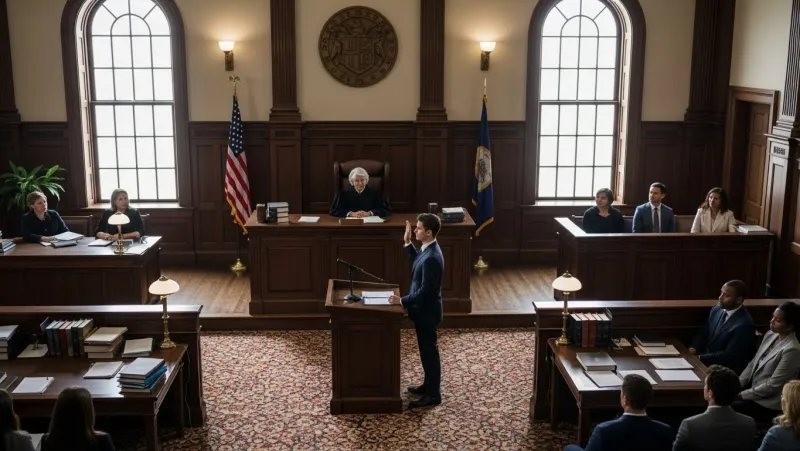
Consumer arbitration in Sacramento, California 94262 imposes specific requirements on the timeliness and procedural structure of evidence submission. A key constraint is the tight scheduling imposed by local arbitration rules, which limits opportunities to supplement or cure documentary deficiencies once an initial packet has been submitted. This trade-off often forces parties to accept higher upfront costs and invest more rigorously in pre-submission due diligence to avoid costly failures.
Most public guidance tends to omit the operational friction caused by workflow boundaries between submission and review, which in Sacramento’s consumer arbitration framework, can mean the difference between winning a case or having critical evidence excluded entirely. This invisible boundary necessitates a stronger upfront commitment to chain-of-custody discipline and evidence preservation workflows than typical civil litigation.
Furthermore, the cost implications of these restrictions often cascade beyond direct legal fees. Parties unprepared for the inflexibility of Sacramento arbitration rules might find themselves trapped in protracted follow-ups or forced settlements, reflecting a broader operational constraint where risk management strategies must expand beyond simple checklist completions to incorporate a more forensic approach to documentation validation.
| EEAT Test | What most teams do | What an expert does differently (under evidentiary pressure) |
|---|---|---|
| So What Factor | Check boxes and submit on time, assuming completeness | Prioritize evidence completeness with multiple validation layers before submission |
| Evidence of Origin | Rely on stated authenticity in documents | Maintain rigorous chain-of-custody documentation to verify provenance |
| Unique Delta / Information Gain | Focus on information quantity | Focus on unique metadata and timestamp integrity to differentiate records |
Don't Leave Money on the Table
Full legal representation typically costs $14,000–$65,000 on average. Self-help document prep: $399.
Start Your Case — $399FAQ
- Is arbitration binding in California?
- Yes. When parties agree to arbitration through a signed arbitration clause or contract, California courts typically uphold the binding nature of the arbitration award, as supported by California Civil Procedure Sections 1281-1284.2.
- How long does arbitration take in Sacramento?
- Most consumer arbitration cases in Sacramento can be resolved within 30 to 90 days from filing, depending on the complexity of the dispute and the arbitration provider’s schedule, as outlined in the rules by AAA and JAMS.
- Can I settle my dispute during arbitration?
- Absolutely. Arbitrators often encourage settlement discussions before the hearing. A well-documented case and good negotiation strategy can lead to a mutually agreeable resolution before the final hearing.
- What happens if I lose the arbitration?
- The arbitration award can be challenged only on procedural grounds such as bias or misconduct. Otherwise, it is enforceable in Sacramento courts like a court judgment, per California Arbitration Act provisions.
- Are arbitration clauses enforceable if not clearly disclosed?
- If the clause was hidden in fine print or not properly disclosed, it may be challenged under California's unconscionability doctrines or consumer protection laws, which sometimes render poorly drafted clauses unenforceable.
Why Contract Disputes Hit Sacramento Residents Hard
Contract disputes in Los Angeles County, where 4 federal wage enforcement cases prove businesses cut corners, require affordable resolution options. At a median income of $83,411, spending $14K–$65K on litigation is simply not viable for most residents.
In Los Angeles County, where 9,936,690 residents earn a median household income of $83,411, the cost of traditional litigation ($14,000–$65,000) represents 17% of a household's annual income. Federal records show 4 Department of Labor wage enforcement cases in this area, with $0 in back wages recovered for 0 affected workers — evidence that businesses here have a pattern of cutting corners on obligations.
$83,411
Median Income
4
DOL Wage Cases
$0
Back Wages Owed
6.97%
Unemployment
Source: U.S. Census Bureau ACS, Department of Labor WHD. IRS income data not available for ZIP 94262.
PRODUCT SPECIALIST
Content reviewed for procedural accuracy by California-licensed arbitration professionals.
About Jason Anderson

View author profile on BMA Law | LinkedIn | Federal Court Records
Arbitration Help Near Sacramento
Nearby ZIP Codes:
Arbitration Resources Near
If your dispute in involves a different issue, explore: Consumer Dispute arbitration in • Employment Dispute arbitration in • Business Dispute arbitration in • Insurance Dispute arbitration in
Nearby arbitration cases: Canyon Country contract dispute arbitration • Trinity Center contract dispute arbitration • Forest Ranch contract dispute arbitration • Boulevard contract dispute arbitration • Anderson contract dispute arbitration
Other ZIP codes in :
References
- California Civil Procedure Code, Sections 1280-1294.7 — https://leginfo.legislature.ca.gov
- American Arbitration Association Rules — https://www.adr.org
- California Department of Consumer Affairs — https://www.dca.ca.gov
- California Contract Law Resources — https://leginfo.legislature.ca.gov
- National Center for Dispute Resolution — https://ncdrc.org
- Federal Evidence Rules — https://www.fedbar.org
Local Economic Profile: Sacramento, California
N/A
Avg Income (IRS)
4
DOL Wage Cases
$0
Back Wages Owed
Federal records show 4 Department of Labor wage enforcement cases in this area, with $0 in back wages recovered for 3 affected workers.

