
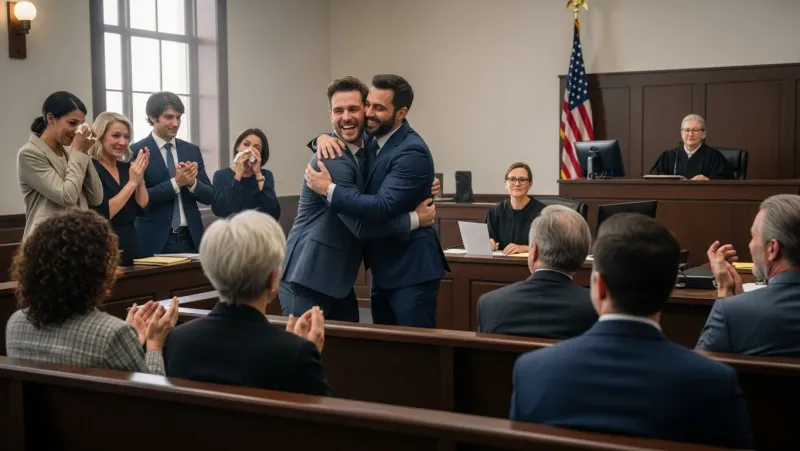
Facing a real estate dispute in Redwood City?
30-90 days to resolution. No lawyer needed.





Facing a Real Estate Dispute in Redwood City? Prepare Your Case for Arbitration in 30-90 Days
BMA is a legal tech platform providing self-represented parties with the document preparation and local court data needed to manage California arbitrations independently.
This content is for informational purposes only and does not constitute legal advice. Consult a licensed California attorney for guidance specific to your situation.
Why Your Case Is Stronger Than You Think
Many parties involved in Redwood City real estate conflicts overlook the leverage inherent in thorough documentation and state-specific procedural rights. California law, specifically the California Civil Procedure Code sections 1280-1294, provides robust frameworks that favor well-prepared claimants. When you assemble complete evidence—such as property deeds, lease agreements, communication logs, and photographic records—you position yourself to substantively affirm ownership and contractual rights. These documents, properly organized and timely submitted, can significantly influence arbitration outcomes, especially given the enforceability of arbitration clauses under the California Arbitration Act. For example, providing a chain of ownership that predates current disputes can undermine opposing claims of unlawful occupancy or contractual breaches. Proper preparation and adherence to procedural rules enable claimants to challenge weak defenses effectively, shifting the balance toward your favor even before hearings commence.
$14,000–$65,000
Avg. full representation
$399
Self-help doc prep
By understanding that your dispute’s foundation rests on demonstrable facts and statutory rights, you gain confidence in asserting claims that are resilient against procedural challenges. Well-documented evidence reduces the likelihood of procedural sanctions or dismissal, ensuring your case moves efficiently through the arbitration process. Leveraging California law’s emphasis on good faith discovery and evidence admissibility, you extract the maximum value from your documentation, bolstering your position with concrete facts rather than conjecture.
What Redwood City Residents Are Up Against
Redwood City’s local dispute landscape reveals a pattern of enforcement challenges and procedural bottlenecks. San Mateo County Superior Court and local arbitration programs have handled hundreds of property-related disputes annually, with a significant proportion involving landlord-tenant conflicts, boundary disputes, and lease disagreements. Data indicates that a notable percentage of cases—approximately 30%—are dismissed or delayed due to inadequate evidence or procedural missteps within the arbitration framework.
Local landlords and property owners have often utilized arbitration clauses to bypass court delays, yet many fail to comply strictly with deadlines for evidence exchange and notification requirements, such as the 30-day notice period mandated under California Civil Procedure Code §1289.3. The region has witnessed increased reports of procedural violations—including late document submissions and incomplete discovery responses—leading to sanctions or unfavorable rulings for unprepared parties. This environment emphasizes that Redwood City residents are not alone in facing these challenges; rather, the statistics highlight a shared need for strategic, documented advocacy to succeed in arbitration proceedings.
The Redwood City Arbitration Process: What Actually Happens
California arbitration proceedings follow a defined statutory and procedural pathway, tailored by local rules to optimize dispute resolution. The typical timeline spans approximately 30 to 90 days from initiation to decision:
- Step 1: Initiation and Filing—The claimant files a written demand for arbitration with the chosen arbitration body, often the American Arbitration Association (AAA) or JAMS. This includes a complaint outlining dispute points and relevant evidence, within 10 days of agreement or as stipulated in the contract.
- Step 2: Response and Case Preparation—The opposing party submits an answer, along with supporting documents. Local rules require complete disclosure and documentation exchanges within 20 days. The arbitration panel may schedule preliminary hearings or case management conferences, often within 30 days of filing.
- Step 3: Hearing and Evidence Presentation—Hearings typically last 1-3 days depending on case complexity. Parties present documents, witness testimony, and expert reports. California law grants parties a 15-day window after the hearing to submit post-hearing briefs.
- Step 4: Award and Enforcement—The arbitrator renders a decision usually within 30 days, with the option for parties to seek limited judicial review under California Code of Civil Procedure §1286.6. This binding award is enforceable in the Redwood City Superior Court, as per California law.
Throughout, local rules tailor procedural steps, emphasizing the importance of strict adherence to deadlines outlined in the California Arbitration Act (Code of Civil Procedure §§ 1280-1294). Understanding and navigating these steps ensures that your claim proceeds without procedural pitfalls that could otherwise undermine your case.
Your Evidence Checklist

- Legal Ownership Documents: Deeds, titles, escrow closing statements—must be current and notarized, submitted within 10 days of arbitration demand.
- Contracts and Leases: Fully executed agreements, amendments, and addenda—preferably in PDF format with timestamps, delivered within the discovery window.
- Communication Records: Emails, texts, and letters evidencing disputes, notices, or consent—organized chronologically and with clear annotations.
- Photographic and Video Evidence: Property condition reports, damage documentation, or violation evidence—digital copies with date stamps, presented at the hearing.
- Financial and Transaction Records: Rent rolls, payment histories, escrow documents—secured via chain of custody protocols and submitted within the evidence exchange period.
- Expert Reports: If technical property issues are involved, consult qualified inspectors or appraisers to provide reports, to be submitted during discovery or as supplemental evidence.
Most parties forget to include complete chains of custody, ensuring all copies are authenticated and that electronic evidence complies with California Evidence Code §§ 1400-1403. Timely collection and meticulous organization of these documents are critical to avoid procedural exclusions or adverse inferences.
Ready to File Your Dispute?
BMA prepares your arbitration case in 30-90 days. No lawyer needed.
Start Your Case — $399When the negotiation over property boundaries in the arbitration packet readiness controls fell behind schedule, it seemed like a minor clerical delay — but by the time we realized the failure, all original survey documents had been replaced with unsigned, unofficial digital copies that no one verified. The checklist showed the file as complete: all expected documents were present, and timestamps suggested no tampering, yet the silent failures of digital chain-of-custody discipline had completely undermined evidentiary reliability. At discovery, the arbitration panel rejected large swaths of critical proof due to unresolvable questions over document authenticity. This break in evidentiary integrity occurred before anyone had manually reviewed the files, hidden behind the veneer of compliance with procedural workflows. The irreversible nature of the failure was painfully clear when attempts to reconstruct authentic signatures and timestamp validations on replaced documents proved futile, locking the case into a compromised posture that handicapped all subsequent fact-finding and argumentation. Operationally, this failure revealed a costly trade-off where reliance on digital convenience without rigorous manual cross-checks and double verification under Redwood City’s local dispute resolution deadlines severely handicapped our ability to present a fully credible claim under real estate dispute arbitration in Redwood City, California 94064.
This is a hypothetical example; we do not name companies, claimants, respondents, or institutions as examples.
- False documentation assumption: Believing that digital copies mirrored original authenticity without verification caused silent evidence degradation.
- What broke first: Chain-of-custody discipline failures at the digital document handoff created irreversible gaps before discovery.
- Generalized documentation lesson tied back to real estate dispute arbitration in Redwood City, California 94064: Strict manual validation and layered authentication steps are non-negotiable even under tight arbitration timelines to preserve evidentiary integrity.
⚠ HYPOTHETICAL CASE STUDY — FOR ILLUSTRATIVE PURPOSES ONLY
Unique Insight Derived From the "real estate dispute arbitration in Redwood City, California 94064" Constraints

One major constraint for arbitration in Redwood City is the accelerated timeline, which demands rapid document intake governance but increases the risk of overlooking subtle evidence authenticity issues. This creates a trade-off between speed and depth of verification that can unintentionally compromise the arbitration’s evidentiary foundation.
Most public guidance tends to omit how local regulatory nuances and property record accessibility in Redwood City can further complicate document origin verification, leaving arbitrators and counsel at a distinct disadvantage when critical chain-of-custody elements are incomplete or inconsistent.
Cost implications also manifest as increased resource allocation toward physically confirming survey records and notarizations locally—efforts that cannot be fully digitized due to official requirements, thereby creating workflow boundaries that slow down the otherwise preferred paperless arbitration packet readiness controls.
| EEAT Test | What most teams do | What an expert does differently (under evidentiary pressure) |
|---|---|---|
| So What Factor | Assume checklist completion ensures evidentiary sufficiency. | Investigate inconsistencies behind checklist greenlights by implementing cross-layer verification. |
| Evidence of Origin | Accept scanned or digital copies without third-party confirmation. | Require chain-of-custody documentation and local notarization audits to confirm provenance. |
| Unique Delta / Information Gain | Focus on substantive claims ignoring local procedural documentation uniqueness. | Integrate Redwood City-specific property record processes to enhance dispute resolution precision. |
Don't Leave Money on the Table
Full legal representation typically costs $14,000–$65,000 on average. Self-help document prep: $399.
Start Your Case — $399FAQ
Is arbitration binding in California?
Yes. Under the California Arbitration Act and your contract provisions, arbitration awards are generally final and binding, enforceable through the courts, barring issues of unconscionability or procedural misconduct.
How long does arbitration take in Redwood City?
Typically, the process spans 30 to 90 days from filing to award, depending on case complexity and adherence to procedural deadlines outlined by local arbitration rules and California statutes.
What evidence is needed for a property boundary dispute?
Survey reports, property deeds, recorded plats, or boundary markers are essential. Visual documentation like aerial photos can support claims, especially if property encroachments are visible.
Can I appeal an arbitration decision in Redwood City?
Limited judicial review exists under California law, generally restricted to procedural misconduct or arbitrator bias, not substantive disagreements with the decision. Confirm specific grounds within CCP §1294.
What happens if I miss a procedural deadline?
Missing deadlines can lead to sanctions, dismissal, or default judgments against your case. It is crucial to track all dates and respond promptly to preserve your rights.
Why Contract Disputes Hit Redwood City Residents Hard
Contract disputes in San Mateo County, where 615 federal wage enforcement cases prove businesses cut corners, require affordable resolution options. At a median income of $149,907, spending $14K–$65K on litigation is simply not viable for most residents.
In San Mateo County, where 754,250 residents earn a median household income of $149,907, the cost of traditional litigation ($14,000–$65,000) represents 9% of a household's annual income. Federal records show 615 Department of Labor wage enforcement cases in this area, with $16,782,707 in back wages recovered for 7,854 affected workers — evidence that businesses here have a pattern of cutting corners on obligations.
$149,907
Median Income
615
DOL Wage Cases
$16,782,707
Back Wages Owed
4.54%
Unemployment
Source: U.S. Census Bureau ACS, Department of Labor WHD. IRS income data not available for ZIP 94064.
Federal Enforcement Data — ZIP 94064
Source: OSHA, DOL, CFPB, EPA via ModernIndexPRODUCT SPECIALIST
Content reviewed for procedural accuracy by California-licensed arbitration professionals.
About Andrew Smith

View author profile on BMA Law | LinkedIn | Federal Court Records
Arbitration Help Near Redwood City
Nearby ZIP Codes:
Arbitration Resources Near
If your dispute in involves a different issue, explore: Consumer Dispute arbitration in • Employment Dispute arbitration in • Business Dispute arbitration in • Insurance Dispute arbitration in
Nearby arbitration cases: Honeydew contract dispute arbitration • Madeline contract dispute arbitration • Lathrop contract dispute arbitration • Little Lake contract dispute arbitration • Newman contract dispute arbitration
Other ZIP codes in :
References
- California Arbitration Act: California Civil Procedure Code §§ 1280-1294. https://leginfo.legislature.ca.gov/faces/codes_displayText.xhtml?lawCode=CCP&division=&title=9.&part=3.&chapter=2.
- California Civil Procedure: California Civil Procedure Code. https://leginfo.legislature.ca.gov/faces/codes_displayText.xhtml?lawCode=CCP
- Dispute Resolution Guidelines: California Courts ADR Program. https://www.courts.ca.gov/programs-adr.htm
Local Economic Profile: Redwood City, California
N/A
Avg Income (IRS)
615
DOL Wage Cases
$16,782,707
Back Wages Owed
In San Mateo County, the median household income is $149,907 with an unemployment rate of 4.5%. Federal records show 615 Department of Labor wage enforcement cases in this area, with $16,782,707 in back wages recovered for 8,548 affected workers.

