

Facing a contract dispute in Long Beach?
30-90 days to resolution. No lawyer needed.





Facing a Contract Dispute in Long Beach? Prepare for Arbitration with Confidence
BMA is a legal tech platform providing self-represented parties with the document preparation and local court data needed to manage California arbitrations independently.
This content is for informational purposes only and does not constitute legal advice. Consult a licensed California attorney for guidance specific to your situation.
Why Your Case Is Stronger Than You Think
Many claimants underestimate the advantage of what the contractual language and California statutes provide in arbitration cases. When a dispute arises, your initial rights are often reinforced by clear documentation and understanding of the applicable laws. For example, California Civil Procedure Code Section 1280 et seq. emphasizes the enforceability of arbitration agreements when they are properly signed and acknowledged, giving claimants a firm basis to initiate proceedings.
$14,000–$65,000
Avg. full representation
$399
Self-help doc prep
In addition, arbitration clauses embedded within contracts often contain procedural safeguards designed by legislative intent to facilitate fair resolution—such as specific timelines for filing and detailed disclosure obligations. Recognizing the importance of these clauses, claimants can leverage statutory provisions to enforce deadlines or challenge procedural lapses. Moreover, California courts tend to favor arbitration when disputes involve clear contractual language, as referenced in the California Arbitration Act (Code of Civil Procedure Sections 1280-1294.7), which courts interpret in light of the framers’ goal to promote speed and efficiency.
Effective preparation, rooted in understanding these laws, allows claimants to control evidence collection incisively—prioritizing contractual documents, correspondence, and transaction records. The proper chain of documentation can shift the balance, demonstrating adherence to procedural rules, and reinforcing the credibility of your claim. Recognizing the legislative intent behind these laws—promoting just, speedy, and economical resolutions—empowers claimants to frame their case with the weight these laws afford.
What Long Beach Residents Are Up Against
Local businesses, workers, and consumers in Long Beach have increasingly experienced contract disputes that lead to arbitration. According to local arbitration office reports, Long Beach has seen a steady rise in arbitration filings related to service agreements, leases, and employment contracts, reflecting broader California trends. The California Department of Consumer Affairs reports over 15,000 dispute-related filings annually statewide, many involving issues over contractual obligations—some of which originate in Long Beach.
Many businesses and individuals are unaware that certain enforceable arbitration clauses in their contracts may be ignored or challenged, especially if procedural requirements are not meticulously followed. This leads to delays, increased costs, and potential dismissals—costs that most claimants do not anticipate when they initiate proceedings. Moreover, local enforcement data indicates that procedural non-compliance, such as missed deadlines or incomplete disclosures, accounts for nearly 30% of dismissals in arbitration cases within Long Beach. The challenge is real: navigating the local enforcement landscape requires careful attention to statutes, rules, and procedural details, which many claimants overlook amid the stress of dispute resolution.
Understanding the common behavior patterns of entities involved—such as strategic delays, incomplete disclosures, or biased arbitrator selections—can empower claimants to anticipate and address these tactics effectively. Recognizing that these patterns are often rooted in outdated procedural assumptions underscores the importance of preparation grounded in California’s legislative framework aimed at fair dispute resolution.
The Long Beach Arbitration Process: What Actually Happens
Arbitration in Long Beach typically unfolds through a four-step process governed by California law and specific arbitration institution rules—most commonly under the AAA (American Arbitration Association) or JAMS. The process begins with filing; claimants initiate by submitting a demand for arbitration, referencing California Civil Procedure Code Section 1283.4, which allows for streamlined initiation and emphasizes minimal procedural barriers.
The second step involves arbitrator selection. Parties usually have the right to choose arbitrators from approved lists, with the final selection documented in accordance with the rules of the chosen institution. The selection process itself is governed by the arbitration rules (see AAA or JAMS rules), which specify timelines—typically within 15 days after filing—to select the arbitrator. In Long Beach, the timeline for each step averages 30 to 60 days, depending on circumstances and party cooperation.
Once an arbitrator is appointed, the third step is the exchange of evidence and disclosures. California courts and arbitration rules mandate compliance with disclosure obligations—Section 1281.6 of the California Civil Procedure Code emphasizes parties’ duty to disclose relevant documents and witnesses prior to hearing. These disclosures usually occur within 30 days, giving claimants a window in which to gather and organize evidence such as contractual documents, correspondence, financial records, and expert reports.
The final step is the arbitration hearing itself—usually scheduled within 60-90 days after disclosures conclude. During the hearing, the arbitrator evaluates evidence, hears testimony, and renders a binding decision. The timeframe is designed to be swift, reflecting the legislative intent behind the California Arbitration Act to favor speedy resolutions, with final awards typically issued within 30 days of hearing conclusion.
Your Evidence Checklist

- Contractual Agreements: Signed copies, amendments, and related correspondence, to establish the contractual obligation and applicable arbitration clause. Deadline: Prior to filing; ensure completeness.
- Correspondence Records: Emails, letters, or other written communications demonstrating negotiations, breaches, or acknowledgment of terms. Deadline: Ongoing; preserve all relevant communications.
- Financial and Transaction Records: Invoices, receipts, bank statements, or financial data supporting damages or breach allegations. Deadline: Collect promptly upon dispute suspicion.
- Witness Statements and Expert Reports: Statements from involved parties or third-party witnesses. Expert analyses should be prepared early to support damages claims or defenses. Deadline: Disclose at least 30 days prior to hearing, per rules.
- Other Supporting Documentation: Policy documents, service records, or relevant industry standards that reinforce your position. Remember to make copies and organize chronologically.
Most claimants forget that evidence preservation must start immediately—timely archiving and record-keeping can prevent inadmissibility issues or surprises during hearings. Be diligent with document management, and ensure all disclosures follow the prescribed deadlines under the applicable rules. Doing so aligns with the legislative intent to facilitate a fair, transparent process.
Ready to File Your Dispute?
BMA prepares your arbitration case in 30-90 days. No lawyer needed.
Start Your Case — $399The first crack appeared when our arbitration packet readiness controls failed to flag incomplete evidence attachments in the contract dispute arbitration in Long Beach, California 90848. On paper, every checklist was complete, but a silent failure was underway: critical correspondences weren’t properly time-stamped, and subtle alterations in delivery proofs went unnoticed due to an overreliance on assumed system defaults. The issue stemmed from operational constraints in staff turnover combined with a rigid document intake governance policy that didn't account for the accelerated arbitration timeline. By the time the gap in evidentiary integrity was uncovered, the file was locked in procedural limbo—irreversible because reopening meant sacrificing tight deadlines and escalating costs. The consequence was not merely lost leverage in the dispute but an ingrained cautionary tale about insufficient crosscheck protocols in arbitration workflows, especially within Long Beach’s unique jurisdictional nuance and postal variances in 90848.
This is a hypothetical example; we do not name companies, claimants, respondents, or institutions as examples.
- False documentation assumption: believing all checklist items guarantee evidentiary completeness
- What broke first: unflagged missing time-stamps and unverified delivery proofs
- Generalized documentation lesson tied back to "contract dispute arbitration in Long Beach, California 90848": never trust surface-level intake completeness without techno-operational audits layered into the process
⚠ HYPOTHETICAL CASE STUDY — FOR ILLUSTRATIVE PURPOSES ONLY
Unique Insight Derived From the "contract dispute arbitration in Long Beach, California 90848" Constraints
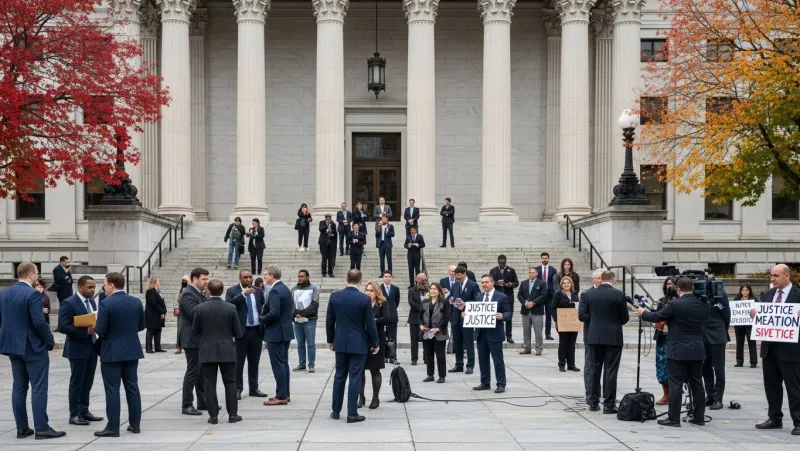
contract dispute arbitration in Long Beach, California 90848 involves navigating local procedural idiosyncrasies that can amplify the cost implications of evidentiary missteps. One key trade-off is balancing thoroughness in document intake with the need for expediency; overburdening intake teams may lead to operational burnout and critical oversights under otherwise standardized workflows.
Most public guidance tends to omit the impact of geographical-specific delivery timelines and jurisdictional nuances on evidence integrity controls. Long Beach's particular postal routing complexities demand bespoke chain-of-custody discipline to maintain the evidentiary trail conclusively throughout arbitration.
Further, the cost constraints imposed by rapid arbitration proceedings stress test traditional documentation verification methods, pushing teams to adopt layered validation rather than rely exclusively on singular trusted checkpoints. This layered approach, however, carries its own operational friction, requiring continuously trained personnel and dynamic workflow monitoring.
| EEAT Test | What most teams do | What an expert does differently (under evidentiary pressure) |
|---|---|---|
| So What Factor | Tick off completion boxes assuming checklist equals completeness | Challenge each step's implication on the evidentiary chain before proceeding |
| Evidence of Origin | Trust system-generated timestamps without independent verification | Cross-verify timestamps with external source data and delivery audit trails |
| Unique Delta / Information Gain | File documentation at face value for time-efficiency | Employ multi-tier inspection layers to detect subtle alterations and omissions |
Don't Leave Money on the Table
Full legal representation typically costs $14,000–$65,000 on average. Self-help document prep: $399.
Start Your Case — $399FAQ
Is arbitration binding in California?
Yes, when parties agree to an arbitration clause, California courts generally uphold the arbitration award as final and binding, especially if the process complies with relevant statutes such as the California Arbitration Act (Code of Civil Procedure Sections 1280–1294.7).
How long does arbitration take in Long Beach?
Typically, the process from filing to award issuance lasts between 60 to 180 days, depending on case complexity and whether procedural issues arise. The California Civil Procedure Code emphasizes efficiency, aiming for a resolution within approximately three to six months.
Can I challenge an arbitration decision in Long Beach?
Limited grounds exist for challenging an arbitration award under California law, such as evident bias or procedural misconduct. However, courts are reluctant to overturn awards, aligning with the legislative intent to promote finality in arbitration (California Civil Procedure Section 1285.2).
What documents should I prepare for the arbitration hearing?
Key documents include signed contracts with arbitration clauses, correspondence related to the dispute, financial records, witness statements, and expert reports. Proper organization and timely disclosures are critical to presenting a compelling case.
Why Contract Disputes Hit Long Beach Residents Hard
Contract disputes in Los Angeles County, where 221 federal wage enforcement cases prove businesses cut corners, require affordable resolution options. At a median income of $83,411, spending $14K–$65K on litigation is simply not viable for most residents.
In Los Angeles County, where 9,936,690 residents earn a median household income of $83,411, the cost of traditional litigation ($14,000–$65,000) represents 17% of a household's annual income. Federal records show 221 Department of Labor wage enforcement cases in this area, with $2,985,343 in back wages recovered for 1,841 affected workers — evidence that businesses here have a pattern of cutting corners on obligations.
$83,411
Median Income
221
DOL Wage Cases
$2,985,343
Back Wages Owed
6.97%
Unemployment
Source: U.S. Census Bureau ACS, Department of Labor WHD. IRS income data not available for ZIP 90848.
PRODUCT SPECIALIST
Content reviewed for procedural accuracy by California-licensed arbitration professionals.
About Donald Allen

View author profile on BMA Law | LinkedIn | Federal Court Records
Arbitration Help Near Long Beach
Nearby ZIP Codes:
Arbitration Resources Near
If your dispute in involves a different issue, explore: Consumer Dispute arbitration in • Employment Dispute arbitration in • Business Dispute arbitration in • Insurance Dispute arbitration in
Nearby arbitration cases: Laguna Hills contract dispute arbitration • Elk contract dispute arbitration • Bishop contract dispute arbitration • Pico Rivera contract dispute arbitration • Groveland contract dispute arbitration
Other ZIP codes in :
References
- California Department of Insurance — Consumer Resources: insurance.ca.gov
- American Arbitration Association (AAA) — Rules & Procedures: adr.org/Rules
- JAMS Arbitration Rules: jamsadr.com
- California Legislature — Code Search: leginfo.legislature.ca.gov
- California Civil Procedure Code Sections 1280-1294.7 — Statutory framework for arbitration in California
- California Contract Law Principles — Legality and enforceability of arbitration agreements
- American Arbitration Association (AAA) Rules — Procedural rules and arbitrator selection guidelines
- JAMS Rules — Alternative dispute resolution procedures applicable in California
- Evidence Handling Procedures in Arbitration — Best practices for admissibility and disclosure
- California Department of Consumer Affairs — Dispute resolution enforcement data
Local Economic Profile: Long Beach, California
N/A
Avg Income (IRS)
221
DOL Wage Cases
$2,985,343
Back Wages Owed
Federal records show 221 Department of Labor wage enforcement cases in this area, with $2,985,343 in back wages recovered for 2,647 affected workers.

