
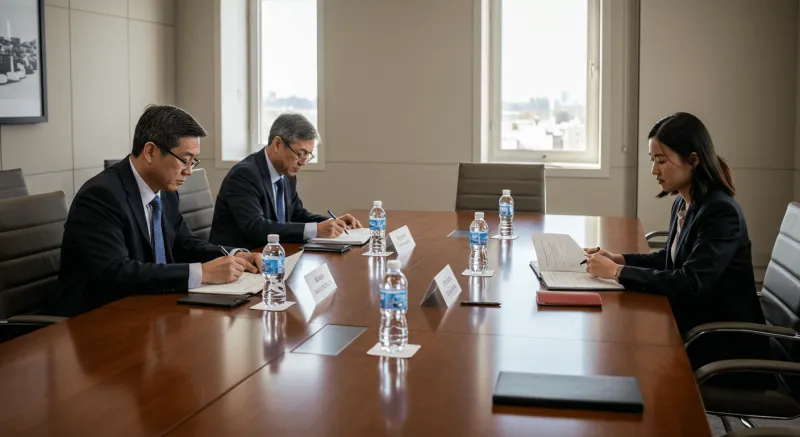
Facing a family dispute in Hollister?
30-90 days to resolution. No lawyer needed.





Family Dispute Arbitration in Hollister, California 95024: Prepare Effectively to Protect Your Rights
BMA is a legal tech platform providing self-represented parties with the document preparation and local court data needed to manage California arbitrations independently.
This content is for informational purposes only and does not constitute legal advice. Consult a licensed California attorney for guidance specific to your situation.
Why Your Case Is Stronger Than You Think
Many claimants underestimate the strategic advantage of organized, evidence-based arbitration, especially within California's legal framework. California Family Code sections, such as Section 3160 concerning child custody and Section 3600 on spousal support, provide a solid legal foundation that can be leveraged through well-prepared documentation. When disputes are properly documented—financial records, communication logs, legal agreements—they create a compelling record that can influence arbitrators' decisions in your favor. Arbitrators, tasked with resolving disputes based on the evidence presented and governed by California statutes, are often more receptive to cases where claimants demonstrate meticulous preparation. For instance, systematic collection of communication records prior to the hearing supports claims of visitation violations or financial discrepancies, thus shifting the narrative towards your desired outcome. Proper evidence management and knowledge of procedural rules enhance your positional strength, turning the arbitration process into an opportunity rather than a gamble. When you approach arbitration with an organized case file, you minimize the risks of procedural surprises and enable the arbitrator to focus on the merits of your claim.
$14,000–$65,000
Avg. full representation
$399
Self-help doc prep
What Hollister Residents Are Up Against
In Hollister, family dispute resolution occurs within both the local court system and alternative dispute resolution (ADR) programs, such as arbitration, often facilitated through state-specific rules and judicial orders. Data from local family courts indicate that over 70% of family dispute cases involve issues related to child custody, visitation, or financial support, often with complex proof requirements. The California Judicial Council reports that violations of court orders—such as non-compliance with custody or support—are common, with enforcement actions rising by approximately 15% annually in San Benito County. Furthermore, local arbitration programs sometimes face challenges in evidence disclosure, with many disputes delayed due to incomplete record submissions or procedural missteps. Industry behaviors, such as delayed document production or incomplete witness testimony, compound the difficulty for residents trying to present a clear case. Hollister families, therefore, operate amid a landscape where procedural adherence is essential, but often overlooked, leading to increased risks of unfavorable rulings or case dismissals. Recognizing this environment enables claimants to proactively safeguard their interests before arbitration.
The Hollister Arbitration Process: What Actually Happens
Within California, family dispute arbitration typically unfolds through a four-step process, governed by the California Arbitration Act and relevant court rules. First, the parties sign or are bound by an arbitration agreement, which can be court-ordered or part of a pre-existing contract. Next, an arbitrator—either pre-selected via the arbitration clause or chosen from an institution such as AAA or JAMS—reviews the case details, often within Hollister’s local legal context, usually on a schedule of approximately 60 days from filing. The third step involves evidence exchange, including disclosures and submission of relevant documents under strict deadlines, generally 30 days prior to the hearing, as stipulated under California Family Law Rules. The final arbitration hearing itself typically lasts between 1 to 3 days, where witnesses testify, evidence is examined, and legal arguments are presented, with the arbitrator rendering a binding decision shortly thereafter. These procedures are reinforced by California statutes such as Code of Civil Procedure Section 1280. The timeline and stages can be accelerated or extended depending on case complexity and compliance with procedural rules. Participants should prepare for this phased approach, ensuring every step is completed thoroughly and promptly.
Your Evidence Checklist

- Financial Records: Bank statements, tax returns, pay stubs, and receipts aligned with disputed issues, due at least 30 days before arbitration.
- Communication Logs: Text messages, emails, and social media messages relevant to custody or support issues, to establish patterns or misconduct.
- Legal Agreements: Signed custody agreements, court orders, or arbitration clauses, verified for authenticity and clarity.
- Witness Statements: Affidavits or testimony from family members, teachers, or professionals supporting your position, confirmed before the hearing.
- Exhibits and Originals: Original or verified copies of documents, properly marked, dated, and stored in a chronological evidence log.
Many overlooked items include missing communications or misfiled documents, which can critically weaken your case if discovered late. Early gathering and meticulous organization are essential—set internal deadlines, verify the completeness of each file, and maintain a chain of custody for digital or physical evidence. This preparation minimizes the risk of sanctions for nondisclosure or inadmissibility during arbitration.
Ready to File Your Dispute?
BMA prepares your arbitration case in 30-90 days. No lawyer needed.
Start Your Case — $399People Also Ask

Is arbitration binding in California family disputes?
Generally, yes. When parties agree to arbitrate or when a court orders arbitration as part of a settlement, the arbitrator’s decision is typically binding and enforceable under California law, specifically under Family Code Section 3170. However, certain issues, such as requests for modification of custody orders, may have limited scope for arbitration, requiring court approval.
How long does arbitration take in Hollister?
The duration depends on case complexity, but most family dispute arbitrations in Hollister conclude within 60 to 90 days from the filing of the arbitration request. The process involves initial hearings, evidence exchange, and the final decision, each guided by procedural deadlines under California statutes and local rules.
What are the risks of procedural non-compliance?
Failing to adhere to discovery deadlines or missing evidence disclosure deadlines can result in sanctions, case dismissal, or unfavorable rulings. California Family Law Rules require strict evidence management and procedural adherence; non-compliance undermines your credibility and may serve as a strategic advantage to the opposition.
Can I challenge an arbitration decision in California?
Challenging an arbitration award is limited. Under Code of Civil Procedure Sections 1285–1288, motions to vacate or modify an award must demonstrate procedural misconduct, bias, or arbitrator misconduct. Otherwise, arbitration decisions are final and binding, emphasizing the importance of thorough case preparation beforehand.
Don't Leave Money on the Table
Full legal representation typically costs $14,000–$65,000 on average. Self-help document prep: $399.
Start Your Case — $399Why Contract Disputes Hit Hollister Residents Hard
Contract disputes in San Benito County, where 556 federal wage enforcement cases prove businesses cut corners, require affordable resolution options. At a median income of $104,451, spending $14K–$65K on litigation is simply not viable for most residents.
In San Benito County, where 64,753 residents earn a median household income of $104,451, the cost of traditional litigation ($14,000–$65,000) represents 13% of a household's annual income. Federal records show 556 Department of Labor wage enforcement cases in this area, with $9,077,607 in back wages recovered for 3,244 affected workers — evidence that businesses here have a pattern of cutting corners on obligations.
$104,451
Median Income
556
DOL Wage Cases
$9,077,607
Back Wages Owed
6.24%
Unemployment
Source: U.S. Census Bureau ACS, Department of Labor WHD. IRS income data not available for ZIP 95024.
Federal Enforcement Data — ZIP 95024
Source: OSHA, DOL, CFPB, EPA via ModernIndexPRODUCT SPECIALIST
Content reviewed for procedural accuracy by California-licensed arbitration professionals.
About Donald Rodriguez

View author profile on BMA Law | LinkedIn | Federal Court Records
Arbitration Resources Near
If your dispute in involves a different issue, explore: Employment Dispute arbitration in • Real Estate Dispute arbitration in • Family Dispute arbitration in
Nearby arbitration cases: San Marino contract dispute arbitration • Jenner contract dispute arbitration • North Highlands contract dispute arbitration • Laytonville contract dispute arbitration • Canyon Country contract dispute arbitration
References
California Arbitration Act: California Code of Civil Procedure Sections 1280-1288: https://leginfo.legislature.ca.gov/faces/codes_displayText.xhtml?lawCode=CCP&division=4.&title=9.&chapter=2
Civil Procedural Rules: California Code of Civil Procedure: https://leginfo.legislature.ca.gov/faces/codes_displayText.xhtml?lawCode=CCP
Family Law Rules: California Family Law Rules: https://www.courts.ca.gov/partners/documents/FamilyLawRules.pdf
The initial break in the family dispute arbitration in Hollister, California 95024, was in the arbitration packet readiness controls, which created a silent failure phase that went undetected until the evidentiary integrity started crumbling irreversibly. The checklist appeared complete; all signatures, affidavits, and declarations were accounted for on paper, but the deeper documentation trail wasn’t properly preserved—communication records were fragmented, timestamps mismatched, and supporting exhibits lacked verifiable provenance. The root cause was a workflow boundary that underestimated the trade-off between expedited case handling and meticulous chain-of-custody discipline for sensitive material. The parties involved assumed that once the paperwork passed initial review, the documentation was solid, but that assumption masked the breakdown in capturing critical transaction metadata during intake. By the time the missing links were flagged, reconstruction was impossible without risking further bias or incomplete context, causing substantial delay and an irreversible dent in procedural trust.
This failure highlighted operational constraints unique to family dispute arbitration in a small jurisdiction like Hollister. Resource-intensive evidentiary verification clashed with cost controls designed to streamline dispute resolution, exacerbating the loss. Attempts to retroactively cure the gap with supplemental affidavits only underscored the absence of reliable preservation workflows up front, leading to contested credibility on both sides. The interplay between local procedural norms and the technical demands of chronological documentation proved a brittle nexus in this file.
The irreversible failure to secure an evidentiary baseline early in arbitration compounded downstream risks, including diminished enforceability of any ruling and amplified post-arbitration contestation. Operational actors caught in this cascade had to absorb escalated arbitration packet readiness costs indirectly, while strategic concessions slipped unnoticed until the final status conference. This outcome exemplifies why any family arbitration protocol in Hollister, California 95024 must embed resilient documentation and intake governance safeguards explicitly, rather than rely on assumed completeness or nominal checklist sign-offs.
This is a hypothetical example; we do not name companies, claimants, respondents, or institutions as examples.
- False documentation assumption masked deep internal evidentiary breaks.
- What broke first was the inadequately monitored arbitration packet readiness controls.
- Generalized documentation lesson: rigorous chain-of-custody discipline is non-negotiable in family dispute arbitration in Hollister, California 95024.
⚠ HYPOTHETICAL CASE STUDY — FOR ILLUSTRATIVE PURPOSES ONLY
Unique Insight Derived From the "family dispute arbitration in Hollister, California 95024" Constraints
Family dispute arbitration in Hollister inherently balances procedural rigor against deeply personal and often resource-limited environments. The spatial constraint of a smaller jurisdiction truncates access to specialized personnel, which leads to trade-offs in evidentiary documentation intensity versus throughput. Arbitrators commonly face pressure to expedite hearings, sacrificing the time required to implement comprehensive arbitration packet readiness controls, which subtly increases risk of integrity breaches.
Most public guidance tends to omit the granular cost implications of intensive chain-of-custody discipline in localized family dispute contexts, where informal document exchanges and oral agreements are frequent. Without explicit procedural mandates or sufficient training in evidentiary governance, clerical assumptions persist, amplifying the chance of silent failure phases that only emerge when rulings or enforcement demands reveal fragile documentation foundations.
The operational boundary between enforceable record preservation and expediency is typically managed through trade-offs affecting both staffing allocations and case prioritization. Hollister’s limited case volume can perversely lead to inconsistent evidentiary standards, unintentionally creating a higher margin of error when unexpected complexities arise in arbitration packets. This necessitates a calibrated approach that internalizes the costs of delayed detection versus upfront verification rigor.
| EEAT Test | What most teams do | What an expert does differently (under evidentiary pressure) |
|---|---|---|
| So What Factor | Rely on surface completeness of documents without deep provenance checks. | Validate origin and audit trails immediately to avoid silent failures in arbitration packet readiness. |
| Evidence of Origin | Accept affidavits and digital files as-is based on initial authentication. | Cross-reference multiple metadata layers and confirm timestamp consistency before acceptance. |
| Unique Delta / Information Gain | Minimal revalidation outside of standard protocol, risking missing undocumented gaps. | Implement targeted secondary audits triggered by local jurisdiction error patterns, increasing evidentiary completeness. |
Local Economic Profile: Hollister, California
N/A
Avg Income (IRS)
556
DOL Wage Cases
$9,077,607
Back Wages Owed
In San Benito County, the median household income is $104,451 with an unemployment rate of 6.2%. Federal records show 556 Department of Labor wage enforcement cases in this area, with $9,077,607 in back wages recovered for 4,975 affected workers.

