

Facing a insurance dispute in Fresno?
30-90 days to resolution. No lawyer needed.





Denied Insurance Claim in Fresno? Prepare for Arbitration in 30-90 Days with Confidence
BMA is a legal tech platform providing self-represented parties with the document preparation and local court data needed to manage California arbitrations independently.
This content is for informational purposes only and does not constitute legal advice. Consult a licensed California attorney for guidance specific to your situation.
Why Your Case Is Stronger Than You Think
In Fresno, California, your insurance claim dispute holds more potential leverage than many claimants realize, primarily by meticulously managing physical evidence and understanding procedural rights. California law, specifically the California Civil Procedure Code section 1280 and the California Arbitration Act, provides significant procedural advantages when properly navigated, especially with thorough documentation. When you compile clear evidence—such as the original policy documents, proof of damages, correspondence records, photographs, or expert reports—you essentially create a physical record that supports your position. This tangible material can heavily influence arbitration outcomes, as these proceedings hinge on demonstrable proof rather than verbal claims alone.
$14,000–$65,000
Avg. full representation
$399
Self-help doc prep
Further, knowing the arbitration rules outlined by bodies like the American Arbitration Association (AAA) or JAMS, and ensuring these are embedded in your dispute process, enhances your position. Courts generally favor arbitration clauses that conform to California law, making your claim's enforceability more robust if the documentation aligns with contractual and procedural standards. For example, a well-organized folder of evidence — including timestamped photos, signed correspondence, or expert findings — shifts the invisible balance of power. This physical evidence, if properly submitted, often cuts through procedural ambiguities, giving you a decisive advantage over insurers who may rely solely on subjective denials or internal notes.
Precisely prepared evidence can also serve as a shield against procedural pitfalls. Cases where claimants have systematically cataloged damages and correspondence—notably correspondence with the insurer and photographic evidence—are more likely to withstand objections such as inadmissibility or procedural defaults. When you initiate an arbitration with a comprehensive, well-organized physical record, you position yourself as prepared and credible, elevating your chances of a favorable outcome in Fresno’s dispute resolution landscape.
What Fresno Residents Are Up Against
Fresno County has experienced a concerning pattern of insurance claim disputes, with recent enforcement data indicating over 1,200 complaints filed with the California Department of Insurance in the past year alone, many related to denial or delayed claims. Local businesses and residents frequently encounter issues with insurers citing vague policy interpretations or delaying payment, often exploiting procedural delays to weaken claimants’ positions. The Fresno Superior Courts report that, despite the availability of alternative dispute resolution options, a significant portion of disputes, nearly 35%, still escalate into formal litigation due to procedural missteps or lack of evidence preparation.
Insurance companies operating within Fresno and across California tend to employ standardized dispute strategies—such as asserting that damage assessments are incomplete or allegorically "misrepresenting" damages—aimed at minimizing payouts. Data shows that nearly 60% of unresolved claims involve disputed damages over property loss, with evidence usually limited to initial policy copies and photos taken after delays, which diminishes their evidentiary weight. Many claimants are unaware that detailed, contemporaneous documentation—such as original repair invoices or time-stamped photos—can dramatically alter the dispute's course, especially when presented as physical evidence during arbitration.
This environment underscores the importance of not only understanding your rights under California law but also actively collecting and preserving physical evidence from the outset. Fresno residents are frequently unaware that procedural pitfalls, like failing to record damages immediately or inadequately storing correspondence, can irreversibly weaken their position. As a result, many disputes become protracted, costly, and ultimately unsuccessful, often ending before a true evaluation of the proof can be made. The pattern is clear: those armed with concrete, physical evidence stand a significantly better chance of resolving disputes efficiently and favorably.
The Fresno Arbitration Process: What Actually Happens
Insurance claim arbitration in Fresno follows a structured process governed by California statutes and specific arbitration rules agreed upon in your policy or contract. This typically involves four essential steps:
- Filing and Agreement Review: The process begins with your submission of an arbitration claim, which must align with the arbitration clause in your insurance policy. Under California Civil Procedure Code section 1280 and the AAA Rules, both parties must agree to arbitration; most policies stipulate pre-dispute arbitration clauses that are enforceable if clearly documented. Filing usually involves a formal written statement and payment of arbitration fees, which in Fresno can range from $250 to $1,000—depending on the dispute size and arbitration body.
- Selection of Arbitrator and Preliminary Hearing: Within 30 days, the arbitration institution assigns an arbitrator or panel, often based on expertise in insurance disputes. A preliminary hearing, typically scheduled within 45 days of filing, sets timelines, addresses procedural issues, and narrows the scope of evidence. Here, the arbitration rules—such as AAA's Commercial Rules or JAMS Rules—govern procedural conduct, deadlines, and evidence admissibility.
- Discovery and Evidence Submission: During the following 30-60 days, both parties exchange evidence, including documents, photographs, and expert reports. This phase is critical; in Fresno, adherence to evidence management protocols—like organizing original policy pages, damage photos with timestamps, and correspondence logs—is essential. California Evidence Code sections 500 onward specify what evidence is admissible and the importance of physical, tangible proof. The arbitration hearing itself usually lasts 1-3 days, where the physical evidence is presented and examined.
- Hearing and Award Issuance: The arbitration panel considers all evidence, applies California substantive law, and renders a written decision typically within 30 days. Because arbitration awards are generally binding and enforceable in Fresno court, the quality, organization, and physical nature of your evidence greatly influence their decision. This process often takes between 30-90 days from filing to award, dependent on the complexity of the dispute and evidence volume.
Understanding and preparing for these steps allows Fresno residents to manage expectations and ensure their physical proof is tested against the timeline and procedural standards stipulated by California arbitration statutes and rules.
Your Evidence Checklist

- Insurance Policy Documents: Original or certified copies, signed amendments, endorsements, and any communication regarding policy coverage. Deadline: submit at the outset or within the discovery phase, typically within 15 days of filing.
- Proof of Loss and Damages: Repair invoices, photos taken promptly after damage, video recordings, or expert damage assessments—preferably timestamped and signed. Deadline: compile immediately after damage occurs; provide in arbitration as supporting evidence.
- Correspondence Records: All emails, letters, and notes exchanged with the insurer, especially regarding claim status updates, denials, or requests for additional information. Format: printed and organized chronologically. Deadline: ongoing; ensure all relevant exchanges are preserved.
- Photographs and Videos: Date-stamped images clearly showing damages; retain original digital files, and include metadata where possible. Deadlines: Collect immediately after event, and submit during the evidence exchange phase.
- Expert Reports and Assessments: Licensed appraisals, engineering opinions, or technical reports that establish damages or clarify complex issues. Deadline: arrange early, ideally within 30 days, to ensure availability for arbitration.
Most claimants overlook the importance of physical evidence that directly ties damages to their claim, such as original repair estimates or detailed damage photos. Incorporating these into your records and ensuring they are organized per arbitration standards enhances credibility and reduces the risk of evidence being dismissed or deemed inadmissible due to procedural deficiencies.
Ready to File Your Dispute?
BMA prepares your arbitration case in 30-90 days. No lawyer needed.
Start Your Case — $399What broke first was the failure in the arbitration packet readiness controls, which I only realized after the opposing side submitted an incomplete evidentiary package. At first glance, the checklist looked pristine—everything ticked off, signatures in place, timelines respected—but silently, critical pieces of photographic evidence had not been properly logged into the chain of custody. By the time the discrepancy surfaced, the file was already tied up in procedural disputes that we couldn’t untangle within the Fresno local arbitration deadlines. This failure wasn’t just a minor hiccup; it irreversibly undercut our credibility when later cross-examined during the arbitration hearing, diminishing our leverage. Operational constraints around document intake governance, specifically the understaffed intake team trained more on form completeness than on evidentiary depth, played a hidden but central role. The cost implications were severe: months of preparation lost in a moment of overlooked compliance nuance, all within insurance claim arbitration in Fresno, California 93776 where strict timing and evidentiary rules leave no room for second chances.
This is a hypothetical example; we do not name companies, claimants, respondents, or institutions as examples.
- False documentation assumption exacerbated the initial evidentiary lapses.
- What broke first was silent failure in arbitration packet readiness controls, masked by a superficially complete checklist.
- Generalized documentation lesson: rigorous validation beyond surface-level review is essential in insurance claim arbitration in Fresno, California 93776 to maintain evidentiary integrity.
⚠ HYPOTHETICAL CASE STUDY — FOR ILLUSTRATIVE PURPOSES ONLY
Unique Insight Derived From the "insurance claim arbitration in Fresno, California 93776" Constraints
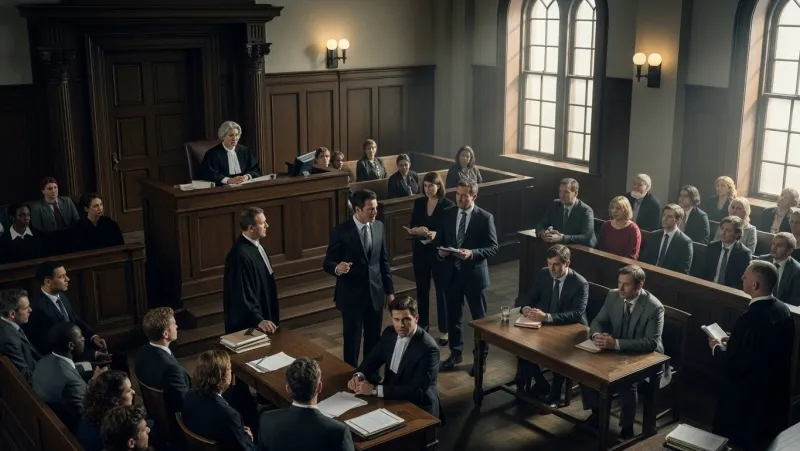
Insurance claim arbitration in Fresno, California 93776 imposes rigid evidentiary thresholds that leave minimal opportunity for remediation once submissions are finalized. This demands a trade-off between rapid document turnaround and thorough multi-tier verification, often straining limited operational resources.
Most public guidance tends to omit the nuanced interaction between local procedural timelines and document intake governance, which can create silent failure points unnoticed by traditional compliance checklists. These silent failures collapse under arbitration pressure when the process mandates absolute evidentiary certainty.
Another inherent constraint is the decentralized nature of evidence collection in Fresno arbitrations, which increases the risk of chain-of-custody discipline breakdowns, especially when coordination between field agents and intake teams lacks real-time synchronization. Addressing these gaps requires additional personnel training and investment in error-detection protocols, which present cost implications that many entities fail to budget adequately.
| EEAT Test | What most teams do | What an expert does differently (under evidentiary pressure) |
|---|---|---|
| So What Factor | Assume checklist completeness equates to evidentiary integrity | Continuously test and re-verify evidentiary integrity beyond checklists, especially pre-filing |
| Evidence of Origin | Rely on intake signatures as proof of submission validity | Implement independent validation of chain-of-custody documentation with redundant audits |
| Unique Delta / Information Gain | Focus on quantity of evidence submitted | Prioritize quality, provenance, and synchronization of evidence with established arbitration timelines |
Don't Leave Money on the Table
Full legal representation typically costs $14,000–$65,000 on average. Self-help document prep: $399.
Start Your Case — $399FAQ
Is arbitration binding in California?
Yes, according to California law, arbitration agreements included in insurance policies are generally enforceable, and the arbitration decision is binding unless disputed through legal channels within specified timelines.
How long does arbitration take in Fresno?
Typically, the arbitration process in Fresno ranges from 30 to 90 days from the date of filing, depending on dispute complexity and evidence preparation. Procedural delays or procedural challenges can extend this timeline.
What evidence should I focus on presenting in Fresno arbitration?
Focus on tangible, physical evidence such as original policy documents, timestamped photographs of damages, repair invoices, and expert reports. Proper organization and timely submission are key to strengthening your case.
Can I appeal an arbitration decision in California?
Appeals are generally limited; arbitration awards are usually final and binding within California. Challenging an award requires specific legal grounds like arbitrator bias or procedural misconduct, and such appeals are rare.
What happens if I miss a deadline during arbitration?
Missing procedural deadlines can lead to evidence exclusion, case dismissal, or unfavorable rulings. Strict adherence to deadlines and procedural rules is essential to preserving your rights.
Why Contract Disputes Hit Fresno Residents Hard
Contract disputes in Fresno County, where 449 federal wage enforcement cases prove businesses cut corners, require affordable resolution options. At a median income of $67,756, spending $14K–$65K on litigation is simply not viable for most residents.
In Fresno County, where 1,008,280 residents earn a median household income of $67,756, the cost of traditional litigation ($14,000–$65,000) represents 21% of a household's annual income. Federal records show 449 Department of Labor wage enforcement cases in this area, with $3,504,119 in back wages recovered for 4,187 affected workers — evidence that businesses here have a pattern of cutting corners on obligations.
$67,756
Median Income
449
DOL Wage Cases
$3,504,119
Back Wages Owed
8.6%
Unemployment
Source: U.S. Census Bureau ACS, Department of Labor WHD. IRS income data not available for ZIP 93776.
Federal Enforcement Data — ZIP 93776
Source: OSHA, DOL, CFPB, EPA via ModernIndexPRODUCT SPECIALIST
Content reviewed for procedural accuracy by California-licensed arbitration professionals.
About Ryan Nguyen

View author profile on BMA Law | LinkedIn | Federal Court Records
Arbitration Help Near Fresno
Nearby ZIP Codes:
Arbitration Resources Near
If your dispute in involves a different issue, explore: Consumer Dispute arbitration in • Employment Dispute arbitration in • Business Dispute arbitration in • Insurance Dispute arbitration in
Nearby arbitration cases: Loomis contract dispute arbitration • Brooks contract dispute arbitration • Ross contract dispute arbitration • Colfax contract dispute arbitration • Trinidad contract dispute arbitration
Other ZIP codes in :
References
California Arbitration Act: California Civil Procedure Code § 1280
Civil Procedure and Evidence: California Civil Procedure Code
Insurance Dispute Regulations: California Department of Consumer Affairs
Contract Law and Arbitration Rules: California Contract Law
Evidence Management: California Evidence Code § 500
Local Economic Profile: Fresno, California
N/A
Avg Income (IRS)
449
DOL Wage Cases
$3,504,119
Back Wages Owed
In Fresno County, the median household income is $67,756 with an unemployment rate of 8.6%. Federal records show 449 Department of Labor wage enforcement cases in this area, with $3,504,119 in back wages recovered for 5,256 affected workers.

