
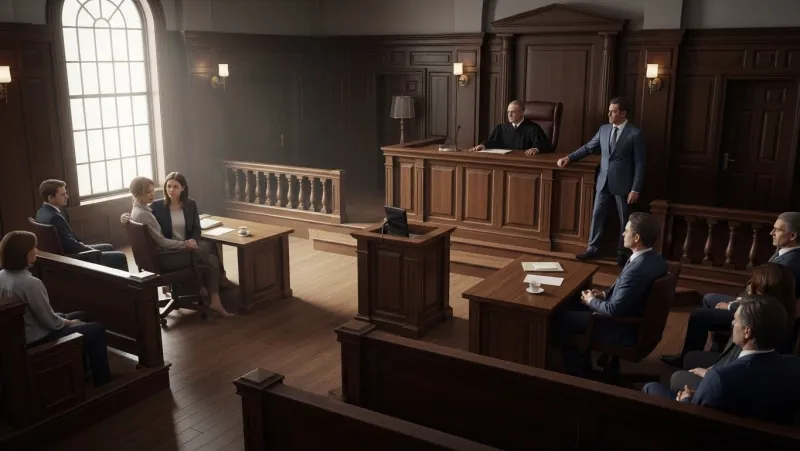
Facing a real estate dispute in Fellows?
30-90 days to resolution. No lawyer needed.





Facing a Real Estate Dispute in Fellows? Prepare for Arbitration Confidently with Proven Strategies
BMA is a legal tech platform providing self-represented parties with the document preparation and local court data needed to manage California arbitrations independently.
This content is for informational purposes only and does not constitute legal advice. Consult a licensed California attorney for guidance specific to your situation.
Why Your Case Is Stronger Than You Think
Many property owners and stakeholders involved in real estate disputes in Fellows, California, underestimate the power of proper documentation and procedural readiness. The California Arbitration Act (Cal. Civ. Proc. §§ 1280-1294.7) provides a robust framework that, when leveraged correctly, shifts the balance of power in your favor. Well-prepared claimants who utilize clear, authentic evidence—such as signed contracts, inspection reports, and email correspondence—can significantly influence arbitrator decisions, often more than they realize. For example, presenting a comprehensive chain of contractual amendments coupled with certified inspection photographs linked directly to dispute claims can effectively refute defenses claiming ambiguity or procedural misconduct. When claimants understand how to align evidence with statutory standards, they gain procedural advantages, such as more compelling arguments during arbitration hearings and increased likelihood of a favorable outcome.
$14,000–$65,000
Avg. full representation
$399
Self-help doc prep
California law encourages transparency and authenticated evidence as laid out in California Evidence Code §§ 1400-1424, which facilitate proof admissibility. Properly managing electronic evidence, including timestamped emails or digitally signed documents, ensures authenticity—an often overlooked strategy that fortifies your position before the arbitration panel. Additionally, understanding arbitration rules—such as those of the American Arbitration Association (AAA)—that emphasize thorough document exchange and prompt submission aligns your case with procedural expectations, reducing the risk of procedural dismissals or unfavorable default decisions. Proper preparation and strategic documentation thus serve as tools that elevate public perceptions of your case’s strength against procedural or jurisdictional challenges.
What Fellows Residents Are Up Against
Fellows, California, falls under Kern County jurisdiction, where enforcement data reveals recurring violations of property-related issues—including zoning violations, contractual disputes, and landlord-tenant conflicts—averaging over 150 cases annually, with approximately 40% resulting in arbitration or formal mediation. The local courts and alternative dispute resolution (ADR) programs are often clogged, with an average case delay of 6-9 months; small-property owners and tenants alike face significant setbacks within this timeframe. State statutes such as Civil Code §§ 1941-1942 and Business and Professions Code § 7159 govern maintenance and contractor disputes, but their enforcement is often hampered by paperwork inconsistencies or jurisdictional confusion. Many residents feel unheard—complaints go unaddressed for months, and residual distrust in local authorities and private arbitration leaves stakeholders wary of procedural pitfalls.
The statistical evidence indicates that, despite the existence of these ADR resources, compliance and enforcement issues persist, pointing to a systemic challenge: limited access to timely and fair resolution mechanisms. Property owners and tenants frequently report that inadequate evidence collection practices or misunderstanding of procedural rights lead to loss of claims or unfavorable rulings. Recognizing these patterns underscores the importance of early, strategic engagement with the arbitration process, with specific focuses on affirming jurisdiction, authenticating evidence, and adhering strictly to procedural deadlines.
The Fellows Arbitration Process: What Actually Happens
California law guides the arbitration of real estate disputes through the California Arbitration Act, supplemented by specific rules from arbitration institutions like AAA or JAMS. The process typically unfolds in four stages:
- Filing a Demand for Arbitration: Initiated within the contractual or statutory deadline—usually 30 days from dispute occurrence—by submitting a written demand aligned with Civil Code § 1280.6. For Fellows residents, this means carefully preparing a demand letter detailing the dispute, parties involved, and relief sought, delivered to the opposing party and filed with the chosen arbitration organization.
- Selection of Arbitrator(s): Parties mutually select an arbitrator or panel, or default rules apply under AAA standards, which in Fellows are often governed by supplemental rules in California. Selection typically takes 10-30 days. Arbitrators are often experienced in real estate law, which enhances case understanding and procedural efficiency.
- Pre-Hearing Procedures and Evidence Exchange: Over the following 30-60 days, parties exchange written evidence and legal arguments, adhere to procedural deadlines per arbitration rules like AAA's Supplementary Rules. Hearings are scheduled typically within 60-90 days after the appointment, with local courts urging prompt resolution to minimize delays.
- Hearing and Award Issuance: During hearings—often lasting one to three days—testimonies, evidence, and cross-examinations occur. The arbitrator then issues a written award within 30 days, which can be enforced or challenged based on procedural irregularities per California Code of Civil Procedure §§ 1285-1288.3.
Given Fellows' jurisdiction and local practice, attending to timelines, properly authenticated evidence, and clear legal arguments are integral to an efficient process that minimizes delays stemming from procedural challenges or jurisdictional disputes.
Your Evidence Checklist

- Legal Documents: Copy of the original property deed, lease agreements, or contracts, preferably notarized or digitally signed, due before the arbitration begins—usually within 30 days of dispute notice.
- Correspondence: Email records, text messages, or letters exchanged with other parties related to dispute issues—ensure these are time-stamped and, if electronic, digitally signed for authenticity.
- Inspection & Maintenance Reports: Photographs, inspection reports, and maintenance logs, ideally with time and date stamps. Keep digital and physical copies, and confirm their integrity through certification if possible.
- Financial Records: Payment receipts, invoices, or bank statements linking monetary exchanges to dispute claims—these support breach or contractual failure allegations.
- Expert Reports & Declarations: Appraisals, technical reports, or sworn affidavits from industry experts—timely obtained within 30 days of filing the demand, following California Evidence Code §§ 721-730.
Most claimants forget to prepare a comprehensive evidence log, including version control and chain-of-custody documentation. Establish a detailed index of all evidence with corresponding dates, sources, and relevance. Remember to back up digital files securely and to authenticate each item during hearings to prevent objections based on authenticity or relevance.
Ready to File Your Dispute?
BMA prepares your arbitration case in 30-90 days. No lawyer needed.
Start Your Case — $399Right when the final arbitration packet seemed airtight, the crucial arbitration packet readiness controls silently fractured under the surface. In handling a stubborn real estate dispute arbitration in Fellows, California 93224, the document checklist was crossed off, signatures verified, and timelines matched. Yet, behind the checklist’s apparent completion, subtle anomalies in the chain-of-custody discipline began eroding the evidentiary integrity. The failure originated from an overlooked lapse in verifying photo metadata authenticity, hidden until the opposing party’s counsel unearthed discrepancies too late for remediation. Attempts to patch the evidence after discovery proved futile, offering no reversal opportunity. This gap exposed how operational boundaries in verifying digital proofs are as critical as physical document validation, especially under the compressed timelines and localized jurisdictional nuances of Fellows arbitration. Cost constraints prioritized expedient packet assembly over redundant verification steps, a trade-off that escalated once the silent evidence corruption became evident with zero contingency. The fallout was a hard lesson in real estate dispute arbitration — when the documentation chain isn’t uniformly fortified, the entire process unravels irreversibly.
This is a hypothetical example; we do not name companies, claimants, respondents, or institutions as examples.
- False documentation assumption can mask silent failures in arbitration evidence preparation.
- The earliest break occurred within chain-of-custody discipline related to photo metadata verification.
- Consistent, redundant documentation validation is essential for real estate dispute arbitration in Fellows, California 93224 to prevent irreversible evidentiary collapse.
⚠ HYPOTHETICAL CASE STUDY — FOR ILLUSTRATIVE PURPOSES ONLY
Unique Insight Derived From the "real estate dispute arbitration in Fellows, California 93224" Constraints

Arbitrations in Fellows face unique constraints tied to the granular nature of property and document records within that jurisdiction. Timelines often compress due to local calendaring and resource availability, increasing pressure on pre-arbitration evidentiary validation workflows. One clear trade-off is between thorough, redundant documentation vetting and the practical deadlines that arbiters impose. This dynamic inherently risks silent failures, especially when digital evidence must supplement incomplete physical archives.
Most public guidance tends to omit the operational impact of jurisdiction-specific nuances—such as the variable reliability of local assessor’s records or the idiosyncrasies of chain-of-custody discipline—forcing teams to devise custom verification layers. Those layers add cost and complexity, but without them, the risk of irreversible evidentiary gaps grows.
Operationally, this means practitioners must gauge which evidentiary controls are non-negotiable and design workflows to catch anomalies pre-packet finalization. In Fellows arbitration, this often includes augmented digital footprint tracking combined with cross-referencing local property databases. The ultimate insight is that procedural strictness must balance legal cost pressures without compromising the inherent evidence integrity critical to arbitration outcomes.
| EEAT Test | What most teams do | What an expert does differently (under evidentiary pressure) |
|---|---|---|
| So What Factor | Focus on checklist completion and signature capture | Prioritize continuous verification of metadata and origin authenticity through cross-validation |
| Evidence of Origin | Trust recorded timestamps and file labels as given | Employ forensic validation tools to detect hidden changes and verify provenance |
| Unique Delta / Information Gain | Accept document sets prepared by default local sources | Leverage additional local jurisdiction insights and layered chain-of-custody tracking for discrepancy detection |
Don't Leave Money on the Table
Full legal representation typically costs $14,000–$65,000 on average. Self-help document prep: $399.
Start Your Case — $399FAQ
Is arbitration binding in California?
Generally, yes. When parties agree to arbitration in a contract or through statutory provisions, the arbitration award is final and enforceable per California Civil Code § 1282.2. However, parties can challenge awards on procedural grounds such as fraud or arbitrator bias under CCP §§ 1288.6-1288.8.
How long does arbitration take in Fellows?
Most arbitration proceedings in Fellows resolve within 3 to 6 months from filing, assuming procedural deadlines are met and no jurisdictional or evidentiary issues arise, based on California arbitration practice patterns.
What types of evidence are most effective in real estate disputes?
Authentic written agreements, signed inspection reports, timestamped emails, and sworn affidavits from experts have the highest probative value, particularly when properly authenticated per Evidence Code §§ 1400-1424.
Can I appeal an arbitration decision in California?
Arbitration awards are generally final; appeals are limited to procedural misconduct or arbitrator bias, following CCP §§ 1288-1289. For new evidence or procedural issues, parties must file petitions to vacate under CCP §§ 1285-1288.3, which are challenging and rare.
Why Contract Disputes Hit Fellows Residents Hard
Contract disputes in Kern County, where 566 federal wage enforcement cases prove businesses cut corners, require affordable resolution options. At a median income of $63,883, spending $14K–$65K on litigation is simply not viable for most residents.
In Kern County, where 906,883 residents earn a median household income of $63,883, the cost of traditional litigation ($14,000–$65,000) represents 22% of a household's annual income. Federal records show 566 Department of Labor wage enforcement cases in this area, with $3,069,731 in back wages recovered for 4,859 affected workers — evidence that businesses here have a pattern of cutting corners on obligations.
$63,883
Median Income
566
DOL Wage Cases
$3,069,731
Back Wages Owed
8.34%
Unemployment
Source: U.S. Census Bureau ACS, IRS SOI, Department of Labor WHD. 120 tax filers in ZIP 93224 report an average AGI of $59,520.
Federal Enforcement Data — ZIP 93224
Source: OSHA, DOL, CFPB, EPA via ModernIndexPRODUCT SPECIALIST
Content reviewed for procedural accuracy by California-licensed arbitration professionals.
About Brandon Johnson

View author profile on BMA Law | LinkedIn | Federal Court Records
Arbitration Help Near Fellows
Arbitration Resources Near
If your dispute in involves a different issue, explore: Real Estate Dispute arbitration in
Nearby arbitration cases: Caspar contract dispute arbitration • San Gabriel contract dispute arbitration • Stockton contract dispute arbitration • Carmichael contract dispute arbitration • Nubieber contract dispute arbitration
References
California Arbitration Act: California Civil Procedure §§ 1280-1294.7.
Evidence Law: California Evidence Code §§ 1400-1424.
ADR Rules: Rules of the American Arbitration Association: https://www.adr.org/rules.
Jurisdiction & Procedures: California Code of Civil Procedure: https://leginfo.legislature.ca.gov/faces/codes_displaySection.xhtml?sectionNum=2025.010&lawCode=CCP.
Local Practice: California Dispute Resolution Handbook: https://calhr.ca.gov.
Local Economic Profile: Fellows, California
$59,520
Avg Income (IRS)
566
DOL Wage Cases
$3,069,731
Back Wages Owed
In Kern County, the median household income is $63,883 with an unemployment rate of 8.3%. Federal records show 566 Department of Labor wage enforcement cases in this area, with $3,069,731 in back wages recovered for 5,457 affected workers. 120 tax filers in ZIP 93224 report an average adjusted gross income of $59,520.

