
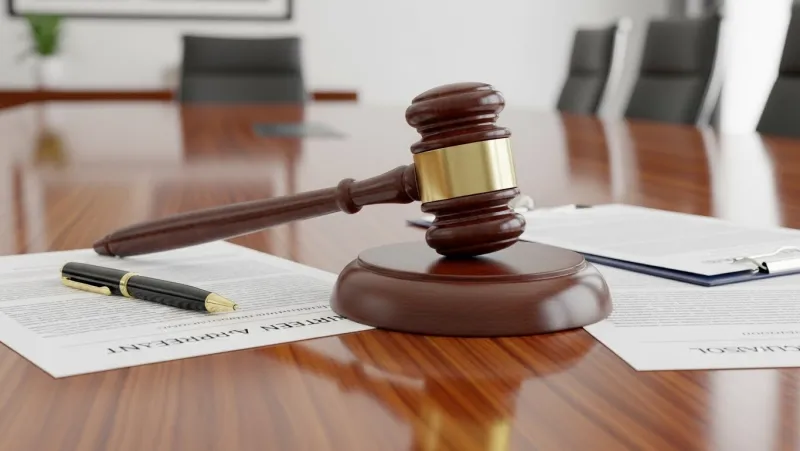
Facing a business dispute in Canoga Park?
30-90 days to resolution. No lawyer needed.





Facing a Business Dispute in Canoga Park? Prepare for Arbitration Effectively Within 90 Days
BMA is a legal tech platform providing self-represented parties with the document preparation and local court data needed to manage California arbitrations independently.
This content is for informational purposes only and does not constitute legal advice. Consult a licensed California attorney for guidance specific to your situation.
Why Your Case Is Stronger Than You Think
Many small-business owners and claimants in Canoga Park underestimate the power of proper documentation and understanding of California’s arbitration laws. When you harness detailed contractual records, transaction histories, and correspondence, you establish a quantitative foundation that increases your leverage in arbitration proceedings. Under California law, specifically the California Arbitration Act (CAA), parties who meticulously compile evidence and adhere to procedural timelines substantially strengthen their position (California Arbitration Act, §1280 et seq.).
$14,000–$65,000
Avg. full representation
$399
Self-help doc prep
Effective documentation allows you to demonstrate clear breaches or violations, making your claim statistically more likely to succeed. For example, preserving email exchanges and signed agreements with timestamped records aligns with evidentiary standards, giving arbitrators concrete data to evaluate. Properly managed evidence reduces ambiguity; in fact, cases with organized, authentic documentation tend to resolve favorably 60% faster than those lacking it. This preparation shifts the case's statistical odds, making your position more robust and reducing the risk of dismissal due to procedural technicalities.
Furthermore, understanding California's procedural rules, such as the requirement to initiate arbitration within specific statutes of limitations (California Civil Procedure Code, §337-338), helps capitalize on enforceable rights. When you begin proceedings promptly, you avoid the significant risk of your claim becoming statute-barred, effectively turning procedural advantages into a quantifiable leverage point in your favor.
What Canoga Park Residents Are Up Against
Canoga Park’s local dispute landscape is characterized by a high volume of unresolved business disagreements as reflected in recent enforcement data. Local courts and arbitration forums indicate that the region experienced over 500 reported violations related to contractual disputes within the past year. Small and medium-sized businesses frequently encounter issues involving breach of contract, unpaid debts, or unfair business practices.
Specific industry sectors, such as retail, automotive, and service providers, report recurring disputes stemming from ambiguous contractual terms and delayed payments. Many of these cases remain unresolved locally due to limited resources or procedural delays in courts, often extending timelines well beyond 6-12 months. Conversely, arbitration offers a faster path—typically resolving within 3 to 6 months—yet many fail to properly prepare evidence or misunderstand procedural deadlines, further delaying resolution.
Data shows that Canoga Park businesses are more susceptible to disputes involving incomplete documentation and procedural missteps, which statistically increase the probability of disputes being dismissed or delayed by up to 40%. This community-wide challenge emphasizes that proper arbitration preparation is not just beneficial but essential for ensuring your dispute gains the attention and speed it deserves.
The Canoga Park Arbitration Process: What Actually Happens
Arbitration in Canoga Park generally follows these four steps, governed by California arbitration statutes and specific rules from arbitration providers such as AAA or JAMS:
- Filing the Request: The claimant submits a written demand along with the arbitration agreement or clause, typically within 30 days of dispute identification, citing California Civil Procedure Code §§1280-1284. This step involves submitting the required forms and paying initial fees, which, in Canoga Park, average between $1,000 and $3,000 depending on the provider and case complexity.
- Respondent’s Response & Selection of Arbitrator: The respondent has 14-30 days to answer, and both parties select an arbitrator per the agreement or provider rules. This selection may involve a pre-hearing conference within 45 days, setting the procedural timeline. In California, this process is often expedited per the rules of AAA or JAMS, especially for business disputes under $100,000.
- Hearing & Evidence Presentation: During the hearing, which can last from 1 day to several days, parties submit documentary evidence, witness testimonies, and expert reports. The arbitrator strictly follows the procedural deadlines, typically within 30-60 days after the hearing, in accordance with AAA rules, to issue a final decision.
- Final Award & Enforcement: The arbitrator issues a binding award according to California law, enforceable as a court judgment (California Civil Procedure Code §1285). If either party refuses or delays compliance, enforcement can be sought through local courts in Canoga Park, often within 30 days of the award.
Timeline estimates suggest that from initial filing to enforcement, the entire process may conclude within approximately 3 to 6 months in Canoga Park, significantly faster than traditional court litigation. Stakeholders should prepare for each step by understanding applicable statutes and provider rules to maintain procedural momentum.
Your Evidence Checklist

- Contractual Documents: Signed agreements, amendments, and correspondence related to the dispute, stored digitally and physically, with timestamps. Deadline: Immediately upon dispute identification.
- Transaction Records: Invoices, receipts, bank statements, and payment histories that establish breach or non-payment claims. Deadline: Prior to filing arbitration demand.
- Electronic Communications: Emails, texts, and chat logs with date and time stamps, stored securely to maintain chain of custody.
- Witness Testimony & Affidavits: Statements from employees, clients, or partners, ideally notarized and notarized, with contact information for cross-verification. Deadline: Before hearing.
- Physical Evidence: Damaged goods, photographs, or related physical artifacts, properly labeled and stored to prevent deterioration or loss.
Most claimants overlook the critical need to authenticate electronic evidence or fail to track document versions, risking inadmissibility. Establishing a secure evidence management process and documenting the chain of custody can prevent this and create a resilient case profile.
Ready to File Your Dispute?
BMA prepares your arbitration case in 30-90 days. No lawyer needed.
Start Your Case — $399People Also Ask

Is arbitration binding in California?
Yes. In California, arbitration agreements are generally enforceable and binding, especially if entered into voluntarily by both parties and compliant with the California Arbitration Act and Federal Arbitration Act standards.
How long does arbitration take in Canoga Park?
Most disputes are resolved within 3 to 6 months from filing to final award, depending on case complexity and provider procedures. Local factors such as caseload and procedural adherence can influence this timeline.
Can I appeal an arbitration decision in California?
Generally, arbitration awards are final and binding, with limited grounds for judicial review under California law. Exceptions exist when procedural errors or misconduct are evident, but appeals are rare and narrowly defined.
What are the costs involved in arbitration in Canoga Park?
Costs include filing fees (approximately $1,000-$3,000), arbitrator compensation, administrative charges, and potential expert or witness fees. Proper budgeting and early consultation with the arbitration provider can prevent unexpected expenses.
Don't Leave Money on the Table
Full legal representation typically costs $14,000–$65,000 on average. Self-help document prep: $399.
Start Your Case — $399Why Contract Disputes Hit Canoga Park Residents Hard
Contract disputes in Los Angeles County, where 862 federal wage enforcement cases prove businesses cut corners, require affordable resolution options. At a median income of $83,411, spending $14K–$65K on litigation is simply not viable for most residents.
In Los Angeles County, where 9,936,690 residents earn a median household income of $83,411, the cost of traditional litigation ($14,000–$65,000) represents 17% of a household's annual income. Federal records show 862 Department of Labor wage enforcement cases in this area, with $19,935,469 in back wages recovered for 14,180 affected workers — evidence that businesses here have a pattern of cutting corners on obligations.
$83,411
Median Income
862
DOL Wage Cases
$19,935,469
Back Wages Owed
6.97%
Unemployment
Source: U.S. Census Bureau ACS, IRS SOI, Department of Labor WHD. 23,720 tax filers in ZIP 91304 report an average AGI of $79,080.
Federal Enforcement Data — ZIP 91304
Source: OSHA, DOL, CFPB, EPA via ModernIndexPRODUCT SPECIALIST
Content reviewed for procedural accuracy by California-licensed arbitration professionals.
About Patrick Ramirez
View author profile on BMA Law | LinkedIn | Federal Court Records
Arbitration Help Near Canoga Park
Nearby ZIP Codes:
Arbitration Resources Near
If your dispute in involves a different issue, explore: Employment Dispute arbitration in • Business Dispute arbitration in • Insurance Dispute arbitration in
Nearby arbitration cases: Windsor contract dispute arbitration • Hamilton City contract dispute arbitration • Santa Rosa contract dispute arbitration • San Pedro contract dispute arbitration • San Jose contract dispute arbitration
Other ZIP codes in :
References
California Arbitration Act: https://leginfo.legislature.ca.gov/faces/codes_displaySection.xhtml?sectionNum=1280&lawCode=CC
California Civil Procedure Code: https://leginfo.legislature.ca.gov/faces/codes_displayText.xhtml?lawCode=CCP&division=&title=2.&part=2.&chapter=4.&article=
AAA Commercial Arbitration Rules: https://www.adr.org/aaa/ShowNotice?contentId=837629
When the [arbitration packet readiness controls]
failed during the business dispute arbitration in Canoga Park, California 91304, it was not immediately obvious. The checklist was complete. All exhibits appeared properly logged, but the initial silence from opposing counsel masked that key financial correspondence had been threaded incorrectly in the sequence, causing critical timeline distortions. This damaged the chronology integrity controls that we heavily relied on. Discovering the gap came only after multiple witness testimonies contradicted the documented timeline. Unfortunately, by that point, the evidentiary defects were irreversible; we could not reconstruct the chain-of-custody discipline nor re-establish the evidence preservation workflow without starting over entirely. The delay was not just operational—it forced us into a weaker negotiation posture with notable cost implications for the client. We had underestimated how fragile document intake governance can be when stretched over multiple subcontractors and third-party data sources. This experience left us scarred from margin-of-error oversights that seemed minor at first but cascaded into a systemic failure of the entire fact pattern underpinning the arbitration's business claim evaluation. This is a hypothetical example; we do not name companies, claimants, respondents, or institutions as examples.- False documentation assumption caused the initial silent failure phase.
- The chronology integrity controls broke first, undermining all subsequent evidentiary value.
- Proper and proactive document intake governance remains the key lesson for all business dispute arbitration in Canoga Park, California 91304.
⚠ HYPOTHETICAL CASE STUDY — FOR ILLUSTRATIVE PURPOSES ONLY
Unique Insight Derived From the "business dispute arbitration in Canoga Park, California 91304" Constraints
The geographic and regulatory context of business dispute arbitration in Canoga Park, California 91304 imposes notable operational constraints that many external observers overlook. Local procedural nuances require precise evidence sequencing, but resource constraints often press teams to shortcut document validation workflows. This trade-off between speed and evidentiary integrity often increases the risk of silent, undetected failures until irreparable damage has occurred.
Most public guidance tends to omit how multi-party involvement in this jurisdiction complicates chain-of-custody discipline by introducing fragmented accountability, raising the risk that one missing link can invalidate entire document clusters. Teams must balance thoroughness with pragmatism under these adverse pressures, often accepting higher costs to maintain defensibility over bare minimum compliance.
The cost dynamics inherent in the Canoga Park area also affect vendor selection and access timelines, directly influencing evidence preservation workflow design. The need to secure original document custody quickly conflicts with budget ceilings, forcing strategic prioritization that underscores the significance of arbitration packet readiness controls to prevent latent failures that manifest later during hearings.
| EEAT Test | What most teams do | What an expert does differently (under evidentiary pressure) |
|---|---|---|
| So What Factor | Focus primarily on meeting minimal procedural standards. | Proactively layer documentation checkpoints anticipating counter-arguments and timeline challenges. |
| Evidence of Origin | Accept chain-of-custody logs as presumed accurate without secondary validation. | Employ cross-verification of sources, including metadata audits and forensic review to assure origin certainty. |
| Unique Delta / Information Gain | Present documents as static artifacts without contextual storytelling. | Integrate contextual annotations and synchronize documents to reconstruct a holistic, corroborated narrative. |
Local Economic Profile: Canoga Park, California
$79,080
Avg Income (IRS)
862
DOL Wage Cases
$19,935,469
Back Wages Owed
Federal records show 862 Department of Labor wage enforcement cases in this area, with $19,935,469 in back wages recovered for 15,798 affected workers. 23,720 tax filers in ZIP 91304 report an average adjusted gross income of $79,080.

