

Facing a consumer dispute in Burlingame?
30-90 days to resolution. No lawyer needed.





Facing a Consumer Dispute in Burlingame? How Proper Documentation and Strategy Can Protect Your Rights
BMA is a legal tech platform providing self-represented parties with the document preparation and local court data needed to manage California arbitrations independently.
This content is for informational purposes only and does not constitute legal advice. Consult a licensed California attorney for guidance specific to your situation.
Why Your Case Is Stronger Than You Think
Many consumers in Burlingame underestimate the leverage they hold when initiating arbitration. The California Arbitration Act (CAA), codified at Code of Civil Procedure sections 1280-1294.9, establishes a framework that favors enforceability of arbitration agreements, provided they meet specific contractual and procedural standards. Moreover, California courts have repeatedly upheld the enforceability of arbitration clauses in consumer contracts, especially when such clauses clearly delineate the process and rights of consumers.
$14,000–$65,000
Avg. full representation
$399
Self-help doc prep
Claimants who meticulously preserve transactional records, correspondence, receipts, and contractual documents can leverage statutory protections under California's consumer protection statutes, such as the California Consumer Legal Remedies Act (CLRA) (California Civil Code sections 1750-1784). Proper documentation, including dated communications and signed contracts, shifts the arbitration in your favor, demonstrating breach causation and damages clearly and efficiently.
Additionally, understanding procedural safeguards—such as filing deadlines specified in the California Code of Civil Procedure and the rules of the arbitration forum—empowers claimants to avoid procedural dismissals. Being organized and proactive ensures your evidence is ready and your claim timeframes are met, reinforcing your position even against sophisticated defendants practicing embedded resistance.
What Burlingame Residents Are Up Against
Burlingame, a city with a population exceeding 30,000, operates within a landscape where consumer disputes are increasingly prevalent. The California Department of Consumer Affairs reports hundreds of violations related to deceptive practices, unfair billing, and contractual breaches annually within the state, many involving Burlingame-based affected businesses. Local enforcement agencies have documented a rising trend of violations in sectors such as retail, services, and financial products.
While individual consumers often face large corporations or service providers with resources to stall or dismiss claims, the data shows a consistent pattern: many Burlingame residents encounter disputes that are either ignored or strategically delayed, leaving claimants to navigate a system structured with built-in procedural barriers. Enforcement agencies note that in Burlingame alone, the number of resolved claims using arbitration remains underreported, masking the true scope of issues faced by residents.
Furthermore, the local arbitration landscape is dominated by national institutions like AAA and JAMS, which have established rules that often favor experienced respondents. However, consumers equipped with comprehensive documentation and understanding of their rights routinely succeed in arbitration, provided they act within the system's procedural limits.
The Burlingame Arbitration Process: What Actually Happens
Consumer arbitration in Burlingame, governed under California law and the arbitration provider’s rules, typically unfolds in four stages:
- Filing and Notice: The claimant submits a written demand for arbitration, referencing the arbitration clause in the contract, within the applicable statute of limitations—generally four years for most contract claims under California law (California Code of Civil Procedure section 337-337.3). The demand is filed with the arbitration provider (e.g., AAA).
- Response and Preliminary Hearing: The respondent has 15-30 days to respond, after which a preliminary hearing is scheduled, often within 30 days of filing, to set the arbitration timetable and address jurisdiction or procedural objections.
- Discovery and Evidence Submission: Arbitration rules usually limit discovery; in California, the AAA allows for limited document exchange and depositions only if mutually agreed upon or ordered by the arbitrator (AAA Consumer Arbitration Rules).
- Hearing and Award: The arbitration hearing typically occurs within 60-180 days after the initial filing, depending on complexity and arbitrator availability. The arbitrator issues a final award, generally binding, within 30 days of closing arguments.
Understanding this process and timeline underscores the importance of early evidence collection and procedural compliance. Effective preparation minimizes delays and increases the chances of a favorable outcome under California's arbitration framework, which emphasizes party autonomy but restricts discovery and procedural motions.
Your Evidence Checklist
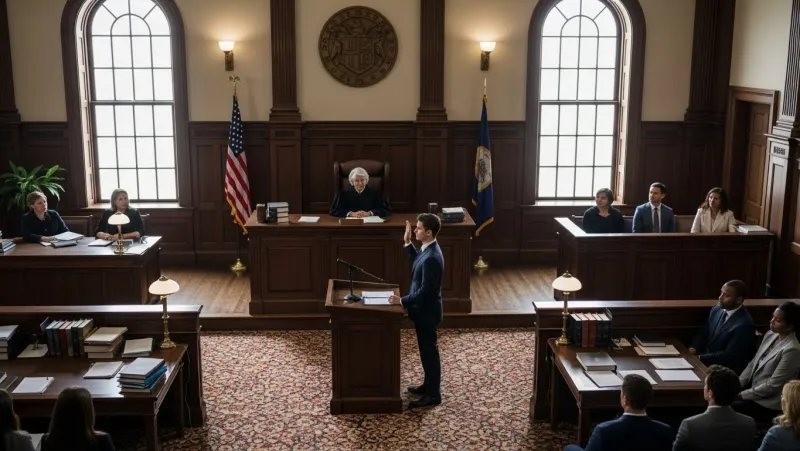
- Contracts and Agreements: Signed agreements outlining the dispute scope, arbitration clauses, and dispute resolution terms, ideally with notarized or digitally verified signatures.
- Transactional Records: Receipts, invoices, bank statements, or electronic proof demonstrating the claimed breach or damages, with clearly marked dates.
- Correspondence: Emails, texts, or recorded phone calls with timestamps that show attempts at resolution or relevant contractual discussions.
- Communication Logs: Any notices sent or received regarding the dispute, including delivery confirmations or acknowledgment receipts.
- Photographic or Video Evidence: Visual proof supporting claims of damages, defective goods, or service failures, with timestamps if possible.
Most claimants overlook the necessity of systematic evidence management, which can be detrimental during arbitration hearings or in response to procedural challenges. Gathering and organizing these documents before arbitration begins can avoid last-minute disputes over evidence admissibility or completeness.
Ready to File Your Dispute?
BMA prepares your arbitration case in 30-90 days. No lawyer needed.
Start Your Case — $399People Also Ask
Is arbitration binding in California?
Yes. When an arbitration clause is valid and enforceable, the resulting arbitration agreement typically compels both parties to follow through with binding arbitration, barring specific statutory exemptions like certain consumer protections under the California Civil Code.
How long does arbitration take in Burlingame?
In Burlingame, typical consumer arbitration proceedings can range from approximately 3 to 6 months, depending on the complexity of the dispute, availability of arbitrators, and the procedural efficiency of the chosen arbitration provider.
Can I challenge an arbitration clause in Burlingame?
Yes. Challenging enforceability often involves reviewing the clause for procedural defects, unconscionability, or insufficient notice under California law. Consulting legal counsel before proceeding is highly recommended.
What are common procedural pitfalls in arbitration?
Common pitfalls include missed deadlines, inadequate evidence, failure to comply with the arbitration provider’s rules, or misinterpretation of the scope of arbitration. These can lead to dismissals or adverse judgments.
Don't Leave Money on the Table
Full legal representation typically costs $14,000–$65,000 on average. Self-help document prep: $399.
Start Your Case — $399Why Contract Disputes Hit Burlingame Residents Hard
Contract disputes in Los Angeles County, where 615 federal wage enforcement cases prove businesses cut corners, require affordable resolution options. At a median income of $83,411, spending $14K–$65K on litigation is simply not viable for most residents.
In Los Angeles County, where 9,936,690 residents earn a median household income of $83,411, the cost of traditional litigation ($14,000–$65,000) represents 17% of a household's annual income. Federal records show 615 Department of Labor wage enforcement cases in this area, with $16,782,707 in back wages recovered for 7,854 affected workers — evidence that businesses here have a pattern of cutting corners on obligations.
$83,411
Median Income
615
DOL Wage Cases
$16,782,707
Back Wages Owed
6.97%
Unemployment
Source: U.S. Census Bureau ACS, IRS SOI, Department of Labor WHD. 20,550 tax filers in ZIP 94010 report an average AGI of $517,000.
Federal Enforcement Data — ZIP 94010
Source: OSHA, DOL, CFPB, EPA via ModernIndexPRODUCT SPECIALIST
Content reviewed for procedural accuracy by California-licensed arbitration professionals.
About Donald Rodriguez

View author profile on BMA Law | LinkedIn | Federal Court Records
Arbitration Resources Near
If your dispute in involves a different issue, explore: Consumer Dispute arbitration in • Employment Dispute arbitration in • Business Dispute arbitration in
Nearby arbitration cases: Rancho Mirage contract dispute arbitration • Santa Clarita contract dispute arbitration • Modesto contract dispute arbitration • Monterey contract dispute arbitration • Topaz contract dispute arbitration
References
- California Arbitration Act: https://leginfo.legislature.ca.gov/faces/codes_displayText.xhtml?division=4.&chapter=2.&part=3.&lawCode=CCP
- California Code of Civil Procedure: https://leginfo.legislature.ca.gov/faces/codes_displayText.xhtml?lawCode=CCP
- California Consumer Legal Remedies Act: https://leginfo.legislature.ca.gov/faces/codes_displayText.xhtml?division=7.&part=2.&lawCode=CLRA
- AAA Consumer Arbitration Rules: https://www.adr.org/sites/default/files/Consumer_Rules_2014.pdf
- Evidence Management Best Practices: https://www.nalsp.org/
- California Department of Consumer Affairs: https://www.dca.ca.gov/
The moment we realized the arbitration packet readiness controls had silently failed was when the Burlingame consumer arbitration did not accept the evidence submission—despite the checklist showing all documents were accounted for and timely submitted. Initially, everything passed the superficial review, and the team believed the chain-of-custody discipline was airtight, but later it became painfully clear that vital signed acknowledgments were missing due to an undocumented procedural assumption that electronic signatures were interchangeable with wet signatures. This gap, buried under layers of cost-saving measures and pushed deadlines in Burlingame, California 94010, proved irreversible once the hearing was underway: no opportunity to supplement missing evidence was granted, and the case's arbitrator strictly enforced local procedural variances that had been overlooked in the contract. The internal failure cost us not only credibility but the chance for any meaningful reprisal within that arbitration forum, underscoring how fragile documentation integrity is when operational trade-offs are ignored.
This is a hypothetical example; we do not name companies, claimants, respondents, or institutions as examples.
- False documentation assumption: believing electronic and wet signatures were legally interchangeable under Burlingame arbitration rules.
- What broke first: the unnoticed failure in chain-of-custody discipline related to evidence sign-offs.
- Generalized documentation lesson tied back to consumer arbitration in Burlingame, California 94010: always verify local procedural requirements beyond generic arbitration packet readiness controls to avoid irreversible evidence exclusion.
⚠ HYPOTHETICAL CASE STUDY — FOR ILLUSTRATIVE PURPOSES ONLY
Unique Insight Derived From the "consumer arbitration in Burlingame, California 94010" Constraints
Consumer arbitration in Burlingame, California 94010 presents unique challenges due to strict local procedural rules that differ subtly from general arbitration standards. Organizations handling such arbitrations must consistently balance the cost implications of exhaustive documentation gathering against the risk of evidentiary exclusion. This trade-off is amplified by the locality’s rigid acceptance policies, which leave no room for post-submission corrections.
Most public guidance tends to omit the nuanced distinction between electronic and physical documentation requirements specific to this jurisdiction, creating a blind spot that can compromise compliance. The assumption that uniform arbitration rules apply nationally will often lead to operational failures when these consumer disputes are localized.
Additionally, the need to maintain precise chain-of-custody discipline in these cases imposes workflow constraints that require dedicated resources and double verification steps. Although perceived as an increased operational cost, this overhead protects against irreversible procedural failures that Burlingame arbitrators rarely forgive.
| EEAT Test | What most teams do | What an expert does differently (under evidentiary pressure) |
|---|---|---|
| So What Factor | Assume compliance checklists cover everything needed for arbitration submission. | Proactively layer local procedural nuance checks against the checklist, converting assumptions into verified requirements. |
| Evidence of Origin | Accept electronic signatures broadly without scrutiny of local acceptance policies. | Confirm signature types comply specifically with Burlingame’s consumer arbitration rules and maintain both versions when possible. |
| Unique Delta / Information Gain | Report submission as complete once all documents are uploaded and timestamps verified. | Integrate chain-of-custody discipline by adding audit trails and physical evidence logs synchronized with digital records to preempt disputes. |
Local Economic Profile: Burlingame, California
$517,000
Avg Income (IRS)
615
DOL Wage Cases
$16,782,707
Back Wages Owed
Federal records show 615 Department of Labor wage enforcement cases in this area, with $16,782,707 in back wages recovered for 8,548 affected workers. 20,550 tax filers in ZIP 94010 report an average adjusted gross income of $517,000.

