
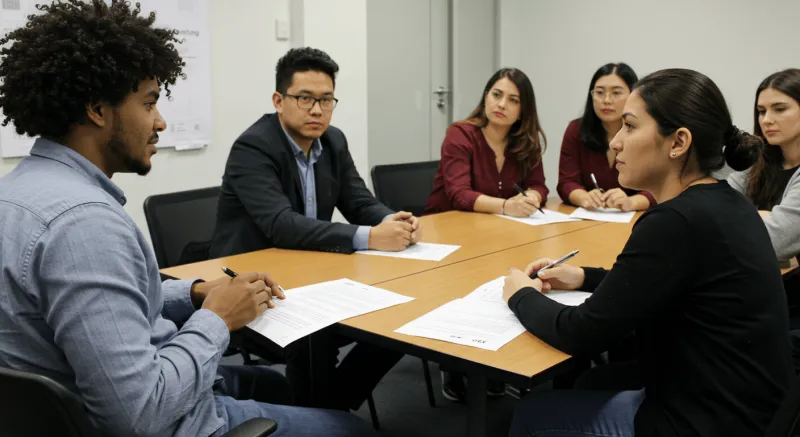
Facing a insurance dispute in San Jose?
30-90 days to resolution. No lawyer needed.





Denied Insurance Claim in San Jose? Get Arbitration-Ready in 30-90 Days
BMA is a legal tech platform providing self-represented parties with the document preparation and local court data needed to manage California arbitrations independently.
This content is for informational purposes only and does not constitute legal advice. Consult a licensed California attorney for guidance specific to your situation.
Why Your Case Is Stronger Than You Think
Many claimants in San Jose underestimate the advantage they hold when preparing for insurance dispute arbitration. Under California law, the enforceability of arbitration clauses often favors the claimant if properly documented. For example, Section 1281.2 of the California Code of Civil Procedure emphasizes that arbitration agreements are to be interpreted in favor of arbitration while adhering to the scope of the contract and statutory protections. Properly crafted documentation, including detailed proof of damages, correspondence, and policy language, shifts the procedural advantage to your side, especially if you demonstrate compliance with deadlines outlined in the arbitration rules set forth by the American Arbitration Association (AAA) or other authorized forums.
$14,000–$65,000
Avg. full representation
$399
Self-help doc prep
Furthermore, California law supports party autonomy with safeguards, allowing claimants to leverage procedural rules to reinforce their position. Evidence management—organized records of communication with insurers, denial letters, and proof of loss—can significantly influence an arbitrator's perception of the strength of your claim. When you proactively prepare documentation aligned with California Evidence Code provisions, you present a compelling case that can withstand procedural challenges and code-based scrutiny.
In practice, diligent preparation can help you resist common tactics used to weaken claims—such as disputed timelines or partial evidence—by demonstrating that you met all procedural requirements. The combination of statutory protections, procedural rules, and strategic documentation ensures your case is not as vulnerable as it might seem on paper.
What San Jose Residents Are Up Against
San Jose’s insurance dispute landscape reflects broader state trends but with local complexities. According to recent data from California’s Department of Insurance, the area has experienced thousands of complaints annually related to claim denials, delays, and unfair settlement practices. These complaints often involve violations of California Insurance Code Sections 790, which mandates fair claims handling, and are prevalent across industries such as property, health, and auto insurance. Local courts and ADR programs, including San Jose's designated arbitration forums, process a high volume of these disputes, which often face procedural hurdles that complicate resolution.
San Jose claims agents and insurers regularly cite policy exclusions, misinterpret coverage terms, or delay responses to pressure claimants into acceptance. Enforcement data shows that a significant percentage of disputes—up to 20% in some years—are dismissed or resolved unfavorably for claimants during early procedural phases, often due to missed deadlines or inadequate documentation.
This surge is compounded by the fact that many claimants are unaware of their rights under California law or how to leverage arbitration effectively. Overall, claimants need to recognize that their opponents often have more sophisticated legal and administrative resources, making precise, well-documented preparation even more critical for success in San Jose’s insurance dispute environment.
The San Jose Arbitration Process: What Actually Happens
In San Jose, insurance claim arbitration generally follows a four-stage process governed by California statutes and AAA or JAMS arbitration rules:
- Initiation and Filing: The claimant files a written demand for arbitration with the chosen arbitration forum, typically within the statutory period of one year from the date of denial or dispute. This process is guided by the AAA Commercial Rules (Section 4) and California Code of Civil Procedure Sections 1280–1284.
- Pre-Hearing Evidence Exchange: Parties exchange evidence, including policy documents, correspondence, proof of damages, and witness lists, often within 30 days after filing. Strict deadlines are enforced per arbitration rules, and failure to comply can result in evidence exclusions (California Evidence Code Section 352).
- Hearing and Decision: The arbitration hearing occurs, usually within 60 to 90 days in San Jose, depending on caseload and complexity. Arbitrators review submitted evidence, hear witness testimonies, and issue a final decision within 30 days of the hearing, pursuant to AAA or JAMS guidelines.
- Enforcement or Appeal: Parties may seek to confirm the arbitration award via the California courts, which will generally uphold the arbitrator’s decision unless procedural or jurisdictional errors are demonstrated (California Civil Procedure Section 1285).
Understanding this process allows claimants to prepare thoroughly, meet critical deadlines, and anticipate procedural expectations on local schedules.
Your Evidence Checklist
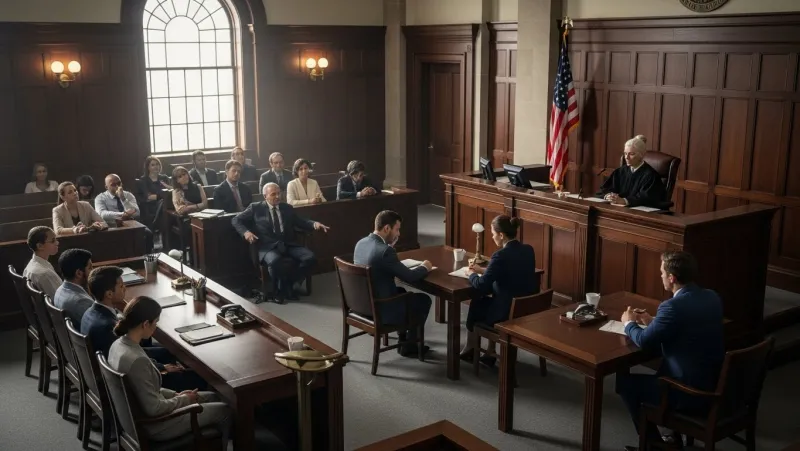
- Policy Documents: Signed policies, endorsements, and amendments—ensure they are current and complete, with signed acknowledgment pages.
- Correspondence Records: All communication with the insurer, including emails, recorded telephone calls, and letters—preferably with timestamps.
- Denial Letters and Clarifications: Official notices outlining reasons for denial, along with any internal notes or supplementary communications.
- Proof of Loss and Damages: Photographs, repair estimates, medical records, receipts, and bank statements verifying claimed damages or expenses.
- Witness Statements: Sworn affidavits or declarations from witnesses confirming damages or coverage issues.
- Evidence Submission Deadlines: Mark all dates for evidence exchange aligned with arbitration rules (e.g., 30 days post-demand), and keep copies of all submissions.
Most claimants overlook the importance of consistent, timely collection and organized presentation of these documents, which can dramatically impact the strength of their case in arbitration.
Ready to File Your Dispute?
BMA prepares your arbitration case in 30-90 days. No lawyer needed.
Start Your Case — $399The claim was flagged by a routine review checklist, which paradoxically passed without incident despite the underlying collapse of the arbitration packet readiness controls. We failed to detect that key photographic evidence had been irretrievably corrupted in transit—an error invisible until the opposing party’s counterclaim surfaced a week before arbitration. The silent failure phase manifested as a deceptive operational boundary where all documentation seemed intact, but chain-of-custody discipline had broken down earlier during file preparation. This breach meant the final arbitration hearing hinged on compromised evidence that could neither be reconstructed nor authenticated, turning the battle over indemnity into a one-sided disadvantage. The inability to revert or amend the evidentiary record at that late stage forced a suboptimal settlement posture—one learned at the expense of lost leverage and increased client liability exposure in insurance claim arbitration in San Jose, California 95148.
This failure’s cost was compounded by the trade-off made in expediting document uploads without cross-verifying integrity hashes, a shortcut taken to meet tight scheduling demands. The standard confirmation that metadata matched the original submission was overlooked, presuming the automated system would flag discrepancies—a presumption that silently failed, underscoring the operational constraint of limited verification bandwidth under legal calendar pressure. That day, technical rigor was sacrificed at the altar of speed, and once the corrupted files were discovered, it was clear the damage was irreversible. Lessons learned emphasize that even robust checklists can mask critical invisible errors when the documentation governance framework lacks robustness aligned to the arbitration’s evidentiary severity.
This is a hypothetical example; we do not name companies, claimants, respondents, or institutions as examples.
- False documentation assumption undermined confidence in arbitration packet readiness controls.
- What broke first was the unnoticed degradation of evidence metadata during file handoff.
- Generalized documentation lesson: in insurance claim arbitration in San Jose, California 95148, rigorous chain-of-custody discipline is paramount to preserve the evidentiary foundation.
⚠ HYPOTHETICAL CASE STUDY — FOR ILLUSTRATIVE PURPOSES ONLY
Unique Insight Derived From the "insurance claim arbitration in San Jose, California 95148" Constraints
The first constraint is the high-stakes nature of evidence integrity combined with compressed timelines inherent in insurance claim arbitration, which often pressures teams into prioritizing expediency over granular verification. The necessity to turn around evidentiary packets quickly clashes with the operational demand for meticulous metadata validation, creating a trade-off between speed and accuracy.
Secondly, limited technological integration in many local arbitration venues heightens the risk of silent failures—where automated checks produce false positives or negatives—because it constrains visibility into the true status of evidence preservation workflows outside formal litigation channels.
Most public guidance tends to omit how localized procedural nuances, such as specific administrative rules in San Jose (zip code 95148), impose additional layers of constraint on dispute resolution timelines and documentation standards. These nuances require tailored validation protocols beyond generic checklist frameworks, which are often insufficient to capture variable boundary conditions set forth by regional arbitration authorities.
| EEAT Test | What most teams do | What an expert does differently (under evidentiary pressure) |
|---|---|---|
| So What Factor | Check if evidence is present and complete without contextual verification. | Correlate evidence completeness with chain-of-custody metadata and timeline consistency to detect subtle integrity breaches. |
| Evidence of Origin | Accept system-generated timestamps at face value. | Cross-validate origin details using external logs and corroborative source data to confirm authenticity. |
| Unique Delta / Information Gain | Rely on vendor/admin confirmation of evidence upload success. | Perform independent hash matching and error-detection scans to capture silent corruptions and undocumented alterations. |
Don't Leave Money on the Table
Full legal representation typically costs $14,000–$65,000 on average. Self-help document prep: $399.
Start Your Case — $399FAQ
Is arbitration binding in California for insurance disputes?
Yes, if the arbitration agreement is enforceable and incorporated into the policy, California courts generally uphold arbitration awards. However, claims outside the scope of the agreement or those facing procedural irregularities may challenge enforceability (California Civil Code Section 1281.4).
How long does arbitration take in San Jose?
Typically, from demand to decision, the process spans approximately 30 to 90 days when parties adhere to deadlines and properly exchange evidence, subject to caseload and complexity.
Can I represent myself in San Jose arbitration?
Yes, claimants may self-represent, but legal counsel familiar with California insurance law and arbitration rules can improve the chances of outcome, especially given the technical nature of coverage disputes.
What if I disagree with the arbitration decision?
In general, arbitration decisions are final and binding under California law, but limited avenues exist for challenging awards based on procedural misconduct or arbitrator bias, subject to court review (California Civil Procedure Section 1285).
Why Consumer Disputes Hit San Jose Residents Hard
Consumers in San Jose earning $83,411/year can't absorb $14K+ in legal costs to fight a company that wronged them. That cost-barrier is exactly what corporations count on — and arbitration at $399 eliminates it.
In Los Angeles County, where 9,936,690 residents earn a median household income of $83,411, the cost of traditional litigation ($14,000–$65,000) represents 17% of a household's annual income. Federal records show 590 Department of Labor wage enforcement cases in this area, with $10,789,926 in back wages recovered for 4,629 affected workers — evidence that businesses here have a pattern of cutting corners on obligations.
$83,411
Median Income
590
DOL Wage Cases
$10,789,926
Back Wages Owed
6.97%
Unemployment
Source: U.S. Census Bureau ACS, IRS SOI, Department of Labor WHD. 22,490 tax filers in ZIP 95148 report an average AGI of $124,720.
PRODUCT SPECIALIST
Content reviewed for procedural accuracy by California-licensed arbitration professionals.
About Scott Ramirez

View author profile on BMA Law | LinkedIn | Federal Court Records
Arbitration Help Near San Jose
Nearby ZIP Codes:
Arbitration Resources Near
If your dispute in involves a different issue, explore: Employment Dispute arbitration in • Contract Dispute arbitration in • Business Dispute arbitration in • Insurance Dispute arbitration in
Nearby arbitration cases: San Martin consumer dispute arbitration • Biola consumer dispute arbitration • Winters consumer dispute arbitration • South San Francisco consumer dispute arbitration • Big Oak Flat consumer dispute arbitration
Other ZIP codes in :
References
- California Civil Code, Sections 1280–1284: https://leginfo.legislature.ca.gov/
- California Evidence Code: https://leginfo.legislature.ca.gov/
- California Insurance Code, Sections 790: https://leginfo.legislature.ca.gov/
- American Arbitration Association (AAA) Rules: https://www.adr.org/Rules
- California Dispute Resolution Procedures: https://disputeresolution.ca.gov/
- California Department of Insurance Data: https://www.insurance.ca.gov/
Local Economic Profile: San Jose, California
$124,720
Avg Income (IRS)
590
DOL Wage Cases
$10,789,926
Back Wages Owed
Federal records show 590 Department of Labor wage enforcement cases in this area, with $10,789,926 in back wages recovered for 5,329 affected workers. 22,490 tax filers in ZIP 95148 report an average adjusted gross income of $124,720.

