
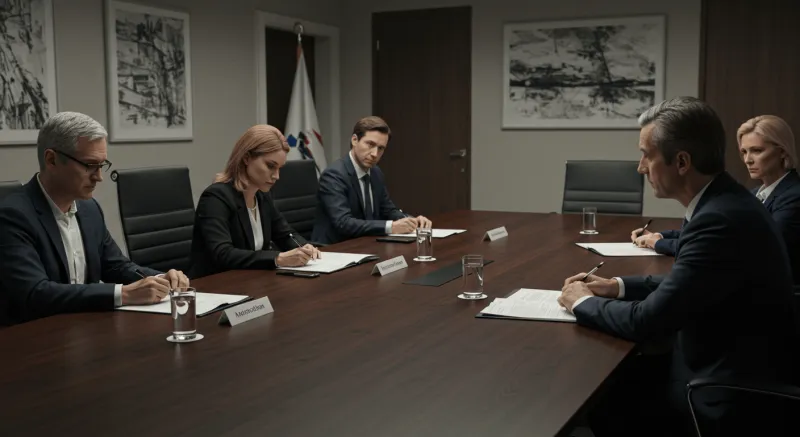
Facing a contract dispute in San Diego?
30-90 days to resolution. No lawyer needed.





Facing a Contract Dispute in San Diego? Prepare for Arbitration with Confidence
BMA is a legal tech platform providing self-represented parties with the document preparation and local court data needed to manage California arbitrations independently.
This content is for informational purposes only and does not constitute legal advice. Consult a licensed California attorney for guidance specific to your situation.
Why Your Case Is Stronger Than You Think
Your contractual disagreement in San Diego may seem overwhelming, but the reality is that with proper documentation and adherence to local laws, you hold significant leverage. California law, specifically the California Civil Procedure Code, provides clear avenues for enforcing arbitration agreements and ensuring procedural fairness. An essential factor is the enforceability of your arbitration clause, which courts uphold when properly incorporated into your contract under California Civil Code § 1624. This grants your claim a solid legal foundation, especially when the dispute arises from a breach of contractual obligations. Moreover, when you compile comprehensive evidence—such as correspondence, breach notices, and financial documents—you shift the balance of power. California statutes encourage the use of affidavits, witness statements, and expert reports to substantiate claims. Properly organized evidence can reveal procedural violations by the opposing party and reveal the other side’s knowledge gaps, which further reinforce your position. Engaging in thorough preparation renders your case less vulnerable to procedural dismissals and demonstrates to arbitral panels your commitment to adhering to procedural rules. When you understand these procedural rights and leverage the specific statutes governing arbitration, your ability to shape the process to your advantage increases significantly. Your preparedness can lead to a quicker resolution, reduced costs, and a higher likelihood of a favorable outcome. Ultimately, methodical adherence to California arbitration protocols ensures you are not at a procedural disadvantage—your case can be as strong as the evidence you present and the strategies you employ.
What San Diego Residents Are Up Against
San Diego's arbitration landscape is shaped by both local and state regulations. The San Diego Superior Court and various arbitration bodies, such as the American Arbitration Association (AAA), operate under specific rules outlined in the San Diego Local Arbitration Rules. Recent enforcement data indicates that many contract disputes, especially in industries like construction, personal services, and retail, face challenges from insufficient evidence or procedural missteps. San Diego has observed a rise in disputes related to service contracts and small business disagreements, with data showing increased violations of procedural deadlines—often exceeding 30% of cases that get dismissed or delayed due to procedural errors. Besides, enforcement agencies have documented frequent failures to submit complete evidence or adhere to arbitration timelines, which can lead to dismissal of claims and extended litigation. The local economic environment, with its high density of small businesses and consumer transactions, means disputes are common and often involve multiple stakeholders with disparate knowledge levels. Industry patterns reveal that companies frequently rely on vague contractual warnings or inadequate documentation, complicating dispute resolution. Your challenge is compounded by the fact that opposing parties might exploit procedural gaps or insufficient recordkeeping, making meticulous preparation critical. Understanding these local enforcement and procedural issues confirms that, absent diligent documentation and adherence to rules, your case can be weakened. Recognizing patterns of non-compliance among local businesses underscores the importance of strategic evidence collection and procedural vigilance. San Diego residents aren't alone—these patterns reflect systemic issues that savvy claimants can mitigate through careful preparation and knowledge of their rights in arbitration.
The San Diego arbitration process: What Actually Happens
Contract arbitration in San Diego typically unfolds in four stages governed by California statutes and local rules. The process begins with the submission of a Notice of Dispute, which initiates the arbitration and activates procedural timelines outlined in California Civil Procedure Code § 1280 et seq.. This initial step usually occurs within 10 days of identifying the dispute, with the parties agreeing upon or being assigned an arbitrator by the chosen agency, such as AAA or JAMS. Next, the Pre-Hearing Preparation phase involves exchanging evidentiary documents—contracts, correspondence, financial records—within specific deadlines, generally between 20 and 30 days after the notice. This phase includes possible preliminary motions, such as objections to evidence or jurisdictional disputes, under procedural standards set by arbitration rules. The third stage is the Hearing Session, which typically occurs 30 to 60 days after evidence exchange, depending on case complexity and scheduling. During this period, both sides present their arguments, supported by documentation, witness testimony, and expert reports. California law emphasizes that evidence must meet relevance and admissibility standards, which the parties should prepare for by organizing their record meticulously. Finally, the Arbitrator’s Decision is issued within 30 days of the hearing, concluding the process. Under California law, arbitration awards are generally binding, with limited grounds for appeal, reinforcing the importance of comprehensive, well-prepared submissions at an early stage. Accurate knowledge of this timeline and the governing statutes ensures you can manage expectations and meet crucial deadlines to avoid procedural failures that could jeopardize your case.
Your Evidence Checklist

- Contract documents: Signed agreements, amendments, addenda, or notices specifying arbitration clauses—submit within 10 days of dispute identification.
- Correspondence: Emails, letters, or messages evidencing breach or negotiations—organized chronologically with source notes.
- Financial records: Invoices, receipts, bank statements demonstrating damages—ensure digital copies are backed up and labeled with relevant dates.
- Witness statements: Affidavits or depositions providing testimony supporting your claims—file at least 15 days before the hearing.
- Expert reports: Any technical or industry-specific evaluations that bolster your position—coordinate with experts early to meet submission deadlines.
- Other supporting evidence: Photographs, contractual warnings, or relevant regulatory notices that establish breach or damages.
Most claimants forget to include all relevant correspondence or overlook the importance of maintaining a chain of custody for electronic evidence. Failing to organize evidence according to arbitration deadlines can lead to exclusion or weaken your case. Be sure to keep thorough records, including timestamps and source details, to support your claims convincingly.
Everything seemed in order until the moment we uncovered a critical misalignment with the arbitration packet readiness controls while managing a contract dispute arbitration in San Diego, California 92136. Initially, the checklist was ticked off, and all documentation appeared complete, but silent failure had already set in—key emails and amendments simply weren't authenticated properly, and the chain-of-custody discipline that we took for granted broke under minimal scrutiny. By the time we detected the issue, the evidentiary integrity was irreversibly compromised, and no retrospective patch could repair the lost credibility or undo the cascading operational fallout. The trade-off between document volume and detailed validation had backfired, a cost implication no one anticipated because earlier arbiters favored speed over comprehensive verification. Miscommunications compounded as involved parties believed documentation accuracy was guaranteed by the checklist’s completeness, masking the core failure until final stages where client stakes were highest.
$14,000–$65,000
Avg. full representation
$399
Self-help doc prep
Ready to File Your Dispute?
BMA prepares your arbitration case in 30-90 days. No lawyer needed.
Start Your Case — $399Further complicating the situation was the operational boundary defined by local arbitration procedural standards and San Diego’s jurisdictional expectations, which constrained corrections post-filing. Our internal workflow boundary did not account for regional nuances related to contract dispute arbitration in 92136, where admissibility hinges heavily on tightly controlled evidence-handling protocols. The failure exposed a trade-off between in-house processing capacity and outsourced verification specialties, forcing us to reconsider resource allocation amid heightened scrutiny and unavoidable reputational risk within a tight deadline.
This is a hypothetical example; we do not name companies, claimants, respondents, or institutions as examples.
- False documentation assumption masked by superficial checklist verification
- Chain-of-custody discipline breaking down first without immediate detection
- Documentation rigor critical to maintaining credibility in contract dispute arbitration in San Diego, California 92136
⚠ HYPOTHETICAL CASE STUDY — FOR ILLUSTRATIVE PURPOSES ONLY
Unique Insight Derived From the "contract dispute arbitration in San Diego, California 92136" Constraints

The distinct regulatory environment and procedural specificity associated with contract dispute arbitration in San Diego, California 92136 impose inherent limitations on post-submission remediation of evidentiary failures. These constraints accentuate the importance of pre-submission documentation validation, as operational agility to correct or supplement records diminishes rapidly once arbitration is underway.
Most public guidance tends to omit the critical trade-off between comprehensive in-house verification and the necessity of leveraging specialized external validation resources familiar with local arbitration norms. This omission can misguide teams to underestimate the upfront cost and complexity of maintaining evidentiary chain integrity under jurisdictional scrutiny, increasing the likelihood of irreversible failures.
Another cost implication arises from the dual-pressure to meet tight timelines while ensuring strict compliance with contract dispute arbitration rules in this geographic region. Balancing these factors requires deliberate workflow boundaries that support early detection and mitigation of documentation risks, preventing silent failures masked by routine procedural checklists.
| EEAT Test | What most teams do | What an expert does differently (under evidentiary pressure) |
|---|---|---|
| So What Factor | Assume checklist completion equals evidentiary readiness | Question checklist sufficiency continuously by dynamic reassessment against arbitration-specific risks |
| Evidence of Origin | Rely on generic document timestamps and metadata | Validate chain-of-custody with localized jurisdictional requirements and third-party attestations |
| Unique Delta / Information Gain | Focus on document volume and surface-level correctness | Integrate deep provenance inspection and operational boundary analysis reflecting San Diego arbitration procedural context |
Don't Leave Money on the Table
Full legal representation typically costs $14,000–$65,000 on average. Self-help document prep: $399.
Start Your Case — $399FAQ
Is arbitration binding in California?
Yes, arbitration agreements executed according to California law are typically binding when properly incorporated into the contract. Courts generally uphold these clauses under the enforceability standards of California Civil Code § 1624.
How long does arbitration take in San Diego?
Most arbitration proceedings in San Diego conclude within 3 to 6 months from initiation, depending on case complexity, evidence exchange, and scheduling availability of arbitrators, as governed by local rules and statutes.
Can I represent myself, or do I need legal counsel?
You can self-represent, but engaging legal or arbitration advocates is recommended for complex disputes. Proper documentation and familiarity with procedural rules increase the likelihood of favorable results.
What happens if I miss a deadline during arbitration?
Missing procedural deadlines can result in dismissal or waiver of your claims. Maintaining an organized case calendar and adhering to arbitration timelines are crucial for preserving your rights.
Why Consumer Disputes Hit San Diego Residents Hard
Consumers in San Diego earning $83,411/year can't absorb $14K+ in legal costs to fight a company that wronged them. That cost-barrier is exactly what corporations count on — and arbitration at $399 eliminates it.
In Los Angeles County, where 9,936,690 residents earn a median household income of $83,411, the cost of traditional litigation ($14,000–$65,000) represents 17% of a household's annual income. Federal records show 861 Department of Labor wage enforcement cases in this area, with $15,489,727 in back wages recovered for 11,396 affected workers — evidence that businesses here have a pattern of cutting corners on obligations.
$83,411
Median Income
861
DOL Wage Cases
$15,489,727
Back Wages Owed
6.97%
Unemployment
Source: U.S. Census Bureau ACS, Department of Labor WHD. IRS income data not available for ZIP 92136.
PRODUCT SPECIALIST
Content reviewed for procedural accuracy by California-licensed arbitration professionals.
About Andrew Smith

View author profile on BMA Law | LinkedIn | Federal Court Records
Arbitration Help Near San Diego
Nearby ZIP Codes:
Arbitration Resources Near
If your dispute in involves a different issue, explore: Employment Dispute arbitration in • Contract Dispute arbitration in • Business Dispute arbitration in • Insurance Dispute arbitration in
Nearby arbitration cases: Santa Fe Springs consumer dispute arbitration • Woodland Hills consumer dispute arbitration • Paynes Creek consumer dispute arbitration • Valencia consumer dispute arbitration • Fair Oaks consumer dispute arbitration
Other ZIP codes in :
References
- California Civil Procedure Annotated Code: https://leginfo.legislature.ca.gov/faces/codes_displayText.xhtml?section=1.3.&lawCode=CCP
- California Civil Code § 1624: https://leginfo.legislature.ca.gov/faces/codes_displayText.xhtml?lawCode=Civ§ion=1624
- San Diego Local Arbitration Rules: https://www.sddc.sandiego.gov/laws/arbitration_rules
- Evidence Handling Standards: https://www.courts.ca.gov/documents/evidence.pdf
Local Economic Profile: San Diego, California
N/A
Avg Income (IRS)
861
DOL Wage Cases
$15,489,727
Back Wages Owed
Federal records show 861 Department of Labor wage enforcement cases in this area, with $15,489,727 in back wages recovered for 12,813 affected workers.

