

Facing a consumer dispute in Long Beach?
30-90 days to resolution. No lawyer needed.





Facing a Consumer Dispute in Long Beach? Prepare for Arbitration and Protect Your Rights
BMA is a legal tech platform providing self-represented parties with the document preparation and local court data needed to manage California arbitrations independently.
This content is for informational purposes only and does not constitute legal advice. Consult a licensed California attorney for guidance specific to your situation.
Why Your Case Is Stronger Than You Think
Consumers and small-business claimants in Long Beach possess significant procedural advantages when initiating arbitration disputes, especially when armed with proper documentation and knowledge of California law. Under the California Arbitration Act (CA Civil Code sections 1280-1294.2), parties retain certain rights to enforce arbitration clauses, but courts also uphold the enforceability of consumer protections that limit arbitration scope or provide remedies. Recognizing these statutory protections enhances your leverage, as courts frequently scrutinize overly broad arbitration clauses that attempt to waive consumer rights.
$14,000–$65,000
Avg. full representation
$399
Self-help doc prep
Properly drafting and submitting your claim with comprehensive evidence can shift the balance of power clearly in your favor. For instance, detailed records of transactions, correspondence, and contractual obligations become critical artifacts. Proper organization of these documents — corroborated with third-party records where possible — enables your case to withstand challenges like arbitrator bias or procedural dismissals. California emphasizes the importance of evidence admissibility (California Civil Procedure Rules, Section 2016.010 and onwards), so understanding how to present your documentation within these parameters fortifies your position.
Moreover, the procedural framework allows for strategic moves, such as challenging enforceability of arbitration clauses if they are unconscionable or overly restrictive, per California case law. By situating your dispute within this legal context, you maintain the initiative, ensuring your rights are preserved throughout. Knowledge of specific statutes and procedural safeguards is your best tool to prevent an unfair or dismissive outcome.
What Long Beach Residents Are Up Against
Long Beach residents face a complex landscape involving a high volume of consumer-related disputes, with enforcement agencies noting hundreds of violations annually within local and statewide jurisdictions. The Long Beach Superior Court and multiple arbitration forums, such as AAA or JAMS, handle numerous disputes involving services, products, or contractual disagreements. According to the California Department of Consumer Affairs data, violations involving unsubstantiated billing, deceptive practices, or faulty goods are prevalent across industries operating locally, including retail, telecommunication, and auto services.
These patterns highlight challenges—many companies rely on arbitration clauses that limit damages or discovery, often reducing consumers’ capacity to obtain full remedies. Enforcement actions sometimes reveal that corporations obscure their policies through complex or poorly drafted contract language, which can be challenged if it conflicts with California consumer protection laws. Data shows an increasing trend of consumers seeking arbitration in Long Beach, but the imbalance of information and procedural intricacies mandates careful preparation to ensure your claim is not dismissed or limited unfairly.
Understanding the local enforcement environment helps you recognize that you're not alone—these issues are systemic, underscoring the importance of meticulous documentation and awareness of procedural rules that gatekeep access to fair resolution.
The Long Beach Arbitration Process: What Actually Happens
Step 1: Filing and Initiation
Within Long Beach, the arbitration process begins when you file a written demand for arbitration, typically governed by the rules of the chosen arbitration institution (e.g., AAA or JAMS). California courts often reference the California Arbitration Act (CA Civil Code section 1280 et seq.) and arbitration-specific rules. Deadlines for filing vary depending on the arbitration agreement but generally require submission within six months of dispute or as specified in the contract. The filing includes your claim statement, factual allegations, and a concise list of damages sought, all prepared in accordance with institutional or ad hoc rules.
Step 2: Arbitrator Appointment
After filing, arbitrators are selected either through mutual party agreement, appointment by the institution, or, if applicable, by default rules. In Long Beach, the process usually takes 2-4 weeks, depending on arbitrator availability. Arbitrators must disclose conflicts of interest under the AAA’s Code of Ethics — failure to do so can provide grounds for challenge per California rules. The process ensures impartiality, but parties can request strikes or ratify appointments within procedural limits.
Step 3: Hearing and Evidence Exchange
The hearing occurs within approximately 4-6 weeks after arbitrator appointment. Discovery limitations, set by the arbitration rules and California law, restrict the scope—typically, limited document requests and witness exchanges. Expect to submit exhibits, witness statements, and legal briefs beforehand; failure to do so can weaken your position or result in sanctions. California Civil Procedure Code section 1283.05 emphasizes procedural fairness, but the process is faster and less formal than court litigation, emphasizing the importance of thorough pre-hearing preparation.
Step 4: Award and Enforcement
The arbitrator issues a decision usually within 30 days of the hearing. This decision is binding and enforceable as a court judgment in California under the California Uniform Arbitration Act (California Civil Code sections 1286-1294.2). If you are dissatisfied with the award, post-arbitration motions for clarification or vacatur are possible but limited. Enforcement involves filing a petition with the Long Beach Superior Court, where the arbitration award is confirmed and can be executed through property liens or wage garnishments, leveraging California’s strong enforcement mechanism for arbitration awards.
Your Evidence Checklist

- Contracts and Terms: Signed agreements, arbitration clauses, terms and conditions, with clear dates.
- Communication Records: Emails, texts, and chat logs relevant to the dispute, ideally with timestamps and recipients.
- Receipts and Proof of Purchase: Invoices, bank statements, digital payment records showing date, amount, and merchant.
- Correspondence with the Business: Letters, email chains, or notices related to the dispute—especially any responses that acknowledge issues or offer settlement.
- Witness Statements: Affidavits from relevant witnesses or experts supporting your version of events.
- Additional Documentation: Photos, videos, or product documentation evidencing defect or service failure.
Deadlines for submitting evidence are specified by arbitration rules—commonly, at least two weeks before the hearing. An often-overlooked step is creating an organized exhibit list with cross-referenced citations, ensuring quick access during hearings. Digital backups and certified copies safeguard against accidental loss and facilitate timely submission.
Ready to File Your Dispute?
BMA prepares your arbitration case in 30-90 days. No lawyer needed.
Start Your Case — $399The moment the standard arbitration packet readiness controls checklist showed green was the exact point the critical piece of consumer arbitration evidence in Long Beach, California 90846 was irreparably compromised. At first, the file seemed flawless—everything looked accounted for on paper, with no flags raised during internal reviews. However, a subtle deviation in the timing of the evidence submission, combined with an overlooked chain-of-custody breakdown, created a silent failure phase where the documentation was quietly degrading in integrity. The operational boundary between local Long Beach procedural expectations and standardized arbitration packet requirements was underestimated, forcing a trade-off where expediency overruled thorough verification. When the issue finally surfaced, every attempt to retrofit compliance was futile; the failure was irreversible and closed the door on any favorable resolution within the consumer arbitration context.
This failure exposed how critical the nuanced layers of compliance with consumer arbitration in Long Beach, California 90846 are—in particular, the tacit knowledge required to ensure segment-specific evidentiary integrity. The operational constraint of complex local arbitration rules versus the demands of maintaining global documentation standards was underestimated, and the cost implications—delayed proceedings and increased litigant frustration—were severe and immediate. The team’s checklist-only mindset masked latent defects, which led to an irrecoverable compliance gap. Ultimately, this experience proved that a deep, localized understanding paired with rigorous, layered controls is indispensable, as reliance on superficial completions can silently erode case viability.
This is a hypothetical example; we do not name companies, claimants, respondents, or institutions as examples.
- False documentation assumption creating invisible evidence gaps
- Initial failure triggered by timing and chain-of-custody breakdown
- Documentation rigor in consumer arbitration in Long Beach, California 90846 requires layered compliance beyond checklist sign-offs
⚠ HYPOTHETICAL CASE STUDY — FOR ILLUSTRATIVE PURPOSES ONLY
Unique Insight Derived From the "consumer arbitration in Long Beach, California 90846" Constraints
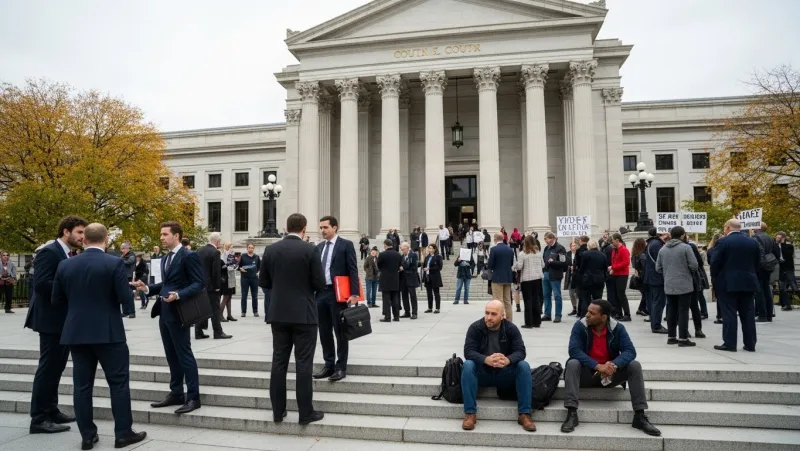
The consumer arbitration landscape in Long Beach, California 90846 requires adherence to both state-specific arbitration mandates and localized procedural nuances, imposing constraints that can complicate evidence management. One significant trade-off involves balancing rapid dispute resolution goals against the exhaustive documentation standards necessary to ensure evidentiary sufficiency. This tension means that teams must be prepared to accept operational slowdowns in favor of robust verification, which is often resisted under pressure to deliver quick outcomes.
Most public guidance tends to omit the granular local expectations that influence how arbitration packets are assembled and validated in Long Beach’s jurisdiction. This omission leaves many practitioners blind to the critical compliance variances that, if ignored, can cause silent failures well before a dispute reaches resolution phases. Consequently, building in local expertise and process redundancy becomes crucial to avoid irrecoverable evidentiary gaps.
Another cost implication arises from the interaction between state arbitration laws and municipal procedural rules, which sometimes demand duplicative documentation that strains operational bandwidth. Resource allocation trade-offs often lead to prioritizing primary arbitration document preparation over meticulous chain-of-custody discipline, which can backfire when challenged. Addressing these constraints requires deliberate, dual-layer process designs aimed specifically at the Long Beach arbitration environment to safeguard against tacit failure modes.
| EEAT Test | What most teams do | What an expert does differently (under evidentiary pressure) |
|---|---|---|
| So What Factor | Treat checklist completion as proof of compliance | Correlate checklist data with real-time chain-of-custody reconciliation to detect latent gaps |
| Evidence of Origin | Document sources per general arbitration rules without local variance | Integrate local Long Beach procedural nuances into evidence provenance validation |
| Unique Delta / Information Gain | Assume uniformity across arbitration jurisdictions | Identify and document jurisdiction-specific arbitration packet readiness controls that mitigate silent failures |
Don't Leave Money on the Table
Full legal representation typically costs $14,000–$65,000 on average. Self-help document prep: $399.
Start Your Case — $399FAQ
Is arbitration legally binding in California for consumer disputes?
Yes. Under California law and the California Arbitration Act, arbitration agreements are generally enforceable unless found unconscionable or improperly executed. Courts uphold arbitration awards, making arbitration a binding and often final resolution method in consumer disputes when properly initiated.
How long does arbitration typically take in Long Beach?
Most consumer arbitrations in Long Beach are resolved within 3-6 months from filing to final award, depending on case complexity, arbitrator availability, and procedural adherence. Faster than traditional litigation, arbitration offers a more efficient path but requires careful early preparation.
Can I challenge an arbitration award or the arbitrator’s impartiality?
Yes. Under California Civil Procedure section 1286.2, you can seek to vacate an arbitration award for reasons including corruption, misconduct, or arbitrator bias. Challenges must be filed within a defined period, usually within 100 days following receipt of the award, and require strong evidentiary support.
What happens if the other party refuses arbitration or defaults?
If the opposing party refuses or defaults, you can request the arbitrator to issue a default decision based on your submitted evidence. If the dispute proceeds to court, you can take the arbitration award to Long Beach Superior Court for enforcement, which enforces the award as a judgment.
Why Consumer Disputes Hit Long Beach Residents Hard
Consumers in Long Beach earning $83,411/year can't absorb $14K+ in legal costs to fight a company that wronged them. That cost-barrier is exactly what corporations count on — and arbitration at $399 eliminates it.
In Los Angeles County, where 9,936,690 residents earn a median household income of $83,411, the cost of traditional litigation ($14,000–$65,000) represents 17% of a household's annual income. Federal records show 221 Department of Labor wage enforcement cases in this area, with $2,985,343 in back wages recovered for 1,841 affected workers — evidence that businesses here have a pattern of cutting corners on obligations.
$83,411
Median Income
221
DOL Wage Cases
$2,985,343
Back Wages Owed
6.97%
Unemployment
Source: U.S. Census Bureau ACS, Department of Labor WHD. IRS income data not available for ZIP 90846.
PRODUCT SPECIALIST
Content reviewed for procedural accuracy by California-licensed arbitration professionals.
About Robert Johnson

View author profile on BMA Law | LinkedIn | Federal Court Records
Arbitration Help Near Long Beach
Nearby ZIP Codes:
Arbitration Resources Near
If your dispute in involves a different issue, explore: Employment Dispute arbitration in • Contract Dispute arbitration in • Business Dispute arbitration in • Insurance Dispute arbitration in
Nearby arbitration cases: Mather consumer dispute arbitration • Proberta consumer dispute arbitration • Altaville consumer dispute arbitration • Cima consumer dispute arbitration • Thermal consumer dispute arbitration
Other ZIP codes in :
References
- California Arbitration Act: https://leginfo.legislature.ca.gov/faces/codes_displayText.xhtml?division=3.&part=3.&lawCode=CAAB
- Civil Procedure Rules: https://govt.westlaw.com/calregs/Watermark.html?contextData=(sc.Default)
- California Consumer Protection Laws: https://codes.ca.gov/
- AAA Rules for Consumer Disputes: https://www.adr.org/rules
- Evidence Handling Guidelines: https://evidenceguidelines.org
- California Department of Consumer Affairs: https://www.dca.ca.gov
Local Economic Profile: Long Beach, California
N/A
Avg Income (IRS)
221
DOL Wage Cases
$2,985,343
Back Wages Owed
Federal records show 221 Department of Labor wage enforcement cases in this area, with $2,985,343 in back wages recovered for 2,647 affected workers.

