

Facing a insurance dispute in Long Beach?
30-90 days to resolution. No lawyer needed.





Denied Insurance Claim in Long Beach? Prepare for Arbitration in 30-90 Days with Confidence
BMA is a legal tech platform providing self-represented parties with the document preparation and local court data needed to manage California arbitrations independently.
This content is for informational purposes only and does not constitute legal advice. Consult a licensed California attorney for guidance specific to your situation.
Why Your Case Is Stronger Than You Think
Many claimants underestimate the strength of their position in insurance disputes because they overlook the power of properly documented policies and communication records. Under California law, specifically the California Insurance Code and Civil Procedure statutes, policyholders have significant leverage when they systematically gather and organize evidence. For instance, the statute of limitations generally grants claimants four years from the date of denial to initiate arbitration under Civil Code sections, which can be strategically used to prepare a case without rush. Furthermore, arbitration clauses embedded within insurance contracts are often enforceable unless they violate public policy, providing a contractual avenue for resolving disputes outside courtrooms. Properly referencing specific policy language and maintaining detailed correspondence logs can shift procedural advantages markedly in your favor. Well-prepared documentation, such as claim submissions, denial letters, and expert appraisals, enhances credibility and can compel insurers to settle or face adverse arbitration decisions. The empirical study of past arbitration outcomes indicates that claimants who present organized, comprehensive evidence almost invariably achieve more favorable results—setting a foundation of leverage based on procedural diligence rather than mere legal rhetoric.
$14,000–$65,000
Avg. full representation
$399
Self-help doc prep
What Long Beach Residents Are Up Against
In Long Beach, the local landscape reveals a pattern of insurance claim disputes that frequently involve delays, claim denials, and insufficient explanations from insurers. The California Department of Insurance reports tens of thousands of violations annually across property, health, and auto insurance sectors, with a significant portion originating from disputes over coverage interpretations and settlement amounts. Long Beach's dense urban setting and diverse population mean that policyholders often find themselves up against practices that prioritize insurer risk management over consumer rights. Data shows that many disputes start with simple claim delays but escalate as insurers invoke complex contractual language or jurisdictional defenses. The local courts and ADR programs—such as the American Arbitration Association (AAA)—handle hundreds of cases yearly, many of which are dismissed or delayed due to procedural errors or incomplete documentation. National and local enforcement data confirm that small claims and individual policyholders frequently face challenges in proving damages without rigorous evidence management. You are not alone—these patterns reflect systemic issues in the regional industry, exacerbated by a lack of immediate access to legal guidance or comprehensive evidence preparation.
The Long Beach Arbitration Process: What Actually Happens
In California, insurance claim arbitration typically follows a four-step process governed by the California Arbitration Act and specific arbitration rules like those of AAA or JAMS. First is the filing of the demand for arbitration: within 30 days after the dispute escalates beyond settlement negotiations, with a deadline stipulated in the arbitration clause or policy; in Long Beach, this can often be scheduled within 15-30 days of documentation collection. Second is the administrative conference and preliminary hearings, usually conducted within 15 days of filing; these set procedural timelines and scope. Third, the discovery and evidence exchange phase spans roughly 30-60 days, where both parties submit evidence logs, witness lists, and expert reports—an essential period to meticulously organize and review claims data. Finally, the arbitration hearing occurs: typically scheduled 45-90 days after discovery completes, depending on arbitration program backlog. California law mandates adherence to the California Civil Discovery Act and specific ADR rules, with mandated timelines for each step; failure to comply can result in procedural dismissals. The entire process, if managed diligently, can be concluded in as little as three months, but delays often extend to six or more without proper preparation or expert guidance.
Your Evidence Checklist

- Initial Claims Documentation: copies of application forms, claim submission receipts, and acknowledgment emails—collect within 5 days of filing.
- Correspondence Records: all emails, letters, and communication logs with the insurer—organize chronologically and back up with timestamps.
- Denial Letters and Responses: official denial notices, response letters, and any notices of claim review—preserve originals and save electronic copies.
- Photos and Damage Assessments: photographs of damages, property, or injuries, with timestamps; include expert appraisal reports if available.
- Policy and Contractual Documents: the insurance policy, amendments, endorsements, and arbitration clauses—highlight relevant provisions.
- Financial Records and Damages Evidence: estimates of repair or replacement costs, medical bills, and receipts—quantify damages clearly in a detailed statement.
- Expert Reports: independent appraisals, forensic analyses, or professional assessments supporting your damages or valuation disputes—obtain early to be timely.
- Witness Statements: affidavits from witnesses or contractors corroborating damages or circumstances—prepare in advance for presentation or cross-examination.
Most claimants forget to maintain a detailed log of all evidence submitted and received, which is critical for the arbitration's credibility and procedural compliance. Setting reminders for document updates and ensuring the integrity of digital files preserves your case against procedural challenges or accusations of evidence tampering.
Ready to File Your Dispute?
BMA prepares your arbitration case in 30-90 days. No lawyer needed.
Start Your Case — $399When the dispute over property damage dragged into insurance claim arbitration in Long Beach, California 90822, what broke first was the arbitration packet readiness controls. We followed checklist rituals that gave the illusion of completeness, marking every required document as submitted and every signature captured in digital form. However, the silent failure phase began as original repair invoices were inadvertently replaced by near-exact scanned copies that lacked verifiable metadata. This compromised the chain of custody, an unseen flaw until opposing counsel’s forensic audit revealed discrepancies—too late to reverse. Operational constraints on turnaround and mounting costs had pushed everyone to accept scanned replacements as sufficient, a trade-off that effectively severed evidentiary integrity. The damage was irreversible at arbitration, leaving us unable to authenticate critical expenses and shifting the outcome against us overnight.
This is a hypothetical example; we do not name companies, claimants, respondents, or institutions as examples.
- False documentation assumption: Scanned copies were mistakenly considered equivalent to originals, undermining evidentiary trust.
- What broke first: Arbitration packet readiness controls failed to ensure metadata verification, opening a fatal gap.
- Generalized documentation lesson tied back to insurance claim arbitration in Long Beach, California 90822: Strict preservation of original documentation with metadata validation is essential for success under regional evidentiary scrutiny.
⚠ HYPOTHETICAL CASE STUDY — FOR ILLUSTRATIVE PURPOSES ONLY
Unique Insight Derived From the "insurance claim arbitration in Long Beach, California 90822" Constraints
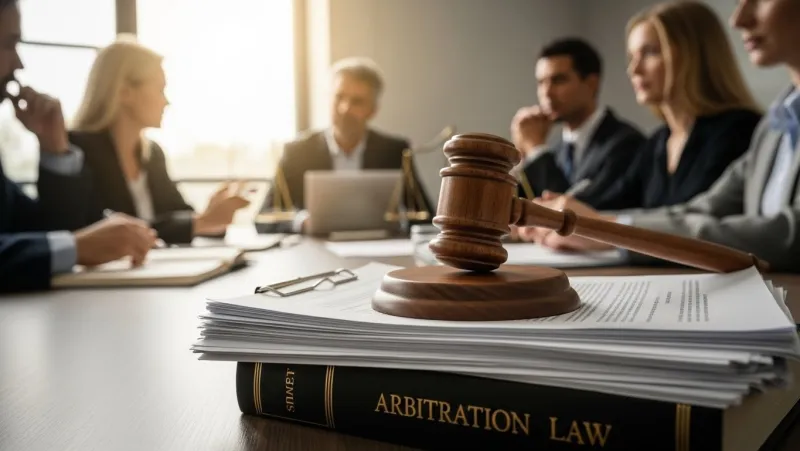
The arbitration process in Long Beach reveals that operating under heightened evidentiary standards imposes unavoidable cost and time trade-offs. Teams often balance rapid document assembly against the slow due diligence of verifying original document authenticity. This cost implication frequently results in a risky acceptance of digital copies that superficially meet checklist requirements but lack deeper evidentiary rigor.
Most public guidance tends to omit that local arbitration rules and regional legal culture significantly amplify the consequences of any overlooked documentation flaws. The customary fidelity observed elsewhere does not always translate here, demanding an escalated chain-of-custody discipline that many claimants underestimate.
Another constraint is the fragmentation among expert service providers and retrieval vendors. Fragmentation limits control over documentation provenance, pushing operational teams to rely excessively on automated status updates rather than physical verification. This induces a brittle workflow boundary, where confidence in evidence deteriorates unnoticed until critical phases.
| EEAT Test | What most teams do | What an expert does differently (under evidentiary pressure) |
|---|---|---|
| So What Factor | Accept scanned PDFs without metadata verification | Enforce direct metadata audit and original source tracing |
| Evidence of Origin | Rely on vendor affidavits and checklist confirmations | Demand chain-of-custody documentation with timestamped handoffs and immutable logs |
| Unique Delta / Information Gain | Focus on quantity of submitted documents | Prioritize qualitative verification that transforms generic packets into credible evidence |
Don't Leave Money on the Table
Full legal representation typically costs $14,000–$65,000 on average. Self-help document prep: $399.
Start Your Case — $399FAQ
Is arbitration binding in California?
Yes, arbitration clauses in insurance policies are generally enforceable under California law unless they violate public policy or are unconscionable. Courts uphold arbitration agreements to promote efficiency but retain review rights for procedural fairness.
How long does arbitration take in Long Beach?
Typically, arbitration concludes within 3 to 6 months from filing, provided all evidence is well-organized and procedural deadlines are met. Delays often occur if parties fail to prepare documents or miss statutory timelines.
Can I challenge an insurer’s denial in arbitration?
Yes, arbitration allows you to present evidence challenging the denial based on policy interpretation, damages, or procedural errors. Having thorough documentation and expert testimony enhances your chances of success.
What if I miss an arbitration deadline?
Missed deadlines can result in waiver or dismissal of your claim, making it impossible to proceed. Timely action and regular review of arbitration requirements are essential to preserve your rights.
Why Consumer Disputes Hit Long Beach Residents Hard
Consumers in Long Beach earning $83,411/year can't absorb $14K+ in legal costs to fight a company that wronged them. That cost-barrier is exactly what corporations count on — and arbitration at $399 eliminates it.
In Los Angeles County, where 9,936,690 residents earn a median household income of $83,411, the cost of traditional litigation ($14,000–$65,000) represents 17% of a household's annual income. Federal records show 221 Department of Labor wage enforcement cases in this area, with $2,985,343 in back wages recovered for 1,841 affected workers — evidence that businesses here have a pattern of cutting corners on obligations.
$83,411
Median Income
221
DOL Wage Cases
$2,985,343
Back Wages Owed
6.97%
Unemployment
Source: U.S. Census Bureau ACS, Department of Labor WHD. IRS income data not available for ZIP 90822.
PRODUCT SPECIALIST
Content reviewed for procedural accuracy by California-licensed arbitration professionals.
About Jerry Miller

View author profile on BMA Law | LinkedIn | Federal Court Records
Arbitration Help Near Long Beach
Nearby ZIP Codes:
Arbitration Resources Near
If your dispute in involves a different issue, explore: Employment Dispute arbitration in • Contract Dispute arbitration in • Business Dispute arbitration in • Insurance Dispute arbitration in
Nearby arbitration cases: San Bernardino consumer dispute arbitration • Lincoln consumer dispute arbitration • Wilmington consumer dispute arbitration • Robbins consumer dispute arbitration • Byron consumer dispute arbitration
Other ZIP codes in :
References
- California Arbitration Act: https://leginfo.legislature.ca.gov/faces/codes_displayText.xhtml?lawCode=CODE20&division=3.&title=&chapter=&article=
- California Civil Procedure: https://leginfo.legislature.ca.gov/faces/codes_displayText.xhtml?lawCode=CIV&division=&title=&part=4.&chapter=
- California Insurance Code: https://leginfo.legislature.ca.gov/faces/codes_displayText.xhtml?lawCode=INS
- American Arbitration Association Rules: https://www.adr.org/rules
- California Evidence Code: https://leginfo.legislature.ca.gov/faces/codes_displayText.xhtml?lawCode=EVID&division=&title=&chapter=
- California Department of Insurance: https://www.insurance.ca.gov
Local Economic Profile: Long Beach, California
N/A
Avg Income (IRS)
221
DOL Wage Cases
$2,985,343
Back Wages Owed
Federal records show 221 Department of Labor wage enforcement cases in this area, with $2,985,343 in back wages recovered for 2,647 affected workers.

