

Facing a business dispute in South San Francisco?
30-90 days to resolution. No lawyer needed.





Facing a Business Dispute in South San Francisco? Prepare for Arbitration to Protect Your Interests
BMA is a legal tech platform providing self-represented parties with the document preparation and local court data needed to manage California arbitrations independently.
This content is for informational purposes only and does not constitute legal advice. Consult a licensed California attorney for guidance specific to your situation.
Why Your Case Is Stronger Than You Think
Many small business owners and consumers in South San Francisco are unaware of the significant leverage they hold when it comes to arbitration. California law ensures that arbitration agreements are enforced if documented properly, and these agreements often serve to balance the playing field against larger, more resource-rich adversaries. Under Section 1281.2 of the California Code of Civil Procedure, parties can compel arbitration if the contract includes a valid arbitration clause, provided that basic procedural standards are met.
$14,000–$65,000
Avg. full representation
$399
Self-help doc prep
Furthermore, the enforceability of these clauses benefits from clear documentation of contractual obligations. For example, carefully drafted arbitration clauses specify the forum, rules, and scope of dispute resolution. By meticulously preserving all related communications—such as emails, signed agreements, and transaction logs—claimants reinforce their position and reduce procedural vulnerabilities. Properly prepared evidence can demonstrate that contractual obligations, compliance timelines, or communications support their claims, effectively shifting the equilibrium of power in arbitration proceedings.
California courts have consistently upheld arbitration clauses when demonstrated through well-maintained records, as outlined in the California Civil Code Section 1281.5. As such, asserting your rights with organized, credible documentation can substantially heighten your chance of a fair resolution, especially when supported by arbitration rules that favor procedural fairness and enforceability.
What South San Francisco Residents Are Up Against
South San Francisco's local business environment involves numerous small businesses and transactional entities, often within sectors like retail, manufacturing, or service industries. According to recent enforcement data, the California Department of Consumer Affairs reports thousands of violations annually in consumer-business interactions, some of which lead to formal complaints or arbitration claims. The city’s economic statistics reveal that approximately 15% of local businesses experience contractual disputes each year, which could involve unpaid bills, service disagreements, or contractual breaches.
In many cases, larger corporations may have internal legal teams that can prolong dispute resolution or obscure documentation, making it harder for smaller claimants to secure a fair outcome. Data indicates that nearly 40% of local claims see delays exceeding the statutory timeline, often because of incomplete evidence or procedural missteps. South San Francisco residents must contend with this landscape, where enforcement and procedural integrity are crucial for successful dispute resolution.
Further complicating matters, some businesses deploy contractual provisions that attempt to limit arbitration scope or challenge enforceability—making it essential for claimants to understand their contractual rights and gather irrefutable documentation to uphold their claims under applicable statutes.
The South San Francisco Arbitration Process: What Actually Happens
In California, arbitration proceedings generally follow a four-step process governed by the California Arbitration Act and standards set by arbitration providers like AAA or JAMS. The typical timeline for a standard dispute in South San Francisco is approximately 3 to 6 months, depending on case complexity and procedural adherence.
- Step 1: Filing and Notice – The claimant initiates arbitration by submitting a claim to an arbitration organization such as AAA or JAMS, or by following the contractual process. Under California Civil Code Section 1281.4, the respondent must be notified, and the arbitration agreement's enforceability is assessed at this stage.
- Step 2: Preliminary Conference and Evidence Exchange – A preliminary meeting is scheduled, typically within 30 days, where procedural rules are established. The parties exchange evidence and clarifications in accordance with the rules of the selected arbitration provider, with deadlines often set at 60 days from filing.
- Step 3: Hearing and Submission of Evidence – A hearing, scheduled usually 60-90 days after the preliminary conference, allows witnesses and evidence to be presented. California’s statutes mandate compliance with fair process, including opportunities for cross-examination and submission of documentary evidence.
- Step 4: Award and Enforcement – The arbitrator issues the decision within 30 days of the hearing. This award can be confirmed in a court of competent jurisdiction under California Code of Civil Procedure Sections 1285 and 1285.1. Enforcement is generally straightforward, provided the arbitration award is documented properly and consistent with California law.
Being aware of these steps and their respective legal underpinnings ensures claimants can plan and act within statutory timelines, avoiding procedural pitfalls that could undermine the case.
Your Evidence Checklist

- Contracts and Arbitration Clauses: Original signed agreements and any amendments, with dates.
- Communication Records: Emails, text messages, official letters, or recorded calls related to the dispute, organized chronologically.
- Transaction Documentation: Invoices, receipts, bank statements, or electronic payment logs evidencing obligations or payments owed.
- Witness Statements: Affidavits or depositions from employees, contractors, or clients who observed relevant events.
- Financial Records: Accounting ledgers, audit reports, or expert assessments quantifying damages or losses.
- Chain of Custody Records: Documentation showing secure handling of electronic or physical evidence, particularly digital communications or physical proof.
Most claimants forget to include or properly organize digital evidence, such as social media interactions or cloud-based communication logs. Deadlines for evidence submission in arbitration are strict—often within 30-60 days after arbitration initiation—making early and accurate collection vital.
Ready to File Your Dispute?
BMA prepares your arbitration case in 30-90 days. No lawyer needed.
Start Your Case — $399The moment the evidentiary chain faltered was the silent collapse of our arbitration packet readiness controls, which no one caught until the aftermath. It began with a presumed "complete" document intake that blinded us to subtle inconsistencies—file metadata that was off by minutes and a digital signature that didn't quite align with the server logs—all symptoms drowned out by an overconfident checklist compliance. The operational constraint of tight deadlines in business dispute arbitration in South San Francisco, California 94083 forced a narrow focus on surface-level completeness rather than deep integrity validation. By the time the failure was uncovered, the damage was irreversible: key exhibits had been inadvertently overwritten during case consolidation, leaving us scrambling without backups or recourse to re-collect evidence. The trade-off to expedite the arbitration briefing came at the cost of losing trust in the foundation of our narrative, a lesson seared into every subsequent case.
This failure was compounded by the constrained workflow boundary between onsite legal teams and the remote arbitration administrators; misalignment on file versions was never communicated in real-time. The silence in the gap masked the degradation of evidentiary integrity despite a checklist that appeared perfect on paper. Even though governance procedures mandated multiple reviews, the operational reality of parallel workstreams and assumption-driven handoffs eroded the robustness of document preservation. The cost implication was clear: the extensive post-failure remediation siphoned staff resources, stalled cross-team cooperation, and exposed us to tactical disadvantages in ongoing proceedings.
These inflection points demonstrate how the irreversible failure occurred not from a single error but from layered operational compromises exacerbated under local arbitration logistics. The South San Francisco jurisdiction’s particular nuances, including limited physical document access and reliance on digital exchanges, made traditional oversight insufficient. This war story serves as an internal cautionary tale that in such environments, even slight deviations in document intake governance can cascade into fatal systemic failures.
This is a hypothetical example; we do not name companies, claimants, respondents, or institutions as examples.
- False documentation assumption stemming from superficial checklist validation rather than forensic metadata verification.
- What broke first was the unnoticed divergence in digital timestamp integrity triggered by asynchronous team workflows.
- Generalized documentation lesson tied back to business dispute arbitration in South San Francisco, California 94083: Robust, real-time synchronization of evidence preservation workflow is critical to prevent irreversible evidentiary failures.
⚠ HYPOTHETICAL CASE STUDY — FOR ILLUSTRATIVE PURPOSES ONLY
Unique Insight Derived From the "business dispute arbitration in South San Francisco, California 94083" Constraints
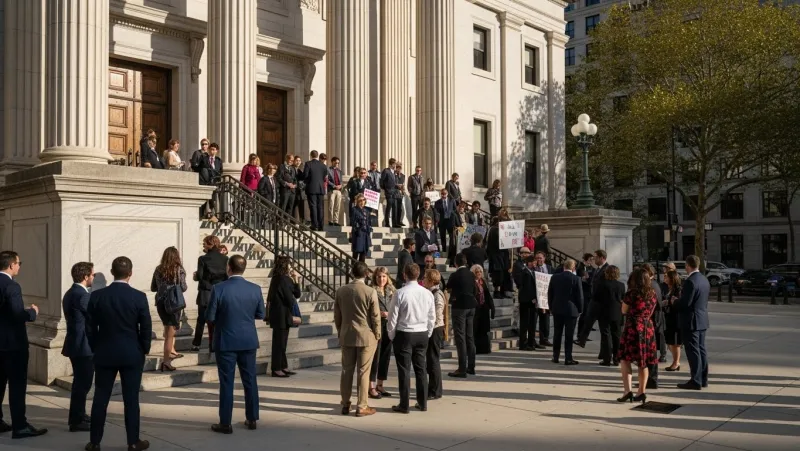
The geographic and legal context in South San Francisco introduces unique operational constraints around evidence handling, emphasizing the need for distributed yet tightly coupled evidence preservation workflows. Physical constraints on document access push workflows to heavily depend on digital exchanges, elevating the risk of silent errors in document intake governance and chronology integrity controls.
Most public guidance tends to omit the nuanced challenges of synchronization latency and real-time audit trail consistency across decentralized arbitration teams. These gaps increase the likelihood of silent failures when standard checklists are treated as proxies for true evidentiary integrity rather than as minimal procedural baselines.
Trade-offs between fast-tracking arbitration packet readiness and maintaining rigorous chain-of-custody discipline must be consciously managed, as shortcuts often mask deeper vulnerabilities that only surface under adversarial conditions. Understanding these friction points is essential for designing workflows that can withstand the evidentiary pressures inherent in local business dispute arbitration.
| EEAT Test | What most teams do | What an expert does differently (under evidentiary pressure) |
|---|---|---|
| So What Factor | Rely on checklist completion as final validation. | Continuously monitor metadata anomalies and timestamp discrepancies throughout the process. |
| Evidence of Origin | Accept document provenance at face value from initial intake. | Implement cross-verification of source authenticity with layered audit trails and server log correlation. |
| Unique Delta / Information Gain | Focus on document contents only, ignoring systemic acquisition factors. | Account for operational workflow constraints and synchronization boundaries that impact evidentiary fidelity. |
Don't Leave Money on the Table
Full legal representation typically costs $14,000–$65,000 on average. Self-help document prep: $399.
Start Your Case — $399FAQ
Is arbitration binding in California?
Generally, yes. Under California law, parties that have signed valid arbitration agreements are bound by the arbitrator’s decision, which courts will enforce as a judgment, unless procedural errors occurred or agreements are invalid under statutes like Civil Code Sections 1281.5 and 1281.6.
How long does arbitration take in South San Francisco?
The process typically lasts between 3 to 6 months from dispute filing to final award, but delays can extend this timeline if procedural issues, evidence disputes, or case complexity occur, especially within the local jurisdiction.
Can I represent myself or do I need an attorney?
While self-representation is possible, especially for straightforward claims, complex disputes involving contractual nuances, significant damages, or technical evidence strongly benefit from experienced arbitration attorneys familiar with California law and local rules.
What happens if the other side refuses to participate?
The arbitrator may proceed ex parte and issue an award based on the evidence submitted by the claimant. California law permits arbitration awards to be confirmed and enforced even if one party declines to participate, provided proper notice was given.
Why Business Disputes Hit South San Francisco Residents Hard
Small businesses in Los Angeles County operate on thin margins — when a contract is broken, arbitration at $399 vs $14K+ litigation makes the difference between staying open and closing doors. With a median household income of $83,411 in this area, few business owners can absorb five-figure legal costs.
In Los Angeles County, where 9,936,690 residents earn a median household income of $83,411, the cost of traditional litigation ($14,000–$65,000) represents 17% of a household's annual income. Federal records show 615 Department of Labor wage enforcement cases in this area, with $16,782,707 in back wages recovered for 7,854 affected workers — evidence that businesses here have a pattern of cutting corners on obligations.
$83,411
Median Income
615
DOL Wage Cases
$16,782,707
Back Wages Owed
6.97%
Unemployment
Source: U.S. Census Bureau ACS, Department of Labor WHD. IRS income data not available for ZIP 94083.
PRODUCT SPECIALIST
Content reviewed for procedural accuracy by California-licensed arbitration professionals.
About Ryan Nguyen

View author profile on BMA Law | LinkedIn | Federal Court Records
Arbitration Resources Near
If your dispute in involves a different issue, explore: Consumer Dispute arbitration in
Nearby arbitration cases: Skyforest business dispute arbitration • La Honda business dispute arbitration • Onyx business dispute arbitration • Desert Hot Springs business dispute arbitration • Escondido business dispute arbitration
References
California Civil Code: https://leginfo.legislature.ca.gov
California Civil Procedure Section 1281.2: https://leginfo.legislature.ca.gov
California Civil Procedure Section 1281.4: https://leginfo.legislature.ca.gov
California Civil Procedure Sections 1285-1285.1: https://leginfo.legislature.ca.gov
California Consumer Privacy Act: https://leginfo.legislature.ca.gov
California Arbitration Rules — AAA: https://www.adr.org
California Arbitration Rules — JAMS: https://www.jamsadr.com
Evidence Preservation Guidelines: https://www.evidenceguidelines.org
California Department of Consumer Affairs: https://www.dca.ca.gov
California Business and Professions Code: https://leginfo.legislature.ca.gov
Local Economic Profile: South San Francisco, California
N/A
Avg Income (IRS)
615
DOL Wage Cases
$16,782,707
Back Wages Owed
Federal records show 615 Department of Labor wage enforcement cases in this area, with $16,782,707 in back wages recovered for 8,548 affected workers.

