

Facing a business dispute in Sacramento?
30-90 days to resolution. No lawyer needed.





Resolved Business Dispute in Sacramento? Prepare for Arbitration and Protect Your Interests
BMA is a legal tech platform providing self-represented parties with the document preparation and local court data needed to manage California arbitrations independently.
This content is for informational purposes only and does not constitute legal advice. Consult a licensed California attorney for guidance specific to your situation.
Why Your Case Is Stronger Than You Think
Many claimants underestimate the legal advantages they hold when properly prepared for arbitration in Sacramento. California law emphasizes the enforceability of arbitration clauses, especially when contractual language clearly mandates arbitration for disputes arising out of commercial relationships. Under the California Arbitration Act (CAA), courts typically uphold arbitration agreements as long as they meet statutory standards of clarity and consent, which means your contractual provisions can serve as a solid foundation for your case. Proper documentation—such as signed agreements, email correspondences, and transactional records—creates a factual matrix that arbitrators prioritize when assessing claims.
$14,000–$65,000
Avg. full representation
$399
Self-help doc prep
Furthermore, California Civil Procedure Code Section 1280 and following sections afford claimants procedural leverage, enabling quick motions to confirm or enforce arbitration agreements, thereby reducing delays. Evidence management, including preserving electronic communications and witness statements within timeframes set by AAA or JAMS rules (often within 10-30 days of the dispute), sustains your claim’s credibility. When integrated with meticulous preparation, this documentation shifts the advantage toward the claimant, allowing for a more persuasive presentation of damages and contractual violations. In essence, the legal framework and disciplined evidence collection maximize your chances of a favorable arbitration outcome.
What Sacramento Residents Are Up Against
In Sacramento County, business disputes are increasingly complex, involving multiple industries—from small retail operations to service providers. Data from the Sacramento Superior Court indicates an uptick in arbitration filings, with over 1,200 arbitration-related disputes recorded annually in recent years, often driven by breaches of contract, unpaid debts, or operational disagreements. Despite this, enforcement agencies report that many businesses and claimants fail to adhere to procedural rules, resulting in delays and unfavorable rulings.
The local economy’s reliance on small businesses intensifies the stakes—when disputes arise, improper documentation or procedural missteps exacerbate financial losses. Sacramento's ADR programs, Sacramento County Superior Court's mandatory arbitration, aim to expedite resolution but often lack enforcement focus on procedural compliance. As a result, many claimants find themselves at a disadvantage when they are unprepared, especially against respondents who leverage procedural tactics or challenge jurisdictional bases to delay or dismiss claims.
This environment demands strategic preparation, ensuring that every piece of evidence is documented, preserved, and ready for submission to avoid unexpected procedural setbacks that could jeopardize your case.
The Sacramento Arbitration Process: What Actually Happens
- Filing and Notice of Dispute: The claimant initiates arbitration through a formal request with an ADR provider such as AAA or JAMS, submitting the complaint and paying applicable fees. Sacramento-specific timelines usually require the filing within 30 days of the dispute’s emergence, with the respondent served either via certified mail or designated process servers, following Civil Procedure Code Section 1013.
- Selection of Arbitrator and Preliminary Conference: Parties or the arbitration institution appoint an arbitrator within 15 days. In California, arbitration agreements often specify panel selection procedures, but if not, the AAA or JAMS assigns an impartial arbitrator, abiding by rules outlined in the AAA Commercial Arbitration Rules or the JAMS Comprehensive Arbitration Rules. A preliminary conference, typically held within 30 days, establishes schedule and procedural parameters.
- Discovery and Evidence Exchange: The parties submit their evidence, including contracts, transaction logs, correspondence, and witness statements. According to California law and arbitration rules, the exchange should occur within 20-45 days after the preliminary hearing, respecting deadlines set forth in the arbitration agreement or rules (see CCP § 1283.05). Arbitrators may order document production and witness depositions, but strict adherence to timelines is critical to prevent sanctions or dismissals.
- Hearing and Award: The arbitration hearing generally takes place within 60-90 days of the exchange of evidence, although extensions may be granted for good cause. The arbitrator evaluates the record, applies relevant statutes—including the California Arbitration Act—and issues a final decision usually within 30 days. Enforcement mechanisms include a court-confirmed award, which carries the same weight as a judgment under California law.
Throughout this process, adherence to procedural rules, timely evidence submission, and clarity of claims play vital roles—each decision point presenting opportunities for strategic advantage or pitfalls if mishandled.
Your Evidence Checklist

- Signed Contracts and Agreements: Ensure that all arbitration clauses are clearly documented, with signatures and dates, stored electronically or in hard copy, and reviewed for enforceability (per Civil Procedure Code Section 1281.96).
- Transactional Records: Collect invoices, purchase orders, payment receipts, and account statements, maintaining original formats and timestamps to establish chronological accuracy.
- Communication Logs: Save emails, texts, call logs, and other correspondence related to the dispute; back up these files to prevent loss or tampering.
- Witness Statements: Obtain written affidavits or depositions from involved parties and witnesses, recording dates and context, and store them per evidence standards.
- Electronic Evidence: Preserve metadata and maintain proper chain-of-custody, especially for digital documents, following recommended practices outlined by the California Evidence Code (Sections 1400 and following).
- Relevant Business Records: Financial statements, contract amendments, or prior dispute correspondence that substantiate your claims.
Most claimants forget to establish a comprehensive evidentiary trail by neglecting to preserve communication logs or failing to verify the authenticity of electronic files prior to submission. Deadlines for evidence submission—often within 20 days of the hearing—make timely collection and organization critical.
Ready to File Your Dispute?
BMA prepares your arbitration case in 30-90 days. No lawyer needed.
Start Your Case — $399The arbitration packet readiness controls broke first—what seemed like a completed evidentiary checklist was in reality a brittle paper trail riddled with unchecked assumptions, especially around contract amendments. In the silent failure phase, the team proceeded under the false impression that all obligations had been documented and traced, but crucial negotiation notes were omitted or stored off-system, degrading chronology integrity controls beyond repair. By the time we realized the breach in document intake governance, the opportunity to supplement or reconstruct the evidentiary record had passed, making the failure irreversible in a high-stakes business dispute arbitration in Sacramento, California 94293. The event illuminated how operational constraints—limited access to third-party communications and the trade-off between speed and thoroughness—can precipitate cascading integrity failures, especially when anchored data capture is shallow and assumptions about evidence completeness go unchallenged.
This is a hypothetical example; we do not name companies, claimants, respondents, or institutions as examples.
- False documentation assumption: Trusting the completeness of formal submissions without validating informal correspondence risks silent evidence degradation.
- What broke first: Initial failures in arbitration packet readiness controls silently compromised the entire chronology integrity before detection.
- Generalized documentation lesson tied back to "business dispute arbitration in Sacramento, California 94293": Rigid adherence to layered verification in documentation phases is essential to prevent irreversible failures under evidentiary pressure.
⚠ HYPOTHETICAL CASE STUDY — FOR ILLUSTRATIVE PURPOSES ONLY
Unique Insight Derived From the "business dispute arbitration in Sacramento, California 94293" Constraints
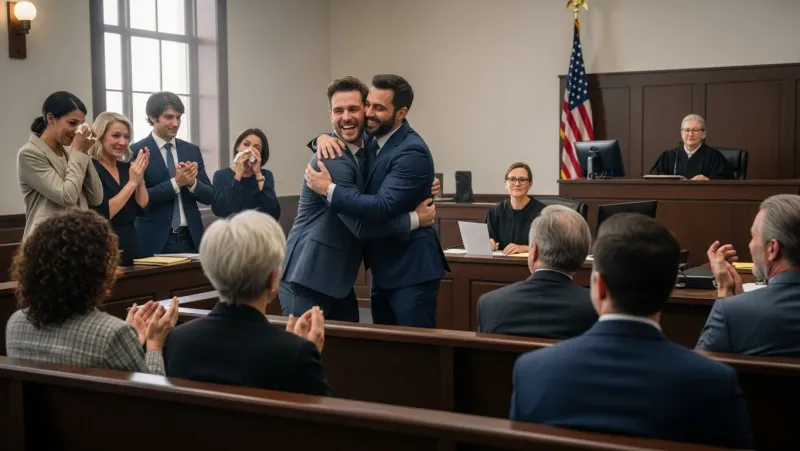
The localized nature of business dispute arbitration in Sacramento, California 94293 imposes unique constraints on evidence gathering and documentation standards, particularly in balancing regional procedural expectations with broader corporate workflow realities. One key trade-off involves reconciling Sacramento’s stringent timeline demands with the need for comprehensive evidence validation, which often strains resources and risks overlooking informal but critical communications.
Most public guidance tends to omit the subtle interdependencies between physical documentation integrity and digital chain-of-custody discipline, which can introduce silent failures if not properly monitored. The cost implication of failing to integrate these aspects is typically underestimated by arbitration teams who prioritize speed over depth in packet readiness controls.
Further compounding constraints are jurisdictional nuances in evidentiary rules that require adaptive operational controls, often forcing teams into workflow boundaries where evidence preservation workflow decisions must be customized. This nuance highlights the cost implications of rigid, cookie-cutter documentation strategies.
| EEAT Test | What most teams do | What an expert does differently (under evidentiary pressure) |
|---|---|---|
| So What Factor | Focuses primarily on checklist completion and timestamps. | Evaluates the context and integrity behind timestamps, questioning assumed completeness and triangulating sources. |
| Evidence of Origin | Relies on formal contract files and official submissions. | Includes informal communications and third-party confirmations as part of evidence intake governance. |
| Unique Delta / Information Gain | Accepts delivered documentation as a static snapshot. | Continuously assesses incremental evidence gain against known timelines and previous evidence states to detect silent gaps. |
Don't Leave Money on the Table
Full legal representation typically costs $14,000–$65,000 on average. Self-help document prep: $399.
Start Your Case — $399FAQ
Is arbitration binding in California?
Yes, arbitration clauses are generally enforceable under the California Arbitration Act, provided they meet legal standards for enforceability as specified in CCP Sections 1281.2 and 1281.6. Once an arbitration agreement is valid, the resulting award is typically binding and enforceable through the courts.
How long does arbitration take in Sacramento?
In Sacramento, arbitration proceedings often conclude within 3 to 6 months after filing, depending on case complexity, evidence readiness, and arbitrator availability. Strict adherence to procedural timelines outlined in AAA or JAMS rules accelerates resolution.
What happens if I don’t present enough evidence?
Insufficient evidence can lead to an unfavorable award, especially if the opposing party demonstrates a stronger factual or contractual basis. Proper documentation, witness testimony, and timely submission are essential to support your claims effectively.
Can I challenge an arbitration award in Sacramento courts?
Under California law, you can seek court confirmation of an arbitration award or file a motion to vacate it on grounds such as arbitrator bias or procedural misconduct. However, these challenges are limited and require strict compliance with CCP Section 1285 and subsequent procedures.
Why Business Disputes Hit Sacramento Residents Hard
Small businesses in Sacramento County operate on thin margins — when a contract is broken, arbitration at $399 vs $14K+ litigation makes the difference between staying open and closing doors. With a median household income of $84,010 in this area, few business owners can absorb five-figure legal costs.
In Sacramento County, where 1,579,211 residents earn a median household income of $84,010, the cost of traditional litigation ($14,000–$65,000) represents 17% of a household's annual income. Federal records show 4 Department of Labor wage enforcement cases in this area, with $0 in back wages recovered for 0 affected workers — evidence that businesses here have a pattern of cutting corners on obligations.
$84,010
Median Income
4
DOL Wage Cases
$0
Back Wages Owed
6.29%
Unemployment
Source: U.S. Census Bureau ACS, Department of Labor WHD. IRS income data not available for ZIP 94293.
PRODUCT SPECIALIST
Content reviewed for procedural accuracy by California-licensed arbitration professionals.
About Stephen Garcia

View author profile on BMA Law | LinkedIn | Federal Court Records
Arbitration Help Near Sacramento
Nearby ZIP Codes:
Arbitration Resources Near
If your dispute in involves a different issue, explore: Consumer Dispute arbitration in • Employment Dispute arbitration in • Contract Dispute arbitration in • Insurance Dispute arbitration in
Nearby arbitration cases: Oakland business dispute arbitration • Sherman Oaks business dispute arbitration • El Dorado business dispute arbitration • Boulevard business dispute arbitration • Glendale business dispute arbitration
Other ZIP codes in :
References
California Arbitration Act: https://leginfo.legislature.ca.gov/faces/codes_displayText.xhtml?lawCode=CA|Code|CIV|SO
California Civil Procedure Code: https://leginfo.legislature.ca.gov/faces/codes_displayText.xhtml?lawCode=CCP
AAA Commercial Arbitration Rules: https://www.adr.org/rules
Local Economic Profile: Sacramento, California
N/A
Avg Income (IRS)
4
DOL Wage Cases
$0
Back Wages Owed
Federal records show 4 Department of Labor wage enforcement cases in this area, with $0 in back wages recovered for 3 affected workers.

