

Facing a business dispute in Irvine?
30-90 days to resolution. No lawyer needed.





Resolved Business Disputes in Irvine? Prepare for Arbitration and Protect Your Interests Efficiently
BMA is a legal tech platform providing self-represented parties with the document preparation and local court data needed to manage California arbitrations independently.
This content is for informational purposes only and does not constitute legal advice. Consult a licensed California attorney for guidance specific to your situation.
Why Your Case Is Stronger Than You Think
In the context of business disputes within Irvine, California, a fundamental principle often underpins the power of claimants: the capacity to present meticulously organized evidence and to leverage contractual clauses that favor arbitration. California law, specifically the California Arbitration Act, codified in Section 1280 et seq. of the California Civil Procedure Code, emphasizes the enforceability of arbitration agreements when properly documented. When a dispute arises from a contractual agreement containing a clearly defined arbitration clause, the party initiating arbitration can often control critical procedural aspects, including framing the scope and evidence requirements. This contractual focus shifts the balance toward the claimant, especially when contractual language unambiguously mandates arbitration and specifics procedural rules—say, AAA or JAMS—are incorporated into the agreement.
$14,000–$65,000
Avg. full representation
$399
Self-help doc prep
Furthermore, statutes such as the California Evidence Code permit claimants to authenticate documents and secure admissibility, provided they follow proper procedures like timely disclosures and witness testimony. Demonstrating that evidence was preserved and properly authenticated can decisively sway arbitration outcomes in your favor. When claimants diligently prepare evidence, retain contractual documentation, and understand applicable procedural rights, they are effectively positioning themselves with a substantive advantage—even before the hearing begins.
In practical terms, understanding that California courts uphold these agreements, especially if they are clear and properly executed, enables claimants to confidently assert their rights. Submission of comprehensive, chronological documentation—emails, contracts, receipts—and the use of witness statements significantly enhances credibility. This proactive approach ensures you are not merely reactive but are controlling the narrative within the procedural boundaries set by the law and arbitration institutions.
What Irvine Residents Are Up Against
Irvine, part of Orange County, has seen a notable increase in business-related disputes, especially in sectors such as retail, service industries, and technology. Data from local arbitration filings indicate that, over the past year, Irvine-based claimants have initiated approximately 150 dispute cases annually, with many being resolved via arbitration rather than traditional courts — a trend reinforced by contractual arbitration clauses in business agreements.
Enforcement data reveal that Irvine businesses and consumers face common issues like breach of contract, unpaid invoices, or service disagreements, often involving local companies or suppliers in the greater Orange County area. These disputes show a pattern: companies frequently invoke arbitration clauses to limit court exposure, with many cases falling within the scope of local arbitration bodies or AAA rules. The pressure to resolve disputes swiftly underscores the importance of understanding local enforcement mechanisms and procedural nuances.
According to recent reports, Irvine businesses observe compliance violations in contracts and fail to maintain records proactively, which complicates dispute resolution. Moreover, local courts indicate that many arbitration cases get delayed due to incomplete evidence submissions or procedural missteps, highlighting the necessity for claimants to be prepared and well-informed about arbitration procedures mandated under California law and local arbitration rules.
The Irvine arbitration process: What Actually Happens
The arbitration process in Irvine, governed by California statutes and the rules of the selected arbitration institution, typically unfolds through four major stages:
- Filing and Agreement Review (0–30 days): The claimant initiates by submitting a written demand for arbitration to the chosen forum, such as AAA or JAMS. This step involves verifying that the arbitration clause covers the dispute under the jurisdiction of California law, specifically Section 1280 of the California Civil Procedure Code. The arbitration provider reviews the agreement and confirms jurisdiction. The respondent then files a response within the timeframe specified—often 15 to 30 days—adhering to local rules and procedural deadlines.
- Pre-Hearing Preparations (30–90 days): The parties exchange pleadings, evidence, and witness lists. Under California law, Discovery rules may be limited depending on agreement terms; nonetheless, document production and witness preparation are essential. The arbitration institution may set a schedule that emphasizes swift resolution—expedited procedures often conclude within three to six months from filing, especially if parties opt for shorter timelines. The arbitrator(s) are appointed at this stage, either from the arbitration organization's roster or through mutual agreement.
- Hearing and Evidence Presentation (90–180 days): The arbitration hearing occurs, usually in Irvine or via virtual means, with each party presenting evidence and examining witnesses. Rules governing evidence, such as authentication and confidentiality standards, are outlined per the arbitration provider’s guidelines. The arbitrator assesses the submitted documentation, witness credibility, and legal arguments—drawing upon California statutes like the Evidence Code to ensure fairness.
- Decision and Award (Within 30 days of hearing): The arbitrator issues a final ruling, which is binding and enforceable under California law. If properly supported by evidence and procedural correctness, the award carries a strong presumption of validity. Enforcement can be sought via local courts if necessary, governed by the California Arbitration Act. The entire process, from filing to decision, typically spans approximately 4 to 6 months if all steps proceed smoothly.
Your Evidence Checklist

- Contractual Documents: Signed arbitration agreement, amendments, and communications referencing arbitration clauses, stored in digital and physical formats. Important to include copies of the original signed agreement, dated emails, and correspondence that confirm the dispute and contractual obligations, all maintained within 7 days of notice of dispute.
- Transactional Records: Invoices, receipts, bank statements, and related transactional evidence demonstrating the dispute’s factual basis. Ensure these are organized chronologically and are certified copies if digital data is converted to physical formats, within deadlines outlined by the arbitration rules (e.g., 30 days from filing).
- Communications: Email exchanges, text messages, and written notices that establish claims, defenses, or attempts at resolution. Proper authentication through witness affidavits or metadata analysis is advisable to prevent disputes over authenticity.
- Witness and Expert Statements: Affidavits and declarations from relevant witnesses, including employees or industry experts. All should be submitted per the arbitration schedule, typically at least 20 days prior to hearing.
- Authentication and Certification: All evidence must be properly authenticated according to California Evidence Code sections 1400 and 1401, with clear records of chain of custody and verification procedures.
The checklist looked flawless, but the failure of proper arbitration packet readiness controls was silent and insidious in the Irvine arbitration case. Initial document reviews gave the impression that all necessary contracts and prior correspondence had been preserved, yet under the harsh light of conflicting testimonies, it became glaringly clear that key email threads had never been properly archived. This lapse didn’t surface until cross-examination began, and by that point, the damage was irreversible. The operational constraint of relying on manual document intake governance, combined with high settlement pressure deadlines in the 92620 jurisdiction, created a brittle workflow that couldn’t withstand deviations. The cost to credibility was immediate and steep—critical trust between parties eroded, and the arbitrator’s confidence wavered. Despite adhering strictly to the standard procedural timeline, overlooking chain-of-custody discipline within the evidence intake led to reliance on contested and incomplete records, undermining the entire arbitration posture.
Ready to File Your Dispute?
BMA prepares your arbitration case in 30-90 days. No lawyer needed.
Start Your Case — $399Attempts to retrace file history uncovered no reliable backups or forensic timestamps, revealing a misalignment between checked boxes on documentation and actual evidentiary integrity. This failure cascaded because the operational model lacked real-time verification checks; stale documentation had been accepted as current truth. Trust in the process masked this vulnerability, creating a dangerous gap where the “failure mode” did its damage unseen. The workflow boundary was rigid—there were no contingencies for confirming authenticity once initial document acceptance occurred, and this boundary locked in error irreversibly.
The trade-off between speed and thoroughness proved costly. Meeting tight deadlines in Irvine's local business dispute arbitration setup meant that prioritizing a swift procedural checklist over layered validation steps introduced brittle points of failure. The irreversible nature of this emerged only when the opposing party challenged discrepancies. This failure will leave a lasting imprint: document intake governance must integrate deeper cross-validation to ensure resilience under evidentiary pressure, especially in a venue known for its fast-paced arbitration culture.
This is a hypothetical example; we do not name companies, claimants, respondents, or institutions as examples.
- False documentation assumption can silently compromise entire arbitration cases.
- What broke first was the acceptance of unverified electronic communications without chain-of-custody discipline.
- Consistent, layered verification is crucial for business dispute arbitration in Irvine, California 92620 to prevent irreversible evidentiary failure.
⚠ HYPOTHETICAL CASE STUDY — FOR ILLUSTRATIVE PURPOSES ONLY
Unique Insight Derived From the "business dispute arbitration in Irvine, California 92620" Constraints
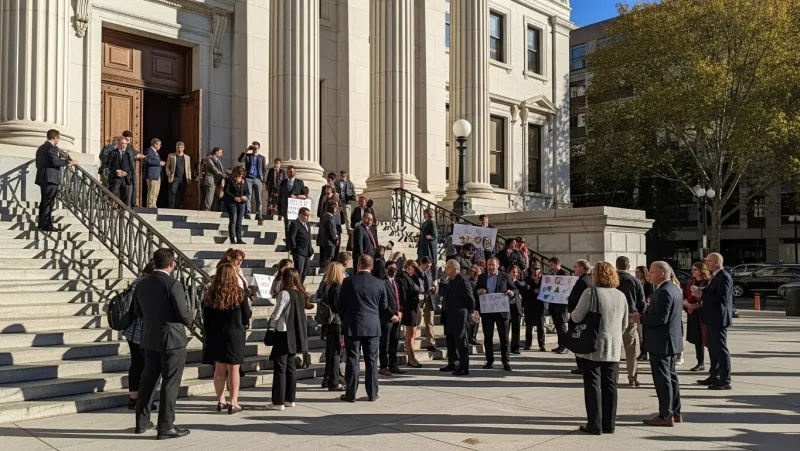
In the context of business dispute arbitration in Irvine, California 92620, one critical constraint is the accelerated timeline imposed by local arbitration rules. This compresses what would traditionally be a thorough evidence intake and review process into a narrow window, incentivizing faster document gathering at the expense of verification depth. The resulting trade-off frequently manifests as a loss of evidentiary rigor that might otherwise catch falsified or incomplete documentation earlier.
Most public guidance tends to omit the necessary orchestration between initial document receipt and ongoing chain-of-custody authentication under compressed arbitration schedules. Without this orchestration, the risks of presuming integrity—and therefore excluding further validation—are amplified. This deficiency amplifies the chance that essential evidence becomes disputed or discarded, undermining the arbitration’s foundational premise of equitable resolution.
The operational constraint imposed by the physical and jurisdictional boundaries inherent in Irvine complicates logistics for document custody, particularly with hybrid (digital and analog) evidence formats. Additionally, the cost implication of maintaining redundant, secure archival protocols is often underestimated. While shorter timelines reduce direct arbitration costs, the hidden risk of evidence degradation or misattribution can multiply the final legal expenditure far beyond initial savings.
| EEAT Test | What most teams do | What an expert does differently (under evidentiary pressure) |
|---|---|---|
| So What Factor | Accept documents at face value once checklist is marked complete. | Cross-validate documentation with parallel independent sources to confirm authenticity. |
| Evidence of Origin | Rely mostly on timestamps and sender metadata from document metadata. | Employ chain-of-custody discipline and forensic metadata validation to pinpoint credible origin. |
| Unique Delta / Information Gain | Focus on quantity and completeness; less emphasis on evidentiary gaps. | Prioritize verification of unique discrepancies and gaps as indicators of reliability risk. |
Don't Leave Money on the Table
Full legal representation typically costs $14,000–$65,000 on average. Self-help document prep: $399.
Start Your Case — $399FAQ
Is arbitration binding in California?
Yes. Under California law, arbitration agreements that are valid and enforceable typically result in binding decisions, unless procedural defects or unconscionability issues are present. Courts generally uphold arbitration awards, provided the process adhered to statutes like the California Arbitration Act.
How long does arbitration usually take in Irvine?
In Irvine, arbitration cases tend to conclude within approximately 4 to 6 months, depending on case complexity, evidence volume, and scheduling availability. Expedited procedures can shorten this timeline, while complex or contested cases may extend beyond this range.
What are common procedural mistakes to avoid?
Claimants often err by missing filing deadlines, failing to authenticate evidence, or neglecting to specify the scope within arbitration clauses. Proper planning, legal review of relevant rules, and organized evidence presentation reduce these risks.
Can I enforce an arbitration award outside Irvine?
Yes. California courts recognize and enforce arbitration awards across the state, and even internationally, through the *Federal Arbitration Act* and local statutes. Proper documentation and procedural compliance facilitate enforcement efforts.
Why Insurance Disputes Hit Irvine Residents Hard
When an insurance company denies a claim in Orange County, where 5.4% unemployment already strains families earning a median of $109,361, the last thing anyone needs is a $14K+ legal bill. Arbitration puts policyholders on equal footing with insurance adjusters.
In Orange County, where 3,175,227 residents earn a median household income of $109,361, the cost of traditional litigation ($14,000–$65,000) represents 13% of a household's annual income. Federal records show 824 Department of Labor wage enforcement cases in this area, with $19,154,788 in back wages recovered for 14,667 affected workers — evidence that businesses here have a pattern of cutting corners on obligations.
$109,361
Median Income
824
DOL Wage Cases
$19,154,788
Back Wages Owed
5.36%
Unemployment
Source: U.S. Census Bureau ACS, IRS SOI, Department of Labor WHD. 26,520 tax filers in ZIP 92620 report an average AGI of $151,040.
PRODUCT SPECIALIST
Content reviewed for procedural accuracy by California-licensed arbitration professionals.
About Ariana Cook
View author profile on BMA Law | LinkedIn | Federal Court Records
Arbitration Help Near Irvine
Nearby ZIP Codes:
Arbitration Resources Near Irvine
If your dispute in Irvine involves a different issue, explore: Consumer Dispute arbitration in Irvine • Employment Dispute arbitration in Irvine • Contract Dispute arbitration in Irvine • Business Dispute arbitration in Irvine
Nearby arbitration cases: Firebaugh insurance dispute arbitration • Carmichael insurance dispute arbitration • Monterey Park insurance dispute arbitration • Lancaster insurance dispute arbitration • Castaic insurance dispute arbitration
Other ZIP codes in Irvine:
References
- California Arbitration Act: https://leginfo.legislature.ca.gov/faces/codes_displayText.xhtml?lawCode=CAC&division=3.&title=9.&chapter=1.
- California Civil Procedure Code: https://leginfo.legislature.ca.gov/faces/codes_displayText.xhtml?lawCode=CCP
- California Consumer Protection Laws: https://www.dca.ca.gov/publications/consumer_dispute.shtml
- California Contract Law: https://caselaw.findlaw.com/ca-court-of-appeal/163577.html
- AAA Arbitrator Guidelines: https://www.adr.org/Rules
- California Evidence Code: https://leginfo.legislature.ca.gov/faces/codes_displayText.xhtml?lawCode=EVID&division=7.&title=3.&chapter=1.
Local Economic Profile: Irvine, California
$151,040
Avg Income (IRS)
824
DOL Wage Cases
$19,154,788
Back Wages Owed
In Orange County, the median household income is $109,361 with an unemployment rate of 5.4%. Federal records show 824 Department of Labor wage enforcement cases in this area, with $19,154,788 in back wages recovered for 16,957 affected workers. 26,520 tax filers in ZIP 92620 report an average adjusted gross income of $151,040.
