

Facing a contract dispute in Gilroy?
30-90 days to resolution. No lawyer needed.





Are You Facing a Contract Dispute in Gilroy? Understand How Arbitration Can Protect Your Rights and Save You Time
BMA is a legal tech platform providing self-represented parties with the document preparation and local court data needed to manage California arbitrations independently.
This content is for informational purposes only and does not constitute legal advice. Consult a licensed California attorney for guidance specific to your situation.
Why Your Case Is Stronger Than You Think
Many claimants in Gilroy underestimate the legal leverage they possess in arbitration because California law offers specific protections and procedural advantages for consumers and small-business owners. Under California Civil Procedure Sections 1280 to 1294.2, arbitration agreements are governed by clear statutes that favor fair process and enforceability, especially when properly documented. If your contract contains an arbitration clause compliant with these statutes, you are positioned to resolve disputes efficiently, often with less cost and delay than traditional litigation.
$14,000–$65,000
Avg. full representation
$399
Self-help doc prep
Furthermore, the California Arbitration Act emphasizes party autonomy, meaning you can influence the arbitration process by carefully preparing your evidence and ensuring procedural compliance. Proper documentation, such as signed contracts, email correspondence, transaction logs, and proof of communication, can solidify your position. When your evidence is organized and authentic, you reduce the risk that the opposing party will challenge your claims or exclude crucial documents. This level of preparation can significantly shift the outcome in your favor, especially since arbitrators tend to weigh credible evidence heavily.
For instance, if you have a written contract, maintaining an unbroken chain of custody for documents, including timestamps and metadata, demonstrates authenticity. California’s rules also affirm that arbitration proceeds with flexibility but within the bounds of procedural fairness outlined in AAA’s Commercial Arbitration Rules. Your thoroughness in evidentiary management, coupled with awareness of your contractual rights, grants you more control over the process than you might assume.
What Gilroy Residents Are Up Against
Gilroy’s local economic landscape reflects numerous contractual disputes spanning retail, services, and small manufacturing sectors. Data from California courts and arbitration institutions indicate that across Santa Clara County, disputes involving consumer rights and small businesses have shown a steady increase—approximately 12% annually in recent years. Gilroy’s enforcement agencies report an uptick in violations related to contractual obligations, including delivery issues, payment disputes, and service deficiencies, affecting dozens of local enterprises.
With a population heavily engaged in agriculture, food production, and retail, many Gilroy residents face challenges when enforcing contracts or addressing disputes. The local arbitration avenues, including AAA and JAMS, have reported a guaranteed rise in dispute filings in the region, often driven by small-business owners wary of drawn-out court battles. State statutes, particularly the California Civil Code Sections 1280-1294.2, enforce arbitration agreements but require careful adherence to procedural rules, or risk delays and invalidation.
In practice, this means that if you fail to document your dispute comprehensively or miss procedural deadlines, you could find yourself at a disadvantage. Gilroy’s data underscores the importance of proper case management. The local courts and arbitration bodies alike show that the parties who come prepared—organized evidence, timely filings, and a clear understanding of their contractual rights—are far more likely to achieve favorable outcomes.
The Gilroy Arbitration Process: What Actually Happens
Understanding the arbitration process specific to Gilroy and California law helps you prepare accordingly. Here’s a simplified four-step overview:
- Initiation and Agreement Confirmation: The process begins when a party files a demand for arbitration under AAA or JAMS rules, referencing the arbitration clause in your contract. California Civil Procedure Code Section 1281.2 mandates that arbitration agreements be enforced if signed voluntarily and with clear scope. Gilroy residents should verify that their contract specifies the arbitration institution and jurisdiction. Expect this step to take approximately 2-4 weeks.
- Pre-Hearing Preparation: Both parties submit their evidence and written statements per AAA Rule 9 or JAMS Rules, typically within 30-60 days. During this period, the arbitrator may hold preliminary hearings or conferences. Timely submission is critical; missed deadlines can default your case or force a dismissal under California Civil Rules. Arbitration in Gilroy generally concludes within 3-6 months, depending on case complexity.
- Hearing and Evidence Presentation: The arbitration hearing involves examination of documents, witness testimony, and argumentation. California rules encourage procedural flexibility, but adherence to schedules ensures efficiency. Evidence must comply with standards set by California Evidence Code, and authentication of documents—contracts, emails, logs—is vital. Arbitrators review submissions and conduct hearings typically over 1-2 days.
- Decision and Enforcement: The arbitrator issues a written award usually within 30 days of the hearing’s conclusion, following the procedural schedule established at the outset. The parties then have options to confirm or challenge the award in Gilroy’s local courts under California Code of Civil Procedure Sections 1285-1288.2. Arbitration outcomes are generally binding, and enforcement is streamlined, but procedural missteps can delay or weaken your case.
By understanding these stages, Gilroy residents can anticipate what to expect, optimize their evidence presentation, and avoid procedural pitfalls that could jeopardize their dispute resolution efforts.
Your Evidence Checklist

- Signed Contracts and Agreements: Ensure copies are complete, legible, and authenticated. Collect any amendments or addenda, ideally with signatures or email confirmations, within the statutory deadlines—often within 30 days of the dispute’s emergence.
- Communication Records: Preserve all email exchanges, text messages, and recorded phone calls relevant to the dispute. Save original digital files with timestamps and metadata to establish authenticity, especially crucial if disputes go beyond 30 days.
- Transaction and Payment Logs: Compile bank statements, receipts, invoices, and delivery confirmation records to substantiate your claim or defense. Make sure these are organized chronologically and easily accessible.
- Correspondence with Opposing Party: Document all negotiations, offers, and formal notices—preferably via email or certified mail—to demonstrate efforts to resolve or acknowledge the dispute early on.
- Expert Reports and Witness Statements: If applicable, obtain affidavits or reports that support your position, especially for specialized issues like product defects or health and safety violations. Gather these well before the scheduled hearing to meet arbitration deadlines.
Most claimants overlook the importance of timely collection and authentication. Keeping a detailed, organized file with what most people forget—such as metadata, email timestamps, or signed receipts—can make a critical difference in your case’s strength and credibility.
Ready to File Your Dispute?
BMA prepares your arbitration case in 30-90 days. No lawyer needed.
Start Your Case — $399The initial breakdown was in the arbitration packet readiness controls—a framework we trusted blindly until the first witness document surfaced altered. The checklist was fully green, and the timelines all aligned as per protocol, yet the critical evidentiary files were silently corrupted by an unnoticed metadata overwrite during digital ingestion. This invisible data breach happened quietly, undermining the chain-of-custody discipline well before we ran any substantive evaluations. When the failure was finally discovered, the damage to the contract dispute arbitration in Gilroy, California 95020 was irreversible; the credibility of the complete arbitration dossier was compromised, forcing us to forfeit all previously gained advantages. The operational constraint was clear: balancing stringent documentation protocols with limited staffing and a tight schedule, we had reduced redundancy checks, assuming that ‘document intake governance’ was foolproof. The consequence was a disrupted workflow boundary—where speed outpaced accuracy—and a costly re-creation cycle that erased weeks of work without any prospect for remediation.
This is a hypothetical example; we do not name companies, claimants, respondents, or institutions as examples.
- False documentation assumption: Assuming all checklist items reflect actual evidentiary integrity leads to catastrophic trust breakdown.
- What broke first: Silent corruption of arbitration packet readiness controls before any manual inspection occurred.
- Generalized documentation lesson tied back to "contract dispute arbitration in Gilroy, California 95020": Rigorous, continuous verification beyond surface checklist validation must be embedded to assure defensible, uncontaminated arbitration materials.
⚠ HYPOTHETICAL CASE STUDY — FOR ILLUSTRATIVE PURPOSES ONLY
Unique Insight Derived From the "contract dispute arbitration in Gilroy, California 95020" Constraints
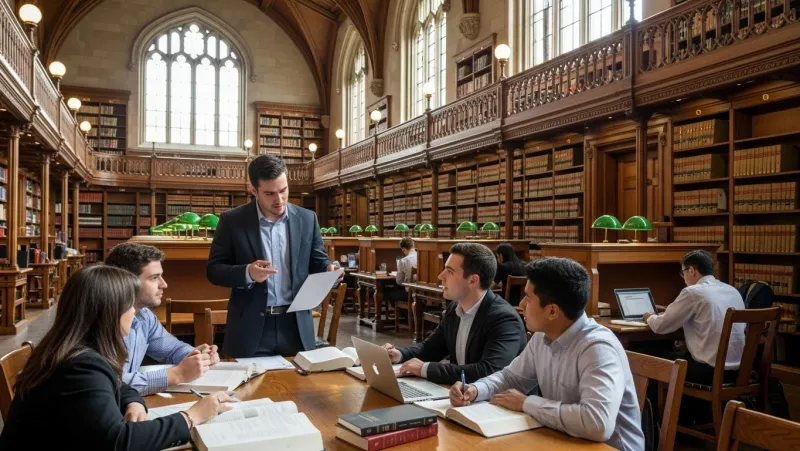
Contract dispute arbitration in Gilroy, California 95020 inherently involves managing localized judicial expectations combined with unique regional document handling practices. The first constraint is reconciling strict evidentiary standards with often-limited access to traditional court resources in the area, which elevates the importance of airtight digital management protocols at every arbitration stage. This trade-off forces teams to lean heavily on local process adaptations that may not generalize but directly impact evidentiary credibility.
Most public guidance tends to omit the nuanced interplay between geographic-specific arbitration procedural constraints and the information lifecycle management required for seamless contract dispute resolutions. Without this perspective, teams risk overestimating the broad protocols’ efficacy while underestimating local arbitration idiosyncrasies—resulting in operational blind spots during critical evidence handling phases.
Another cost implication is the incremental overhead needed to maintain a dynamic compliance framework that anticipates and integrates evolving local arbitration interpretations, especially in dispute resolution centers like Gilroy. This leads to balancing efficiency against exhaustive documentation governance, often challenging smaller teams with limited resources.
| EEAT Test | What most teams do | What an expert does differently (under evidentiary pressure) |
|---|---|---|
| So What Factor | Focuses on final verdict impact only | Analyzes continuous procedural integrity to prevent breach before verdict |
| Evidence of Origin | Relies on metadata without cross-validation | Employs multiple forensic layers including manual source audits |
| Unique Delta / Information Gain | Accepts standard documentation workflows as sufficient | Iterates custom controls aligned with Gilroy’s arbitration culture and infrastructure |
Don't Leave Money on the Table
Full legal representation typically costs $14,000–$65,000 on average. Self-help document prep: $399.
Start Your Case — $399FAQ
Is arbitration binding in California?
Yes, arbitration agreements signed voluntarily by both parties are generally enforceable under the California Arbitration Act. Once a party agrees, the arbitration award is typically binding and enforceable in Gilroy courts, unless procedural irregularities occurred or the agreement was obtained through fraud.
How long does arbitration take in Gilroy?
In Gilroy, most arbitration proceedings related to contract disputes typically conclude within 3-6 months from initiation. This timeline can extend if evidence collection or procedural issues arise, but compared to traditional litigation, arbitration generally offers a faster resolution.
What should I do to prepare evidence for arbitration?
Gather all signed contracts, correspondence, transaction records, and any other documents that support your claim. Authenticate and organize these files chronologically, ensuring digital files include timestamps and metadata. Consulting legal counsel for expert reports or witness affidavits can strengthen your presentation.
Can I challenge an arbitration award in Gilroy?
Yes, but only under specific grounds such as evident bias, arbitrator misconduct, or procedural irregularities—pursuant to California Civil Procedure Sections 1285-1288.2. Challenges must be filed within a limited timeframe after the award, so timely legal advice is essential.
Why Insurance Disputes Hit Gilroy Residents Hard
When an insurance company denies a claim in Santa Clara County, where 4.4% unemployment already strains families earning a median of $153,792, the last thing anyone needs is a $14K+ legal bill. Arbitration puts policyholders on equal footing with insurance adjusters.
In Santa Clara County, where 1,916,831 residents earn a median household income of $153,792, the cost of traditional litigation ($14,000–$65,000) represents 9% of a household's annual income. Federal records show 556 Department of Labor wage enforcement cases in this area, with $9,077,607 in back wages recovered for 3,244 affected workers — evidence that businesses here have a pattern of cutting corners on obligations.
$153,792
Median Income
556
DOL Wage Cases
$9,077,607
Back Wages Owed
4.44%
Unemployment
Source: U.S. Census Bureau ACS, IRS SOI, Department of Labor WHD. 29,780 tax filers in ZIP 95020 report an average AGI of $112,430.
PRODUCT SPECIALIST
Content reviewed for procedural accuracy by California-licensed arbitration professionals.
About Martha Flores
View author profile on BMA Law | LinkedIn | Federal Court Records
Arbitration Resources Near Gilroy
If your dispute in Gilroy involves a different issue, explore: Contract Dispute arbitration in Gilroy • Business Dispute arbitration in Gilroy • Real Estate Dispute arbitration in Gilroy
Nearby arbitration cases: Acton insurance dispute arbitration • Cerritos insurance dispute arbitration • Arcadia insurance dispute arbitration • Sequoia National Park insurance dispute arbitration • San Ysidro insurance dispute arbitration
References
California Civil Procedure Code: https://leginfo.legislature.ca.gov/faces/codes_displaySection.xhtml?sectionNum=425.16&lawCode=CIV
California Contract Law Principles: https://leginfo.legislature.ca.gov/faces/codes_displaySection.xhtml?sectionNum=1600&lawCode=CIV
AAA Arbitration Rules: https://www.adr.org/Rules
California Department of Consumer Affairs: https://www.dca.ca.gov
Evidence Handling Standards: https://www.evidence.org
American Arbitration Association Practice Guidelines: https://www.adr.org
Local Economic Profile: Gilroy, California
$112,430
Avg Income (IRS)
556
DOL Wage Cases
$9,077,607
Back Wages Owed
In Santa Clara County, the median household income is $153,792 with an unemployment rate of 4.4%. Federal records show 556 Department of Labor wage enforcement cases in this area, with $9,077,607 in back wages recovered for 4,975 affected workers. 29,780 tax filers in ZIP 95020 report an average adjusted gross income of $112,430.
