

Facing a insurance dispute in El Monte?
30-90 days to resolution. No lawyer needed.





Denied Insurance Claim in El Monte? Prepare for Arbitration in 30-90 Days with Confidence
BMA is a legal tech platform providing self-represented parties with the document preparation and local court data needed to manage California arbitrations independently.
This content is for informational purposes only and does not constitute legal advice. Consult a licensed California attorney for guidance specific to your situation.
Why Your Case Is Stronger Than You Think
Many claimants underestimate the potential impact of diligent documentation and procedural strategy when facing insurance disputes in El Monte. California law provides robust pathways to arbitrate disagreements over coverage, policy interpretation, or claim denials, especially when a well-prepared case can leverage existing statutes and procedural rules to your advantage. For instance, under California Civil Procedure Code §1280, arbitration agreements are enforceable if they comply with statutory requirements, including clear language and proper notice. This means that if your insurance policy contains an arbitration clause, the process is generally binding and prioritized over court litigation, giving you a procedural edge.
$14,000–$65,000
Avg. full representation
$399
Self-help doc prep
Furthermore, California courts and arbitration bodies have established rules that favor fair and comprehensive evidence disclosure, such as the AAA Commercial Arbitration Rules, which mandate early document exchange and witness disclosures. When claimants systematically organize their evidence early—preserving all communication records, medical reports, repair invoices, and correspondence—they position themselves to present a convincing case. This proactive preparation can counteract typical employer or insurer tactics, such as delaying responses or disputing damages, and can even influence arbitrators' perceptions, emphasizing the validity and completeness of your claim.
Strategic use of expert reports, thorough record-keeping, and understanding your rights under California's Insurance Code sections (e.g., §12921) can significantly shift procedural leverage. These legal tools, when employed effectively, ensure claimants retain the upper hand—especially against resource-rich insurers—by preventing procedural dismissals and establishing the credibility of claims from the outset.
What El Monte Residents Are Up Against
In El Monte, insurance claim disputes are increasingly common, influenced by local industry patterns and enforcement challenges. Data from the California Department of Insurance indicates that the state has seen thousands of complaint violations regarding claim refusals, delays, or inadequate settlements, with a notable portion originating from Los Angeles County, where El Monte resides. Many local businesses and insurers operate under high-volume policies, often relying on procedural nuances and complex clause language to deny or delay claims.
El Monte's demographic profile—comprising numerous small-business owners and residents—faces a tough environment where insurers might scrutinize claims more aggressively, especially in sectors such as auto, property, or health insurance. The California Department of Consumer Affairs reports over 3,500 complaints across the region annually that involve unfair claim settlement practices. These patterns underscore the importance of taking procedural control, documenting every interaction, and understanding the local enforcement climate. Claimants are not alone; a pattern of disputes suggests that the insurer or carrier's initial response often requires challenge through arbitration to secure rightful coverage.
Moreover, local ADR programs such as the AAA California and JAMS handle a significant volume of insurance disputes in El Monte, with enforcement data showing that many cases are resolved through arbitration rather than court proceedings—highlighting its importance as a dispute resolution avenue. Accurate awareness of these patterns can empower claimants to navigate the process more effectively and avoid procedural pitfalls that could undermine their case.
The El Monte arbitration process: What Actually Happens
In California, insurance claim arbitration typically follows a structured four-step process, with specific timelines tailored for cases originating in El Monte. Upon receipt of an arbitration demand, governed by the AAA Commercial Arbitration Rules or the specific arbitration clause in your policy, the process unfolds as follows:
- Step 1: Filing and Response (Weeks 1-4): The claimant submits a written demand for arbitration, including all supporting documents. The insurer responds within 20 days, contesting jurisdiction or scope if necessary, per California Civil Procedure §1281.9. In El Monte, this stage often takes approximately four weeks, considering local administrative processing times.
- Step 2: Evidence Exchange and Preparation (Weeks 5-8): Both parties exchange evidence, witness lists, and expert reports according to AAA disclosure rules. This phase emphasizes detailed document management, as deadlines are strictly enforced under California law. Failure to disclose evidence promptly can result in sanctions or evidence exclusion, per AAA Rule 24.
- Step 3: Hearing and Presentation (Weeks 9-12): The arbitration hearing, typically lasting 1-3 days, is scheduled in El Monte or nearby facilities. The arbitrator reviews submissions, hears witness testimonies, and evaluates damages. California's arbitration statutes (California Code of Civil Procedure §1281.3) govern these proceedings.
- Step 4: Award and Enforcement (Weeks 13-14): The arbitrator issues a decision, which is binding and enforceable in Los Angeles County courts. If either party seeks to confirm or challenge the award, California courts uphold arbitration awards in accordance with CCP §1285-1287.2, often within two weeks of filing the appropriate motion.
This timeline, from demand to enforceable award, generally spans 30 to 90 days, highlighting the importance of precise procedural adherence and evidence management at each stage.
Your Evidence Checklist

- Policy Documents: Original policy, endorsements, arbitration clause, and amendments. Deadline: Immediately upon receipt; ensure copies are preserved digitally and physically.
- Correspondence Records: All email, letter, and call logs with insurers—save timestamps and metadata. Deadline: Ongoing, with special emphasis on record-keeping prior to filing.
- Claim Documentation: Claim submission receipts, claim acknowledgment letters, and internal notes. Deadline: Prior to arbitration demand.
- Medical and Repair Records: Medical bills, repair invoices, assessments, and evaluations. Deadline: Before hearing; continuously update files.
- Witness Statements and Expert Reports: Statements from healthcare providers, repair technicians, or industry experts. Deadline: Prior to evidence exchange; prepare early to avoid last-minute surprises.
- Evidence Log: An organized index of all documents, communications, and evidence items, with clear labels and discovery notes. Deadline: Continuous throughout the dispute process.
Most claimants forget to maintain a comprehensive evidence log and underestimate the importance of early preservation. Failing to collect or disclose critical evidence at the proper time can irreversibly weaken a case, especially if challenged during arbitration.
Ready to File Your Dispute?
BMA prepares your arbitration case in 30-90 days. No lawyer needed.
Start Your Case — $399What broke first was the assumption that dispatching the insurance adjuster with a supposedly pristine arbitration packet readiness controls checklist meant the evidentiary trail was intact. It took several weeks before the silent failure became apparent: key repair authorizations were logged only in oral confirmations that never made it into the formal file. Their absence created a break in chain-of-custody discipline that was invisible during task audits and progress reports. Yet by the time the discrepancy was discovered—in El Monte's near-surface arbitration environment—the ability to retroactively validate claim authenticity had fully evaporated. Reconstructing the lost integrity would have demanded re-interviews and expensive expert testimony, both cost-prohibitive at the late discovery phase. This was a brutal lesson in the cost trade-offs of real-time evidence preservation workflow versus a cursory pre-arbitration paper review.
This is a hypothetical example; we do not name companies, claimants, respondents, or institutions as examples.
- False documentation assumption: relying solely on checklist completion masked critical gaps in repair authorization records.
- What broke first: an incomplete chain-of-custody discipline stemming from unrecorded verbal approvals.
- Generalized documentation lesson tied back to insurance claim arbitration in El Monte, California 91732: the high-stakes local arbitration climate demands rigorous, timestamped evidence acquisition beyond standard procedural checkpoints.
⚠ HYPOTHETICAL CASE STUDY — FOR ILLUSTRATIVE PURPOSES ONLY
Unique Insight Derived From the "insurance claim arbitration in El Monte, California 91732" Constraints
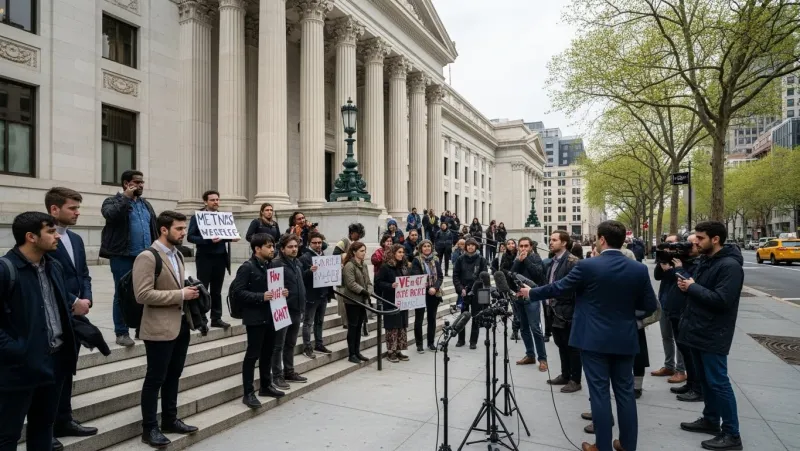
The arbitration process in El Monte's jurisdiction is tightly compressed in both timeline and resource allocation, forcing practitioners to balance speed against evidentiary completeness. Every document intake governance decision implicitly trades off redundancy versus agility, and missing minor entries can cascade into irreversible losses of claim credibility. Most public guidance tends to omit the criticality of contemporaneous multi-layer verification steps in this high-turnover environment.
Operational constraints in El Monte also stipulate limited third-party data retrieval capabilities, increasing dependency on claimant-submitted information, which elevates the importance of upfront chronology integrity controls. The cost implications of re-opened discovery due to inadequate documentation often dwarf initial investment outlays in robust record-keeping systems.
Finally, regional arbitration panels impose strict thresholds on acceptable proof of causation and damage quantification, putting a premium on well-structured evidence preservation workflows that can accommodate last-minute challenges without systemic collapse.
| EEAT Test | What most teams do | What an expert does differently (under evidentiary pressure) |
|---|---|---|
| So What Factor | Focus on meeting arbitrator checklist requirements superficially. | Embed critical path failure points detection within pre-submission analytics to anticipate silent losses. |
| Evidence of Origin | Accept claimant statements without contemporaneous cross-validation. | Institute timestamped, multi-source corroboration protocols to lock in chronology integrity. |
| Unique Delta / Information Gain | Provide baseline documentation without capturing evidentiary gain through metadata or progress tracing. | Leverage detailed document intake governance to elevate each entry's evidentiary value under arbitration scrutiny. |
Don't Leave Money on the Table
Full legal representation typically costs $14,000–$65,000 on average. Self-help document prep: $399.
Start Your Case — $399FAQ
Is arbitration binding in California?
Yes. When an arbitration clause is present and valid, California law generally requires parties to abide by the arbitrator’s decision, making it binding and enforceable through the courts under CCP §1285.
How long does arbitration take in El Monte?
Typically, arbitration in El Monte can be completed within 30 to 90 days from the initial demand, depending on case complexity, evidence exchange speed, and arbitrator availability, according to California arbitration schedules.
Can I represent myself in insurance arbitration?
Yes, claimants can represent themselves, but engaging legal or arbitration professionals enhances evidence preparation, procedural compliance, and strategy, especially when claiming significant damages or complex issues.
What if the other party refuses to cooperate with evidence disclosure?
Most arbitration rules require strict adherence to disclosure obligations. Non-cooperation can result in sanctions, evidence exclusion, or a procedural advantage for the compliant party, emphasizing the importance of thorough early documentation.
Why Insurance Disputes Hit El Monte Residents Hard
When an insurance company denies a claim in Los Angeles County, where 7.0% unemployment already strains families earning a median of $83,411, the last thing anyone needs is a $14K+ legal bill. Arbitration puts policyholders on equal footing with insurance adjusters.
In Los Angeles County, where 9,936,690 residents earn a median household income of $83,411, the cost of traditional litigation ($14,000–$65,000) represents 17% of a household's annual income. Federal records show 1,945 Department of Labor wage enforcement cases in this area, with $31,208,626 in back wages recovered for 21,195 affected workers — evidence that businesses here have a pattern of cutting corners on obligations.
$83,411
Median Income
1,945
DOL Wage Cases
$31,208,626
Back Wages Owed
6.97%
Unemployment
Source: U.S. Census Bureau ACS, IRS SOI, Department of Labor WHD. 26,110 tax filers in ZIP 91732 report an average AGI of $47,210.
PRODUCT SPECIALIST
Content reviewed for procedural accuracy by California-licensed arbitration professionals.
About Ivy Lee
View author profile on BMA Law | LinkedIn | Federal Court Records
Arbitration Help Near El Monte
Nearby ZIP Codes:
Arbitration Resources Near El Monte
If your dispute in El Monte involves a different issue, explore: Consumer Dispute arbitration in El Monte • Employment Dispute arbitration in El Monte • Business Dispute arbitration in El Monte • Family Dispute arbitration in El Monte
Nearby arbitration cases: Orangevale insurance dispute arbitration • Glennville insurance dispute arbitration • Goleta insurance dispute arbitration • Cantua Creek insurance dispute arbitration • Milford insurance dispute arbitration
References
Arbitration Rules: AAA Commercial Arbitration Rules, available at https://www.adr.org/aaa/ShowProperty?nodeId=2015944
Civil Procedure: California Civil Procedure Code, available at https://leginfo.legislature.ca.gov/faces/codes_displayText.xhtml?lawCode=CCP
Consumer Protection: California Department of Consumer Affairs, available at https://www.dca.ca.gov/
Contract Law: California Contract Law, available at https://leginfo.legislature.ca.gov/faces/codes_displayText.xhtml?lawCode=COM&division=3.&title=
Dispute Resolution Guidance: California Arbitration Practice Guides, available at https://www.calbar.ca.gov/
Evidence Management: Evidence Management in Arbitration, available at https://www.adr.org/aaa/ShowProperty?nodeId=2015948
Local Economic Profile: El Monte, California
$47,210
Avg Income (IRS)
1,945
DOL Wage Cases
$31,208,626
Back Wages Owed
In Los Angeles County, the median household income is $83,411 with an unemployment rate of 7.0%. Federal records show 1,945 Department of Labor wage enforcement cases in this area, with $31,208,626 in back wages recovered for 23,782 affected workers. 26,110 tax filers in ZIP 91732 report an average adjusted gross income of $47,210.
