
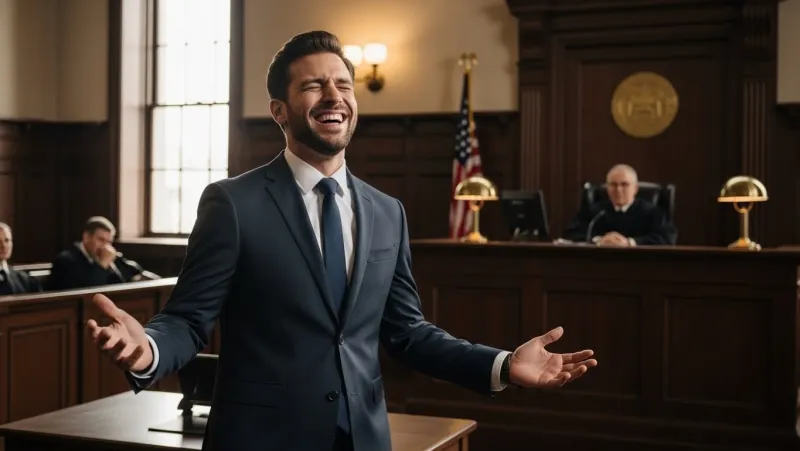
Get Your Business Dispute Case Packet — Skip the $14K Lawyer
A partner, vendor, or client owes you and won't pay? Companies in Brooklyn with federal violations cut corners everywhere — contracts, payments, obligations. Use their record against them.
5 min
to start
$399
full case prep
30-90 days
to resolution
Your BMA Pro membership includes:
Professionally drafted demand letter + evidence brief for your dispute
Complete case packet — demand letter, evidence brief, filing documents
Enforcement alerts when companies in your area get new violations
Step-by-step filing instructions for AAA, JAMS, or local court
Priority support — dedicated case manager on every filing
| Lawyer (full representation) |
Do Nothing | BMA | |
|---|---|---|---|
| Cost | $14,000–$65,000 | $0 | $399 |
| Timeline | 12-24 months | Claim expires | 30-90 days |
| You need | $5,000 retainer + $350/hr | — | 5 minutes |
* Lawyer cost range reflects full legal representation retainer + hourly fees for employment disputes. BMA Law provides document preparation only — not legal advice or attorney representation. For complex claims, consult a licensed attorney.
✅ Arbitration Preparation Checklist
- Locate your federal case reference: CFPB Complaint #20030641
- Document your business contracts, invoices, and B2B communication records
- Download your BMA Arbitration Prep Packet ($399)
- Submit your prepared case to your arbitration provider — no attorney required
- Cross-reference your evidence with federal violations documented for this ZIP
Average attorney cost for business dispute arbitration: $5,000â$15,000. BMA preparation packet: $399. You handle the filing; we arm you with the roadmap.
Or Compare plans | Compare plans
30-day money-back guarantee • Case capacity managed by region — current availability varies





Brooklyn (11231) Business Disputes Report — Case ID #20030641

BMA Law Arbitration Preparation Team
Dispute documentation · Evidence structuring · Arbitration filing support
BMA Law is not a law firm. We help individuals prepare and document disputes for arbitration.
Step-by-step arbitration prep to recover unpaid invoices in Brooklyn — no lawyer needed. $399 flat fee. Includes federal enforcement data + filing checklist.
- ✔ Recover Unpaid Invoices without hiring a lawyer
- ✔ Flat $399 arbitration case packet
- ✔ Built using real federal enforcement data
- ✔ Filing checklist + step-by-step instructions
In Brooklyn, NY, federal records show 1,555 DOL wage enforcement cases with $33,545,361 in documented back wages. A Brooklyn distributor facing a business dispute involving unpaid wages or owed compensation can find themselves navigating a complex landscape. In a small city like Brooklyn, disputes involving $2,000 to $8,000 are common, yet litigation firms in nearby larger cities often charge $350–$500 per hour, making justice unaffordable for many local businesses. The enforcement numbers highlight a pattern of employer non-compliance, allowing a Brooklyn distributor to reference verified federal records—including the Case IDs listed here—to document their dispute without the need for costly retainer fees. Unlike the $14,000+ retainer most NY litigation attorneys demand, BMA Law offers a $399 flat-rate arbitration packet, made possible by federal case documentation and local enforcement data. This situation mirrors the pattern documented in CFPB Complaint #20030641 — a verified federal record available on government databases.
Who This Service Is Designed For
This platform is built for individuals and small businesses who cannot justify $15,000–$65,000 in legal fees but still need a structured, enforceable arbitration case. We are not a law firm — we are a dispute documentation and arbitration preparation service.
If you need legal advice or courtroom representation, consult a licensed attorney for guidance specific to your situation.
BMA is a legal tech platform providing self-represented parties with the document preparation and local court data needed to manage arbitrations independently — no law firm required.
This content is for informational purposes only and does not constitute legal advice. Consult a licensed attorney for guidance specific to your situation.
Introduction to Business Dispute Arbitration
In the bustling commercial hub of Brooklyn, New York 11231, businesses regularly navigate complex legal landscapes that can sometimes lead to disputes. To efficiently manage and resolve these conflicts, many businesses turn to arbitration—a form of alternative dispute resolution that offers a private, efficient, and enforceable means of settling disagreements. Arbitration involves the submission of disputes to a neutral third party, called an arbitrator, whose decision—known as an award—is typically final and binding. This process helps preserve business relationships, shields confidential information, and ensures a swift resolution in a dynamic environment characterized by a population of over 2.6 million residents and a dense network of commercial activity.
Legal Framework Governing Arbitration in New York
The legal underpinnings of arbitration in Brooklyn are rooted in New York State law, notably the New York Civil Practice Law and Rules (CPLR). These statutes promote the enforceability of arbitration agreements and awards, aligning with the broader federal framework in the United States that favors arbitration as a means of dispute resolution. The Federal Arbitration Act (FAA) also plays a significant role, ensuring that arbitration agreements are given full effect and that awards are recognized and enforceable across jurisdictions. Under these laws, businesses enjoy a legal environment that respects their contractual rights to choose arbitration, while courts maintain the authority to oversee proceedings to ensure fairness and compliance with legal standards.
Advantages of Arbitration over Litigation
- Speed: Arbitration procedures often resolve disputes faster than traditional court processes, which may involve lengthy docket schedules.
- Cost-Effectiveness: Reduced legal fees and court costs make arbitration more economical for businesses.
- Confidentiality: Unlike court proceedings, arbitration processes are private, protecting sensitive business information.
- Flexibility: Parties can tailor arbitration procedures to suit their specific needs and schedule.
- Enforceability: Under New York law and the FAA, arbitration awards are generally straightforward to enforce domestically and internationally.
These benefits are especially vital in Brooklyn's diverse and densely populated business environment, facilitating swift dispute resolution that minimizes disruption and preserves ongoing commercial relationships.
The Arbitration Process in Brooklyn, NY 11231
The arbitration process in Brooklyn generally proceeds through several key stages:
1. Agreement to Arbitrate
The process begins with a contractual agreement—either embedded in a business contract or a separate arbitration clause—that stipulates arbitration as the method for dispute resolution.
2. Initiation of Arbitration
Once a dispute arises, the claimant files a notice with an arbitration organization or directly with the other party, initiating the proceedings.
3. Selection of Arbitrator
Both parties select a neutral arbitrator, often based on expertise and experience relevant to Brooklyn’s business community. Select arbitrators typically have local industry knowledge, which enhances the credibility of the decision.
4. Hearing and Evidence
Both sides present their evidence and arguments in a hearing that, while less formal than court trials, follows procedural fairness standards.
5. Award and Enforcement
After considering the evidence, the arbitrator renders an award. This decision is usually binding and enforceable in New York courts.
Choosing the Right Arbitrator in Brooklyn
Selecting an appropriate arbitrator is critical to a successful dispute resolution process. Factors include:
- Expertise: Industry-specific knowledge pertinent to Brooklyn's local business environment.
- Experience: Comprehensive understanding of arbitration procedures and familiarity with New York law.
- Reputation: Credibility and neutrality within the Brooklyn business community.
- Language and Communication Skills: Ability to clearly interpret complex legal and business issues.
Local arbitrators often possess nuanced insights into Brooklyn's business practices, making their decisions more relevant and accepted by all parties.
Common Types of Business Disputes in Brooklyn
Brooklyn's vibrant commercial environment fosters various types of disputes, such as:
- Contract Disputes: Breach of commercial agreements, lease disagreements, and supplier conflicts.
- Partnership Disputes: Dissolution issues, profit sharing, and management disagreements.
- Intellectual Property: Trademark, patent, and copyright infringements relevant to Brooklyn’s creative economy.
- Landlord-Tenant Conflicts: Disputes over commercial leasing terms within the 11231 zip code.
- Consumer and Business Torts: Defamation, unfair competition, and trade libel issues.
The complex and dense nature of Brooklyn’s diverse business environment often calls for arbitration's tailored and confidential approach.
Enforcement of Arbitration Awards in New York
Once an arbitration award is issued, it is highly enforceable under New York law. The New York Civil Practice Law and Rules (CPLR) facilitate the confirmation of arbitral awards, enabling parties to seek court enforcement if necessary. Courts in Brooklyn and across New York generally uphold arbitration awards with limited grounds for refusal, including local businessesnduct. This enforceability aligns with the principles of natural law, emphasizing the importance of respecting agreements and upholding the control over property—here, the property being the legal rights and obligations of the dispute parties.
Local Economic Profile: Brooklyn, New York
$217,160
Avg Income (IRS)
1,555
DOL Wage Cases
$33,545,361
Back Wages Owed
Federal records show 1,555 Department of Labor wage enforcement cases in this area, with $33,545,361 in back wages recovered for 19,029 affected workers. 16,900 tax filers in ZIP 11231 report an average adjusted gross income of $217,160.
Local Arbitration Resources and Support in Brooklyn
Brooklyn offers a range of resources to assist businesses involved in arbitration, including:
- Local arbitration organizations and panels with expertise in Brooklyn’s commercial sectors.
- Legal firms specializing in dispute resolution and arbitration law.
- Business associations that provide guidance and training on arbitration agreements and processes.
- Courts equipped to enforce arbitration awards efficiently.
- Brooklyn-based law firms and arbitration specialists committed to protecting property rights and ensuring justice in business disputes.
Collaborating with experienced local legal professionals ensures that disputes are resolved in accordance with New York law and the specific needs of the Brooklyn business community.
Arbitration Resources Near Brooklyn
If your dispute in Brooklyn involves a different issue, explore: Consumer Dispute arbitration in Brooklyn • Employment Dispute arbitration in Brooklyn • Contract Dispute arbitration in Brooklyn • Insurance Dispute arbitration in Brooklyn
Nearby arbitration cases: Ridgewood business dispute arbitration • New York business dispute arbitration • Maspeth business dispute arbitration • Astoria business dispute arbitration • South Ozone Park business dispute arbitration
Other ZIP codes in Brooklyn:
Key Data Points
| Attribute | Details |
|---|---|
| Population of Brooklyn | Over 2,679,609 residents |
| Zip Code | 11231 |
| Major Industries | Creative arts, manufacturing, retail, technology, real estate |
| Legal Support | Numerous Brooklyn-based arbitration lawyers and organizations |
| Legal Framework | New York CPLR, FAA, and international conventions |
Practical Advice for Brooklyn Businesses
- Draft Clear Arbitration Clauses: Ensure contracts explicitly specify arbitration agreements, procedures, and selection of arbitrators.
- Choose Experienced Arbitrators: Favor arbitrators with local knowledge and industry expertise.
- Maintain Confidentiality: Utilize arbitration clauses to safeguard sensitive information amid disputes.
- Seek Early Mediation: Consider combining mediation before arbitration to resolve disputes amicably.
- Consult Experienced Counsel: Work with Brooklyn-based attorneys knowledgeable in arbitration law to navigate complex disputes effectively.
These practices align with legal theories emphasizing property control and moral responsibility, ensuring that disputes are handled ethically and efficiently.
⚠ Local Risk Assessment
Brooklyn exhibits a high incidence of wage theft and unpaid overtime violations, with over 1,500 cases enforced annually and more than $33 million recovered in back wages. This pattern indicates a challenging employer culture where compliance is often overlooked, placing workers at risk of ongoing wage violations. For a worker filing today, understanding this enforcement landscape underscores the importance of verified documentation and strategic arbitration to secure owed wages efficiently within Brooklyn’s dynamic business environment.
What Businesses in Brooklyn Are Getting Wrong
Many Brooklyn businesses mistakenly believe that small wage disputes are not worth legal effort, leading them to ignore violations like unpaid overtime or minimum wage breaches. This oversight often results in continued non-compliance and significant financial penalties. Relying solely on informal resolutions without proper documentation can jeopardize future enforcement efforts and reduce chances of recovering owed wages, especially when violations are tied to specific issues like misclassification or unpaid overtime.
In CFPB Complaint #20030641, documented in 2026, a consumer in Brooklyn, New York, raised concerns about the improper use of their personal credit report. The individual had recently attempted to secure a loan but discovered that inaccurate or outdated information on their report was adversely affecting their creditworthiness. Despite making efforts to dispute the errors directly with the credit reporting agencies, the issues persisted, leading to frustration and financial setbacks. This scenario illustrates a common dispute involving the mishandling of personal financial data, which can impact lending terms, debt collection efforts, or billing practices. The consumer believed that their report was being used in ways that unfairly hindered their financial opportunities, highlighting the importance of proper dispute resolution processes. If you face a similar situation in Brooklyn, New York, having a properly prepared arbitration case can be the difference between recovering what you are owed and walking away empty-handed.
ℹ️ Dispute Archetype — based on documented enforcement patterns in this ZIP area. Not a specific case or individual. Record IDs reference real public federal filings on dol.gov, osha.gov, epa.gov, consumerfinance.gov, and sam.gov. Verify at enforcedata.dol.gov →
☝ When You Need a Licensed Attorney — Not This Service
BMA Law prepares arbitration documentation. For the following situations, you need a licensed attorney — document preparation alone is not sufficient:
- Complex discrimination claims involving multiple protected classes or systemic patterns
- Criminal retaliation or situations involving law enforcement
- Class action potential — if multiple employees share the same violation pattern
- Claims above $50,000 where legal representation cost is justified by potential recovery
- Appeals of arbitration awards — requires licensed counsel in your state
→ NY Lawyer Referral (low-cost) • Legal Services NYC (income-qualified, free)
🚨 Local Risk Advisory — ZIP 11231
⚠️ Federal Contractor Alert: 11231 area has a documented federal debarment or exclusion on record (SAM.gov exclusion record). If your dispute involves a government contractor or healthcare provider, this exclusion may directly affect your case.
🌱 EPA-Regulated Facilities Active: ZIP 11231 contains facilities regulated under the Clean Air Act, Clean Water Act, or RCRA hazardous waste programs. Environmental compliance disputes in this area have a documented federal enforcement track record.
🚧 Workplace Safety Record: Federal OSHA inspection records exist for employers in ZIP 11231. If your dispute involves unsafe working conditions, this federal inspection history may support your arbitration case.
Frequently Asked Questions
1. What types of disputes can be resolved through arbitration in Brooklyn?
Most commercial disputes, including contract breaches, partnership disagreements, intellectual property issues, and lease disputes, can be resolved through arbitration in Brooklyn.
2. How long does the arbitration process typically take?
While it varies, arbitration in Brooklyn often concludes within a few months, significantly faster than litigation, which can take years.
3. Are arbitration awards in Brooklyn enforceable in court?
Yes, under New York law and the FAA, arbitration awards are generally enforceable, and courts uphold their validity with limited grounds for denial.
4. How can businesses select the best arbitrator?
Consider arbitration experience, industry expertise, reputation, and understanding of Brooklyn’s local business practices. Engaging a local arbitrator can enhance the relevance of the decision.
5. Is arbitration confidential in Brooklyn?
Yes, arbitration proceedings are private, allowing businesses to keep sensitive information out of public records, which is vital in competitive markets.
Expert Review — Verified for Procedural Accuracy

Kamala
Senior Advocate & Arbitrator · Practicing since 1969 (55+ years) · MYS/63/69
“I review every document line by line. The data sourcing on this page has been verified against official DOL and OSHA databases, and the preparation guidance meets the standards I hold for my own arbitration practice.”
Procedural Compliance: Reviewed to ensure document preparation steps align with Federal Arbitration Act (FAA) standards.
Data Integrity: Verified that 11231 federal enforcement records are sourced from DOL and OSHA databases as of Q2 2026.
Disclaimer Verified: Confirmed as educational data and document preparation only; not provided as legal advice.
Why Business Disputes Hit Brooklyn Residents Hard
Small businesses in Kings County operate on thin margins — when a contract is broken, arbitration at $399 vs $14K+ litigation makes the difference between staying open and closing doors. With a median household income of $74,692 in this area, few business owners can absorb five-figure legal costs.
Federal Enforcement Data — ZIP 11231
Source: OSHA, DOL, CFPB, EPA via ModernIndexCity Hub: Brooklyn, New York — All dispute types and enforcement data
Other disputes in Brooklyn: Contract Disputes · Employment Disputes · Insurance Disputes · Family Disputes · Real Estate Disputes
Nearby:
Related Research:
Business Mediators Near MeFamily Business MediationTrader Joe S SettlementData Sources: OSHA Inspection Data (osha.gov) · DOL Wage & Hour Enforcement (enforcedata.dol.gov) · EPA ECHO Facility Data (echo.epa.gov) · CFPB Consumer Complaints (consumerfinance.gov) · IRS SOI Tax Statistics (irs.gov) · SEC EDGAR Company Filings (sec.gov)
Arbitration War Story: The Brooklyn Brewery Dispute
In the heart of Brooklyn, New York 11231, a bitter arbitration battle unfolded between two business partners, Marco Santoro and Elijah Kim, owners of East River Craft Brewery. Their partnership, which began with promise in early 2018, soured dramatically by mid-2023, leading to a high-stakes arbitration that would decide the future of their craft beer empire and nearly $1.2 million in disputed funds.
The Background: Marco, the creative force behind the recipes, and Elijah, the business strategist, launched East River Craft Brewery in September 2018 with a $500,000 seed investment. Their Brooklyn location, a former warehouse near the waterfront, quickly became a neighborhood hit. By 2022, the brewery grossed $3.5 million annually, but cracks began to show in their partnership.
In January 2023, Marco accused Elijah of siphoning off $400,000 from the company account to fund a separate and unauthorized side project — a trendy gastropub called Harbor Lights. Elijah countered, asserting the money was a legitimate loan meant to expand both their brands, with repayment agreements they had discussed informally but never formally documented.
The Arbitration Proceedings: After months of unsuccessful negotiations and escalating tensions, they agreed to settle the matter through arbitration under New York State rules. The arbitration panel convened on May 5, 2024, at a small conference room in downtown Brooklyn, presided over by retired judge Linda Garret.
Both sides presented detailed financial records and witness testimonies. Marco’s lawyer highlighted discrepancies in company books and emails where Elijah promised transparency but failed to disclose the loan formally. Elijah’s defense emphasized verbal agreements and industry customary practices that often rely on informal understandings between partners.
The arbitration hearings lasted three tense days. Each party brought in forensic accountants; tempers flared during cross-examinations, especially when evidence revealed Elijah had personally withdrawn funds without co-signature signatures. The panel had to navigate complex issues surrounding partnership law, fiduciary duty, and contractual obligations.
The Outcome: On June 18, 2024, Judge Garret delivered her decision. She ruled that Elijah had breached his fiduciary duties by diverting company money without explicit partner consent but recognized the intent to eventually repay the sum. The panel ordered Elijah to repay $275,000 immediately to East River Craft Brewery and structured a payment plan for the remaining $125,000 over 12 months, with 6% interest.
Additionally, the panel mandated the creation of formal financial controls, including local businessesunt signatures and quarterly independent audits, to prevent future disputes. Both partners were strongly encouraged to draft a comprehensive new partnership agreement.
Reflection: The arbitration brought a hard reckoning for two friends turned adversaries. Though it resolved the financial issues, the emotional toll led Elijah to sell his remaining stake later that summer, effectively ending the partnership. Marco continued East River Craft Brewery alone, fortified by the lessons learned amid the arbitration war, and the brewery has since expanded its distribution beyond Brooklyn.
In the bustling business ecosystem of Brooklyn’s 11231, their story stands as a cautionary tale: clear agreements and transparency are vital, even—perhaps especially—between trusted partners.
Avoid Brooklyn business errors that trigger wage violations
- Missing filing deadlines. Most arbitration forums have strict filing windows. Miss them and your claim is permanently barred — no exceptions.
- Accepting early lowball settlements. Companies often offer fast, small settlements to avoid arbitration. Once accepted, you cannot reopen the claim.
- Failing to document evidence at the time of the incident. Screenshots, emails, and records lose evidentiary weight if they can't be timestamped. Document everything immediately.
- Signing waivers without understanding them. Some agreements contain mandatory arbitration clauses or liability waivers that limit your options. Read before signing.
- Not preserving the chain of custody. Evidence that can't be authenticated is evidence that gets excluded. Keep originals. Don't edit. Don't forward selectively.
- How does Brooklyn’s filing process impact wage disputes?
Brooklyn workers must file wage claims with the New York State Department of Labor or federal agencies, often requiring detailed documentation. BMA Law’s $399 arbitration packet helps streamline and strengthen your case based on verified enforcement data and case histories specific to Brooklyn. - What enforcement data supports Brooklyn wage theft cases?
Federal records show over 1,500 wage enforcement cases annually in Brooklyn, highlighting persistent violations. Using BMA Law’s documented case data and local enforcement patterns can bolster your dispute without a high upfront retainer.
Official Legal Sources
- Federal Arbitration Act (9 U.S.C. § 1–16)
- AAA Commercial Arbitration Rules
- Uniform Commercial Code (UCC)
- SEC Enforcement Actions
Links to official government and regulatory sources. BMA Law is a dispute documentation platform, not a law firm.