
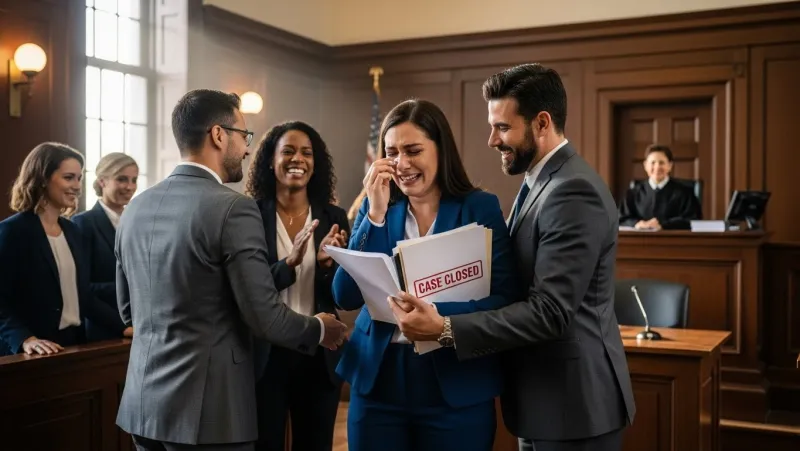
Get Your Employment Arbitration Case Packet — File in Brooklyn Without a Lawyer
Underpaid, fired unfairly, or facing unsafe conditions? You're not alone. In Brooklyn, federal enforcement data prove a pattern of systemic failure.
5 min
to start
$399
full case prep
30-90 days
to resolution
Your BMA Pro membership includes:
Professionally drafted demand letter + evidence brief for your dispute
Complete case packet — demand letter, evidence brief, filing documents
Enforcement alerts when companies in your area get new violations
Step-by-step filing instructions for AAA, JAMS, or local court
Priority support — dedicated case manager on every filing
| Lawyer (full representation) |
Do Nothing | BMA | |
|---|---|---|---|
| Cost | $14,000–$65,000 | $0 | $399 |
| Timeline | 12-24 months | Claim expires | 30-90 days |
| You need | $5,000 retainer + $350/hr | — | 5 minutes |
* Lawyer cost range reflects full legal representation retainer + hourly fees for employment disputes. BMA Law provides document preparation only — not legal advice or attorney representation. For complex claims, consult a licensed attorney.
✅ Arbitration Preparation Checklist
- Locate your federal case reference: SAM.gov exclusion — 2024-07-08
- Document your employment dates, pay stubs, and any written wage agreements
- Download your BMA Arbitration Prep Packet ($399)
- Submit your prepared case to your arbitration provider — no attorney required
- Cross-reference your evidence with federal violations documented for this ZIP
Average attorney cost for employment arbitration: $5,000â$15,000. BMA preparation packet: $399. You handle the filing; we arm you with the roadmap.
Or Compare plans | Compare plans
30-day money-back guarantee • Case capacity managed by region — current availability varies





Brooklyn (11201) Employment Disputes Report — Case ID #20240708

BMA Law Arbitration Preparation Team
Dispute documentation · Evidence structuring · Arbitration filing support
BMA Law is not a law firm. We help individuals prepare and document disputes for arbitration.
Step-by-step arbitration prep to recover wage claims in Brooklyn — no lawyer needed. $399 flat fee. Includes federal enforcement data + filing checklist.
- ✔ Recover Wage Claims without hiring a lawyer
- ✔ Flat $399 arbitration case packet
- ✔ Built using real federal enforcement data
- ✔ Filing checklist + step-by-step instructions
In Brooklyn, NY, federal records show 1,555 DOL wage enforcement cases with $33,545,361 in documented back wages. A Brooklyn restaurant manager facing an employment dispute for a few thousand dollars can look to these federal records—see the Case IDs on this page—to verify their claim without paying a costly retainer. In Brooklyn, where disputes over $2,000 to $8,000 are common, traditional litigation firms in nearby larger cities often charge $350–$500 per hour, pricing most residents out of justice. With BMA Law’s $399 flat-rate arbitration packet, a Brooklyn worker or employer can document their case based on verified federal data, making justice accessible without exorbitant legal fees. This situation mirrors the pattern documented in SAM.gov exclusion — 2024-07-08 — a verified federal record available on government databases.
Who This Service Is Designed For
This platform is built for individuals and small businesses who cannot justify $15,000–$65,000 in legal fees but still need a structured, enforceable arbitration case. We are not a law firm — we are a dispute documentation and arbitration preparation service.
If you need legal advice or courtroom representation, consult a licensed attorney for guidance specific to your situation.
BMA is a legal tech platform providing self-represented parties with the document preparation and local court data needed to manage arbitrations independently — no law firm required.
This content is for informational purposes only and does not constitute legal advice. Consult a licensed attorney for guidance specific to your situation.
With a population of over 2.6 million residents, Brooklyn is one of New York City's most vibrant and diverse boroughs. The dynamic nature of its labor market inevitably leads to employment disputes, ranging from wage claims to discrimination and wrongful termination grievances. To manage these conflicts efficiently, arbitration has become an increasingly popular alternative to traditional litigation. This article provides a comprehensive overview of employment dispute arbitration in Brooklyn, NY 11201, exploring its legal foundations, processes, benefits, and challenges, supported by relevant legal theories and practical advice for both employees and employers.
Introduction to Employment Dispute Arbitration
Employment dispute arbitration is a form of alternative dispute resolution (ADR) where parties agree to resolve their disagreements outside traditional courts through a neutral arbitrator. This process is often stipulated in employment contracts or collective bargaining agreements, especially in Brooklyn’s diverse economic context. Arbitration provides a confidential, efficient, and usually less costly method of resolving disputes related to wages, dismissals, discrimination, harassment, and other workplace issues.
Legal Framework Governing Arbitration in New York
The enforceability and governance of arbitration in New York are primarily rooted in federal law, notably the Federal Arbitration Act (FAA), as well as state statutes and court decisions. New York law upholds the validity of arbitration agreements, emphasizing the importance of mutual consent and clear contractual terms. Under the Napoleonic Code—an influential civil legal framework historically shaping contractual obligations in other jurisdictions—agreement enforcement hinges on principles of good faith and reasonable standards, emphasizing the mitigation principle where injured parties are expected to take reasonable steps to minimize damages following a breach.
In the context of employment disputes, arbitration clauses are frequently included in employment contracts, and New York courts tend to uphold these agreements unless they are unconscionable or violate public policy. Additionally, the Power Imbalance Theory highlights the potential disparity in bargaining power between employers and employees, which courts consider when analyzing the fairness of arbitration agreements.
Common Types of Employment Disputes in Brooklyn
Brooklyn's workforce, characterized by its diversity, faces a broad spectrum of employment issues. Common disputes include:
- Wage and hour claims—disputes over unpaid wages, overtime, and tip violations.
- Discrimination and harassment—claims based on race, gender, age, disability, or other protected statuses.
- Wrongful termination—dismissals alleged to violate contractual terms or laws prohibiting unjust discharge.
- Retaliation and whistleblower issues—employees facing adverse actions after reporting violations or unsafe practices.
- Workplace safety violations—disputes related to occupational hazards and OSHA regulations.
The Arbitration Process: Steps and Procedures
The arbitration process for employment disputes in Brooklyn typically follows a structured sequence:
- Initiation: The aggrieved party files a claim with a designated arbitration center or notices the dispute according to the arbitration clause.
- Selecting an Arbitrator: Parties agree on an arbitrator with expertise in employment law, or the center appoints one.
- Pre-hearing Procedures: Including document exchange, evidence submission, and preliminary hearings to define issues.
- Hearing: Presentation of evidence, witness testimony, and legal arguments similar to court proceedings but less formal.
- Decision: The arbitrator renders a binding or non-binding decision based on the merits.
- Enforcement: The decision can be enforced through courts if binding, providing finality to the dispute.
Throughout this process, the principles of contract law—particularly the mitigation principle—play a role. Injured parties are expected to take reasonable steps to minimize damages, which the arbitrator considers when assessing claims and remedies.
Advantages of Arbitration over Litigation
Arbitration offers several benefits over traditional litigation, especially pertinent in Brooklyn’s busy legal environment:
- Faster Resolution: Arbitration generally concludes faster than court proceedings, which can last for years.
- Cost-Effective: Reduced legal fees and procedural costs make arbitration accessible for many employees and employers.
- Confidential Process: Arbitrations are private, protecting reputations and sensitive business information.
- Expert Arbitrators: Selection of neutrals with specialized employment law knowledge can lead to more informed outcomes.
- Enforceability: Under the FAA, arbitration awards are widely enforceable across jurisdictions.
Role of Local Arbitration Centers in Brooklyn 11201
Brooklyn hosts several arbitration centers that cater to its large and diverse population. These centers provide accessible venues, experienced arbitrators, and tailored services for the local labor market. Notable among them is the a certified arbitration provider, which collaborates with local legal professionals to facilitate fair and efficient arbitration. Their services are vital in handling the substantial volume of employment disputes, ensuring accessible pathways to justice. These centers operate within the framework of New York law, supporting the core principles of arbitration and fairness.
Challenges and Criticisms of Employment Arbitration
Despite its benefits, arbitration faces criticism and challenges, particularly concerning employment disputes:
- Limited Appeal Rights: Arbitration awards are typically final, restricting the parties' ability to appeal or seek judicial review.
- Potential for Bias: Power imbalances can influence arbitration outcomes, especially when employees have less bargaining power or access to legal resources.
- Public Policy Concerns: Critics argue that arbitration may undermine important legal protections, such as anti-discrimination laws, by limiting transparency and judicial oversight.
- Cost of Initiating Arbitration: While often cheaper than litigation, initial costs can still be a barrier for some employees.
Legal theories, such as the Power Imbalance Theory, highlight that these issues stem from unequal bargaining power, which can impact the fairness of arbitration proceedings.
Resources and Support for Employees and Employers
In Brooklyn, various resources are available to assist both employees and employers in navigating arbitration:
- The Brooklyn Municipal Arbitrations Office offers guidance and mediates disputes.
- Legal aid organizations provide free or low-cost legal advice on employment arbitration rights.
- Local labor unions counsel members on arbitration clauses and collective bargaining issues.
- Private legal firms specializing in employment law assist clients in drafting arbitration agreements and representing them in disputes.
Case Studies of Employment Arbitration in Brooklyn
Real-world cases illustrate the practical aspects of arbitration in Brooklyn:
Case Study 1: Wage Dispute in a Brooklyn Restaurant
A group of tipped employees filed a wage claim citing unpaid overtime. The employer and employees settled through arbitration, with the arbitrator awarding back wages and confirming the employment practices complied with state laws. The confidentiality of arbitration preserved the restaurant's reputation.
Case Study 2: Discrimination Complaint in a Brooklyn Tech Firm
An employee claimed racial discrimination and harassment. The case was arbitrated under a clause in the employment contract. After a thorough hearing, the arbitrator ordered reinstatement and damages, demonstrating arbitration's capacity to resolve complex discrimination disputes efficiently.
Arbitration Resources Near Brooklyn
If your dispute in Brooklyn involves a different issue, explore: Consumer Dispute arbitration in Brooklyn • Contract Dispute arbitration in Brooklyn • Business Dispute arbitration in Brooklyn • Insurance Dispute arbitration in Brooklyn
Nearby arbitration cases: New York employment dispute arbitration • Richmond Hill employment dispute arbitration • Astoria employment dispute arbitration • Jamaica employment dispute arbitration • East Elmhurst employment dispute arbitration
Other ZIP codes in Brooklyn:
Conclusion and Future Outlook
Employment dispute arbitration in Brooklyn, NY 11201, continues to evolve as a vital component of the local labor legal landscape. Supported by a robust legal framework and accessible local centers, arbitration offers a pragmatic alternative to litigation, aligned with the modern needs for timely and cost-effective dispute resolution. However, ongoing debates about fairness and access highlight the importance of balanced arbitration procedures that safeguard employee rights. As Brooklyn's workforce grows more diverse and complex, the role of arbitration will likely expand, emphasizing the need for continual legal reform and resource development to ensure just outcomes for all parties involved.
⚠ Local Risk Assessment
Brooklyn’s enforcement landscape reveals a persistent pattern of wage theft violations, with over 1,500 cases filed annually and more than $33 million recovered in back wages. This indicates a culture among local employers that often disregards proper wage and hour laws, putting workers at risk of unpaid wages. For employees filing today, this pattern underscores the importance of thorough documentation and leveraging federal records to strengthen their case without the need for costly litigation.
What Businesses in Brooklyn Are Getting Wrong
Many Brooklyn businesses mistakenly assume wage and hour violations are minor or isolated, often overlooking the frequency of violations like unpaid overtime and minimum wage breaches. These errors—such as neglecting proper record-keeping or misclassifying employees—can severely damage a dispute’s strength. Relying solely on incomplete evidence or ignoring federal enforcement patterns risks losing crucial leverage in employment cases.
In the federal record identified as SAM.gov exclusion — 2024-07-08, a formal debarment action was documented against a local party in the Brooklyn, NY area. This record highlights a situation where a federal contractor was deemed ineligible to participate in government projects due to misconduct or violations of procurement regulations. From the perspective of a worker or consumer, such actions signal serious concerns about accountability and ethical standards within government contracting. When a contractor faces debarment, it often means that they engaged in activities that compromised the integrity of federal programs, potentially impacting the quality of work or the fair handling of funds. While If you face a similar situation in Brooklyn, New York, having a properly prepared arbitration case can be the difference between recovering what you are owed and walking away empty-handed.
ℹ️ Dispute Archetype — based on documented enforcement patterns in this ZIP area. Not a specific case or individual. Record IDs reference real public federal filings on dol.gov, osha.gov, epa.gov, consumerfinance.gov, and sam.gov. Verify at enforcedata.dol.gov →
☝ When You Need a Licensed Attorney — Not This Service
BMA Law prepares arbitration documentation. For the following situations, you need a licensed attorney — document preparation alone is not sufficient:
- Complex discrimination claims involving multiple protected classes or systemic patterns
- Criminal retaliation or situations involving law enforcement
- Class action potential — if multiple employees share the same violation pattern
- Claims above $50,000 where legal representation cost is justified by potential recovery
- Appeals of arbitration awards — requires licensed counsel in your state
→ NY Lawyer Referral (low-cost) • Legal Services NYC (income-qualified, free)
🚨 Local Risk Advisory — ZIP 11201
⚠️ Federal Contractor Alert: 11201 area has a documented federal debarment or exclusion on record (SAM.gov exclusion — 2024-07-08). If your dispute involves a government contractor or healthcare provider, this exclusion may directly affect your case.
🌱 EPA-Regulated Facilities Active: ZIP 11201 contains facilities regulated under the Clean Air Act, Clean Water Act, or RCRA hazardous waste programs. Environmental compliance disputes in this area have a documented federal enforcement track record.
🚧 Workplace Safety Record: Federal OSHA inspection records exist for employers in ZIP 11201. If your dispute involves unsafe working conditions, this federal inspection history may support your arbitration case.
Frequently Asked Questions (FAQs)
1. Is arbitration mandatory for employment disputes in Brooklyn?
Arbitration is often stipulated in employment contracts or collective bargaining agreements. However, whether it is mandatory depends on the specific contractual provisions and applicable laws.
2. Can employees refuse arbitration in Brooklyn?
Employees can generally refuse arbitration if not bound by an agreement or if the arbitration clause is deemed unconscionable or unenforceable under law. Consulting a legal professional is advised.
3. How long does arbitration typically take in Brooklyn?
Most employment arbitrations conclude within a few months, significantly faster than traditional court cases, which can take years.
4. Are arbitration awards in Brooklyn enforceable nationwide?
Yes. Under the Federal Arbitration Act, arbitration awards are generally enforceable across the United States.
5. What protections exist for employees in arbitration proceedings?
While arbitration can limit certain rights, statutes like the Civil Rights Act and NY Fair Employment Practices Law still provide protections, though their enforcement in arbitration can be complex. Consulting legal experts is recommended for specific concerns.
Local Economic Profile: Brooklyn, New York
$278,000
Avg Income (IRS)
1,555
DOL Wage Cases
$33,545,361
Back Wages Owed
Federal records show 1,555 Department of Labor wage enforcement cases in this area, with $33,545,361 in back wages recovered for 19,029 affected workers. 36,530 tax filers in ZIP 11201 report an average adjusted gross income of $278,000.
Key Data Points
| Data Point | Information |
|---|---|
| Population of Brooklyn | 2,679,609 |
| Number of employment disputes annually in Brooklyn | Estimated thousands, given the size and diversity of the workforce |
| Typical duration of arbitration process | 3-6 months |
| Cost range for arbitration per case | $2,000 - $10,000, depending on complexity |
| Enforceability of arbitration awards | Widely recognized under federal and state law |
Why Employment Disputes Hit Brooklyn Residents Hard
Workers earning $74,692 can't afford $14K+ in legal fees when their employer violates wage laws. In Kings County, where 7.3% unemployment already pressures families, arbitration at $399 levels the playing field against well-funded corporate legal teams.
Federal Enforcement Data — ZIP 11201
Source: OSHA, DOL, CFPB, EPA via ModernIndexCity Hub: Brooklyn, New York — All dispute types and enforcement data
Other disputes in Brooklyn: Contract Disputes · Business Disputes · Insurance Disputes · Family Disputes · Real Estate Disputes
Nearby:
Related Research:
How Long Does A Personal Injury Settlement TakeCrane AccidentsTiterbestimmung Hepatitis B Osha AccidentData Sources: OSHA Inspection Data (osha.gov) · DOL Wage & Hour Enforcement (enforcedata.dol.gov) · EPA ECHO Facility Data (echo.epa.gov) · CFPB Consumer Complaints (consumerfinance.gov) · IRS SOI Tax Statistics (irs.gov) · SEC EDGAR Company Filings (sec.gov)
Arbitration War Story: The Battle Over Brooklyn’s Cafe Pay Dispute
In the bustling heart of Brooklyn, New York 11201, a seemingly routine workplace disagreement turned into a fierce arbitration battle that tested the limits of fairness and labor law. The case involved Donald Rodriguez, a line cook at Eastside Espresso, and her former employer, Jasper Bennett, owner of the popular local café.
Maria had worked at Eastside Espresso for just over two years, earning $18 per hour. In June 2023, after a series of unexpected schedule changes, Maria claimed that she was owed back wages for unpaid overtime totaling $7,500. The company, however, argued that Maria was a salaried employee exempt from overtime pay and countered that any discrepancies resulted from schedule miscommunications, not wage violations.
The dispute escalated to arbitration in early September 2023. Both parties agreed to a confidential binding arbitration under New York State labor law, facilitated by the Brooklyn Arbitration Center.
From day one, the atmosphere was charged. Maria’s attorney, the claimant of Klein & Associates, presented detailed pay records, timestamps from the company’s scheduling system, and witness statements from coworkers who testified on her extended shifts without overtime compensation. Jasper Bennett, representing himself pro se, insisted that the café’s payroll was managed by a professional service and any errors were unintentional and minimal.
the claimant, the arbitration hearings unfolded with intense examinations of employment contracts, state labor statutes, and payroll data. Maria’s key argument focused on New York’s clear guidelines regarding non-exempt employees and overtime entitlement under New York Labor Law § 190 and related federal provisions.
Jasper contended that Maria’s fluctuating roles, including occasional managerial duties, rendered her exempt, but his inconsistent testimony and lack of documented managerial responsibilities weakened his position.
As the arbitration drew to a close in late November 2023, the arbitrator, a retired judge with over 30 years of experience, weighed the evidence carefully. In a detailed award issued December 5, 2023, the arbitrator found that Maria was misclassified as exempt and was indeed owed unpaid overtime wages. The award granted Maria $6,800 in back wages, plus $1,200 in liquidated damages, totaling $8,000, slightly less than the original claim but affirming the essence of her dispute.
Additionally, the arbitrator ordered Jasper Bennett to revise Eastside Espresso’s payroll practices within 90 days and mandated compliance training to prevent future violations.
Maria described the outcome as a hard-earned victory” that not only compensated her but “sent a clear message: workers’ rights matter, even in small businesses.” Jasper, while disappointed, acknowledged the ruling and committed to implementing the changes.
This arbitration war story highlights the challenges faced by employees in navigating wage disputes, the importance of thorough documentation, and the vital role arbitration plays in resolving workplace conflicts efficiently in Brooklyn’s vibrant labor market.
Avoid Brooklyn business errors in wage claim cases
- Missing filing deadlines. Most arbitration forums have strict filing windows. Miss them and your claim is permanently barred — no exceptions.
- Accepting early lowball settlements. Companies often offer fast, small settlements to avoid arbitration. Once accepted, you cannot reopen the claim.
- Failing to document evidence at the time of the incident. Screenshots, emails, and records lose evidentiary weight if they can't be timestamped. Document everything immediately.
- Signing waivers without understanding them. Some agreements contain mandatory arbitration clauses or liability waivers that limit your options. Read before signing.
- Not preserving the chain of custody. Evidence that can't be authenticated is evidence that gets excluded. Keep originals. Don't edit. Don't forward selectively.
- How does Brooklyn’s Department of Labor enforcement impact my employment dispute?
Brooklyn workers rely on federal DOL enforcement data to validate wage theft claims. Filing correctly with the New York State Labor Board requires understanding local procedures, and BMA Law’s $399 arbitration packet helps you organize and present your case effectively based on verified federal case records. - What are the filing requirements for employment disputes in Brooklyn, NY?
Employees and employers in Brooklyn must follow specific filing rules with the NYS Department of Labor and federal agencies. Using BMA Law’s affordable $399 document preparation service ensures your case aligns with local and federal standards, maximizing your chances of a successful resolution.
Official Legal Sources
- Fair Labor Standards Act (29 U.S.C. § 201)
- Title VII of the Civil Rights Act
- National Labor Relations Act (NLRA)
- DOL Wage and Hour Division
- OSHA Whistleblower Protections
Links to official government and regulatory sources. BMA Law is a dispute documentation platform, not a law firm.
Expert Review — Verified for Procedural Accuracy

Rohan
Senior Advocate & Arbitration Specialist · Practicing since 1966 (58+ years) · MYS/32/66
“Clarity in arbitration comes from organized facts, not theatrics. I have confirmed that the document preparation framework on this page follows established procedural standards for dispute resolution.”
Procedural Compliance: Reviewed to ensure document preparation steps align with Federal Arbitration Act (FAA) standards.
Data Integrity: Verified that 11201 federal enforcement records are sourced from DOL and OSHA databases as of Q2 2026.
Disclaimer Verified: Confirmed as educational data and document preparation only; not provided as legal advice.