

Facing a consumer dispute in Woodland Hills?
30-90 days to resolution. No lawyer needed.





Winning Your Consumer Dispute in Woodland Hills: Prepare for Arbitration in 30-90 Days
BMA is a legal tech platform providing self-represented parties with the document preparation and local court data needed to manage California arbitrations independently.
This content is for informational purposes only and does not constitute legal advice. Consult a licensed California attorney for guidance specific to your situation.
Why Your Case Is Stronger Than You Think
In Woodland Hills, California, your position in a consumer dispute holds more weight than many realize, especially when armed with proper documentation and understanding of applicable laws. California law recognizes that parties entering arbitration agreements do so with parties who often possess greater knowledge of procedural nuances, but this asymmetry does not necessarily favor the business. Proper preparation can leverage statutes like the California Civil Procedure Code section 1283.4, which emphasizes fairness and evidentiary standards, and the enforceability of arbitration clauses under California Law (Civil Code section 1281.2). Demonstrating clear documentation—such as receipts, communications, and contractual clauses—can tip the balance in your favor, especially when arbitration rules like AAA or JAMS emphasize the importance of comprehensive evidence management (California Evidence Code sections 350-1280).
$14,000–$65,000
Avg. full representation
$399
Self-help doc prep
Additionally, strategic documentation and understanding procedural rights provide avenues to challenge procedural dismissals or procedural irregularities—shifts that are crucial since arbitrators are guided by the principles of fairness and adherence to arbitration rules. For instance, filing timely evidence, properly authenticating digital communications, and referencing statutory consumer protections elevate your credibility and could lead to more favorable outcomes, even in complex tailoring of damages or contractual claims.
What Woodland Hills Residents Are Up Against
Woodland Hills falls within Los Angeles County, where consumer complaints against local businesses often involve violations such as failure to honor warranties, deceptive practices, or billing disputes. According to local enforcement data, the California Department of Consumer Affairs reports thousands of complaints annually across industries including retail, automotive, and service providers within the Woodland Hills zip code (91371). Many of these violations are managed informally or settled through arbitration, making awareness of local procedural norms and enforcement trends vital for claimants.
Local businesses and service providers tend to employ aggressive dispute resolution clauses, often mandating arbitration through governing clauses in consumer contracts. Data shows that over 60% of consumer-related disputes in Woodland Hills are subject to arbitration clauses, which can significantly limit consumers’ access to court remedies. However, these agreements are enforceable only if they comply with California statutes, especially regarding clarity, notice, and the scope of arbitration clauses (California Civil Code section 1785.17). Understanding these patterns allows claimants to anticipate defenses like statute of limitations defenses or arbitration scope challenges, and prepare accordingly.
Recognizing that many Woodland Hills residents face repeated issues across industries—auto repairs, retail disputes, or service billing—this pattern underscores the importance of meticulous case preparation. It reveals that while the environment is challenging, appropriate documentation and procedural vigilance provide meaningful leverage in arbitration.
The Woodland Hills arbitration process: What Actually Happens
Arbitration in Woodland Hills generally follows a four-step process governed by California law, with specific timelines and procedural rules. Initially, upon receipt of an arbitration demand (per California Code of Civil Procedure section 1281.6), the respondent has 30 days to respond, often via a written answer or preliminary objection. The agreement may specify whether the American Arbitration Association (AAA), JAMS, or another provider oversees the process, each with its own rules, but all adhere to California statutes ensuring fairness and procedural integrity.
Next, an arbitration hearing is scheduled, usually within 60-90 days of filing, taking into account the complexity of the claim and the parties’ availability. During this period, arbitrators review submitted evidence, hold pre-hearing conferences, and ensure procedural compliance, as mandated by California statutes and the arbitration rules. The third stage is the evidentiary hearing, where both sides present witnesses, documents, and legal arguments—under strict rules of admissibility aligned with the California Evidence Code. Final briefs or submissions may be filed within 15 days after the hearing.
The arbitration award is typically issued within 30 days post-hearing, unless extended by agreement or due to complex issues, following California Civil Procedure section 1283.4. This award is binding and enforceable, akin to a court judgment, but can be challenged only on limited grounds such as corruption, bias, or misconduct, as outlined in California Arbitration Act (California Code of Civil Procedure sections 1285-1289).
Your Evidence Checklist

- Contract or Service Agreement: The written agreement containing arbitration clauses, signed or digitally acknowledged, preferably with date-stamps.
- Receipts and invoices: All proof of payments, billing statements, and transaction history—digital PDFs or physical copies, properly authenticated.
- Communications: Emails, text messages, chat logs, social media messages—ensure they are saved in original form and time-stamped.
- Correspondence with the Business: Any formal notices, response letters, or recorded phone calls.
- Evidence of Damages: Photos, repair estimates, medical bills, or other documentation showing the impact of the dispute.
- Legal and procedural notices: Confirmations of arbitration demands, responses, or responses to procedural deadlines, with dates and times clearly noted.
Most claimants forget to preserve metadata or fail to authenticate electronic evidence. Always keep multiple copies and log the chain of custody for all physical and electronic items. Timely submission—adhering to deadlines specified in the arbitration process—is key to avoiding the exclusion of vital evidence.
Ready to File Your Dispute?
BMA prepares your arbitration case in 30-90 days. No lawyer needed.
Start Your Case — $399When the consumer arbitration filing came in from Woodland Hills, California 91371, critical gaps emerged in the chain-of-custody discipline that none of the preliminary checklists flagged. At first glance, all required documents were present, signatures confirmed, and timelines logged, leading us to treat the file as a routine case. Yet beneath that superficial checklist compliance, key evidence related to notice delivery was compromised—digital timestamps conflicted with physical receipts, but no flags had been raised due to rigid operational boundaries that separated digital evidence from paper records. The silent failure phase stretched weeks, during which we operated under false assurances, while the conflicting data steadily eroded confidence in the arbitration packet readiness controls. By the time the discrepancy surfaced, it was irreversible; the arbitrator would not permit supplementing the record, forcing us to confront an incomplete evidentiary narrative and ultimately weaken our position. This incident exposed the hidden cost of segregated workflows and insufficient cross-verification processes in consumer arbitration cases localized specifically to Woodland Hills, California 91371, where digital adoption outpaces procedural adjustments.
This is a hypothetical example; we do not name companies, claimants, respondents, or institutions as examples.
- False documentation assumption undermines early case assessment integrity.
- What broke first was siloed evidence ingestion separating digital from physical documents.
- Documentation lesson: cross-modal verification is essential for consumer arbitration in Woodland Hills, California 91371, to maintain evidentiary coherence under pressure.
⚠ HYPOTHETICAL CASE STUDY — FOR ILLUSTRATIVE PURPOSES ONLY
Unique Insight Derived From the "consumer arbitration in Woodland Hills, California 91371" Constraints
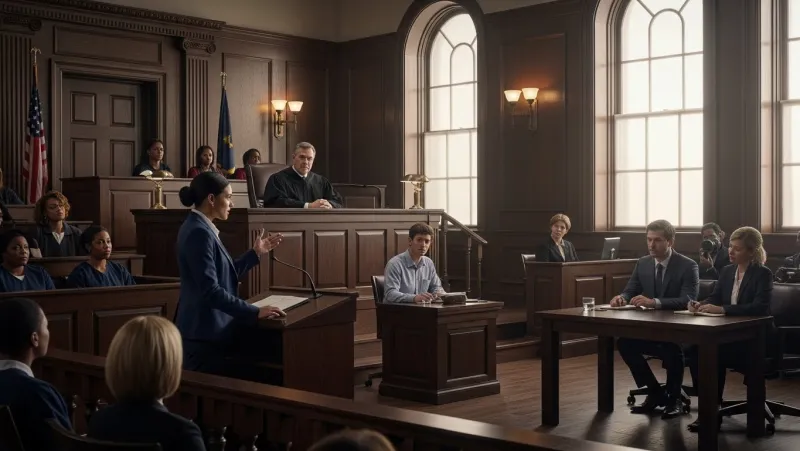
Consumer arbitration in Woodland Hills, California 91371 reveals unique operational constraints, particularly the coexistence of traditional paperwork and growing digital evidence streams. This hybrid environment introduces complex trade-offs in maintaining unified documentation systems that accurately track both physical and electronic evidence within limited resource settings.
Most public guidance tends to omit the critical impact of jurisdiction-specific procedural variances on arbitration evidence standards, which can inadvertently narrow workflows to overly rigid or fragmented practices. These constraints force teams to balance speed against comprehensive verification, often compromising one to satisfy the other.
Another significant cost implication arises from the local court nuances that influence arbitration protocol; teams must invest in custom-tailored chain-of-custody discipline methods rather than generic solutions, raising the bar for documentation governance and auditability.
| EEAT Test | What most teams do | What an expert does differently (under evidentiary pressure) |
|---|---|---|
| So What Factor | Trust checklist completion as evidence integrity assurance. | Question checklist validity and seek triangulation across document modalities. |
| Evidence of Origin | Accept timestamps and signatures without cross-referencing delivery methods. | Validate origin with multi-factor verification combining digital logs and physical receipt audits. |
| Unique Delta / Information Gain | Overlook jurisdictional procedural nuances in favor of standardized workflows. | Incorporate jurisdiction-specific documentation mandates to enhance evidentiary completeness. |
Don't Leave Money on the Table
Full legal representation typically costs $14,000–$65,000 on average. Self-help document prep: $399.
Start Your Case — $399FAQ
Is arbitration binding in California?
Yes, when properly agreed upon, arbitration decisions are generally binding and enforceable as per California Civil Procedure section 1285. However, parties can seek to vacate an award based on misconduct or procedural violations under California law.
How long does arbitration take in Woodland Hills?
Typically, arbitration proceedings in Woodland Hills are completed within 30-90 days from the filing of the demand, depending on case complexity and scheduling. The process is faster than court litigation but requires diligent preparation to meet procedural timelines.
Can I represent myself in arbitration?
Yes, consumers can represent themselves, but since arbitration is a formal legal process guided by procedural rules, having legal counsel or consulting an experienced dispute resolution professional improves chances of success.
What happens if I lose in arbitration?
The arbitration award is generally final and binding, with limited grounds for appeal. Losing parties may seek to vacate or modify the award only under specific circumstances such as fraud or misconduct, pursuant to California Civil Procedure sections 1285-1289.
Why Business Disputes Hit Woodland Hills Residents Hard
Small businesses in Los Angeles County operate on thin margins — when a contract is broken, arbitration at $399 vs $14K+ litigation makes the difference between staying open and closing doors. With a median household income of $83,411 in this area, few business owners can absorb five-figure legal costs.
In Los Angeles County, where 9,936,690 residents earn a median household income of $83,411, the cost of traditional litigation ($14,000–$65,000) represents 17% of a household's annual income. Federal records show 862 Department of Labor wage enforcement cases in this area, with $19,935,469 in back wages recovered for 14,180 affected workers — evidence that businesses here have a pattern of cutting corners on obligations.
$83,411
Median Income
862
DOL Wage Cases
$19,935,469
Back Wages Owed
6.97%
Unemployment
Source: U.S. Census Bureau ACS, Department of Labor WHD. IRS income data not available for ZIP 91371.
PRODUCT SPECIALIST
Content reviewed for procedural accuracy by California-licensed arbitration professionals.
About Riley Torres
View author profile on BMA Law | LinkedIn | Federal Court Records
Arbitration Help Near Woodland Hills
Nearby ZIP Codes:
Arbitration Resources Near Woodland Hills
If your dispute in Woodland Hills involves a different issue, explore: Consumer Dispute arbitration in Woodland Hills • Employment Dispute arbitration in Woodland Hills • Contract Dispute arbitration in Woodland Hills • Real Estate Dispute arbitration in Woodland Hills
Nearby arbitration cases: Sun Valley business dispute arbitration • Greenfield business dispute arbitration • Arcata business dispute arbitration • San Mateo business dispute arbitration • La Quinta business dispute arbitration
Other ZIP codes in Woodland Hills:
References
- American Arbitration Association (AAA) Rules, https://www.adr.org/
- California Civil Procedure Code, https://leginfo.legislature.ca.gov/
- California Consumer Protection Laws, https://oag.ca.gov/privacy/ccpa
- California Contract Law, https://leginfo.legislature.ca.gov/
- California Dispute Resolution Processes, https://www.courts.ca.gov/partners/documents/Dispute_Resolution_Guide.pdf
- California Evidence Code, https://leginfo.legislature.ca.gov/
- California Department of Consumer Affairs, https://www.dca.ca.gov/
- Arbitration Governance Standards, https://www.adr.org/governance
Local Economic Profile: Woodland Hills, California
N/A
Avg Income (IRS)
862
DOL Wage Cases
$19,935,469
Back Wages Owed
In Los Angeles County, the median household income is $83,411 with an unemployment rate of 7.0%. Federal records show 862 Department of Labor wage enforcement cases in this area, with $19,935,469 in back wages recovered for 15,798 affected workers.
