

Facing a insurance dispute in Bieber?
30-90 days to resolution. No lawyer needed.





Denied Insurance Claim in Bieber? Prepare for Arbitration and Protect Your Rights
BMA is a legal tech platform providing self-represented parties with the document preparation and local court data needed to manage California arbitrations independently.
This content is for informational purposes only and does not constitute legal advice. Consult a licensed California attorney for guidance specific to your situation.
Why Your Case Is Stronger Than You Think
In insurance dispute cases, the key leverage often lies in the clarity of documentation and the enforceability of the arbitration agreement. California law affirms that clear, plain language in the policy and arbitration clause grants you significant advantage in resolving disputes efficiently. Under the California Arbitration Act, arbitration clauses are interpreted based on their ordinary meaning, meaning if your policy explicitly states that claims will be settled via arbitration, this clause is enforceable as written, unless it is unconscionable or ambiguous.
$14,000–$65,000
Avg. full representation
$399
Self-help doc prep
For example, if your policy states that “any unresolved claim shall be settled through binding arbitration,” the language provides a straightforward pathway to enforce arbitration—a process less costly and faster than court litigation. Properly collected evidence such as policy copies, correspondence, and claim forms in the original language serve as concrete proof of contractual obligations. California courts uphold the contract's plain terms, which means that you can significantly strengthen your position by emphasizing the exact wording used and ensuring it is clearly documented.
Additionally, timely raising procedural objections or clarifying contractual language can influence the arbitrator’s initial rulings, giving you a procedural edge. Keep in mind that the enforceability of your arbitration agreement rests on its clarity and consistency with California statutes, such as CCP Section 1281.2, which supports arbitration provisions that are expressed in plain language. When your documentation aligns precisely with the language of the clause, you enhance your ability to compel arbitration and reduce the risk of procedural surprises delaying resolution.
What Bieber Residents Are Up Against
In Bieber, local insurance disputes often confront challenges stemming from the practices of insurance providers and the limitations of small-scale arbitration programs. Lassen County, like many rural counties in California, has seen a notable number of claims disputes—often over denied coverage, settlement delays, or improper handling. Data shows that the California Department of Insurance recorded over 1,200 complaints annually related to claim delays and denials across the state, with a significant portion originating from rural areas like Bieber.
Local businesses and residents report that insurance carriers frequently cite policy ambiguities or procedural technicalities to deny valid claims, relying on complex legal language or procedural technicalities to justify delays. Many consumers are unaware that arbitration clauses are embedded in their policies, nor do they always realize the enforceable potential this provides. While Bieber may lack a dedicated arbitration court, many disputes are funneled into state and private arbitration forums—such as AAA or JAMS—whose procedures are governed by California law and arbitration rules.
The challenge is that small claims or simple disputes often get complicated when carriers assert procedural objections, or when claimants fail to gather or preserve crucial documentation early in the process. The data underscores this: many disputes are lost due to procedural defaults or incomplete evidence, especially when claimants do not understand their rights or the importance of early documentation collection.
The Bieber arbitration process: What Actually Happens
The arbitration process in California, including Bieber, generally proceeds through four clear stages:
- Initiation of Dispute and Selection of Arbitrator: You begin by submitting a written demand for arbitration, referencing your policy’s arbitration clause. The selection of an arbitrator follows rules set by the chosen institution—typically AAA or JAMS—requiring that the arbitrator has relevant experience in insurance law. Under California law, the arbitration agreement’s specified procedures and any contractual stipulations guide this process. This step takes approximately 10-15 days.
- Pre-Hearing Preparation: Both parties exchange evidence per the applicable arbitration rules—most often within 20-30 days of arbitrator appointment. This includes disclosing documents such as claim correspondence, policy copies, proof of damages, and expert reports. Timelines are governed by the rules under the California Arbitration Act and the arbitration contract, with strict deadlines that must be adhered to. Missing these deadlines can lead to procedural challenges or default rulings.
- Hearings and Evidence Presentation: The arbitration hearing typically lasts several hours to a couple of days, depending on case complexity. Each side presents evidence, examines witnesses, and makes legal arguments. California courts uphold the principle that arbitration proceedings are less formal but still bound by due process, with evidence subject to authentication under the California Evidence Code.
- Decision and Enforcement: The arbitrator issues a written award within 30 days after the hearing concludes. Under California law, this award is binding and enforceable unless challenged in court on grounds of misconduct, bias, or procedural irregularities. Both parties should ensure they understand how to confirm or challenge awards within the statutory deadlines (usually within 100 days of the award date).
Understanding these steps allows Bieber residents to structure their evidence gathering, anticipate procedural timelines, and prepare strategically for each stage—maximizing their chances of a favorable resolution.
Your Evidence Checklist

- Policy Documents: Copy of the insurance policy, amendments, endorsements, and arbitration clause language. Ensure these are clear, legible, and time-stamped.
- Claim Communications: All correspondence with the insurer—emails, letters, call logs, and documented phone conversations. Save originals and backup files, noting dates of each exchange.
- Claims Forms and Reports: Submit copies of claim forms, claim status reports, and initial reports submitted to the insurer.
- Proof of Damages: Receipts, estimates, photographs, and expert appraisals demonstrating actual losses or repair costs.
- Expert Reports: Evaluations from licensed adjusters or professional evaluators relevant to damages or liability issues.
- Evidence Preservation: Maintain a chain of custody, verify authenticity through notarization or official copies, and double-check for completeness well before deadlines.
Most claimants overlook diligently gathering and organizing this documentation, which can critically weaken their case if assembled inadequately or late. Early collection and proper preservation are vital strategies.
Ready to File Your Dispute?
BMA prepares your arbitration case in 30-90 days. No lawyer needed.
Start Your Case — $399The initial failure in the claim came from relying on a seemingly bulletproof arbitration packet readiness controls checklist, which gave the illusion that all documentation was intact and internally consistent. We didn’t detect the missing communications log with the insurer, which was quietly lost during file handoffs amid Bieber’s limited digital infrastructure. This silent failure phase let the pre-arbitration phase drift unchecked, leaving no trace of evidentiary inconsistencies until the opposing party surfaced them irreversibly in the arbitration hearing. The boundary between what is considered “complete” in Bieber’s constraints and what actually constitutes airtight documentation is razor-thin, and crossing it without detection compounded the audit trail’s fragility. By the time the issue was discovered, costly inefficiencies were locked in, and the claim’s outcome was jeopardized by an unresolvable evidentiary gap tied specifically to operational limitations in that locale. This wasn't a failure of intent but one of applying a protocol without adjustment for the nuances of remote arbitration settings like Bieber’s 96009 ZIP code, where document intake governance has unique bottlenecks and legal scrutiny intensifies.
This is a hypothetical example; we do not name companies, claimants, respondents, or institutions as examples.
- False documentation assumption: believing checklist completeness equals evidentiary integrity
- What broke first: undetected loss of insurer communication logs during file transfers
- Generalized documentation lesson tied back to insurance claim arbitration in Bieber, California 96009: strict local operational constraints demand tailored, proactive evidence workflows beyond standard checks
⚠ HYPOTHETICAL CASE STUDY — FOR ILLUSTRATIVE PURPOSES ONLY
Unique Insight Derived From the "insurance claim arbitration in Bieber, California 96009" Constraints
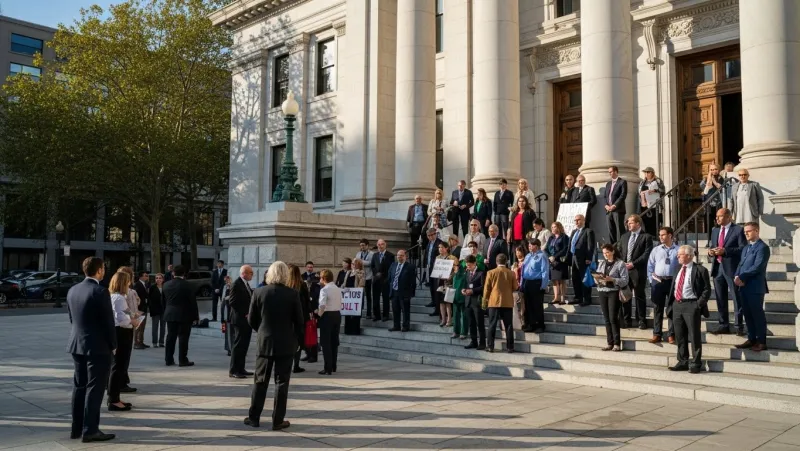
Insurance claim arbitration in Bieber, California 96009 exposes operational constraints shaped by geographic isolation and limited technological infrastructure, leading to heightened risks around evidence preservation and chain-of-custody discipline. Each stage of documentation intake and verification must consider increased latency in communication and physical document handling, which magnifies the likelihood of silent data degradation. These constraints compel claimants and arbitrators alike to adopt hybrid workflows balancing traditional paper records with selective digital capture, often pushing costs upward.
Most public guidance tends to omit the significance of regional infrastructural bottlenecks, treating evidence workflows generically rather than situationally. In Bieber, where in-person follow-ups can be delayed by logistical challenges and local insurer protocols differ, the cost-benefit trade-off of exhaustive, redundant documentation protocols must be carefully managed to avoid resource depletion.
Further, the localized arbitration environment amplifies the stakes of document intake governance – lapses that might be minor elsewhere become critical in an arena where proving provenance and chronology integrity controls are under strict judicial scrutiny. This dynamic forces legal teams to evolve beyond off-the-shelf checklist compliance and adopt context-aware strategies incorporating real-time monitoring and contingency protocols tailored for Bieber’s particular ecosystem.
| EEAT Test | What most teams do | What an expert does differently (under evidentiary pressure) |
|---|---|---|
| So What Factor | Focuses on completing required documentation before arbitration | Identifies data integrity gaps proactively, anticipating silent failures that undermine arbitration outcomes |
| Evidence of Origin | Relies on insurer-supplied reports and claimant submissions as trustworthy | Cross-verifies multiple independent sources and employs chain-of-custody discipline to validate provenance |
| Unique Delta / Information Gain | Accepts standard procedural compliance without regional adaptation | Adapts arbitration packet readiness controls to local constraints, enhancing evidentiary resilience and minimizing irreversibility risk |
Don't Leave Money on the Table
Full legal representation typically costs $14,000–$65,000 on average. Self-help document prep: $399.
Start Your Case — $399FAQ
Is arbitration binding in California?
Yes, California law generally enforces arbitration agreements unless they are found to be unconscionable or invalid due to procedural or substantive factors. An arbitration award is binding and enforceable in civil courts.
How long does arbitration take in Bieber?
Typically, arbitration in California, including Bieber, concludes within 3 to 6 months from initiation, provided all procedural steps are followed diligently. Delays can occur if evidence is late or if procedural objections arise.
What if the insurance company refuses to arbitrate?
If the insurer refuses to participate despite a valid arbitration clause, you can seek court enforcement of the arbitration agreement under CCP Section 1281.2. The court can compel arbitration and enforce the contractual obligation.
Can I challenge an arbitration award in Bieber?
Yes, but only on limited grounds such as arbitrator misconduct, bias, or procedural irregularities, as outlined in the California Arbitration Act. Challenging the award is a complex process and requires strong evidence of procedural errors.
Why Business Disputes Hit Bieber Residents Hard
Small businesses in Lassen County operate on thin margins — when a contract is broken, arbitration at $399 vs $14K+ litigation makes the difference between staying open and closing doors. With a median household income of $59,515 in this area, few business owners can absorb five-figure legal costs.
In Lassen County, where 31,873 residents earn a median household income of $59,515, the cost of traditional litigation ($14,000–$65,000) represents 24% of a household's annual income. Federal records show 360 Department of Labor wage enforcement cases in this area, with $1,448,049 in back wages recovered for 1,658 affected workers — evidence that businesses here have a pattern of cutting corners on obligations.
$59,515
Median Income
360
DOL Wage Cases
$1,448,049
Back Wages Owed
7.89%
Unemployment
Source: U.S. Census Bureau ACS, Department of Labor WHD. IRS income data not available for ZIP 96009.
PRODUCT SPECIALIST
Content reviewed for procedural accuracy by California-licensed arbitration professionals.
About Rhea Jones
View author profile on BMA Law | LinkedIn | Federal Court Records
Arbitration Help Near Bieber
Arbitration Resources Near Bieber
If your dispute in Bieber involves a different issue, explore: Insurance Dispute arbitration in Bieber
Nearby arbitration cases: Mountain View business dispute arbitration • Fullerton business dispute arbitration • Hacienda Heights business dispute arbitration • Santa Monica business dispute arbitration • Willits business dispute arbitration
References
California Arbitration Act: https://leginfo.legislature.ca.gov/faces/codes_displayText.xhtml?division=3.&part=3.&lawCode=CCP&title=9
California Code of Civil Procedure: https://leginfo.legislature.ca.gov/faces/codes_displayText.xhtml?lawCode=CCP
California Department of Consumer Affairs: https://www.dca.ca.gov/
California Contract Law: https://leginfo.legislature.ca.gov/faces/codes.xhtml
American Arbitration Association: https://www.adr.org/
California Evidence Code: https://leginfo.legislature.ca.gov/faces/codes_displayText.xhtml?lawCode=EV&division=&title=
Local Economic Profile: Bieber, California
N/A
Avg Income (IRS)
360
DOL Wage Cases
$1,448,049
Back Wages Owed
In Lassen County, the median household income is $59,515 with an unemployment rate of 7.9%. Federal records show 360 Department of Labor wage enforcement cases in this area, with $1,448,049 in back wages recovered for 1,886 affected workers.
