
Cancel [anonymized] Today - Stop Recurring Charges Immediately
By BMA Law Research Team
Direct Answer
To cancel a [anonymized] subscription effectively and halt all recurring charges, a consumer must submit a cancellation request in accordance with the provider’s stated terms of service. This typically requires logging into the user account via the [anonymized] platform and utilizing the subscription management interface to terminate auto-renewals or membership benefits. Consumers should retain written or electronic confirmation of the cancellation.
If the digital platform does not provide clear cancellation options or confirmation, consumers may need to contact customer service directly by phone or email and keep comprehensive records of all communications. Under the Federal Trade Commission’s (FTC) rules and applicable consumer protection statutes such as the Restore Online Shoppers’ Confidence Act (15 U.S.C. §8401 et seq.), companies must provide a clear and accessible method to cancel online subscriptions and refrain from billing customers after cancellation confirmation.
Absent prompt cancellation confirmation or where recurring charges continue, consumers may consider disputing unauthorized payments through their payment provider or pursue remedies via arbitration if contract terms include mandatory dispute resolution clauses. Arbitration rules such as those outlined by the American Arbitration Association (AAA) (see AAA Consumer Arbitration Rules) provide the procedural framework for such claims. Documentation including cancellation requests, transaction histories, and provider communications form the evidentiary basis for formal disputes.
- Submit cancellation through [anonymized]’s online subscription management portal and save confirmation.
- Maintain comprehensive records of cancellation requests, customer service correspondence, and payment statements.
- Dispute unauthorized billing promptly with payment providers if charges persist post-cancellation.
- Review contractual arbitration clauses carefully before initiating dispute proceedings.
- Federal consumer protection laws require clear cancellation mechanisms and prohibit unauthorized post-cancellation billing.
Why This Matters for Your Dispute
Subscription services with automated billing models frequently result in consumer disputes related to account cancellations and billing errors. Consumers often report difficulties in navigating often complex or unclear cancellation protocols, which may lead to continued charges that they consider unauthorized. In many cases, dispute resolution requires a clear understanding of contract terms, communication timelines, and evidence gathering to support claims.
Federal enforcement records show that service providers in the online media and membership subscription sector have faced regulatory scrutiny for practices including failure to provide clear cancellation procedures and improper billing. For example, multiple CFPB consumer complaints highlight ongoing issues within subscription industries involving unclear cancellation policies and unauthorized recurring charges. Details have been changed to protect the identities of all parties.
Such records underscore the importance of careful dispute preparation, especially when arbitration clauses are invoked disproportionately early in the process. Effective dispute resolution often hinges on well-documented proof of cancellation requests aligned with consumer protection regulations, such as those enforced by the Federal Trade Commission (FTC).
Consumers and small business owners preparing for arbitration or dispute proceedings are advised to leverage available arbitration preparation services to ensure full compliance with procedural standards and maximize claim viability.
How the Process Actually Works
- Review Account and Subscription Status: Log into the [anonymized] account to verify current subscription status and billing cycle. Document subscription commencement and last billed dates using screenshots or account summaries.
- Locate Cancellation Procedure: Identify the cancellation process from [anonymized]’s terms of service or help center. Confirm whether cancellation is possible online or requires customer service interaction.
- Submit Cancellation Request: Follow instructed steps for cancellation: this may include selecting ‘Cancel Subscription’ in the user portal or emailing customer support. Retain all confirmations generated by the system or sent by representatives.
- Record Communication and Payment History: Save copies of all cancellation-related correspondence and billing statements showing recurring charges before and after cancellation.
- Monitor Account Statements: Confirm that no further billing occurs in subsequent payment periods. If unauthorized charges appear, contact payment processor or bank immediately to request dispute initiation.
- Review Arbitration and Dispute Clauses: Check [anonymized]’s terms for any mandatory arbitration or venue clauses that may govern the dispute handling. Assess whether arbitration is required prior to filing any formal complaint or claim.
- Gather Evidence for Dispute: Organize documentation including cancellation confirmation, billing history, and correspondence into a cohesive file. Prepare a timeline of events with corroborating screenshots and official contract copies.
- File Dispute or Arbitration Claim if Needed: Use documented evidence to submit a formal dispute with [anonymized] or via payment provider channels. If arbitration applies, file with the specified provider adhering to procedural rules such as AAA Consumer Arbitration Rules.
For detailed guidelines on documentation, refer to our dispute documentation process.
Where Things Break Down
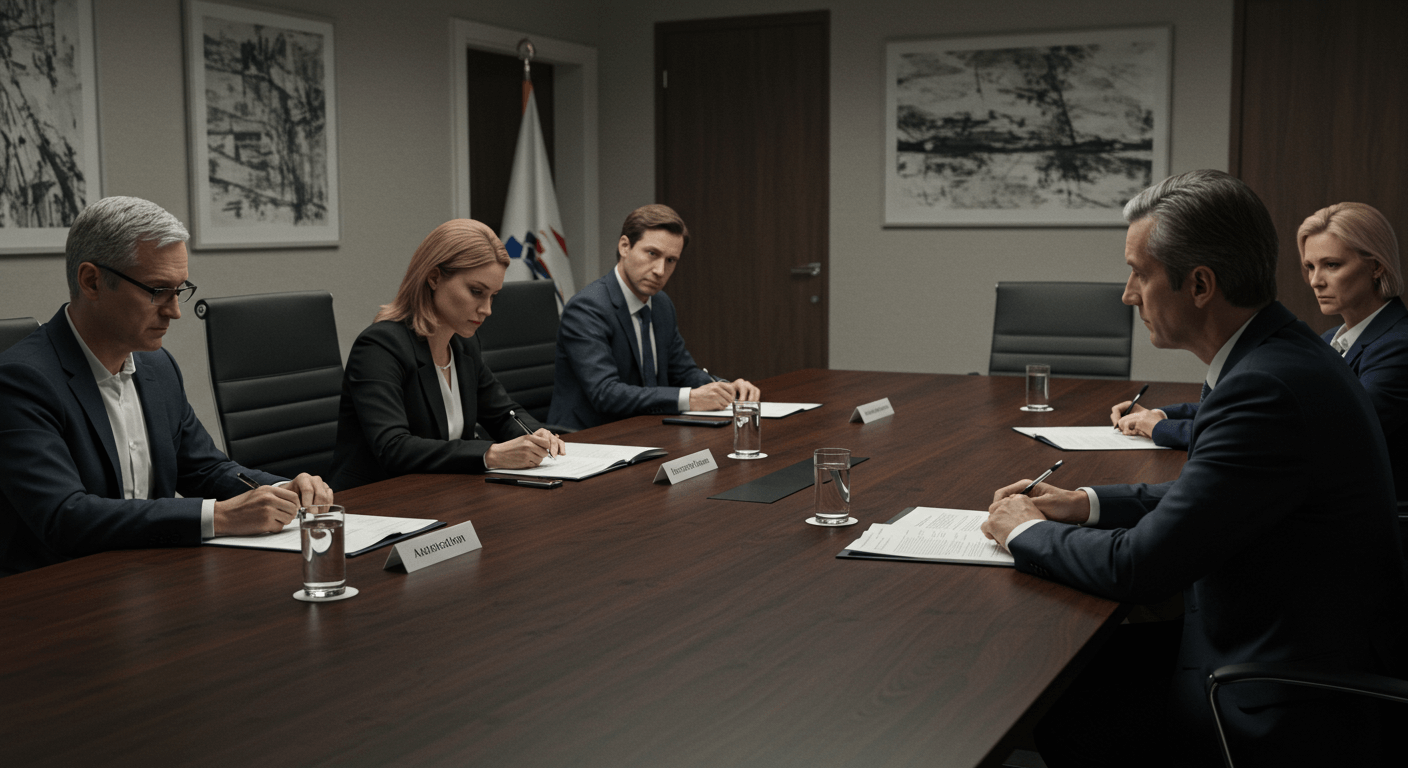
Pre-Dispute: Failure to Obtain Clear Cancellation Confirmation
Failure Name: Insufficient Evidence Submission
Ready to File Your Dispute?
BMA prepares your arbitration case in 30-90 days. Affordable, structured case preparation.
Start Your Case - $399Trigger: Cancellation requests made without explicit written or electronic confirmation from [anonymized].
Severity: High - Difficulty proving cancellation leads to prolonged billing and invalidates dispute claims.
Consequence: Greater risk of dispute dismissal or unfavorable arbitration outcome due to lack of proof.
Mitigation: Always save confirmation emails or screenshots of cancellation completion. Use traceable communication means such as email instead of phone calls.
During Dispute: Misinterpretation of Contractual Terms
Failure Name: Misreading Arbitration Clauses
Trigger: Assuming cancellation rights without analyzing the terms of service, especially regarding automatic renewals and dispute resolution.
Severity: Medium to High depending on contract language clarity.
Consequence: Potential loss of ability to litigate disputes in court, mandatory arbitration binding, or waiver of certain claims.
Mitigation: Engage legal review of contract terms before dispute filing to clarify rights and obligations.
Post-Dispute: Delayed Response to Recurring Charges
Failure Name: Lack of Timely Dispute Filing
Trigger: Consumer delays disputing charges or neglects following up with payment providers.
Severity: Medium - Payment networks often set strict deadlines to initiate chargebacks or disputes.
Consequence: Claim may become time-barred and payments final, increasing consumer financial loss.
Mitigation: Monitor bank statements regularly and act promptly on unauthorized charges.
Verified Federal Record: CFPB complaint database shows a consumer in California filed on 2026-03-08 for recurring billing dispute involving subscription service cancellation issues. The dispute concerned ongoing charges after cancellation requests with resolution ongoing.
- Ambiguities in online cancellation interface causing confusion
- Automated communications lacking confirmation or receipt acknowledgment
- Disagreement over effective cancellation date and applied billing cycles
- Customer service delays or automated responses complicating dispute gathering
Decision Framework

| Scenario | Constraints | Tradeoffs | Risk If Wrong | Time Impact |
|---|---|---|---|---|
| Proceed with arbitration for disputed charges |
|
|
Potential dismissal or unfavorable award | Moderate delay due to process duration |
| Request regulatory complaint and informal resolution |
|
|
Possible no resolution or minimal compensation | Potentially lengthy process |
| Direct chargeback with payment provider |
|
|
Chargeback denial or re-billing | Relatively fast (days to weeks) |
Cost and Time Reality
Canceling [anonymized] and disputing continued billing typically cost no more than time and effort for the average consumer. If disputes escalate to arbitration, filing fees can range between $200 to $1,500 depending on the arbitration provider’s fee schedule and the value of claimed damages. Arbitration timelines average between 3 to 6 months. Compared to litigation, arbitration is generally less costly and faster but limits discovery and court appeal options.
Consumers should monitor billing statements monthly and promptly raise disputes to avoid financial detriment. The cost of subscription monthly payments, commonly around $10 to $15, may seem small but can accumulate quickly, especially if unauthorized charges persist for multiple months.
For a ballpark understanding of possible monetary recoupment or claim value, see our estimate your claim value tool designed for consumer billing disputes.
What Most People Get Wrong
- Assuming verbal cancellation is sufficient: Without a dated, verifiable confirmation, disputes are difficult to prove. Always get written confirmation.
- Ignoring terms of service arbitration clauses: Many expect to sue in court, but mandatory arbitration may limit options and change procedural rules.
- Waiting too long to dispute charges: Payment processors enforce strict time limits for chargebacks, often 60-120 days.
- Not maintaining a detailed timeline and records: Lack of organized evidence reduces dispute success prospects.
Further insights are available at our dispute research library.
Strategic Considerations
Deciding whether to escalate subscription cancellation disputes to formal arbitration or regulatory complaint depends on contract language, evidence strength, and cost-benefit analysis. When clear evidence supports unauthorized billing, arbitration can be effective, especially if charges are substantial. Conversely, systemic issues with cancellation procedures may warrant filing consumer complaints with regulatory bodies before arbitration.
Settlement may be preferable where the provider offers a refund or subscription credit to avoid prolonged processes. Limitations include strict contractual dispute resolution requirements and jurisdictional constraints that may restrict court venue.
For a comprehensive understanding of our approach to these disputes, see BMA Law's approach.
Two Sides of the Story
Side A: Consumer Perspective
The consumer subscribed to [anonymized]’s membership and later decided to cancel due to changing preferences. Despite following the cancellation procedure outlined in the online portal, the consumer noticed charges continuing on their bank statement. Attempts to contact customer support were met with automated responses and no confirmation. The consumer gathered all correspondence and payment records, then initiated a dispute with their bank and considered arbitration to recover charges.
Side B: Service Provider Perspective
The subscription service maintains a cancellation policy communicated via terms of service requiring cancellation through the user account portal before the next billing cycle. The provider asserts that failure to follow the explicit cancellation process outlined online may result in continued billing per contract terms. Customer support claims to have responded to cancellation requests but lacks detailed logs of all interactions. Arbitration is the preferred mechanism for resolving payment disputes.
What Actually Happened
The dispute resolved after the consumer submitted clear evidence of cancellation requests and billing records in arbitration. The provider agreed to a partial refund to avoid further proceedings. The case highlights the importance of rigorous documentation and understanding contract terms, especially arbitration clauses.
This is a first-hand account, anonymized for privacy. Actual outcomes depend on jurisdiction, evidence, and specific circumstances.
Diagnostic Checklist
| Stage | Trigger / Signal | What Goes Wrong | Severity | What To Do |
|---|---|---|---|---|
| Pre-Dispute | No written confirmation of cancellation | Inability to prove cancellation request | High | Use traceable cancellation methods, save all confirmations |
| Pre-Dispute | Unclear cancellation instructions | Mistimed or ineffective cancellation | Medium | Review terms before cancellation; confirm process clarity |
| During Dispute | Ambiguous contract arbitration clauses | Unexpected mandatory arbitration limiting remedies | High | Obtain legal interpretation before filing dispute |
| During Dispute | Delayed response from service provider | Evidence gaps, stalled resolution | Medium | Prompt follow-up, document all contact attempts |
| Post-Dispute | Continued billing after cancellation confirmed | Payment recovery complications | High | File chargeback with bank and escalate disputes |
| Post-Dispute | Failure to track dispute status | Missed deadlines, claim dismissal | Medium | Maintain timelines, calendar follow-ups |
Need Help With Your Consumer Dispute?
BMA Law provides dispute preparation and documentation services starting at $399.
Not legal advice. BMA Law is a dispute documentation platform, not a law firm.
FAQ
How do I confirm that my [anonymized] subscription cancellation was successful?
Obtain written or electronic confirmation of cancellation immediately after submitting the request, such as a confirmation email or on-screen receipt. According to FTC guidelines, confirmation is a key consumer right (16 C.F.R. §310). Retain this documentation for any dispute processes.
What if [anonymized] continues to bill me after cancellation?
First, collect all payment records and cancellation confirmations. Then, contact your bank or credit card issuer to dispute the charges under billing error protections per Regulation Z (12 C.F.R. §1026). If the dispute persists, formal arbitration per [anonymized]’s terms may be necessary.
Are arbitration clauses enforceable in [anonymized]’s subscription agreement?
Yes. Arbitration agreements in consumer contracts are generally enforceable under the Federal Arbitration Act (9 U.S.C. §§1-16), provided they comply with fairness standards. Review the terms carefully to confirm mandatory arbitration provisions before proceeding.
How long do I have to dispute unauthorized charges on my bank statement?
Under the Electronic Fund Transfer Act (15 U.S.C. §1693f), consumers typically have 60 days from the statement date to notify the bank of errors. For credit cards, Regulation Z allows 60 days. Timely reporting is essential to preserve rights to dispute.
What kind of evidence do I need to support a cancellation dispute?
Evidence should include a clear timeline of cancellation requests, written confirmation (emails, screenshots), billing statements showing continued charges, and copies of [anonymized]’s terms of service. Authentication of records following legal evidence standards enhances credibility.
References
- Federal Trade Commission - Consumer Protection: ftc.gov
- Federal Arbitration Act - 9 U.S.C. §§ 1-16: law.cornell.edu
- Electronic Fund Transfer Act - 15 U.S.C. §1693f: law.cornell.edu
- Regulation Z (Truth in Lending) - 12 C.F.R. §1026: consumerfinance.gov
- American Arbitration Association - Consumer Arbitration Rules: adr.org
Last reviewed: June/2024. Not legal advice - consult an attorney for your specific situation.
Important Disclosure: BMA Law is a dispute documentation and arbitration preparation platform. We are not a law firm and do not provide legal advice or representation.
Get Local Help
BMA Law handles consumer arbitration across all 50 states:
Important Disclosure: BMA Law is a dispute documentation and arbitration preparation platform. We are not a law firm and do not provide legal advice or representation.