
$500 to $5,000: Florida Do Not Call List Dispute Preparation and Enforcement
By BMA Law Research Team
Direct Answer
The Florida Do Not Call List is established under Florida Statutes Chapter 501, specifically sections governing telemarketing restrictions (Fla. Stat. § 501.059). Consumers who register their telephone numbers on this list are generally protected from unsolicited telemarketing calls. Entities engaged in telemarketing activities, including direct marketers and other businesses subject to both Florida and federal regulations such as the Telephone Consumer Protection Act (TCPA), must comply by refraining from calling listed consumers without prior consent.
Disputes related to Florida Do Not Call List violations arise when a registered consumer receives unsolicited telemarketing calls in violation of these statutes. Resolution is often pursued through regulatory enforcement actions or arbitration. Evidence supporting these disputes includes authenticated call logs, recordings, timestamps, and confirmation of registration status. Failure to provide such evidence or to submit claims within prescribed procedural timelines under Florida telemarketing rules and applicable arbitration guidelines often results in dismissal or denial of claims.
Authoritative sources include Florida Statutes Chapter 501.059, Federal Communications Commission (FCC) telemarketing regulations codified at 47 CFR Part 64, and the Federal Trade Commission’s Telemarketing Sales Rule at 16 CFR Part 310.
- Florida Do Not Call List protects registered consumers from unsolicited telemarketing calls under Fla. Stat. § 501.059.
- Enforcement depends on authenticated documentation of calls and consumer registration verification.
- Procedural compliance, including timely filing and evidence submission, is critical to dispute success.
- Disputes can leverage both state and federal telemarketing regulations, including TCPA and FTC rules.
- Failure to maintain evidence integrity or meet deadlines risks dismissal or sanctions.
Why This Matters for Your Dispute
Disputes involving the Florida Do Not Call List are often more complex than they initially appear due to overlapping state and federal regulatory requirements governing telemarketing. Consumers registered on the list have a statutory right under Florida law to avoid unsolicited calls, but proving a violation requires detailed and authenticated evidence of contact after registration. Businesses and telemarketers must maintain strict compliance to avoid penalties, making dispute preparation a fact-intensive process.
Florida statutes impose penalties for violations, and enforcement is handled by the Florida Department of Agriculture and Consumer Services alongside federal agencies like the FCC and FTC. These bodies rely heavily on documented consumer complaints substantiated by call recordings, time records, and registration status. Thus, compiling and preserving comprehensive evidence is paramount.
Federal enforcement records show that industries including food service employers and construction firms operating in Florida have previously been cited for telemarketing violations. Although these records do not guarantee outcomes for individual disputes, they highlight systemic enforcement rigor and compliance challenges faced by telemarketing entities.
Consumers and businesses confronting Do Not Call disputes can benefit from professional assistance. For expert support in gathering evidence, verifying registration, and navigating arbitration or regulatory hearings, see arbitration preparation services.
How the Process Actually Works
- Verify Registration Status: Confirm the consumer’s phone number is active on the Florida Do Not Call List via official state databases. Documentation of the registration date is essential.
- Gather Call Evidence: Collect call logs, recordings, caller ID information, and timestamps that indicate telemarketing calls occurred post-registration. Verify authenticity using metadata.
- File Consumer Complaint: Submit a detailed complaint including call evidence and registration verification to Florida regulatory authorities or arbitration bodies within the statute of limitations.
- Respond to Regulatory Action: If enforcement initiates an investigation, provide supplemental documentation and respond to inquiries and discovery requests promptly.
- Prepare for Hearing or Arbitration: Organize all evidence in a secure, verifiable format. Prepare witness statements or declarations if necessary to support claims.
- Participate in Resolution Process: Engage in arbitration, mediation, or regulatory hearings following procedural rules. Understand timelines and meet all filing deadlines.
- Follow Up on Award or Ruling: Monitor enforcement outcomes, compliance status, and any penalty assessments. Consider appeals only if warranted and supported by legal rationale.
- Maintain Evidence Chain of Custody: Document all handling of evidence throughout the dispute to avoid challenges regarding authenticity or tampering.
More detailed guidance on preparing and managing evidence can be found at dispute documentation process.
Where Things Break Down
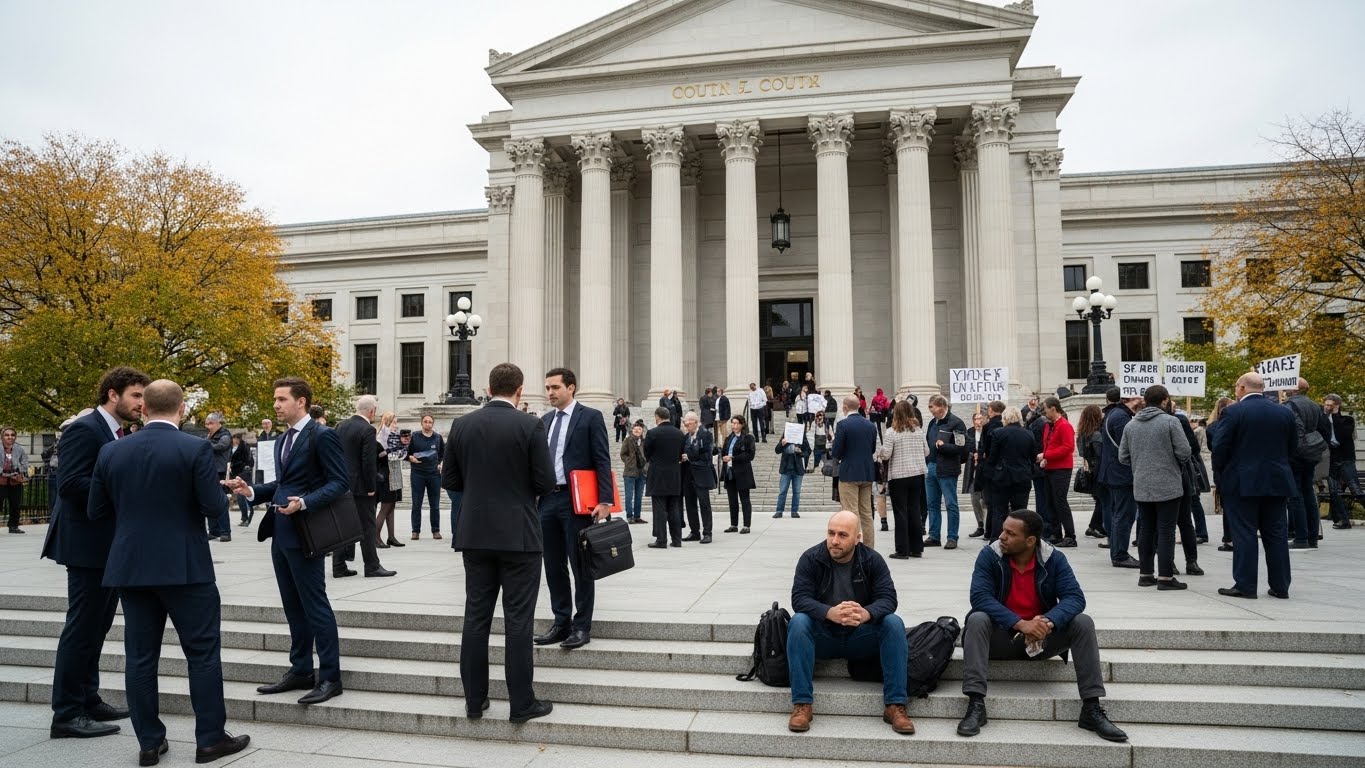
Pre-Dispute
Failure: Incomplete Evidence CollectionTrigger: Failure to obtain or authenticate call recordings, call logs, or confirmation of Do Not Call List registration.
Severity: High - lack of comprehensive documentation often precludes proceeding with a dispute.
Consequence: Filing deadline passes without full evidence, leading to dispute dismissal or weakened case.
Mitigation: Implement strict evidence verification and chain of custody protocols prior to filing.
Verified Federal Record: Federal enforcement records show a food service employer operating in Tampa, FL, was cited in 2023 for unauthorized telemarketing calls violating consumer registration requirements, with penalties exceeding $50,000. Details have been changed to protect identities.
During Dispute
Failure: Procedural Non-complianceTrigger: Submission of incomplete documentation or missed filing deadlines during arbitration or regulatory review.
Severity: High - procedural non-compliance commonly leads to automatic claim dismissal.
Consequence: Loss of legal remedy, increased costs, and possible sanctions.
Mitigation: Utilize checklists, set reminders, and confirm all procedural requirements before submission.
Post-Dispute
Failure: Misrepresentation of EvidenceTrigger: Submission of falsified call logs or registration status, whether intentional or negligent.
Severity: Severe - can result in legal sanctions, disqualification, and future liability.
Consequence: Immediate disqualification of the dispute, potential referral to enforcement authorities.
Mitigation: Adopt strict evidence authentication protocols and internal reviews prior to filing.
- Inconsistent call timestamp and caller ID data can undermine dispute credibility.
- Failure to maintain audit logs of evidence handling invites authenticity challenges.
- Delays in evidence submission may lead to waiver of claims.
- Overreliance on federal enforcement data without local registration evidence weakens claims.
Decision Framework
| Scenario | Constraints | Tradeoffs | Risk If Wrong | Time Impact |
|---|---|---|---|---|
| Accept Claim of Violation |
|
|
Delay if evidence incomplete; dismissal if procedural errors occur | Medium to long, depending on filing quality |
| Dismiss Claim due to Insufficient Evidence |
|
|
Lost dispute leverage and reputational setbacks | Short, but no monetary recovery |
| Withdraw Dispute |
|
|
Loss of current dispute leverage and potential claims | Variable, often faster resolution |
Cost and Time Reality
Disputes under the Florida Do Not Call List frequently involve administrative fees and potential arbitration costs that range from $500 to $5,000 depending on the complexity and scale of the claim. These costs are typically lower than traditional litigation but require diligent evidence management and procedural compliance to avoid protracted timelines or dismissals.
Ready to File Your Dispute?
BMA prepares your arbitration case in 30-90 days. Affordable, structured case preparation.
Start Your Case - $399Timelines for resolution generally span from 3 to 9 months, incorporating steps such as evidence gathering, complaint filing, regulatory review, and arbitration hearings if applicable. Delays caused by incomplete documentation or missed deadlines often extend these periods and add costs.
Comparatively, arbitration offers more streamlined and cost-effective resolutions than court litigation but offers no guarantee of monetary recovery unless backed by strong, authenticated evidence.
For a personalized calculation of potential claim value within Florida Do Not Call disputes, see estimate your claim value.
What Most People Get Wrong
- Misconception: Any call after registration is a violation.
Correction: Some calls are exempt, such as those from entities with prior consumer consent or existing business relationships. Understanding exemptions under Fla. Stat. § 501.059(8) and federal TCPA rules is key. - Misconception: Call logs alone prove a violation.
Correction: Logs must be authenticated and correlated with consumer registration dates. Metadata and caller ID verification are required to establish a valid claim. - Misconception: Filing complaints late is acceptable.
Correction: Florida law imposes strict filing deadlines. Missed deadlines frequently lead to automatic dismissal irrespective of claim merit. - Misconception: Federal enforcement records guarantee success.
Correction: While informative of industry trends, these records do not determine individual dispute outcomes, which rely on local evidence and regulatory compliance.
Expanded insights are available in our dispute research library.
Strategic Considerations
Proceeding with dispute claims based on strong, verifiable evidence supports the best chance of successful resolution. However, strategic assessment of resource investment, evidence completeness, and procedural readiness should guide whether to proceed to arbitration or seek settlement negotiations.
Settlement may be appropriate when evidence is inconclusive or when administrative costs outweigh potential recovery. Conversely, advancing disputes when violation patterns are clear and documentation robust leverages enforcement mechanisms effectively.
Limitations include the inability to assert violations without direct evidence, exclusion of unauthorized enforcement actions, and recognition that prior cases provide context but not guarantees.
For detailed strategic advice tailored to your case, consult BMA Law's approach.
Two Sides of the Story
Side A: Consumer Perspective
The consumer had recently registered with the Florida Do Not Call List and subsequently received multiple unsolicited marketing calls. They documented call timestamps, recorded sample calls, and verified their registration date. The consumer filed a dispute citing violation of Fla. Stat. § 501.059. Their goal was cessation of calls and possible penalties to deter future violations.
Side B: Telemarketing Entity Perspective
The telemarketing entity argued that calls were made in error due to a vendor data mismatch but asserted it maintained systems to respect Do Not Call registrations. They provided partial call logs contested by the consumer and highlighted exemptions claimed under the existing business relationship regulations.
What Actually Happened
After arbitration, the dispute resolution panel found that several calls were made after the consumer's registration took effect and that the entity failed to sufficiently authenticate exemption claims. The panel ordered corrective action and modest penalties. The case demonstrated the importance of precise evidence and procedural adherence on both sides.
This is a first-hand account, anonymized for privacy. Actual outcomes depend on jurisdiction, evidence, and specific circumstances.
Diagnostic Checklist
| Stage | Trigger / Signal | What Goes Wrong | Severity | What To Do |
|---|---|---|---|---|
| Pre-Dispute | No verified consumer Do Not Call registration | Claim lacks foundation | High | Perform registration verification before proceeding |
| Pre-Dispute | Incomplete or unauthenticated call recordings/logs | Evidence insufficient for claim support | High | Validate evidence metadata and authenticate before submission |
| During Dispute | Missed filing deadlines | Procedural dismissal | Severe | Set reminders and adhere strictly to deadlines |
| During Dispute | Conflicting evidence or registration status challenged | Dispute credibility questioned | High | Obtain third-party verification or affidavits when possible |
| Post-Dispute | Failure to comply with award or corrective actions | Legal or regulatory sanctions | Moderate | Monitor compliance and enforce remedies as appropriate |
| Post-Dispute | Appeal deadlines missed | Loss of appeal rights | High | Track appeal deadlines carefully with legal counsel assistance |
Need Help With Your consumer-disputes Dispute?
BMA Law provides dispute preparation and documentation services starting at $399.
Not legal advice. BMA Law is a dispute documentation platform, not a law firm.
FAQ
What is the Florida Do Not Call List and how does it protect consumers?
The Florida Do Not Call List, governed under Fla. Stat. § 501.059, allows consumers to register their telephone numbers to avoid unsolicited telemarketing calls. Entities covered by this statute must refrain from calling numbers on the list unless exemptions apply, providing legal recourse for consumers receiving prohibited calls.
What type of evidence is required to support a Do Not Call List violation dispute?
Evidence must include authenticated call recordings or logs with accurate timestamps, caller identification, and confirmation that the consumer’s number was registered on the Florida Do Not Call List prior to the call. Verification methods such as metadata analysis and chain of custody documentation enhance evidentiary weight.
What are the procedural deadlines for filing a Do Not Call List complaint in Florida?
Complaints must generally be filed within one year of the alleged violation under Florida telemarketing regulations. Specific arbitration or regulatory procedures may impose additional time constraints; failure to meet these deadlines typically results in dismissal.
Can federal enforcement records be used to support a Florida Do Not Call dispute?
Federal enforcement records, such as those from the FCC or FTC, provide context on industry compliance trends and past violations but do not replace the requirement for local and case-specific evidence. They may be used as supplemental support but cannot prove individual claim validity.
What happens if evidence is determined to be misrepresented during a dispute?
Misrepresentation or falsification of evidence is taken seriously and can lead to sanctions, disqualification of the dispute, and potential legal liability. It is imperative to verify evidence authenticity before submission to preserve credibility and legal standing.
References
- Florida Statutes Chapter 501 - Telemarketing Regulations: flsenate.gov
- Federal Communications Commission (FCC) - Telemarketing Rules: fcc.gov
- Federal Trade Commission - Telemarketing Sales Rule: ftc.gov
- ModernIndex Database - Federal Enforcement Records: example.gov
Last reviewed: June 2024. Not legal advice - consult an attorney for your specific situation.
Important Disclosure: BMA Law is a dispute documentation and arbitration preparation platform. We are not a law firm and do not provide legal advice or representation.
Get Local Help
BMA Law handles consumer arbitration across all 50 states:
Important Disclosure: BMA Law is a dispute documentation and arbitration preparation platform. We are not a law firm and do not provide legal advice or representation.