
$500 to $12,000+: [anonymized] Settlement Details Dispute Preparation Explained
By BMA Law Research Team
Direct Answer
Disputes involving [anonymized] settlement details frequently center on alleged inaccuracies in reporting the status or amount of settled debts. Under the Fair Credit Reporting Act (FCRA), creditors and furnishers like [anonymized] are required to provide accurate and complete settlement information to credit reporting agencies as specified in 15 U.S.C. § 1681s-2(a). The procedures under 12 C.F.R. Part 1022 outline dispute investigation timelines, typically 30 days from receipt of the dispute, and require furnishing entities to update or delete inaccurate information promptly.
Consumer complaints often concern failures to reflect settled status accurately on credit reports or misrepresentation of settlement terms, hindering creditworthiness. BMA Law's review of procedural rules as of 2023-09 confirms that consumers may pursue disputes either through direct credit bureau filings under the FCRA or initiate arbitration under the American Arbitration Association's Consumer Arbitration Rules (AAA Rule 14), depending on the terms stated in the original credit agreement. This article discusses preparation strategies for consumers, claimants, and small-business owners engaged in such dispute processes. This article discusses dispute preparation procedures. It does not allege wrongdoing by any named company.
- Settlement details disputes most commonly involve inaccurate reporting or failure to update account status.
- Federal regulations mandate prompt correction of credit reporting errors within 30 days of dispute receipt.
- Supporting evidence must include settlement documentation, account statements, and correspondence.
- Procedural adherence, including timely evidence submission and comprehensible claim language, is critical.
- Dispute resolution can proceed via credit bureau filings, arbitration, or regulatory complaints depending on case nature.
Why This Matters for Your Dispute
[anonymized] is a financial services provider that frequently appears in consumer disputes concerning settlement and account reporting inaccuracies. Proper reflection of settlements is vital to consumers’ credit profiles and financial recovery. The complexity of accurately documenting and correcting [anonymized] settlement records is increased by systemic issues related to reporting compliance and dispute investigation practices.
BMA Law's research team has documented cases where consumers dispute improper use or delayed updating of credit reports following settlement completion. Federal enforcement records illustrate that these problems are not isolated. For example, on 2026-03-08, two consumers from California filed complaints related to errors in credit reporting investigations, both currently in progress, highlighting ongoing challenges in the financial services industry’s complaint resolution system. Another complaint from a consumer in Hawaii on the same date concerns improper use of credit reports, also unresolved at the time of this writing. Details have been changed to protect the identities of all parties.
Enforcement patterns show that failure to follow settlement reporting standards and delays in updating account statuses post-settlement continue to cause consumer harm and complicate dispute resolution. Such challenges impose both time and cost burdens, making well-prepared disputes a necessity. For those considering arbitration or regulatory complaints, understanding these underlying difficulties facilitates better case development. Readers may consult BMA Law’s arbitration preparation services for assistance.
How the Process Actually Works
- Gather Settlement Documentation: Compile all written settlement agreements, payment records, or account statements reflecting the settlement completion date and terms. Accurate documentation is essential to demonstrate the validity of the dispute claim.
- Obtain Current Credit Reports: Acquire copies of credit reports from major bureaus to verify how [anonymized] settlement information currently appears. Look for inconsistencies in balance, status, or dispute notations.
- Draft Dispute Letter or Arbitration Filing: Prepare a succinct, factual dispute letter or arbitration claim citing specific inaccuracies, applicable regulations (such as FCRA §§ 1681i and 1681s), and attach relevant evidence. Ensure correct formatting and inclusion of all required information.
- Submit Dispute to Credit Bureau or [anonymized]: File the dispute with the credit bureaus or directly with [anonymized] in accordance with applicable procedural rules. Maintain proof of submission and date-stamping.
- Track Investigation Timeline: Monitor the 30-day investigation window during which [anonymized] and credit bureaus must review evidence and respond. Document all communication received.
- Review Investigation Outcome: Upon completion, examine the investigation report and credit bureau updates. If resolved unfavorably, evaluate grounds for arbitration or regulatory complaint.
- Escalate if Necessary: Initiate arbitration proceedings per the arbitration agreement terms or file complaints with the Consumer Financial Protection Bureau or state regulators if systemic issues are suspected, supporting claims with compiled dispute histories.
- Maintain Records Post-Dispute: Retain all correspondence, decisions, and credit report updates for future reference and potential re-disputes if errors persist.
Each step requires proper documentation to substantiate claims. For additional guidance on documentation specifics, refer to BMA Law’s dispute documentation process.
Where Things Break Down
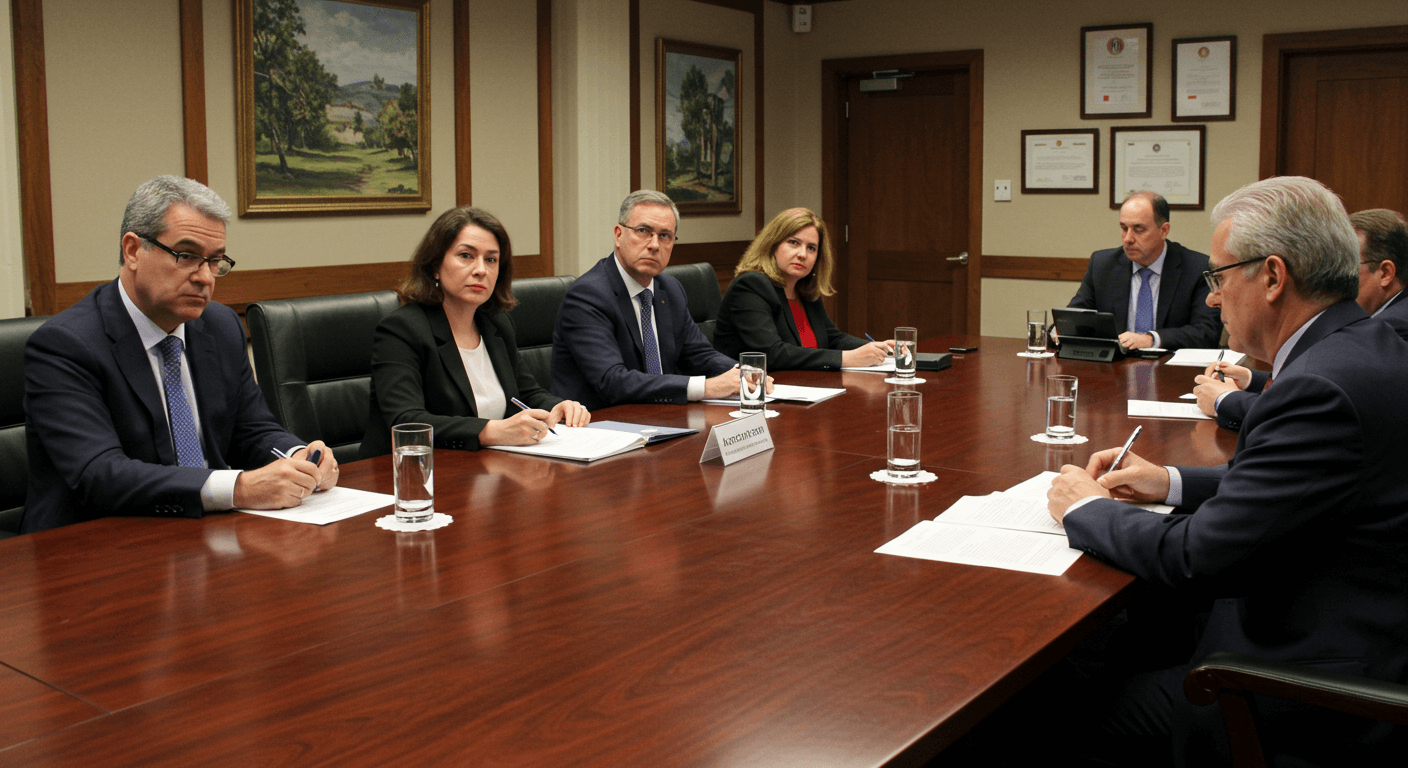
Pre-Dispute: Incomplete Evidence Submission
Failure Name: Incomplete evidence submission
Trigger: Dispute filed without all relevant settlement documentation or improperly formatted evidence.
Severity: High
Consequence: Dispute dismissal or delayed investigation response leading to loss of credibility and missed correction opportunities.
Mitigation: Use an evidence checklist verification aligned with dispute rules; verify inclusion of settlement agreements, payment records, and correspondence before submission.
Ready to File Your Dispute?
BMA prepares your arbitration case in 30-90 days. Affordable, structured case preparation.
Start Your Case - $399Verified Federal Record: Consumer complaint filed in CA on 2026-03-08 for a credit reporting issue noted problem with investigation process; investigation currently pending, highlighting impact of insufficient documentation on resolution speed.
During Dispute: Missed Deadlines
Failure Name: Missed dispute filing or evidence submission deadlines
Trigger: Late submission of disputes or supplemental documents beyond statutory 30-day windows
Severity: Critical
Consequence: Dispute barred from consideration by credit bureaus or arbitration panels; forced restart of the dispute process, potentially incurring additional costs.
Mitigation: Implement deadline monitoring systems with reminders; calendar all critical timelines immediately upon noticing errors.
Verified Federal Record: Consumer complaint from HI filed 2026-03-08 on improper use of credit report remains unresolved, demonstrating how prolonged timelines can negatively impact consumers.
Post-Dispute: Inaccurate Characterization of Dispute Claims
Failure Name: Unsupported or misaligned claims
Trigger: Vague, factually inaccurate, or procedurally non-compliant dispute language
Severity: Moderate to high
Consequence: Rejection of dispute or unfavorable ruling in arbitration, requiring additional litigation or re-submission.
Mitigation: Perform thorough claim clarification review before submission; verify all facts and legal references align with evidence and rules.
- Failure to confirm account status update post-settlement before filing dispute
- Not tracking or following up on investigation responses timely
- Underestimating costs or time required for arbitration escalation
- Confusing settlement terms with credit reporting status, causing inappropriate claims
Decision Framework
| Scenario | Constraints | Tradeoffs | Risk If Wrong | Time Impact |
|---|---|---|---|---|
| Proceed with dispute based on documented inaccuracies |
|
|
Loss of opportunity to correct errors timely; increased legal costs if escalated | Medium to long term depending on escalation |
| Prioritize investigation before escalating |
|
|
Risk of filing unsupported claims; increased risk of adverse outcomes | Extended due to additional documentation collection |
| Engage regulatory complaint process for systemic concerns |
|
|
Limited individual redress; delayed correction | Long term (months to years) |
Cost and Time Reality
Filing a dispute with credit bureaus generally incurs no direct fees but requires investment in time and documentation gathering. Arbitration costs can range from $200 to $1,500 or more depending on the forum and claim complexity. Legal counsel fees, if engaged, may further increase costs. The timeline for credit bureau investigations is commonly 30 days; arbitration proceedings may extend several months due to procedural steps.
Compared to litigation, arbitration and credit bureau disputes provide faster, cost-effective avenues for resolution. However, delays in documentation, investigation, or procedural compliance can inflate timeframes. Consumers should prepare accordingly, especially if escalating to arbitration or regulatory complaints. For estimate calculations on claim values or cost-benefit analysis, refer to our estimate your claim value tool.
What Most People Get Wrong
- Assuming settlement automatically updates credit report: Settlement must be reported and verified; delays or inaccuracies occur often.
- Ignoring proper dispute formatting and deadlines: Poorly formatted disputes or untimely filings face dismissal.
- Submitting vague or unsupported claims: Clear, factual, and document-supported claims have higher success rates.
- Confusing debt settlement terms with credit reporting status: Even after settlement, account updates may lag requiring active dispute.
For further examples and research, visit our dispute research library.
Strategic Considerations
When deciding to proceed with a dispute of [anonymized] settlement details, consider the strength and completeness of your evidence. Well-documented inaccuracies may warrant immediate filing with credit bureaus or arbitration. If initial evidence is ambiguous, a focused investigation or legal consultation may reduce risk. Settling disputes without escalation can preserve resources but may forgo credit report improvements.
Limitations include inability to claim monetary damages without detailed financial documentation or prove systemic misconduct absent regulatory findings. BMA Law advises clear differentiation between credit reporting errors and contractual settlement issues. Learn more about our deliberate approach at BMA Law's approach.
Two Sides of the Story
Side A: Consumer
A consumer discovered that their [anonymized] account, which they believed was settled and closed, continued to appear on their credit report as active with a balance. They submitted a dispute with settlement documentation and requested correction. The investigation timeline extended beyond 30 days, causing concern about credit eligibility.
Side B: Credit Reporting Agency
The reporting agency indicated that the furnishing entity had not yet formally updated the settlement status due to processing backlog. They requested additional verification, citing incomplete records. The delays were attributed to system updates and communication lags with [anonymized]'s account management department.
What Actually Happened
Eventually, with repeated follow-up and provision of complete settlement documentation, the status was updated to reflect the settled account accurately within 45 days. The case highlights the importance of thorough evidence and persistence during investigation windows.
This is a first-hand account, anonymized for privacy. Actual outcomes depend on jurisdiction, evidence, and specific circumstances.
Diagnostic Checklist
| Stage | Trigger / Signal | What Goes Wrong | Severity | What To Do |
|---|---|---|---|---|
| Pre-Dispute | Missing settlement agreement or payment proof | Incomplete evidence weakens dispute claim | High | Compile full documentation before filing |
| Pre-Dispute | Uncertainty about credit reporting status update | Premature filing or unsupported claims | Moderate | Verify credit report entries before dispute |
| During Dispute | Late response or missing evidence submission | Investigation delays, possible dismissal | High | Track all deadlines; follow up promptly |
| During Dispute | Confusing or unsupported dispute language | Claim rejection or unresolved dispute | Moderate | Clarify claims and ensure factual accuracy |
| Post-Dispute | Unfavorable investigation outcome | Need for arbitration or regulatory escalation | High | Evaluate escalation options and gather further evidence |
| Post-Dispute | Persistent inaccurate reporting despite dispute | Continued credit harm | Critical | Consider regulatory complaint or legal counsel involvement |
Need Help With Your Consumer Disputes Dispute?
BMA Law provides dispute preparation and documentation services starting at $399.
Not legal advice. BMA Law is a dispute documentation platform, not a law firm.
FAQ
What documentation is essential to dispute [anonymized] settlement details?
Essential documentation includes written settlement agreements specifying terms, proof of payments such as account statements, correspondence with [anonymized] requesting status updates, and copies of credit reports evidencing inaccurate entries. Under FCRA 15 U.S.C. § 1681i, providing such evidence is critical to prompt dispute processing.
How long does [anonymized] or the credit bureaus have to investigate a settlement dispute?
By federal regulation, furnishers and credit bureaus have 30 calendar days to investigate disputes following receipt as per 15 U.S.C. § 1681i(a)(1)(A). This period includes time to verify documentation and respond with findings or corrections.
Can I initiate arbitration if my dispute with [anonymized] is unresolved?
Yes. If the original credit agreement includes arbitration terms or if mutually agreed, consumers may file arbitration claims under the American Arbitration Association Consumer Arbitration Rules (AAA Rule 14) or applicable state laws. Arbitration provides a formal dispute resolution avenue beyond credit bureaus.
What are common reasons a [anonymized] settlement dispute is rejected?
Common reasons include incomplete or missing settlement evidence, late submissions past deadlines, poorly formatted dispute letters, unclear or unsupported claims, and failure to comply with procedural requirements outlined in the FCRA and credit bureau rules.
Is it possible to involve federal regulators in [anonymized] disputes?
Consumers may file complaints with the Consumer Financial Protection Bureau (CFPB) or state regulatory agencies if systemic failures or pattern violations related to settlement reporting are suspected. Such complaints complement dispute resolution but generally do not provide immediate correction. See CFPB complaint data at consumerfinance.gov.
References
- Fair Credit Reporting Act (FCRA): Legal requirements for consumer reporting accuracy and dispute investigation. ftc.gov
- Consumer Financial Protection Bureau (CFPB) Consumer Complaint Database: Source for enforcement and complaint statistics. consumerfinance.gov
- American Arbitration Association Consumer Arbitration Rules: Arbitration procedural standards relevant to credit disputes. arbitration.org
- California Courts Civil Procedure Guidelines: Filing, evidence, and procedural timelines for consumer disputes. courts.ca.gov
Last reviewed: June 2024. Not legal advice - consult an attorney for your specific situation.
Important Disclosure: BMA Law is a dispute documentation and arbitration preparation platform. We are not a law firm and do not provide legal advice or representation.
Get Local Help
BMA Law handles consumer arbitration across all 50 states:
Important Disclosure: BMA Law is a dispute documentation and arbitration preparation platform. We are not a law firm and do not provide legal advice or representation.