
How to Cancel a Credit Card Payment and Dispute Charges Effectively
By BMA Law Research Team
Direct Answer
Yes, it is possible to cancel a credit card payment through the dispute process, but only under specific legal and procedural grounds. Under the Fair Credit Billing Act (FCBA), 15 U.S.C. § 1666, consumers have the right to dispute unauthorized charges, billing errors, and fraudulent transactions on their credit card accounts. To initiate cancellation, a consumer must send a written notice of dispute to the issuer within 60 days of receiving the statement containing the charge, as stipulated in 15 U.S.C. § 1666(a).
Payment cancellation is not an automatic right. The issuer will investigate the claim under protocols provided by the FCBA and corresponding card network rules (e.g., Visa, MasterCard dispute regulations). If the investigation confirms an error or unauthorized transaction, the issuer must correct the account and reverse the charge. Failure to follow these procedures within the legal timeframes may result in denial of cancellation requests.
Authoritative guidance from the Consumer Financial Protection Bureau (CFPB) at consumerfinance.gov provides detailed instructions on dispute rights and steps. State laws may supplement these rights but generally follow the federal framework.
- Disputes under the Fair Credit Billing Act must be submitted within 60 days of the statement date.
- Valid grounds for cancellation include fraud, unauthorized charges, and billing errors.
- Issuers conduct formal investigations and may request supporting documentation.
- Failure to meet procedural requirements, especially timely notice, can invalidate a dispute.
- Consumers can escalate unresolved disputes to arbitration or regulatory agencies.
Why This Matters for Your Dispute
Cancelling a credit card payment is more complex than simply requesting a refund. The process is governed by a precise legal framework designed to balance consumer protection with issuer rights. Failure to understand and navigate this framework can result in rejected disputes, financial loss, or delayed resolutions. Because credit card payments often involve multiple parties - issuers, merchants, and sometimes payment processors - timely and well-substantiated disputes are crucial.
Federal enforcement records show a financial services company in California was cited in 2026 for issues related to improper investigations of consumer disputes, signaling ongoing industry challenges in dispute handling. Specifically, a CFPB complaint filed on 2026-03-08 involved a consumer alleging that the company's investigation into a billing complaint was inadequate. This underscores why comprehending your rights and following dispute procedures accurately is essential.
Similar enforcement records indicate consumers across states such as Hawaii and California filing complaints about improper use of consumer credit reports and billing disputes, which remain unresolved or in progress. Such cases highlight systemic risks of procedural noncompliance by certain issuers or intermediaries.
For claimants or small-business owners preparing to dispute credit card payments, professional arbitration or dispute preparation services can improve documentation quality and increase the likelihood of a successful cancellation or adjustment. BMA Law's arbitration preparation services assist in assembling and presenting dispute materials consistent with legal and issuer standards.
How the Process Actually Works
- Identify the disputed transaction: Review your credit card statement to locate the charge you wish to cancel or dispute. Gather all transaction details including date, amount, merchant, and transaction ID.
- Determine grounds for dispute: Confirm that your reason qualifies under law such as fraud, unauthorized charge, billing error (e.g., duplicate or incorrect amount), or service/product non-receipt.
- Gather documentation: Collect supporting evidence such as receipts, correspondences with the merchant, fraud reports (police reports if applicable), and previous dispute records.
- Submit formal notice of dispute: Send a written dispute letter or submit an online dispute through your card issuer’s official channel within 60 days of the statement date, as mandated by 15 U.S.C. § 1666. Ensure the dispute clearly states why the charge is incorrect or unauthorized.
- Issuer investigation: The credit card company will acknowledge receipt, begin investigation, and temporarily withhold the disputed amount if appropriate under the law and issuer policy. Expect follow-ups requesting additional evidence.
- Resolution and communication: Within a reasonable timeframe (typically 30-90 days), the issuer informs you of the investigation results. If the dispute is upheld, the charge is cancelled or corrected. If denied, options for escalation will be provided.
- Escalate if necessary: If the issuer rejects the dispute, you may escalate to arbitration through the card network’s rules or file complaints with consumer protection agencies such as the CFPB.
- Monitor your account: Review subsequent statements to ensure resolution is properly reflected and no retaliatory charges are made.
Each step requires careful attention to procedural deadlines, documentation completeness, and follow-up communications. For guidance on compiling proper evidence, visit dispute documentation process.
Where Things Break Down
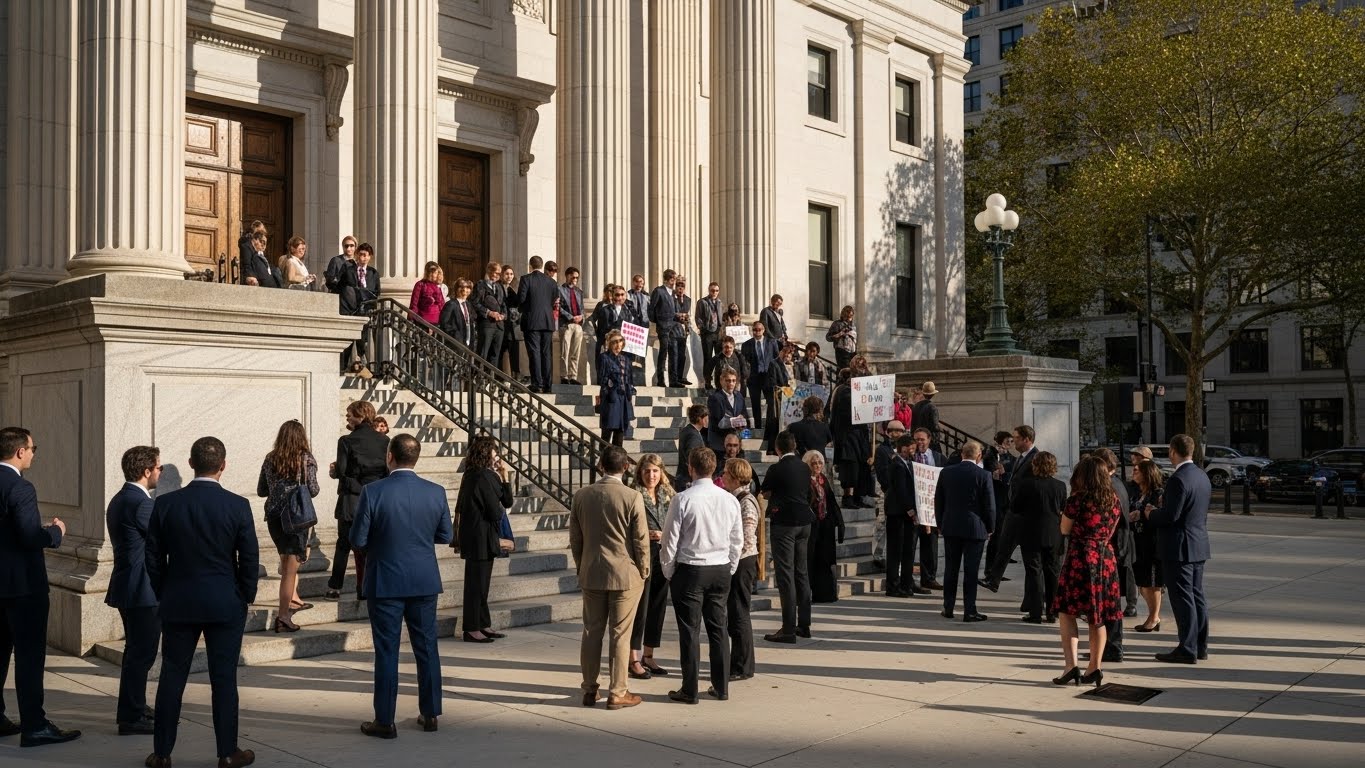
Pre-Dispute: Late Notification of Dispute
Failure name: Late notification of dispute
Trigger: Missing the 60-day deadline after statement issuance.
Severity: High - statutory bar against dispute rights.
Consequence: Dispute may be summarily rejected; no reversal of charges; limited options for arbitration.
Mitigation: Set reminders and monitor statements rigorously. Use standardized dispute templates with deadline highlights.
Ready to File Your Dispute?
BMA prepares your arbitration case in 30-90 days. Affordable, structured case preparation.
Start Your Case - $399Verified Federal Record: A CFPB complaint filed in California on 2026-03-08 described a consumer whose dispute was rejected due to late submission beyond the 60-day limit, resulting in unresolved billing issues. Details have been changed to protect the identities of all parties.
During Dispute: Insufficient Evidence Submission
Failure name: Insufficient evidence submission
Trigger: Lack of receipts, correspondence, or credible fraud reports.
Severity: Moderate to high depending on case.
Consequence: Issuer’s investigation concludes no error, dispute rejected, difficult to reopen absent new evidence.
Mitigation: Provide comprehensive documentation including transaction details, merchant communications, and police reports if applicable. Follow issuer’s evidence submission guidelines.
Post-Dispute: Procedural Missteps
Failure name: Procedural missteps such as wrong dispute forms or channels
Trigger: Filing disputes outside prescribed format or using informal means.
Severity: Moderate
Consequence: Delayed or rejected disputes, increased barriers to resolution.
Mitigation: Use issuer-approved templates or online portals, verify receipt confirmation, maintain copies of submissions.
- Additional friction points include confusing issuer policies, delayed responses beyond mandated timelines, and failure to escalate rejected disputes promptly.
- Misunderstanding applicable laws may cause consumers to file disputes on unqualified grounds, wasting valuable time.
- Inadequate understanding of arbitration options limits potential recovery in contested cases.
Decision Framework

| Scenario | Constraints | Tradeoffs | Risk If Wrong | Time Impact |
|---|---|---|---|---|
| Proceed with dispute based on supported evidence |
|
|
Dispute rejection if evidence is insufficient | 30-90 days investigation time |
| Reject dispute or settle outside arbitration |
|
|
Possible waiver of further dispute rights | Variable, usually shorter than full dispute |
| Escalate to arbitration or regulatory agency |
|
|
Costs may be unrecoverable if unsuccessful | Several months to over a year |
Cost and Time Reality
Disputing a credit card payment typically involves minimal direct fees when filed through the issuer’s online or written dispute channels. However, indirect costs arise from time spent gathering evidence, drafting dispute letters, and following up over investigation periods that generally last 30-90 days. Arbitration fees, if the dispute escalates to a formal proceeding, can range from several hundred to over a thousand dollars, with additional attorney fees if applicable.
Compared with litigation, disputing credit card payments through issuer channels is faster, less formal, and more cost-effective. Litigation costs tend to be significantly higher, with unpredictable timelines.
For an estimated valuation based on claim type, transaction amount, and dispute grounds, consult our estimate your claim value tool.
What Most People Get Wrong
- Misconception: You can cancel any credit card payment at will.
Correction: Only payments with valid legal grounds such as unauthorized charges or billing errors qualify for cancellation under federal law. - Misconception: Oral disputes are sufficient.
Correction: Written notice within 60 days is mandatory to preserve dispute rights under the FCBA (15 U.S.C. § 1666). - Misconception: All disputes lead to payment reversal.
Correction: The issuer may reject disputes lacking sufficient evidence or filed late. - Misconception: Arbitration is always free and simple.
Correction: Arbitration often incurs fees and can extend resolution timelines significantly.
For more in-depth analysis, visit the dispute research library.
Strategic Considerations
Deciding whether to proceed with a dispute depends on the strength of your evidence, timing, and prior communications with the merchant. Proceeding promptly with a well-documented dispute is generally advisable when charges are clearly unauthorized or erroneous. Settlement or negotiation may be preferable if evidence is weak or if the merchant offers a satisfactory resolution.
Limitations include the 60-day statutory window, evidentiary burden on the consumer, and issuer-specific process constraints. Arbitration remains an option for persistent disputes but involves costs and uncertainty.
For BMA Law's framework on dispute strategy, see BMA Law's approach.
Two Sides of the Story
Side A: Consumer
The consumer noticed a suspicious $250 charge on their statement they did not authorize. They promptly filed a written dispute within 30 days, providing correspondence showing no authorization and a police report regarding potential fraud. The issuer acknowledged the dispute and initiated an investigation.
Side B: Card Issuer
The issuer reviewed the documentation and contacted the merchant for transaction verification. The merchant confirmed the charge but could not provide proof of consumer authorization. After 45 days, the issuer reversed the charge per FCBA guidelines.
What Actually Happened
The consumer’s swift action and comprehensive evidence resulted in a successful cancellation of the disputed payment. The issuer’s compliance with procedural deadlines and investigation requirements ensured the dispute was resolved favorably. Both parties avoided protracted arbitration or litigation.
This is a first-hand account, anonymized for privacy. Actual outcomes depend on jurisdiction, evidence, and specific circumstances.
Diagnostic Checklist
| Stage | Trigger / Signal | What Goes Wrong | Severity | What To Do |
|---|---|---|---|---|
| Pre-Dispute | Receipt of statement with questionable charge | Missed opportunity to dispute within 60 days | High | Note statement date; prepare dispute immediately |
| Pre-Dispute | Unclear dispute grounds | Dispute rejected as invalid | Moderate | Review FCBA grounds; consult CFPB guidance |
| During Dispute | Incomplete or missing documentation | Investigation concludes no error | High | Provide receipts, letters, fraud reports promptly |
| During Dispute | No acknowledgement of dispute from issuer | Missed deadlines, potential waiver | High | Confirm receipt; escalate internally or with CFPB |
| Post-Dispute | Dispute rejected without clear explanation | Loss of rights if not escalated timely | Moderate | Request detailed denial; consider arbitration |
| Post-Dispute | Ongoing unauthorized charges post-dispute | Financial loss, lack of account security | High | Freeze account, notify issuer again, report fraud |
Need Help With Your Consumer Disputes Dispute?
BMA Law provides dispute preparation and documentation services starting at $399.
Not legal advice. BMA Law is a dispute documentation platform, not a law firm.
FAQ
Can I cancel a credit card payment after it has posted to my account?
You can initiate a dispute even after payment posts, but you must generally notify your issuer in writing within 60 days of the statement containing the charge to preserve dispute rights under 15 U.S.C. § 1666(a). After filing, the issuer investigates and may reverse the charge if it finds an error or unauthorized use.
What evidence is required to successfully dispute a credit card payment?
Supporting documents typically include receipts, proof of returns or refunds, correspondence with the merchant, and fraud or police reports for unauthorized charges. The more comprehensive and credible the evidence, the stronger the dispute case under FCBA guidelines.
What happens if I miss the 60-day dispute deadline?
Missing the 60-day deadline generally bars your ability to dispute the charge under federal law, allowing the issuer to collect the amount without correction. Some issuers may consider late disputes, but this is not guaranteed.
Can I dispute a charge if I authorized it but am unsatisfied with the product or service?
Disputing charges based solely on dissatisfaction with goods or services is usually not covered under FCBA unless there is a billing error, such as being charged the wrong amount. Other options may include negotiating directly with the merchant.
When should I consider escalating a dispute to arbitration?
If the issuer denies your dispute and you believe the decision is incorrect, and if arbitration is available via your cardholder agreement or network rules, escalating may provide a binding resolution. Be aware arbitration involves additional time and potential costs.
References
- Fair Credit Billing Act, 15 U.S.C. § 1666: Legal framework for credit card dispute rights. law.cornell.edu
- Consumer Financial Protection Bureau - Credit card disputes overview: consumerfinance.gov
- Federal Arbitration Rules - Dispute resolution procedures: adr.org
- California Courts - Consumer rights for credit card disputes: courts.ca.gov
Last reviewed: June 2024. Not legal advice - consult an attorney for your specific situation.
Important Disclosure: BMA Law is a dispute documentation and arbitration preparation platform. We are not a law firm and do not provide legal advice or representation.
Get Local Help
BMA Law handles consumer arbitration across all 50 states:
Important Disclosure: BMA Law is a dispute documentation and arbitration preparation platform. We are not a law firm and do not provide legal advice or representation.