
$1,500 to $12,000+: Bruin v. BANA Class Settlement Dispute Preparation and Payout Guide
By BMA Law Research Team
Direct Answer
The Bruin v. BANA class settlement involves claims centered on alleged issues with consumer reporting and possible violations of federal consumer protection statutes including the Fair Credit Reporting Act (FCRA), 15 U.S.C. § 1681 et seq. Claimants seeking settlement compensation must file claims adhering strictly to submission deadlines established in the settlement agreement, which typically reference procedural rules such as the AAA Commercial Arbitration Rules and applicable state arbitration statutes. Successful claims are contingent upon demonstrating eligibility through properly authenticated documentation evidencing reporting errors or mishandling of consumer reports.
Procedural requirements under Section 4 of the settlement outline claimant qualifications, dispute resolution mechanisms, and deadlines to preserve rights. The Federal Rules of Civil Procedure (Rule 26 and 34) provide standards for evidence disclosure applicable in arbitration contexts. Federal enforcement data from the Consumer Financial Protection Bureau (CFPB) highlights ongoing investigations into consumer reporting concerns, reinforcing the need for thorough evidence gathering and compliance with procedural mandates. Failure to meet these standards risks claim dismissal or denial.
- Claim submission must comply with deadlines and claimant qualification requirements as outlined in the Bruin v. BANA class settlement agreement.
- Evidence must be carefully preserved, authenticated, and correspond with consumer reports and correspondence with the defendant.
- Federal enforcement records show numerous ongoing investigations related to improper consumer report usage, underscoring the relevance of accurate evidence.
- Procedural compliance with arbitration and evidence rules significantly affects claim viability and negotiation leverage.
- Settlement payouts typically range from $1,500 to $12,000 per claimant, depending on claim strength and negotiated outcomes.
Why This Matters for Your Dispute
Consumers, claimants, and small-business owners engaged in disputes related to the Bruin v. BANA class settlement face a multifaceted challenge. The underlying claims often involve complex allegations of improper consumer report handling, which must be demonstrated through concrete evidence, including consumer reports and detailed correspondence. It is not sufficient to rely on generalized enforcement data or anecdotal evidence. Procedural precision is equally critical, as missed deadlines or incomplete documentation frequently lead to dismissal.
Federal enforcement records show a financial services operator in California filed a consumer complaint on 2026-03-08 relating to the improper use of a consumer report, with resolution currently pending. Such examples are emblematic of recurring industry issues driving class settlements, but also illustrate the necessity of presenting timely, authenticated evidence to successfully participate in the settlement process. Enforcement oversight reinforces procedural rigor for claimants wishing to assert breach or procedural claims effectively.
Claimants supported by well-organized evidence and strict compliance with procedural rules amplify their chances of settlement success or favorable arbitration outcomes. Conversely, insufficient preparation risks undermining the dispute resolution effort. For professional assistance in preparing arbitration-ready claims or managing settlement documentation, consider arbitration preparation services offered by specialized firms.
How the Process Actually Works
- Review Settlement Agreement: Obtain and carefully read the Bruin v. BANA settlement agreement. Identify eligibility criteria, claim submission deadlines, and dispute resolution mechanisms. Documentation needed: signed settlement text, claimant eligibility notices.
- Gather Evidence: Collect all relevant documentation including consumer reports, correspondence with the defendant, and any financial records reflecting alleged violations. Evidence preservation protocols should be followed to maintain chain of custody.
- Authenticate Documents: Apply evidence authentication standards by verifying sources, dates, and relevance of supporting records. Where possible, use notarized copies or certified reports.
- Prepare Claim Submission: Complete claim forms with accurate data and attach supporting evidence. Ensure completeness to avoid procedural dismissals. Documentation needed: completed claim form, evidence checklist.
- Submit Claim Before Deadline: Adhere strictly to claim submission timelines as stated in the settlement documents. Late filings typically forfeit recovery rights.
- Respond to Dispute Notices: If claims are challenged, collect additional information and engage dispute resolution protocols including arbitration where applicable.
- Monitor Federal Enforcement Data: Review Consumer Financial Protection Bureau (CFPB) enforcement activity that might align with your claim type to understand evolving compliance trends.
- Negotiate or Proceed to Arbitration: Depending on claim acceptance or denial, work towards either informal settlement or formal arbitration as provided in settlement dispute resolution sections. Documentation needed: arbitration demand, settlement negotiation records.
For detailed steps on compiling and documenting your evidence, see our dispute documentation process.
Where Things Break Down
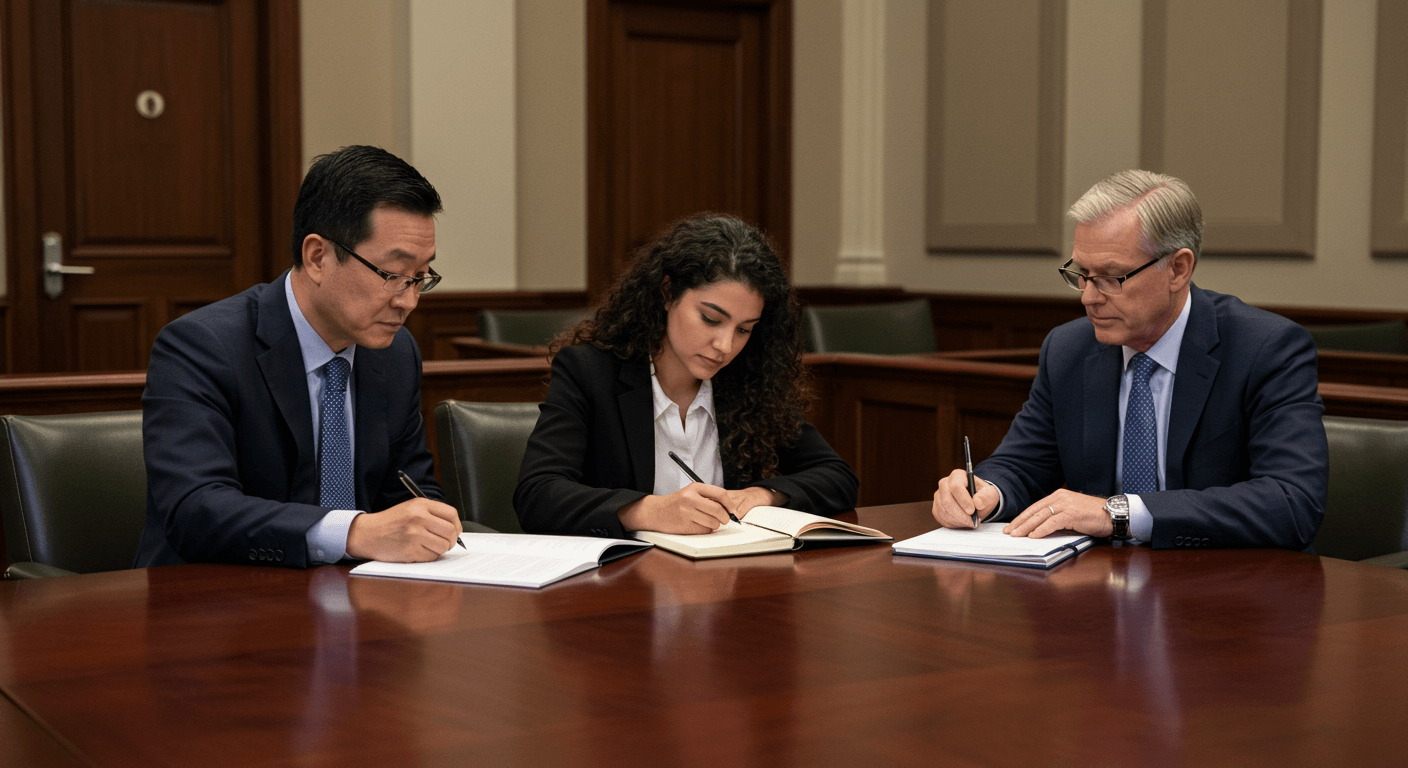
Pre-Dispute: Evidence Insufficiency
Failure Name: Evidence Insufficiency
Trigger: Incomplete documentation or mishandling during evidence collection
Severity: High
Consequence: Dismissal of claim; diminished credibility in dispute resolution
Mitigation: Follow a standardized evidence checklist and implement authentication protocols.
Ready to File Your Dispute?
BMA prepares your arbitration case in 30-90 days. Affordable, structured case preparation.
Start Your Case - $399Verified Federal Record: A consumer in California filed a complaint on 2026-03-08 regarding improper use of a consumer report. Resolution is still in progress, highlighting ongoing investigation standards necessary for evidence sufficiency.
During Dispute: Procedural Non-Compliance
Failure Name: Procedural Non-Compliance
Trigger: Missing deadlines or failing to adhere to arbitration rules
Severity: Critical
Consequence: Motion to dismiss, loss of dispute opportunity, increased costs
Mitigation: Employ regular audits of timelines and review arbitration procedural rules (e.g., AAA Commercial Arbitration Rules).
Verified Federal Record: CFPB data reports several complaint investigations in the financial services sector involving consumer report disputes, emphasizing the importance of timely procedural filings.
Post-Dispute: Misapplication of Enforcement Data
Failure Name: Misapplication of Enforcement Data
Trigger: Incorrect interpretation or overgeneralization of enforcement records
Severity: Moderate to high
Consequence: Credibility challenges, possible sanctions for misrepresentation
Mitigation: Rely strictly on verified federal records contextualized to claim facts.
- Failure to track communication accurately
- Ignoring updates to settlement terms or arbitration rules
- Overlooking documentation of claimant eligibility
- Underestimating costs related to expert testimony or evidence review
Decision Framework

| Scenario | Constraints | Tradeoffs | Risk If Wrong | Time Impact |
|---|---|---|---|---|
| Proceed with formal arbitration assertion |
|
|
Dismissal of claims; lost fees; damage to credibility | Extended timeline; possible delays due to evidence gathering |
| Settle dispute informally |
|
|
Lower recovery; risk of incomplete compensation | Quicker resolution but possible prolonged negotiation |
| File procedural or evidence dispute |
|
|
Risk of dismissal if not resolved favorably; increased cost | Potentially extends dispute timeline significantly |
Cost and Time Reality
Dispute participation costs in the Bruin v. BANA class settlement context typically include fees for evidence acquisition, expert consultation, and legal or arbitration-related expenses. Filing fees for arbitration generally range between $200 and $1,000, depending on the administering body. Compared with traditional litigation, arbitration often reduces the timeline to resolution, typically spanning 6 to 12 months from claim submission to final award.
Settlement payouts based on claim statistics commonly range from $1,500 to $12,000 per claimant, depending on the complexity and strength of the individual claims. Timeliness in claim submission directly influences both potential recovery and legal expenses. For an estimate tailored to your dispute, consult our estimate your claim value tool.
What Most People Get Wrong
- Assuming enforcement data alone supports claims: Enforcement patterns inform context but cannot substitute for individual evidence and documentation.
- Missing submission deadlines: Many claimants dismiss their eligibility by failing to adhere strictly to the deadlines stated in settlement documents.
- Using unauthenticated evidence: Disputes that rely on questionable or improperly authenticated documents face dismissal risks.
- Overgeneralizing industry enforcement data: Claimants must avoid applying unrelated enforcement records to their individual claims to maintain credibility.
For more detailed explanations of common errors, visit our dispute research library.
Strategic Considerations
Deciding whether to proceed with formal arbitration or informal settlement requires careful assessment of evidence strength, procedural compliance, and expected recovery. Arbitration generally demands higher preparation and incurs greater costs but offers potential for larger awards. Settlement negotiations may expedite resolution but often involve lower payouts. Participants should tailor their approach to match the quality and completeness of documentation.
Limitations include the inability to claim solely on enforcement patterns without corroborating individual evidence and variable outcomes influenced by jurisdictional interpretations. Understanding these boundaries is critical to managing expectations and dispute strategy. For a detailed explanation of our methodology, refer to BMA Law's approach.
Two Sides of the Story
Side A: Claimant’s Perspective
The claimant experienced alleged errors in consumer credit reporting linked to BANA policies. They attempted to resolve the issue through direct correspondence but, facing obstacles, opted to participate in the class settlement process. The claimant carefully gathered consumer reports, dispute communications, and financial records to establish eligibility and support their claim under the settlement provisions.
Side B: Defendant’s Perspective
The defendant, represented by financial institution counsel, evaluated claims for procedural completeness and compliance with settlement terms. Where discrepancies or incomplete evidence appeared, the defendant challenged claims per dispute resolution protocols to ensure settlement integrity and procedural fairness.
What Actually Happened
Through exchange of evidence and adherence to arbitration rules, a negotiated settlement was reached in numerous cases falling within the prescribed $1,500 to $12,000 payout range. Delays occurred in situations of incomplete documentation or contested procedural matters, emphasizing the importance of robust evidence preparation. Lessons highlight the necessity for precise adherence to deadlines and evidence authentication standards.
This is a first-hand account, anonymized for privacy. Actual outcomes depend on jurisdiction, evidence, and specific circumstances.
Diagnostic Checklist
| Stage | Trigger / Signal | What Goes Wrong | Severity | What To Do |
|---|---|---|---|---|
| Pre-Dispute | Missed submission deadline in notice | Automatic loss of claim eligibility | Critical | Track deadlines carefully; set reminders and audit periodically |
| Pre-Dispute | Incomplete evidence collection | Weak claim foundation; higher dismissal risk | High | Use standardized checklist and retain copies of all documents |
| During Dispute | Failure to comply with arbitration rules | Possible dismissal or sanctions | Critical | Regular procedural compliance audits; consult AAA Commercial Arbitration Rules |
| During Dispute | Submission of unauthenticated evidence | Evidence ruled inadmissible; claim weakens | High | Implement chain of custody and verification protocols |
| Post-Dispute | Incorrect use of enforcement data in argument | Credibility impairment; possible sanctions | Moderate | Present data with proper attribution and context; avoid overgeneralization |
| Post-Dispute | Failure to respond timely to dispute communications | Proceedings may continue without claimant input; adverse rulings possible | High | Prioritize response monitoring; maintain communication logs |
Need Help With Your Consumer-Disputes Dispute?
BMA Law provides dispute preparation and documentation services starting at $399.
Not legal advice. BMA Law is a dispute documentation platform, not a law firm.
FAQ
What are the key eligibility criteria for claimants under the Bruin v. BANA class settlement?
Eligibility depends on whether the claimant is a consumer or small-business owner affected by the relevant alleged consumer reporting violations within the defined settlement period. Claimants must meet specific qualification criteria detailed in the settlement agreement, including documentation of the impact and adherence to claim submission deadlines per Section 3 of the settlement. Refer also to relevant arbitration rules for dispute provisions.
How important is evidence authentication in submitting a claim?
Authentication of evidence is critical. Documentation must be verifiable through chain of custody protocols and sourced directly from recognized reporting agencies, correspondence records, or financial documents. Courts and arbitrators generally exclude unauthenticated evidence, as outlined in Federal Rules of Evidence Rule 901, adapted for arbitration contexts.
What happens if a claim is submitted past the deadline stipulated in the settlement agreement?
Claims filed after the prescribed deadline are typically barred from recovery. Procedural rules in arbitration and class settlements prioritize timely submission to govern orderly dispute resolution. Late claim submission usually results in automatic dismissal per settlement provisions and applicable procedural codes like the AAA Rules.
Can enforcement data from the Consumer Financial Protection Bureau (CFPB) support my individual claim?
CFPB enforcement data provides important context on industry trends but cannot replace evidence individualized to your claim. The data assists in demonstrating systemic issues but is insufficient on its own to establish claimant-specific recovery eligibility, consistent with settlement and arbitration limitations.
What are common mistakes to avoid during the settlement dispute process?
Common mistakes include submitting incomplete or unauthenticated evidence, ignoring deadlines, relying solely on generalized enforcement data, and failing to monitor communication or procedural requirements during dispute resolution. These errors often lead to claim dismissal or reduced negotiation leverage. A thorough checklist and procedural compliance reviews mitigate these risks effectively.
References
- AAA Commercial Arbitration Rules: Procedural standards and arbitration process requirements - adr.org
- Federal Rules of Civil Procedure: Evidence handling and dispute filing standards - uscourts.gov
- Consumer Financial Protection Bureau Enforcement Data: Industry enforcement patterns and complaint statistics - consumerfinance.gov
- Restatement (Second) of Contracts: Legal principles of settlement agreements - ali.org
Last reviewed: June 2024. Not legal advice - consult an attorney for your specific situation.
Important Disclosure: BMA Law is a dispute documentation and arbitration preparation platform. We are not a law firm and do not provide legal advice or representation.
Get Local Help
BMA Law handles consumer arbitration across all 50 states:
Important Disclosure: BMA Law is a dispute documentation and arbitration preparation platform. We are not a law firm and do not provide legal advice or representation.