
$1,500 to $15,000+: Arbitration Training Course for Consumer and Small-Business Claimants
By BMA Law Research Team
Direct Answer
Arbitration training courses for consumers and small-business claimants focus primarily on equipping participants with comprehensive knowledge about arbitration procedures, evidence management, and procedural requirements as defined by institutional arbitration rules such as the [anonymized] Commercial Arbitration Rules (2023 edition). Courses typically cover key concepts including the arbitration agreement, appointment of arbitrators, hearing protocols, and procedural compliance. Training also emphasizes compliance with evidence standards and timelines critical under federal procedural guidelines.
According to the Federal Arbitration Act (9 U.S.C. §§ 1-16), arbitration serves as a binding alternative to judicial litigation, emphasizing efficiency and confidentiality. Arbitration procedural rules, for example under AAA Rule R-8 and R-9, outline document submissions, timelines, and hearing conduct, mandating timely evidence presentation and cross-examination rights. Training also covers claim formulation aligned with legal standards such as the Restatement (Second) of Contracts § 205 and procedural rules from federal civil procedure codes to bolster the claimant's presentation of factual allegations and damages.
- Arbitration is a contractual dispute resolution alternative governed by institution-specific procedural rules.
- Proper evidence collection and management are critical, as late or inadmissible evidence can undermine claims.
- Clear claims articulations grounded in factual and contractual bases increase arbitration success probability.
- Non-compliance with procedural deadlines results in sanctions or adverse rulings.
- Use enforcement data, such as federal consumer complaint patterns, to shape credible dispute strategies.
Why This Matters for Your Dispute
Arbitration has become a prevalent method for resolving consumer and small-business disputes, particularly where confidentiality and quicker resolutions are prioritized. However, the technical nature of arbitration procedures and the binding finality of awards pose risks that require effective preparation. For claimants unfamiliar with arbitration nuances, procedural missteps like failing to submit timely evidence or misunderstanding arbitrator authority frequently result in weakened case positions or dismissal.
Federal enforcement records show persistent complaint patterns related to credit reporting across multiple states. For instance, consumers in Hawaii and California filed complaints in early 2026 regarding the improper use of consumer reports and investigative failures under the Fair Credit Reporting Act framework. These enforcement insights underscore the importance of understanding specific regulatory requirements and complaint resolution statuses when formulating arbitration claims in consumer disputes.
BMA Law's research team has documented that claimants who leverage procedural controls and evidence management protocols experience higher rates of arbitration success. Early identification of jurisdictional and procedural nuances also prevents pitfalls that otherwise cause costly delays or penalties. The intersection of arbitration procedural rigor with dynamic enforcement data requires claimants to stay current and meticulous in their preparation.
For those preparing arbitration submissions, arbitration preparation services can provide systematic support in meeting deadlines and compiling admissible evidence, reducing risks of procedural sanctions.
How the Process Actually Works
- Pre-arbitration assessment: Review the arbitration agreement to confirm dispute eligibility and institutional rules. Document the nature of the dispute focusing on contractual or consumer rights bases. Collect preliminary evidence such as contracts, communications, and transaction records.
- Appointment of arbitrator: Follow the arbitration institution’s procedures to select or appoint the arbitrator(s). Ensure clear understanding of arbitrator authority and scope defined in the arbitration clause.
- Initial procedural conference: Participate in scheduling hearings, establishing procedural calendar, and setting evidence submission deadlines. Prepare and file a claim statement outlining factual allegations and relief sought.
- Evidence collection and organization: Gather all relevant documents and preserve electronic records securely. Develop a document preservation plan adhering to evidence chain and authenticity standards detailed in training.
- Submission of evidence: Submit documents and witness materials by the deadlines. Confirm compliance with arbitration rules regarding evidence admissibility. Prepare for cross-examination and evidentiary challenges.
- Arbitration hearing: Present claims, cross-examine opposing parties, and respond to procedural rulings. Ensure all procedural motions and objections are timely filed and argued.
- Award issuance: Review the arbitrator’s decision for accuracy and completeness. Understand the limited grounds for appeal under 9 U.S.C. § 10 and prepare enforcement documentation if necessary.
- Post-award enforcement: File for confirmation or enforcement of award in appropriate court jurisdiction as defined by federal or state law. Maintain documentation of all enforcement filings and correspondence.
Detailed documentation at each stage is crucial. See dispute documentation process for guidance on compiling professional submissions.
Where Things Break Down
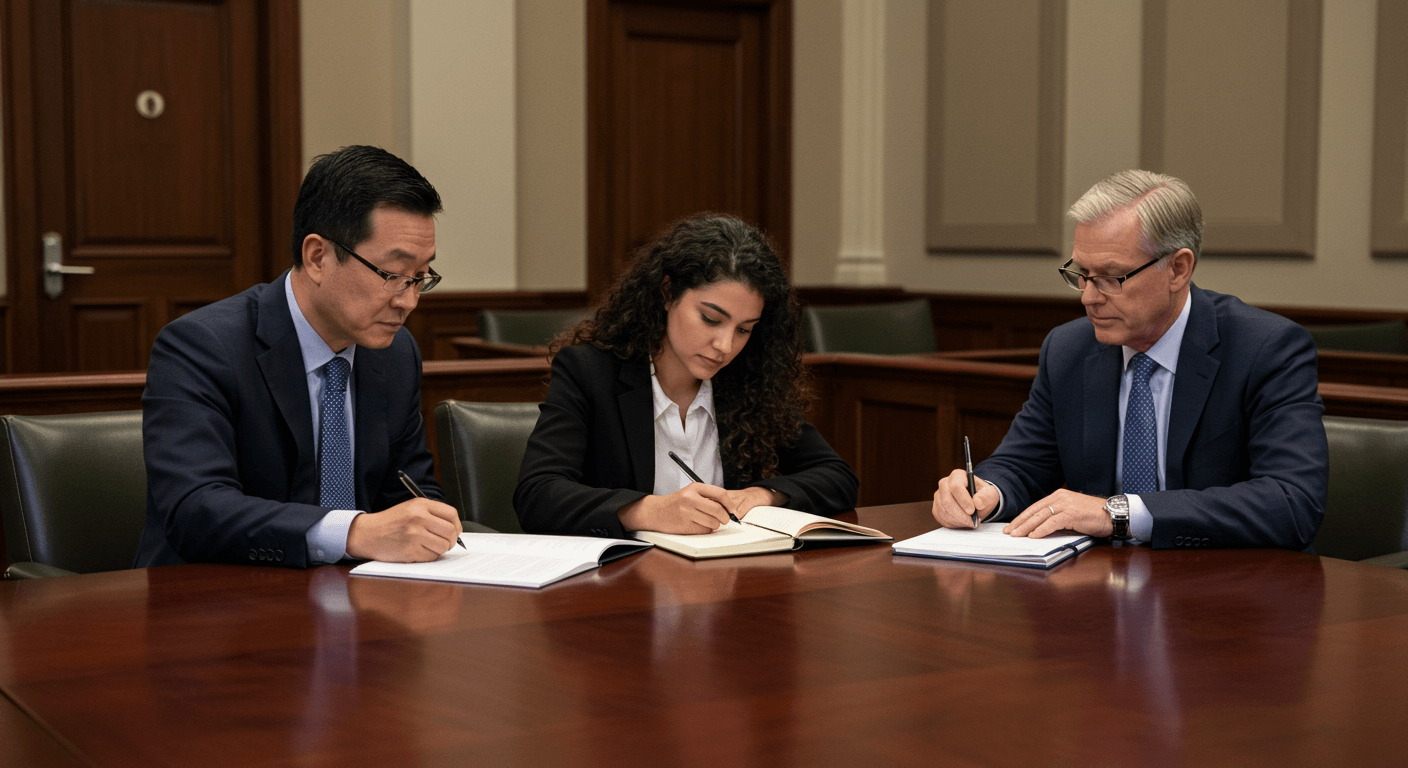
Pre-Dispute: Evidence Inadmissibility due to Poor Management
Trigger: Failure to follow evidence management protocols such as timely preservation and authentication of documents.
Ready to File Your Dispute?
BMA prepares your arbitration case in 30-90 days. Affordable, structured case preparation.
Start Your Case - $399Severity: High. Late or incomplete evidence collection leads to exclusion, weakening claims substantially.
Consequence: Case dismissal or unfavorable rulings due to lack of credible proof.
Mitigation: Implement a detailed evidence checklist and maintain secure repositories for electronic records. Conduct preparatory training on evidence standards.
Verified Federal Record: Federal enforcement records show multiple complaints about improper report use in consumer credit disputes involving entities in California and Hawaii filed on 2026-03-08, highlighting the importance of accurate document handling in claims related to credit reporting.
During Dispute: Procedural Non-compliance
Trigger: Missing submission deadlines or failing to comply with hearing rules.
Severity: Critical, often resulting in sanctions or default judgments.
Consequence: Case dismissal or adverse rulings that cannot be appealed easily.
Mitigation: Use procedural calendar monitoring tools and confer regularly with arbitration administrators to clarify deadlines.
Post-Dispute: Misinterpretation of Tribunal Rules
Trigger: Lack of knowledge about specific institutional arbitration protocols or updates.
Severity: Moderate to high depending on procedural errors impacting evidentiary or hearing processes.
Consequence: Delays, objections to evidence, or case dismissal.
Mitigation: Engage in ongoing training and review arbitration governance standards regularly. Seek counsel for complex procedural points.
- Failure to properly articulate claims or causation damages.
- Non-secure management of electronic records leading to loss or tampering allegations.
- Ignoring enforcement data trends that could shape dispute framing and credibility.
Decision Framework

| Scenario | Constraints | Tradeoffs | Risk If Wrong | Time Impact |
|---|---|---|---|---|
| Choose arbitration or litigation |
|
|
Dismissal for incorrect forum, higher legal fees | Arbitration typically faster |
| Prioritize evidence submission timelines | Arbitration procedural deadlines | Early prep costs vs stronger case positioning | Exclusion of evidence, weakening claims | Faster submission facilitates hearing scheduling |
| Engage legal counsel or self-represent | Budget constraints; complexity of dispute | Expertise vs cost savings | Higher risk of procedural errors without counsel | Self-representation may cause delays |
Cost and Time Reality
Arbitration training courses for consumers and small-business claimants generally range from $500 to $2,000 depending on depth, duration, and training format. Arbitration procedural fees may add $1,000 to $5,000 depending on the institution, with additional legal fees if counsel is retained. In contrast to litigation, arbitration often reduces timeline duration from years to months but at the cost of potentially limited appeal options. Efficient preparation, including training in procedural rules and evidence management, may reduce risks of sanctions or lost claims that result in higher costs.
Participants are advised to consider their specific dispute context when assessing costs. For an approximate valuation of potential awards in consumer disputes, use the estimate your claim value tool.
What Most People Get Wrong
- Assuming arbitration rules are uniform: Procedural rules vary among institutions and must be reviewed carefully for each dispute. For example, AAA and JAMS have differences in evidence submission protocols.
- Neglecting evidence timeliness: Late submission of documents often results in exclusion, weakening the case.
- Overestimating appeal opportunities: Arbitration awards are generally final with limited appeal under 9 U.S.C. § 10.
- Failing to use enforcement data: Ignoring consumer complaint trends and enforcement records may reduce claim credibility and strategic framing.
More detailed analyses are available in the dispute research library.
Strategic Considerations
Claimants should weigh the advantages of proceeding with arbitration versus settlement based on dispute complexity, evidence strength, and procedural capabilities. Arbitration is advisable for contractual disputes requiring confidentiality and confidential resolutions, while settlement may mitigate risks related to procedural or evidentiary weaknesses. Limitations such as the narrow grounds for appeal and jurisdictional enforcement challenges should inform decision-making. BMA Law's approach emphasizes thorough pre-dispute preparation, alignment of documentation to arbitration rules, and incorporation of enforcement data to guide strategic positioning.
Additional insights are available at BMA Law's approach.
Two Sides of the Story
Side A: Consumer claimant
The consumer initiated arbitration over alleged improper use of their credit report by a financial services provider. They prepared submissions after completing an arbitration training course focusing on evidence management and procedural deadlines. Despite initial uncertainty regarding arbitrator appointment and hearing protocols, adherence to training guidelines ensured timely document submission and clear articulation of factual allegations.
Side B: Small-business respondent
The respondent acknowledged receipt of arbitration notice and complied with procedural requirements to submit evidence and attend hearings. From their perspective, the respondent emphasized the importance of clear procedural understanding to defend effectively and avoid default judgments.
What Actually Happened
The arbitration proceeding concluded with a binding award issued within six months of initiation. Both parties acknowledged that thorough preparation, procedural compliance, and clear evidence management helped prevent delays and procedural sanctions. Lessons include the necessity of understanding arbitration procedural rules and using complaint enforcement data to frame factual disputes credibly.
This is a first-hand account, anonymized for privacy. Actual outcomes depend on jurisdiction, evidence, and specific circumstances.
Diagnostic Checklist
| Stage | Trigger / Signal | What Goes Wrong | Severity | What To Do |
|---|---|---|---|---|
| Pre-Dispute | Unclear arbitration agreement terms | Incorrect forum selection or ineligible arbitration claim | High | Review contracts with legal counsel; verify arbitration eligibility early |
| Pre-Dispute | Inadequate evidence collection | Missing critical documents or inadmissible evidence | High | Use detailed evidence checklist; preserve records securely |
| During Dispute | Missed filing deadlines | Procedural sanctions or default judgment | Critical | Implement procedural calendar; set reminders |
| During Dispute | Unfamiliarity with arbitration hearing process | Inadmissible evidence or procedural objections | Moderate | Conduct pre-hearing review; consult guidelines and counsel |
| Post-Dispute | Delays in award enforcement filings | Difficulties in collecting arbitration award | Moderate | Prepare enforcement documentation promptly; verify jurisdiction |
| Post-Dispute | Ignoring enforcement trend data | Reduced credibility of claims and strategic missteps | Low to moderate | Incorporate relevant enforcement data into dispute framing |
Need Help With Your Consumer Dispute?
BMA Law provides dispute preparation and documentation services starting at $399.
Not legal advice. BMA Law is a dispute documentation platform, not a law firm.
FAQ
What is the primary purpose of arbitration training for consumers and small businesses?
Arbitration training aims to familiarize claimants with procedural rules, evidence submission requirements, and hearing protocols specific to arbitration institutions. This knowledge helps minimize procedural errors, ensures timely submissions, and strengthens case presentation as mandated under the Federal Arbitration Act and institutional rules such as AAA Commercial Arbitration Rules.
How important is evidence management in arbitration?
Evidence management is critical. Timely collection, secure preservation, and authentication of documents directly affect admissibility under rules like AAA Rule R-22. Poor evidence handling can lead to exclusion and weaken claims. Training emphasizes building an evidence chain and maintaining document integrity throughout the arbitration process.
Can I represent myself in arbitration or should I hire counsel?
Self-representation is permitted but requires thorough understanding of arbitration rules and procedural standards. Engaging legal counsel reduces procedural risks and improves advocacy but incurs higher costs. The choice depends on dispute complexity, claimant experience, and budget constraints as outlined in arbitration procedural guidelines.
What happens if I miss an arbitration deadline for evidence submission?
Missing a deadline typically results in exclusion of late evidence per institutional rules such as AAA Rule R-22. This exclusion can critically impair the ability to prove claims, often leading to dismissal or unfavorable decisions. Training stresses use of procedural calendars and reminders to avoid such outcomes.
How can enforcement data inform my arbitration strategy?
Enforcement data, like consumer complaint records from the CFPB, reveal common dispute issues and compliance patterns within specific industries. Incorporating this data can enhance claim credibility by demonstrating prevailing industry problems and regulatory recognition, which supports factual allegations in arbitration claims.
References
- Model Commercial Arbitration Rules - Framework for arbitration processes and evidence standards: arbitrationrules.org
- Federal Arbitration Act, 9 U.S.C. §§ 1-16 - Governs enforcement and procedural standards in arbitration: law.cornell.edu
- Federal Complaint Records Database (CFPB) - Consumer complaint insights and enforcement patterns: consumercomplaints.gov
- Restatement (Second) of Contracts - Legal principles on contract obligations relevant to claims: alp.org
- Federal Civil Procedure Code - Guidelines on procedural requirements and evidence submission: civpro.org
Last reviewed: 06/2024. Not legal advice - consult an attorney for your specific situation.
Important Disclosure: BMA Law is a dispute documentation and arbitration preparation platform. We are not a law firm and do not provide legal advice or representation.
Get Local Help
BMA Law handles consumer arbitration across all 50 states:
Important Disclosure: BMA Law is a dispute documentation and arbitration preparation platform. We are not a law firm and do not provide legal advice or representation.