
Distinction Between a Mediator and a Lawyer in Dispute Resolution
What breaks first in many dispute resolutions is the misunderstanding of the distinct roles between a mediator and a lawyer. This confusion leads disputants to assume mediation guarantees legal enforceability or that lawyers will naturally facilitate informal, interest-based settlements. Such assumptions not only cause procedural missteps but often magnify delays, escalate costs, and jeopardize outcomes.
In my years handling consumer-disputes disputes, I have repeatedly witnessed the repercussions of conflating these roles without proper preparation or strategic clarity. This article provides a detailed, operational distinction between a mediator and a lawyer, focusing on procedural realities, evidentiary rigor, risks, and the preparation necessary to navigate dispute resolution effectively.
Primary Key Entity Definition
Mediator: A mediator is a neutral third party who facilitates voluntary resolution of disputes by guiding dialogue and negotiation between disputing parties. Importantly, mediators do not issue binding rulings or provide legal advice; their authority ends with aiding the parties in reaching a mutually acceptable agreement subject to subsequent enforcement mechanisms.
Lawyer: A lawyer is a licensed legal professional authorized to represent clients, provide legal advice, interpret laws, draft binding documents, and advocate within formal proceedings including litigation and arbitration. Their role encompasses legal strategy formulation and ensures compliance with procedural and substantive law.
Audience
This article is intended for consumers, claimants, and small-business owners who are preparing disputes or arbitration mechanisms. It is imperative for such parties to understand when to engage mediation versus legal counsel to prevent procedural pitfalls that undermine their claims or defense.
Roles and Responsibilities
The fundamental difference between a mediator and a lawyer lies in their operational scope during a dispute process. Understanding these differences is essential for parties to avoid mistakes that commonly surface during dispute preparation.
Mediator Role: Facilitation Without Advocacy
The mediator serves as a neutral facilitator whose responsibility is to create a structured environment that encourages communication, clarifies misunderstandings, and aids the parties in exploring resolution options. Mediators do not evaluate the merits of the case, provide legal advice, offer opinions on contractual validity, or enforce obligations.
The mediator’s neutrality is both a procedural and ethical imperative; any perceived bias disqualifies their effectiveness and compromises the dispute’s integrity.
Because mediators do not possess procedural authority to impose decisions, their influence is confined to persuasion and process management. This limitation requires parties to have realistic expectations that mediation is a tool for negotiation, not adjudication.
Lawyer Role: Advocacy, Advice, and Representation
Lawyers operate within a distinctly authoritative framework defined by state licensure, procedural rules, and formal legal ethics. Their role extends beyond negotiation to include comprehensive legal analysis, advising clients on rights and liabilities, drafting enforceable agreements, and representing clients in binding arbitration, litigation, or settlement negotiations.
This advisory role encompasses evaluating evidence, articulating legal theories, and managing compliance with procedural deadlines for filings and submissions, which are essential for protecting client interests and preserving enforceability of outcomes.
- Representation: Lawyers possess authority to act on behalf of clients, including appearing in court and arbitration hearings.
- Legal Counsel: Offering interpretations of contractual language, statutory requirements, and case law implications.
- Negotiation Strategy: Formulating settlement offers that align with legal rights and potential enforcement.
Terminology to Distinguish
- Neutrality (mediator)—Committed to impartial procedural oversight without advocacy.
- Legal counsel—Provision of advice within a framework of substantive law.
- Representation—Formal acting on behalf of clients in tribunals or negotiations.
- Advisory role—Interpretative and strategic guidance anchored in legal doctrine.
Procedural Context and Arbitral Implications

The procedural positioning of mediators and lawyers markedly affects dispute preparation and arbitration readiness. Failure to appreciate these distinctions can result in missed deadlines, unenforceable settlements, or strategic disadvantages.
Ready to File Your Dispute?
BMA prepares your arbitration case in 30-90 days. Affordable, structured case preparation.
Start Your Case — $399Limitations of Mediation in Procedural Authority
Mediators lack the procedural authority to bind parties or enforce agreements. Once an agreement is reached in mediation, it requires formalization through legal instruments—often with the assistance of lawyers—to gain enforceability under arbitration or court frameworks.
Parties relying solely on mediated agreements without legal review or proper documentation risk entering into non-binding arrangements that offer no remedial certainty.
This is especially critical when arbitration clauses specify that outcomes must comply with certain procedural or evidentiary standards as outlined in rules such as the UNCITRAL Arbitration Rules.
Lawyers and Arbitration Preparedness
Legal counsel engages in the comprehensive preparation of the case to meet procedural requirements:
- Drafting submissions compliant with arbitration rules or court procedure.
- Collecting and organizing admissible evidence pursuant to deadlines and standards.
- Formulating and executing legal strategy to maximize enforceability of claims or defenses.
These procedural tasks necessitate coordination between the client's objectives and strict legal frameworks—omission or error leads to risks such as dismissal or unenforceability.
Key Terms in Procedural Context
- Procedural authority—Legal power to impose binding decisions.
- Enforcement mechanisms—Legal means to compel compliance with dispute outcomes.
- Legal strategy—Planning to achieve legally recognized dispute resolution.
Evidence and Documentation Requirements
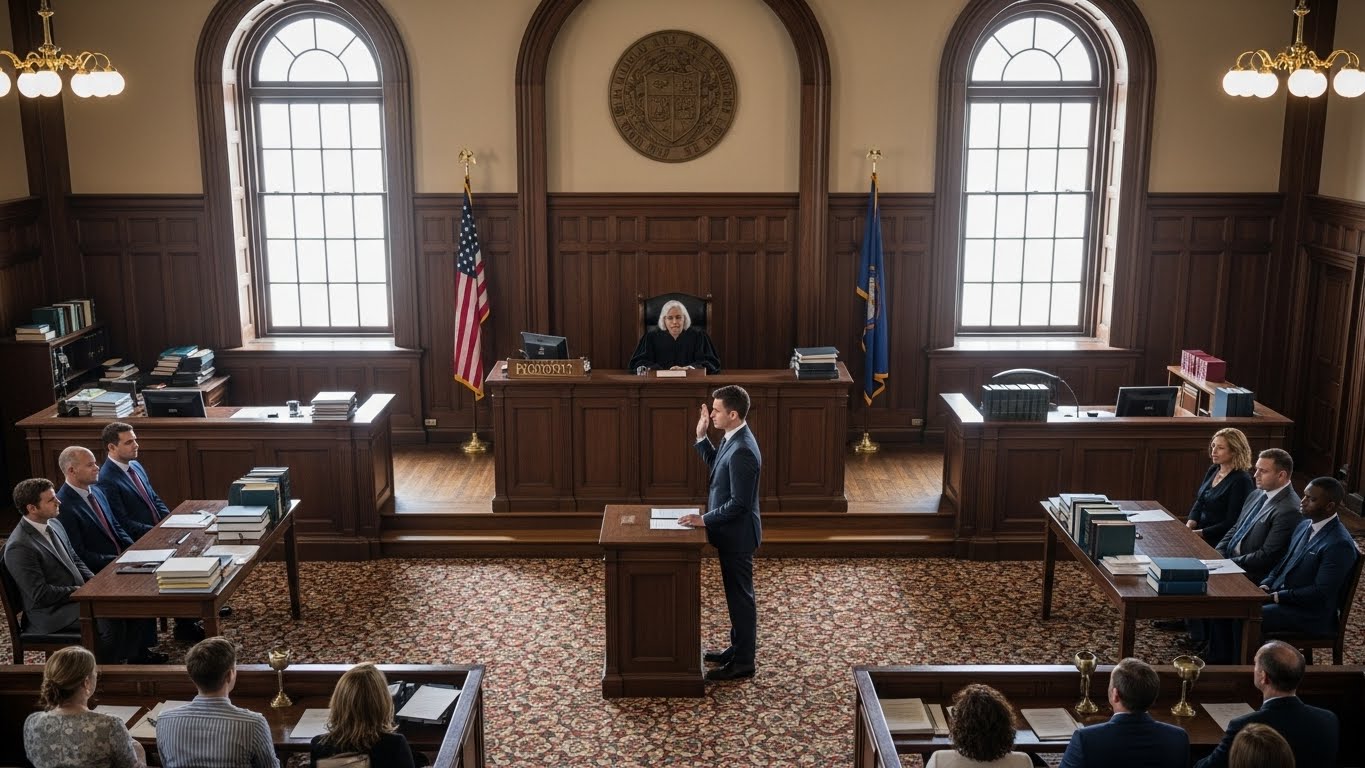
Evidence management is another domain where mediator and lawyer roles diverge sharply, affecting dispute documentation and ultimate resolution credibility.
Mediators’ Evidence Role is Facilitatory, Not Evidentiary
Mediators do not adjudicate facts; therefore, evidence is only introduced to clarify issues or improve communication. There is no requirement or expectation for formal presentation of evidence in mediation, and strict rules of admissibility do not apply.
Documents or testimonies offered during mediation sessions may not be suitable for subsequent legal proceedings unless properly preserved and authenticated.
Lawyers’ Rigorous Evidence Collection and Submission Obligations
Contrastingly, lawyers must meticulously gather evidence that complies with procedural standards—such as authenticity, relevancy, and admissibility—aligned with rules like the Federal Rules of Civil Procedure.
- Authentication and verification of documents and witness statements.
- Organizing exhibits according to arbitration or court submission protocols.
- Preempting evidentiary challenges through procedural compliance.
Lapses in evidence handling can result in dismissal or detrimental rulings, threatening client interests.
Related Terminology
- Evidence management—Processes for identification, collection, and organization of proof.
- Admissibility—Legal standard determining whether evidence may be considered by arbitrators or judges.
- Documentation standards—Formal criteria ensuring evidence integrity and procedural compliance.
Procedural Risks and Limitations
Understanding the risks inherent in solely relying on mediation or insufficient legal preparation is vital to avoiding situations that exacerbate disputes rather than resolve them.
Risk 1: Over-Reliance on Mediation May Delay Enforceable Resolution
Mediation inherently requires voluntary cooperation. If parties fail to reach binding agreement, the effort elongates dispute duration without substantive progress, increasing costs and complicating later adjudication attempts.
Additionally, informal mediated settlements that lack proper documentation or legal vetting are vulnerable to disputes over validity or enforceability, requiring subsequent legal intervention that could have been avoided.
Risk 2: Inadequate Legal Preparation Threatens Arbitration Outcomes
Failing to engage a lawyer for arbitration or litigation preparation risks noncompliance with procedural deadlines, poor evidence presentation, and weakened claims. Such deficiencies can result in adverse rulings, loss of arbitrator confidence, or outright dismissal, compromising client objectives.
These risks underscore the necessity for early legal involvement, particularly when complex rights, contract interpretation, or damages calculation are at stake.
Terminology Reflecting Procedural Vulnerabilities
- Delay risks—Additional time and expense due to ineffective resolution methods.
- Procedural compliance—Adhering to established arbitration or court processes.
- Enforceability—Legal capacity of agreements or awards to be upheld and executed.
Operator Signals to Determine Appropriate Pathways
A robust assessment framework is critical when deciding whether to pursue mediation or engage legal counsel immediately. The following signals guide decision-making:
- Assess need for legal interpretation: Complex contract or statutory rights require lawyer involvement.
- Determine whether the settlement requires formal enforceability: Informal resolutions favor mediation.
- Evaluate dispute complexity: Single-issue, interpersonal matters may be suitable for mediation; multifaceted disputes demand legal expertise.
- Identify procedural deadlines that impact evidence and filings.
- Confirm mediator neutrality to avoid conflicts of interest.
- Monitor evidence collection for compliance with technical standards.
- Explicitly delineate roles to prevent confusion and subsequent procedural errors.
- Consider maturity of dispute terms before engaging legal paths.
- Consult arbitration rules to verify if legal counsel or mediation is mandatory or recommended.
- Assess initial resolution suitability for mediation versus immediate legal action.
- Determine if legal advice is required to elucidate enforceability of proposed settlements.
- Be attentive to procedural bottlenecks that may unnecessarily increase costs or delays.
Decision Matrix for Dispute Resolution Pathways
| Decision | Options | Selection Logic | Hidden Costs |
|---|---|---|---|
| Engage mediation first |
|
Use when dispute involves interpersonal issues or seeks quick, informal resolution without binding effect. |
|
| Hire legal counsel before proceeding |
|
Use when dispute involves complex legal rights, substantial damages, or enforceability concerns. |
|
| Use arbitration clause or process |
|
Use when contract stipulates arbitration or when enforceability of outcomes is required. |
|
Known Failure Modes and Their Impact
Failure Mode 1: Misclassification of Dispute Resolution Method
Mechanism: Choosing mediation when legal enforceability is necessary leads to non-binding outcomes that fail to resolve the dispute definitively.
Trigger: Misunderstanding dispute scope or resolution objectives.
Irreversible Moment: After signing agreements or completion of an unsuccessful mediation attempt.
Downstream Impact:
- Enforcement failure causing further litigation or arbitration.
- Extended dispute duration.
- Escalation of legal and administrative costs.
Failure Mode 2: Inadequate Evidence Preparation
Mechanism: Failure to gather or organize admissible evidence per procedural rules.
Trigger: Ignoring evidence management protocols or filing deadlines.
Irreversible Moment: Close of evidence submission deadline.
Downstream Impact:
- Weakened legal position.
- Opposition gaining tactical advantage.
- Potential dismissal or adverse ruling.
Failure Mode 3: Role Confusion Between Parties and Professionals
Mechanism: Misinterpretation of mediator's inability to provide legal advice or lawyer’s role beyond advocacy.
Trigger: Assuming mediators can deliver legal opinions or expecting lawyers to drive interest-based negotiation without legal framing.
Irreversible Moment: Initiation of formal proceedings, or signing legally binding agreements without legal vetting.
Downstream Impact:
- Procedural conflicts or duplicative efforts.
- Inadequate dispute preparation leading to weaknesses in case posture.
- Enforcement difficulties arising from informal settlements or flawed documentation.
Controls and Guardrails to Mitigate Risks
Clear Role Delineation
What it prevents: Minimizes procedural errors due to role confusion.
Implementation Notes: Define and communicate the specific functions and limits of mediators and lawyers during initial dispute assessments. Clarify that mediators facilitate dialogue only, and lawyers advise and represent.
Procedural Compliance Checks
What it prevents: Avoids evidence inadmissibility and procedural delays.
Implementation Notes: Regularly audit evidence collection and documentation using up-to-date procedural checklists aligning with applicable arbitration or litigation rules (e.g., UNCITRAL Arbitration Rules, Federal Rules of Civil Procedure).
Outcome Verification
What it prevents: Prevents unenforceable agreements and reduces post-resolution disputes.
Implementation Notes: Ensure all mediated agreements undergo legal review and formal documentation before execution to confirm they contain clear, enforceable terms and satisfy procedural standards.
Integrating Mediation and Legal Counsel: Strategic Considerations
Strategic sequencing can be effective: starting with mediation for interpersonal or less complex disputes to conserve resources, then escalating to legal counsel or arbitration preparation as necessary. However, this hybrid approach requires early and continuous evaluation of procedural signals and legal imperatives to prevent entrenched delay or compromised enforceability.
Parties should coordinate with professionals experienced in both domains to understand when transition points should occur and to ensure BMA's arbitration preparation service or our dispute documentation process are engaged timely to support enforceable resolution.
Conclusion and Recommendations
Parties engaged in consumer or small-business disputes must carefully assess the nature and complexity of their conflicts, the desired enforceability of outcomes, and the role of each professional before proceeding.
Failing to appreciate the non-advisory role of mediators and the authoritative capacity of lawyers is a recurring source of costly errors that can irreparably damage a party’s legal position.
Engage legal counsel early when dispute complexity or enforceability is at issue and consider mediation as a complementary but non-substitutable tool for resolution. Confirm procedural deadlines and evidence requirements are met meticulously, and maintain clarity on each participant’s role throughout the dispute lifecycle.
For parties uncertain about dispute preparation or arbitration readiness, BMA Law's approach offers strategic guidance tailored to these operational realities. Starting with a robust legal framework can preserve options and reduce latent procedural risks.
Take Action: If you are preparing a dispute or arbitration, begin your case with a detailed consultation to align your strategy with process requirements and enforceability considerations.
Don't Leave Money on the Table
Court litigation costs $14,000–$65,000 on average. Arbitration with BMA: $399.
Start Your Case — $399
References
- UNCITRAL Arbitration Rules, United Nations Commission on International Trade Law, https://uncitral.un.org/en/texts/arbitration/rules
- Federal Rules of Civil Procedure, U.S. Courts, https://www.uscourts.gov/rules-policies/current-rules-practice-policies/federal-rules-civil-procedure
- ICA International Arbitration Court Practice Notes, https://www.iaa.court/sites/default/files/2022-08/ICA_Practice_Notes.pdf
- American Bar Association, Mediation and Arbitration Roles and Differences, https://www.americanbar.org/groups/dispute_resolution/resources/DisputeResolutionProcesses/mediation_vs_arbitration/
- National Center for State Courts, Mediation Process and Legal Counsel Functions, https://www.ncsc.org/__data/assets/pdf_file/0018/22386/legal-counsel-and-mediation.pdf
Get Local Help
BMA Law handles consumer arbitration across all 50 states. Find preparation help in your area:
Important Disclosure: BMA Law is a dispute documentation and arbitration preparation platform. We are not a law firm and do not provide legal advice or representation.